bearing blog


bear – ing n 1  the manner in which one comports oneself;  2  the act, power, or time of bringing forth offspring or fruit; 3 a machine part in which another part turns [a journal ~];  pl comprehension of one’s position, environment, or situation;   5  the act of moving while supporting the weight of something [the ~ of the cross].


  • “You, Reading This, Be Ready” by William Stafford.

    William Stafford is a poet who is new to me, but he was incredibly prolific, despite beginning his career late:  at 48 (I turn 48 this year!) he published his first major collection of poetry.

    Why not this poem, this pseudo-sonnet, for the first Friday in Lent?

    You, Reading This, Be Ready

    Starting here, what do you want to remember?
    How sunlight creeps along a shining floor?
    What scent of old wood hovers, what softened
    sound from outside fills the air?

    Will you ever bring a better gift for the world
    than the breathing respect that you carry
    wherever you go right now?  Are you waiting
    for time to show you some better thoughts?

    When you turn around, starting here, lift this
    new glimpse that you found; carry into evening
    all that you want from this day. This interval you spent
    reading or hearing this, keep it for life—

    What can anyone give you greater than now,
    starting here, right in this room, when you turn around?

    .                                                                    — William Stafford


  • Today and tomorrow.

    Let's get this out of the way first thing.

    The readings for today tell us to do both:

    "Blow the trumpet in Zion!
                proclaim a fast,
                call an assembly"

    AND

    "…when you fast,
    anoint your head and wash your face,
    so that you may not appear to be fasting,
    except to your Father who is hidden."


    There is no contradiction here, and there doesn't need to be.

    Today we proclaim the fast.

    Tomorrow we wash our faces, and keep going.

    Ash-Wednes


  • Narrators.

    These days I find myself thinking more and more about Erma Bombeck.

    Erma Bombeck had a daily column in my hometown newspaper when I was a child.  (I didn't know when I first started reading her that the columns were syndicated to appear all over the country; the readers of the Dayton papers knew she was local).  I loved reading the newspaper; comics first, of course, but also advice columns and weird-little-fact-of-the-day columns and humor columns.  And I loved reading Erma Bombeck.  She was funny, even if I did not always understand the humor, and touching, and I recognized a skilled practioner of the writer's craft even then.

    And there was another side to it.  She wrote a "housewife's column:"  she wrote about raising a family, finding humor and ridiculousness and occasionally profundity in the ordinary mother's life.  I was not a homemaker; I was, what, eleven or twelve?  But I lived in a home.  I had a mother.   And when I read about children from her perspective, sometimes I didn't understand what was so funny about it (for example, she wrote a tongue-in-cheek instruction manual for after her death, including careful instructions on how to change a toilet paper roll and wipe toothpaste out of a sink, which I took as utterly serious when I first read it and didn't realize until I was an older teenager that it was satirical).  Nevertheless some of it sank in and I could see myself, as a child, and the ordinary childish things I did.  It was a little mortifying, but eye-opening in an important way.  I think it helped me see my own mother as a more complete human being than I might have otherwise.  And I remembered those things years later when I became a mother, myself, and again when I lost my own mother.

    If you've never encountered Erma Bombeck, I suggest starting with her 1971 collection If Life is a Bowl of Cherries, What Am I Doing in the Pits?  I haven't read it in many years, and maybe it's super dated by now, but in any case you'll get an idea of what I'm talking about.

    + + +

    I am always saying that I think the first so-called mommyblogger (let's retire that term, though) was Erma.  I would like to go back in time and ask Erma what it was like, to write about home and family, to write humorously about home and family, prolifically so (thousands of columns over many years) and still to guard the hearts of the individuals she lived with and loved.  How did she do it?  Was she always successful?  Did her kids go off to college uneasily wondering if their professors would ask when they learned to change a toilet paper roll?  And what about the griefs and the struggles small and large?  How much did she write about those?  How much did she keep in?  Was she ever bursting with stories she wanted to tell because they were her stories but in the end could not, because they were not ONLY her stories, but also someone else's?

    Stories about relationships never belong to only one person.

    Even stories about the briefest of encounters never belong to only one person.  

    + + +

    And it's hard to understand what to do with them.  I mean, everyone whom the stories belong to has something to grapple with. 

    One of the key things to realize is that we are the main character in some stories and simultaneously a supporting character, or even an antagonist, in others.  And there's no absolute right story, either; God may have the God's-eye view, but good luck obtaining the transcript.

    Being the supporting character in someone else's story doesn't negate my own version.  It doesn't remove my need to tell it, or my right to tell it… but respect for the existence of all those other versions sure calls into question the wisdom of telling it, or setting it out in public.

    + + +

    All this is to say that one of the great hardships of loving someone, having a close family member who is having a really, really hard time…

    …and yes, I love someone, I have a family member, who is having a really, really hard time… many of us do…. and it is hard, it is…

    …is the knowledge that the experience is not only your own and it would be an injustice to preserve your own point of view as the sole, Authorized Version.

    + + +

    I almost wrote, "No matter how hard it is for you personally,  it isn't your story to tell."

    But that's not true.  There is a story that is mine to tell if I wish or keep back if I deem it wise… but wisdom and respect for the fullness of other human beings' internal lives, at least the shreds of wisdom I've managed to claw together in forty-seven years, tell me that you can't have everything.  You voluntarily set some things aside because you value other things more. 

    And one of the things you sometimes waive is the right to tell your own story, at least widely.

    + + +

    Being the supporting character in someone else's story, though?

    Holding true things back, for important reasons?

    It doesn't mean that your story is false, and it does not mean that your story is unimportant.

    Yes, your story—the one in which you are the main character—the one in which you stand just off to the side, doing what you can, while a great battle is happening just out of your reach.  

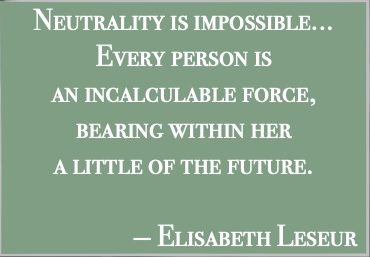
    It is real, it is important, because your heart matters too.  And maybe there's a safe audience:  a trusted friend, a small group of supporters, an audience to whom you can remain securely anonymous perhaps.  Or maybe it's just a private journal, or slips of paper that afterward must fall into the flames.  Or maybe it seems to come to nothing at all, just an unarticulated heart-hurt.  Like a wispy tendril of poetry that circulates in your heart for years, never written down, because you can find no words that will catch it and pin it down without destroying it in a puff.

    I'm just saying, it's real, and there is something that will come of it, someday; because it's you, it lives in you, in the works of your hands and in the spark that is common to every human life.

    + + +

    Luke 2:19

    + + +


  • The importance of taking temperatures.

    We have had a lot of feelings around here for the last two years.  Feelings of loss, feelings of anger, feelings of relief from time to time. 

    In that time, two of my kids have been diagnosed with disorders that bear the names of feelings:  one with anxiety, one with depression.  I've become very caught up in all things "feeling."  There are medications for these conditions, of course, but those don't get you there on their own; therapy is part of it too, sometimes for the individual kids, sometimes including one or both of us parents; occasionally Mark and I have had a session with the child's therapists and without the child. 

    Therapy means lots of talk about feelings.

    + + +

    One of my young people, the anxious one, has been given a diagram called a "feelings thermometer."  I'm told that it goes by other names, with the most clinical-buzzword-sounding being SUDS:  the Subjective Units of Distress Scale (Wikipedia).   

    A thermometer colored by a child in a rainbow spectrum with blue at the bottom and red at the top.  The ticks are labeled from bottom to top:  1-I'm feeling great! 2-I am relaxed and happy 3-I am cool and collected "I got this"  4-I am okay  5-This is hard but I am in control  6-I am getting uncomfortable  7-I am heating up  8-I am boiling  9-I am ready to explode 10-I am exploding out of control

    One version of the emotional temperature scale for a younger child.

    It's basically a form of "On a scale of one to ten (or zero to ten), how anxious are you feeling right now?" 

    You would think that something this simple would not be very helpful, but I've been amazed at how much it's helped. The more reading I do about ways that clinicians use the scale, the more I try to use it in everyday conversations. 

    I suspect that one of the reasons it's helpful in our family is just that it yields a number within a number range, which even if it is entirely subjective, is a landscape that…certain people in the family… find to be comforting and reliable, like a well-blazed hiking trail.  

    + + +

    Notwithstanding the quirks of our comfort zones:  it also gives us a low-impact way to inquire about the well-being of the anxious young person. 

    All types of measurement change the value being measured, but some do it more than others.  At the beginning of our journey from "this kid is a worrier" to "we need help if we are going to help this kid" to "this kid is in treatment for an anxiety disorder", any attempt to ask about anxiety tended to create more anxiety. 

    Take a seemingly simple question like "How are you doing today" (yes, I know that in many circumstances this question is not perceived as simple).  Sometimes asking it would precipitate a complete meltdown; I think the act of self-examination itself triggered anxiety.   But the number is somehow less weighty, maybe because it doesn't force much engagement with language. 

    At first it was difficult for the child in question to nail down the part of the scale, and there was some hemming and hawing, and prompting from us.  But with practice it became a very quick way to check in:  "What's your emotional temperature right now?" gets a numerical response almost right away, with only a few "um"s.

    + + +

    One thing I found really helpful as I went on reading about how people use the thermometer:   Different parts of the scale call for different kinds of support. 

    At the very top of the scale—let's say betwen 8 and 10—the anxious person may be incapable of language-based reasoning.  There's no point in, say, insisting that they just get back to their schoolwork, or that they explain what set them off.  There may not even be a point in trying to talk them down, or reassure them with language.   Instead, depending on what works best with this particular person, it may be time for a cuddle or a hand lightly stroking the back; or an invitation to go to a quiet place and rest, with another or in private; or a suggestion to engage in vigorous activity or in some self-soothing behavior that the young person has practiced and found to work for them in the past.  (more on that below.)

    Towards the bottom of the scale—say below 5—even if the anxious person is not totally at peace, they can reason and think and perform tasks, independently or with others.  They can engage in therapy, they can be encouraged to stay on task, they can consciously choose behaviors.  They can also practice deeper relaxation techniques to bring the number lower still.

    In the middle, when a moderate amount of stress is being experienced, there is an opportunity to develop self-regulation.  Here is where the young person (as well as their parents!) can learn to notice when the temperature is rising and then do something about it.  Take a break, switch to another task, practice breathing exercises, get up and stretch, try a visualization, get up and fetch something to use as a fidget… all these things are behaviors that have to be learned.  It is here, in the zone of moderate stress, where they can be tried, tested, and practiced; later when the emotional temperature goes through the roof, they can call on these techniques to help bring them down.

    + + +

    One of the things I have learned by using the emotional temperature scale is that what a kid looks like on the outside is not necessarily a great indicator of what distress level they would report on the inside.  And yes, if you had asked me about this before we were using the scale, I would have said "of course that makes sense, everyone exhibits distress differently." 

    But I did not have, then, so much personal experience with how the same person can exhibit distress differently at different times.  A child who appears to be quietly playing a favorite computer game may be, in fact, calm and happy, and often they are.  But a child who appears to be quietly playing a favorite computer game may also be trying desperately to use the computer game to distract from intense internal distress.  A child who is flailing around in the playroom or, grunting with effort, whacking the hanging punching bag with a stick, not answering when called, may be physically expressing anger and distress.  Or they may be absorbed in an imaginary game of swordfighting.   

    I often tell the kids, "I can't read your mind; you have to tell me."  I regularly need to remind myself of that as well.


  • The baptism of water and the repentance of God.

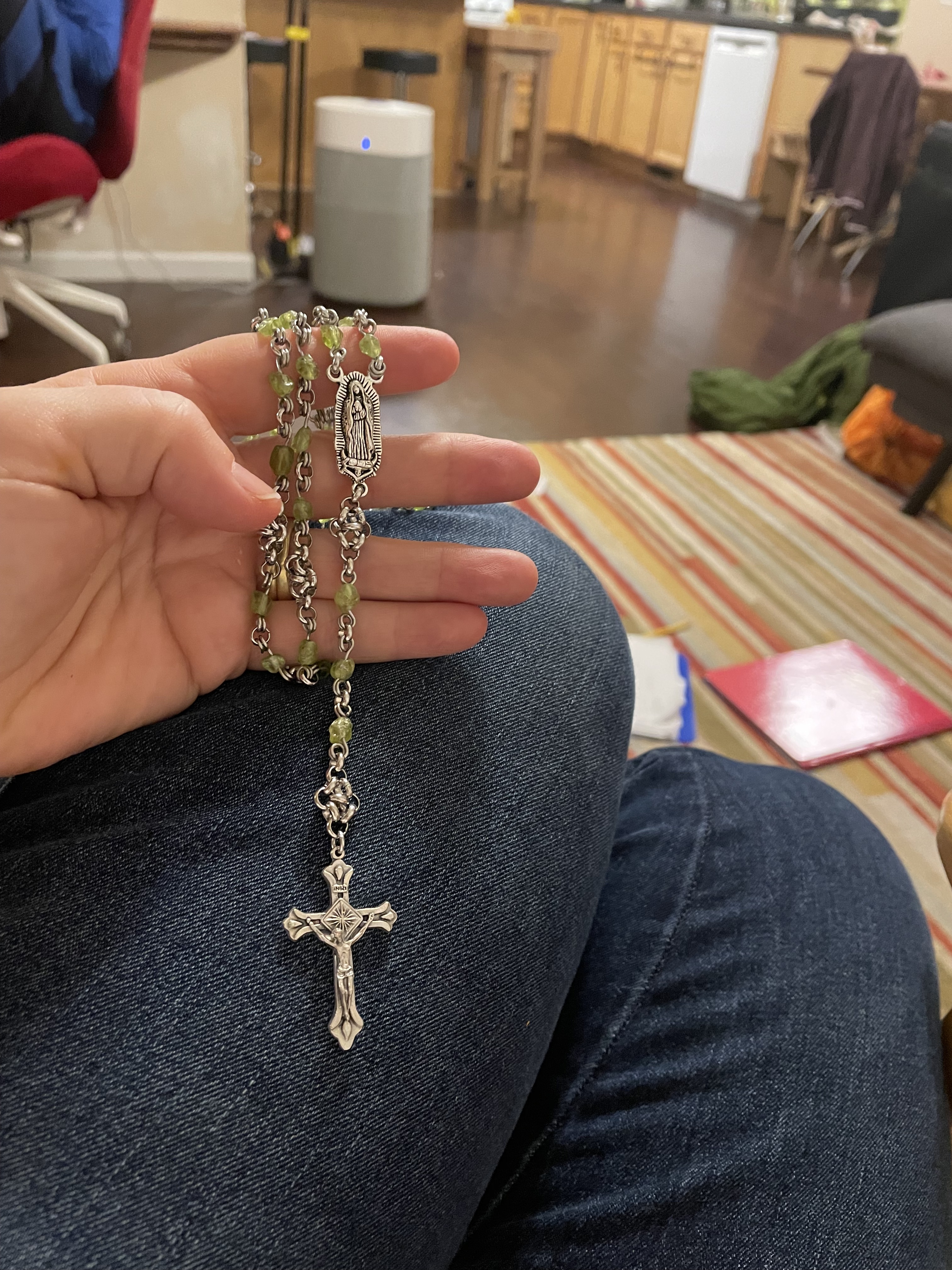
    A couple of weeks ago I had time for a single decade of the Rosary, and it being Thursday, I chose the first Luminous Mystery:  the baptism of Jesus by John.

    I don’t know very much about how other Christian denominations (who have different views of sacraments and sacramentals) understand John’s baptism, exactly how it fits into the economy of salvation, or precisely what it accomplishes when Jesus undergoes it.  I’d like to know more.

    John the Baptist appears in all four Gospels.  Here is the version of his baptism from Mark 1 (this is the NRSVCE):

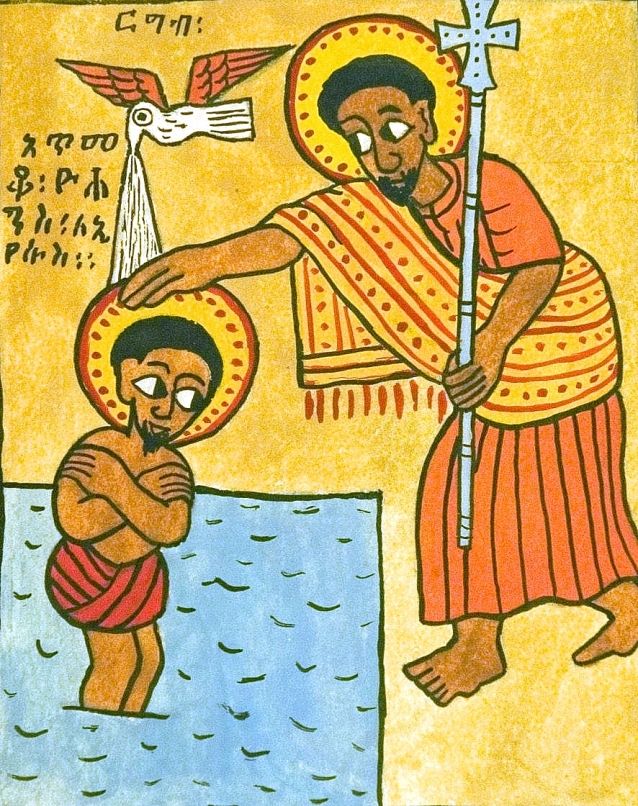
    Ethiopianbaptism

      John the baptizer appeared in the wilderness, proclaiming a baptism of repentance for the forgiveness of sins. And people from the whole Judean countryside and all the people of Jerusalem were going out to him, and were baptized by him in the river Jordan, confessing their sins….

        He proclaimed, “The one who is more powerful than I is coming after me; I am not worthy to stoop down and untie the thong of his sandals. I have baptized you with water; but he will baptize you with the Holy Spirit.” 

        In those days Jesus came from Nazareth of Galilee and was baptized by John in the Jordan.  And just as he was coming up out of the water, he saw the heavens torn apart and the Spirit descending like a dove on him. And a voice came from heaven, “You are my Son, the Beloved; with you I am well pleased.”  And the Spirit immediately drove him out into the wilderness.

    And here it is from Matthew:

         In those days John the Baptist came, preaching in the wilderness of Judea and saying,“Repent, for the kingdom of heaven has come near.”

        …People went out to him from Jerusalem and all Judea and the whole region of the Jordan.  Confessing their sins, they were baptized by him in the Jordan River. 

       But when he saw many of the Pharisees and Sadducees coming to where he was baptizing, he said to them: “You brood of vipers! Who warned you to flee from the coming wrath?  Produce fruit in keeping with repentance.  And do not think you can say to yourselves, ‘We have Abraham as our father.’ I tell you that out of these stones God can raise up children for Abraham.  The ax is already at the root of the trees, and every tree that does not produce good fruit will be cut down and thrown into the fire.

     “I baptize you with water for repentance. But after me comes one who is more powerful than I, whose sandals I am not worthy to carry. He will baptize you with the Holy Spirit and fire.…”

    Then Jesus came from Galilee to the Jordan to be baptized by John.  But John tried to deter him, saying, “I need to be baptized by you, and do you come to me?”

    Jesus replied, “Let it be so now; it is proper for us to do this to fulfill all righteousness.” Then John consented.

    As soon as Jesus was baptized, he went up out of the water.

    In Catholicism, it’s a matter of considerable mystery with some room for contemplation (hence its inclusion among the mysteries of the Rosary).  A few things we have as settled doctrine:

    • John’s baptism is not the same as today’s Sacrament of Baptism; it’s not a sacrament at all.  It’s not a channel of grace that’s promised to anyone who, properly disposed, undergoes it.  It’s something else.
    • Like a sacrament, though, it is a sign:  a sign of relationship, conversion, and preparation.  “He will go before him in the spirit and power of Elijah, to turn the hearts of the fathers to the children, and the disobedient to the wisdom of the just, to make ready for the Lord a people prepared.”  (Luke 1:17)
    • John baptizes with water for repentance.  He rebukes people who present themselves for baptism, ostensibly claiming the sign of repentance, but whom he knows to be living in a way that is not “in keeping with repentance.”

    John’s baptism is not just something that John does to people; the people come and ask for it, and those who are properly disposed are permitted to willingly undergo it, publicly before the crowd.

    So what is it, exactly?  Is there a simple way of understanding John’s baptism of the people?  Is something like it accessible to us even today?

    I think there is:  to undergo John’s baptism is to make an act of contrition.  It is short of a sacrament, yet it is a sign of repentance; includes acknowledgment of one’s sins; and its effects are really only accessible to those who, well, mean it.

    Schoolchildren typically learn a memorized form of an Act of Contrition, with the intent that they can call on it all their life as a prayer of supplication and sorrow for sins.   A childlike version is:  “My God, I am sorry for my sins with all my heart.  In choosing to do wrong and failing to do good, I have sinned against you whom I should love above all things.  I firmly intend, with your help, to do penance, to sin no more, and to avoid whatever leads me to sin.”   This may well have been the same sentiment in the hearts of many who waded with John into the water.  And I think it’s a good reason to keep John in mind when we say an act of contrition ourselves, whether in or out of the sacrament of confession.

    + + +

    That is what I think John’s baptism means for the ordinary person.  So what does it mean for the stainless Son of God to wade into the water and be baptized by John?  What does it mean for God to make an act of contrition?  God, who can neither be dishonest in his signs and messages, nor… have sins in His past for which He might be sorry?

    Why does Christ display repentance?

    The answer John is given when he protests is:  “Let it be so now, for it is proper for us in this way to fulfill all righteousness” (Mt 3:13).  We can read this fifteen ways till Tuesday and it is going to be very hard to extract much out of this answer beyond, well, reassuring John, who sounds rather alarmed at being put in the position of baptizing the Messiah.  

    B493ff57-e7ab-4f42-9802-0df4038f9f42_text

    No, really, John.  It’s “proper.”  At least for “now.”  It will fulfill “all righteousness.”

    What are the effects?

    Jesus’s baptism by John is seen to mark the beginning of His public life, so one effect is to inaugurate His public ministry.  According to the Catechism (par. 536), it also represents “the acceptance and inauguration of His mission as God’s suffering Servant”; “He allows himself to be numbered among sinners;”…he anticipates (willingly, as the others willingly made their act of contrition) the “‘baptism’ of His bloody death.”

    Jesus entering the water sanctifies the water for us as a sign of repentance and conversion.  Since it is linked to His willing acceptance of His saving death, it imbues the water of our Baptism with our own willingness to die to self and to make of our lives a sacrifice.

    I think I understand this, but I’m often still stuck on “but why is Jesus pretending to be, you know, personally contrite?  Is there something just a wee bit dishonest about this?  “God is not a human being, that he should lie, or a mortal, that he should change his mind” (Num 23:19).

    + + +

    And yet…

    …there are a handful of lines here and there in which “God repented.”  And sometimes the “repentance” is sealed, so to speak, with an act.

    And the LORD was sorry that He had made man on the earth, and it grieved Him to His heart.  “I will blot out man whom I have created from the face of the ground… for I am sorry that I have made them.”  (Gen. 6:6-7)

    God depicts the flood as an act of contrition, a sign of regret.  (Later followed by something better:  the sign of the covenant and promise to Noah.)

    “I regret that I have made Saul king, because he has turned away from me and has not carried out my instructions… I am sending you [Samuel] to Jesse of Bethlehem.  I have chosen one of his sons to be king.”

    God depicts the withdrawal of the kingdom from Saul as an act of contrition.  Later followed by something better:  the anointing of David.

    There are some other mentions:  the Psalmist says, e.g. in Ps 106, “Yet he took note of their distress when he heard their cry; for their sake he remembered his covenant and out of his great love he relented. He caused all who held them captive to show them mercy.”  And the prophet Amos declares, of various plagues, “The Lord repented, concerning this,” presumably ending the plagues.  These could definitely be read more as the human perspective on what’s going on in God’s mind, though; it’s not as strongly worded as putting the words “I regret” directly in the mouth of the Eternal.  And then there’s God repenting of threatening to destroy the people in Exodus, in response to Moses’ plea.

    What I’m saying is, it’s there: God allowing himself to be depicted as a being who repents and relents, like a creature in time.  It might be only human misunderstanding of the way that mercy and justice interplay, and that’s how it’s come down to us, because that’s the best way it could get through our heads how mercy works.

    Here is the thing:  we are creatures in time, and so we have the capacity to repent and relent, to admit our wrongs, or to show mercy.  But none of us is guaranteed to do so; we refuse the opportunity often, and perhaps some people never learn to!

    And how could we learn unless we are taught?

    + + +

    When my children ask me about various Old Testament stories, “But did this really happen?” I usually prefer to be a bit circumspect about it.  The correctness of the answer depends, after all, on what the child understands their question to mean.

    In appropriate context I will tell them, of course, that Scripture is a different kind of book from a history or a science text or a morality tale, and that all those kinds of books can be true in different ways and with different kinds of language.

    But if I am pressed  personally (“do you really believe this really happened?” ) I answer:  I believe with all my heart that God wanted us to know this story, and he wanted us to know it for a good reason. 

    + + +

    By that standard it doesn’t have to make sense that God “repented” or “was sorry” for various of His early acts, and it doesn’t have to make sense that Jesus says it is “proper” for John to baptize Him with a baptism of repentance.  If nothing else, He must have wanted us to know a story that depicts Him enacting something that is proper to him—mercy—by a means which models a way that is more proper to us—repentance.


  • Clothes that fit.

    One of the tropes of the pandemic was:   living in yoga pants.   Or, not just yoga pants, but comfortable clothes in general:  pajamas on the bottom and buttoned Zoom-ready shirts on top, or maybe just pajamas all day if you can conduct business by email and voice call.   My spouse is still working out of a home-office carved out of half our game room, webcam and all, often in a Work Shirt, running shorts and sandals.  I hope the flourishing armies of delivery drivers were wearing supportive shoes and clothes they could easily move in, too (and that my neighbors and I tipped them well enough to pay for good functional ones).

    Now that I am vaccinated and shopping in person is safer, I have been systematically replacing my wardrobe.   I've put it off too long.  Not entirely voluntarily, but to some extent. It would certainly be understandable to put it off if I needed to stay in a strict budget and replace things one at a time as I could afford it; lots of people have to do it that way; but I have been economically fortunate and do not have that excuse.   No, over the last few years I have gradually changed clothing sizes and, well, tried to ignore it.  The involuntary part is because just about when the clothes I was wearing started to be no-longer-deniably small for me, the pandemic hit and delayed me further. 

    But now that I've started to buy new clothes again I've realized just how much I undervalued simple comfort.

    Freedom of movement, functional pockets in the right places, clothing that doesn't gap or tug if I bend or stretch or sit a certain way, clothes that fit.  I had almost forgotten what a difference that makes.

    + + +

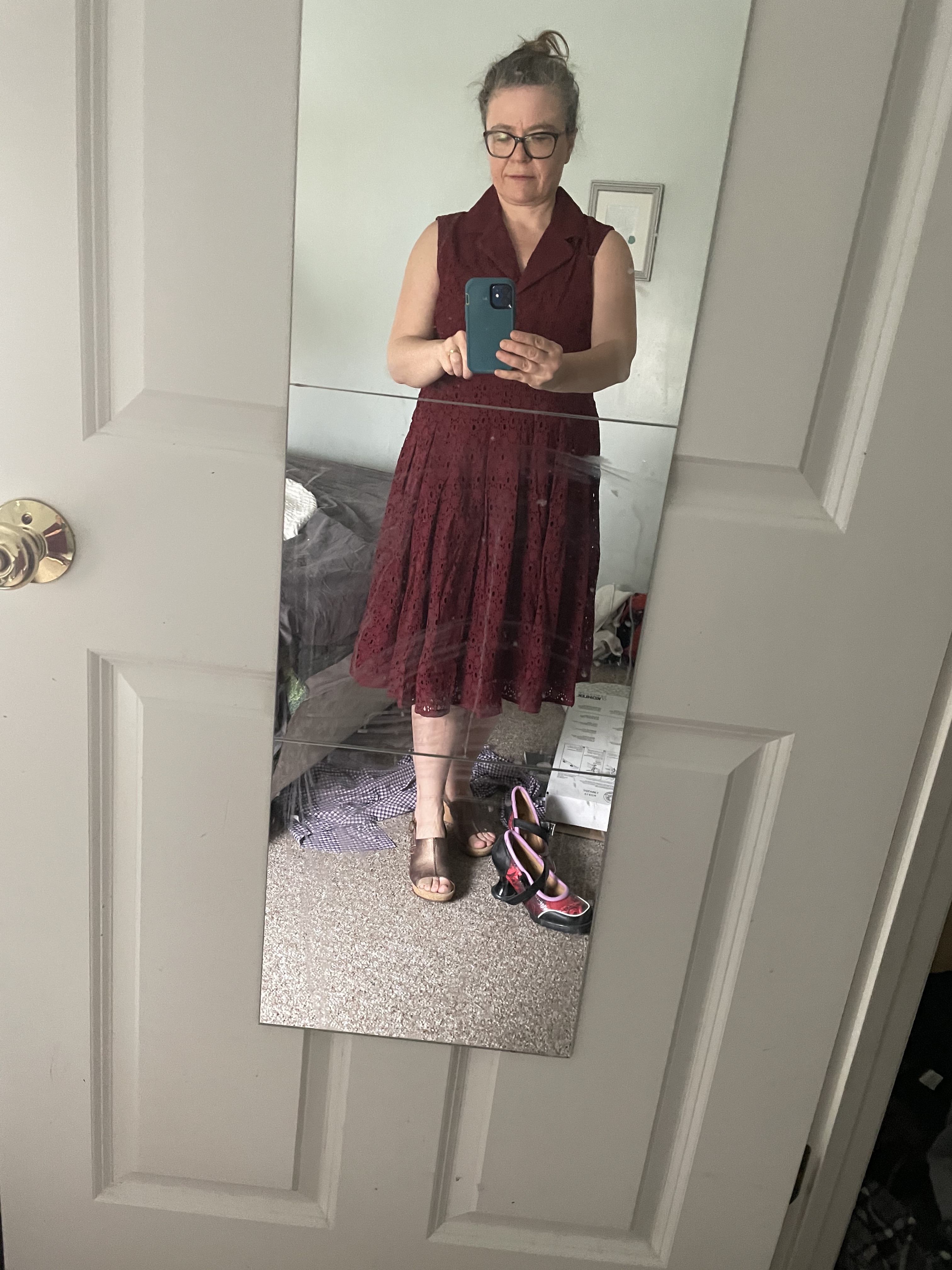
    The first things I got, which kind of set me off in this direction, were some summer dresses from eShakti.  If you don't know eShakti, well, take a look:  you can send in your measurements and get clothing (mostly dresses) made-to-measure and customized with your preferred sleeves, hems, and necklines.  The dresses came back, I held them up in front of me by the shoulders, and I thought:  whoa those are thick in the waist.  And then I put one on and took a deep, cleansing, belly-expanding breath, and thought, "I am going to live in these dresses all summer."  And when I looked in the mirror I didn't think they looked bad at all, despite the loose waist.  

    IMG_9960

    Selfie with dress that fits.

    Here's the thing about clothing based on a tape measure:  it's honest.

    The next things I got were new athletic clothes.  I've been lifting weights three times a week and swimming or running twice a week, with the occasional yoga session thrown in.  (More on that later.)  Result:  I am living in gym clothes a lot.  You know how one of the tips and tricks for getting yourself to exercise, if you can swing it,  is to start your day wearing the gym gear?  Or sleep in it, to help nudge you to wake up and go running?   I have been doing that.  And I finally got tired of the tops being too unsupportive and the bottoms being too squeezy. 

    I finally got tired of it…  No, that's not really what happened.   I think I could have gone on with slightly uncomfortable athletic wear for a while.  What really happened is that, as is relatively normal in weightlifting, I have been taking progress photos every month to monitor the muscular development of my arms and shoulders.  And indeed my arms and shoulders are getting more muscular, and also I can tell that my pregnancy-damaged core muscles are doing a much better job holding my insides in place.  But also the athletic clothes are not getting any more well-fitting.  I guess it was reasonable to think that they might possibly do so, since you never quite know what will happen when you start lifting weights:  you might get larger, you might get smaller, you might do both at the same time in different places.  Now that some months have gone by, though, it's clear that I should stop waiting to see if the running pants and support tops will fit again, and should just start amassing a wardrobe of clothes that fit.

    So I've got new quick-dry hiking pants and new roll-up climbing pants with the phone zip-pocket behind the knee.  Runnig capris and sports bras and support tanks.  A one-piece number that is like a singlet with a stretchy sheath dress over the top.   Some yoga stuff.  New bike shorts.   

    + + +

    What I didn't expect was that I would feel instantly so much better and more optimistic.  There are some subtle cues that too-tight clothing sends you all day long.  In the past I had even believed that I needed discomfort in my clothes to remind me, you know, not to eat whenever I felt like it;  I thought I had shed that self-punishment, maybe I hadn't completely.   But now that I can breathe again, I feel released, easy:  not just in the sense that my body isn't pinched and compressed by my clothes anymore, but more comfortable in my own skin.  I feel not just good, but well.   Like I am already on my way to reaching my goals of being stronger, more flexible, with better balance.  A sense of power and capability, and gratitude for movement.  

    I put off buying a larger size because I didn't want to be a larger size.  But I did want clothes that fit.  The tape measure helped me get over it.

    + + + 

    About ten years ago, in response to a reader question, I wrote a post about "acceptance," though I definitely meant specifically self-acceptance, and should have said so.  Acceptance of other people's selves is a matter of justice; self-acceptance, of humility properly understood.  So if I wrote the post today, I'd write it differently.  For example:

    I'm not really happy with the vocabulary surrounding the debate about "acceptance."  Should people accept their bodies as they are?  Is the fat-acceptance movement healthy or not?   

    One thing I didn't grasp at the time I wrote this:  the "fat-acceptance" movement has an important self-acceptance component for sure, but a far more urgent feature of it is the work to compel others—institutions and gatekeepers—to accept the existence of fat persons, who have the right to equal treatment, respectful health care, and comfortable, safe access to public spaces.  Missing that was an ignorant mistake on my part.

    Here's much of the rest of that post, lightly edited.

    The words "accept" and "acceptance" are weaselly.  People choose them for their positive connotations (who will come out against "acceptance?") but their precise meaning requires more information. 

    First: "to accept" needs an object to make any sense at all.  One doesn't merely "accept," one accepts a thing — or a person, or a place, or an idea.  To describe a person, for example, as "very accepting," says nothing of substance, only imparts a glow of positivity, until the writer specifies:  Exactly what does she accept?

    Second: the verb morphs its meaning depending on what the object is.  Watch this:

    • "I accepted the job" = "I agreed to the terms of the offer of employment."
    • "I accepted the gift" = "I agreed to receive the gift and I received it."
    • "The college accepted me" = "The college permitted me to enroll as a student."
    • "I accepted that fact" = "I acknowledged that fact as true."
    • "The restaurant accepts credit cards" = "The restaurant will receive payment in the form of credit cards"
    • "The employees accepted the poor working conditions" = "The employees endured the poor working conditions without complaining"

    What all these threads of meaning have in common is the notion of receiving willingly or agreeably.   A thing which is "accepted" is received, along with all its consequences, whether they be good or bad, with the assent of the will in some way.   But notice the necessity of the concept of "receiving"—something is grasped, or taken, or taken on, that was not grasped before. 

    So when you're talking about "accepting a person" the meaning is perfectly clear if that person has either undergone a sort of a change, or else despite some measure of apparent other-ness, has been "received" as a fellow nonetheless.

     When a college accepts a student or a team accepts an athlete, the meaning is that a person has newly become a member of a group because the group has agreed to admit him. 

    When a grown child's new spouse is accepted as part of the family, that means that—even though the other family members didn't get to choose the spouse—the family nevertheless willingly extends "membership privileges," treating the new person as a family member. 

    When we Catholics in our wedding vows agree that we "will accept children lovingly from God" we mean that we promise to welcome children that we don't yet have, should they arrive. 

    All of these cases involve an act of will, but also an act of receiving.  Even if the receiving happened without our explicit chance to consent (as in the case of the in-laws, or sometimes in the case of the children!), the act of will that turns it from merely "receiving" to "receiving willingly"—to "accepting"—is a choice.  That act of will may happen much later than the act of receiving (perhaps the in-laws take some time to "accept" the new spouse) but the receiving is still implied.

    So—here's a question—how can one "accept one's body?"  

    "I receive my body willingly?"  That doesn't really work, unless personhood and will precede embodiment, a belief that I'm betting few or none of my readers subscribe to.    I have been embodied since my beginning.  I cannot "accept" it in any literal sense, because I never "received" it.   I can accept someone else's body but it's nonsense to say I accept my own.

    So when we say something like "body acceptance," meaning one's own body, we must be using "body" as a euphemism or as shorthand for the real object.  

    What's the real thing we accept?

    + + +

    One possibility:  we accept a physical condition that our body is in.    This connotes "endure without complaining"—in the way one might accept a privation, or a punishment, or the "poor working conditions" mentioned above, or a disease.  

    But even this isn't really specific enough to say whether such "acceptance" is healthy or unhealthy.  What's the attitude inside?  The term doesn't specify.   

    I'll-prove-I-can-withstand-this?   

    Looking-on-the-bright-side?   

    Maybe uniting-my-suffering-to-the-suffering-of-Christ, or complaining-won't-help-so-why-bother? 

    Any of these will do to be described as "accepting the conditions."    But I think you'll agree that which one is meant makes a very big difference to the spirit.

    + + +

    Another possibility is that we accept some idea or truth or statement about our body.   This means, simply, "we believe" that idea or truth.  In that case, whether it's healthy to "accept" the truth or idea hinges on whether the truth is true!   

    "I accept that this morning I weighed X pounds" is a lot different from "I accept that I will always weigh  X pounds."  

    "I accept that my physical condition increases my risk of developing diabetes" is a lot different from "I accept that I will develop diabetes." 

    "I accept that I wear a size Y" is a lot different from "I accept that I have to wear big baggy clothes to hide my ugly hips."  

    "I accept that it's very difficult to exercise" is a lot different from "I accept that I am not able to exercise."

    The original post was written as an answer to the following question, which (following the way my blog was going at the time) focused on weight loss:

    [W]hat do you think is the sequence for losing weight? Not accepting your body, so you change it; or accepting who you are and then from that acceptance just 'loving' yourself enough to change.

    When Delores asked me that, did she mean "enduring" a body-condition, or does she mean "believing" a body-truth?  I think the question becomes more logical if we frame it as follows:

    "What do you think is the sequence for losing weight? 

    • Is it:  (1) refusing to accept the proposition  "Changing your body is impossible or undesirable."   Instead, accepting a different one:  "Changing your body is possible and desirable."  (2) taking steps to change your body.
    • Or is it (1) accepting the relevant facts about yourself:  that your body is in a certain condition, and that you live under certain constraints, and that you have certain tendencies and desires; (2) with the power that comes from that knowledge, just willingly making sacrifices or acts of will that create good changes."

    These are not mutually exclusive propositions.  They are each incomplete, and can be put together to make a sequence that is more complete.  

    1.  Understand and believe the relevant facts.

    2.  From those facts, discern carefully whether a change offers benefits.

    3.  If a change offers benefits, discern carefully from the facts whether they are possible to attain.

    4.  If there are benefits that are possible to attain, determine from the facts how they could be attained. 

    5.  Decide whether you want to expend the effort to attain them.

    That's the order of operations, without using the word "acceptance."  

    + + +

    Not totally a complete order of operations, though, because it's important to acknowledge that not every desired change is within the reach of the will:  sometimes there are real obstacles.  And not every desired change is, shall we say, correctly desired?   Occasionally we feel a manufactured dissatisfaction, or one imposed from outside pressure.  

    Ten years later, I would also add that there is some trial and error involved:  expending the effort could bring desired results, undesired results, or nothing.  That outcome produces facts that should be fed back into the discernment loop.   I've definitely experienced some changes in the facts since I wrote that, and have had to update my priors, and redirect my efforts. 

    And sometimes just de-center the dissatisfaction, and re-center in gratitude.

    Giving my body space to move and breathe isn't challenge-free (it does cost money and time to make any change) but it is just not that complicated, compared to so many other more grueling sorts of change-work.   I don't have to earn the right to the space to move and breathe, and neither does anyone else, in any sort of body.


  • The new ground rules.

    For a couple of years, 2008 or so, I wrote frequently about exercise and eating strategies.   Sometimes I wrote about how those intersect with theology of the body, or Thomist morality.  I returned to the topic sporadically, but not steadily, since then.  It's been a while since I've written much.

    I wrote all that because I was in the midst of two major life changes.

    • First, that year when my third child was a toddler, I was prioritizing regular exercise for me for the first time.  Having taken lessons before that pregnancy, afterwards I started swimming twice a week, later adding running.   In order to keep it up, I thought, I had to be obsessive and inflexible; for better or worse, I was obsessive and inflexible, and I did keep it up.  Still am doing it today.


    • Later, after the shock of having sustained this new habit for several months, I began restricting calories, and over the course of about six months I lost 27 percent of my initial body weight.    Having thought of myself as perpetually dumpy and sedentary since childhood, I found myself now active, and also, not fat.

    Note the causality:  My writing about this didn't bring it about.  I wrote because I was having what I called success, and I was desperately trying to make sense of it.  I needed to understand why it was happening, was because I was afraid that if I didn't figure out why it was happening, I would not be able to keep from going back to "the way I was before."

    + + +

    Ha.  As if I could slip back accidentally to "the way I was before."   Back to my early thirties?  I am older!  Human beings are not reversible.  For one thing, my windows of possibility have shifted.  For another, I understand more.

    I've learned that the effort required to track calories closely enough to override the body's own cues is seriously intensive, tends to push out other satisfying activities, and requires a constant input of motivation.   And I've learned that I don't want to live in that kind of monomaniacal relationship with myself.

    It may seem odd, but motivation itself is part of the problem.  I do lift myself up with messages that are true and encouraging, and celebrate with rewards that are both pleasant and good.    That's great when they work.  But if those don't do the job, I've often been tempted to use any mental means to the end of self-control:  shame, fear, dwelling on bad memories, threats of self-punishment; contempt for my body, contempt for other bodies.    Those thoughts still pop up, even though I understand better the damage they can do.

    + + +

    Sometimes I betrayed those thoughts in my writing.

    Writing has been a way to motivate myself, maybe spread a little motivation to others who might enjoy it.  I think this is, in principle, a worthy endeavor.   I've always used writing to to see if my ideas make sense and to improve them, and the promise (threat) of a small audience raises the stakes enough to make it meaningful.    I feel reward when a reader comments that something clicked, gave them an idea, helped.   

    But when you write, in part, as a tool to root out error…. a corollary is that frequently, the error spends some time noodling around on the page.  And one might not catch them all.    It's not inherently wrong to try to work out ideas in public that way.  But there are limits. 

    First of all, I have to be clear about what I'm doing (sometimes, literally, making it up as I go along).

    Second:  when the topic is one that has been as historically fraught as exercise and diet and body image and fat loss, one about which many people carry a great deal of internalized harm… I need to be selective about setting down those first drafts of my thoughts. 

    Because I also carry internalized messages that have power, and maybe not just over me.  Some of my thoughts are not great, especially some that in the intervening years I've learned to recognize as intrusive thoughts.  It might help me to exorcise them by giving voice to their content, but will it help anyone else?  If I'm going to straighten myself out by writing about those, best to write them longhand on one of the yellow pads I buy by the case, at least in first draft.  And maybe just keep them to myself, or share with a therapist instead.

    + + + 

    It's hard for me to precisely sort my previous writing about this stuff into "definitely okay, maybe even good" and "definitely problematic."  I've considered going back and editing, but the task is too overwhelming.  I've considered deleting stuff, but I think there are kernels of insight there worth rescuing.   For now it's still all there, waiting for me to decide what to do about it.

    Meanwhile:  I'm changing up my lifestyle once again.  I'm committing myself to strengthen patterns of thinking that are much more compatible with good mental health and body care.   I would very much like to clarify them by setting them out on the blog. 

    But:  when I blogged about fitness and nutrition before, expressing what I was going through 10-12 years ago, I wanted to write conversationally and frankly but that really amounted to being careless:  careless about language, careless about the words I used relative to the philosophy of the human person; careless about how pouring all my unfiltered thoughts out on the page might affect people who have a history of eating disorders, or of scrupulosity, or of difficulty caring for themselves.   I don't want to make the same mistakes again.

    Would it be better just to… not write about this sort of thing at all?  I'm open to that possibility.  I'm not sure I can find out unless I give it a try.

    What if I could write about it without making those mistakes?  What would it look like?  

    + + +

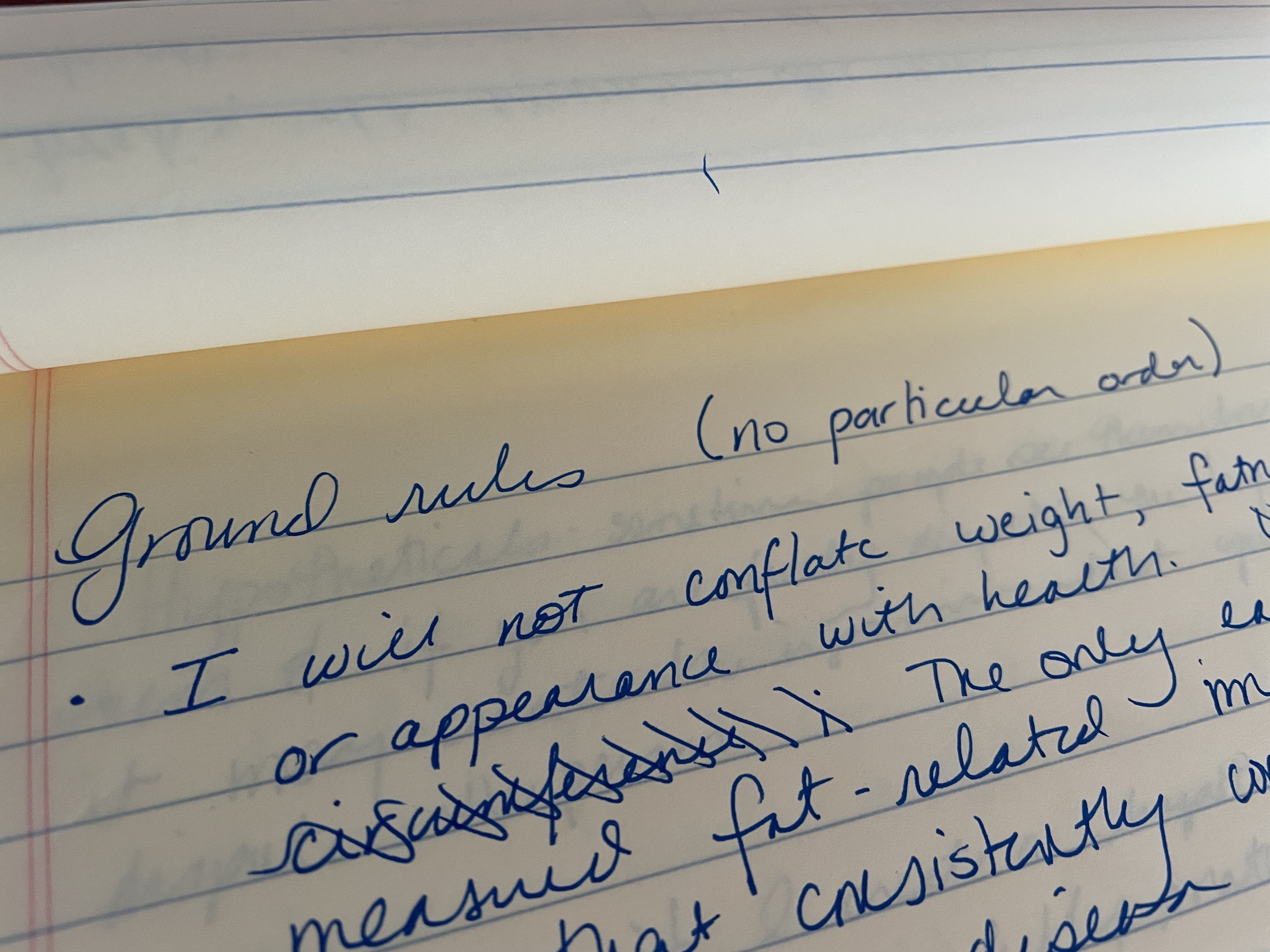
    A photograph of handwriting on paper that reads "Ground Rules."

    Ground rules.


    1.  I will not conflate weight, fatness, or appearance with health.   

    It's not just that these, as indicators of health, are poor and incomplete—though they are.   

    It also means no more blithe writing about "desire for health" as a nobler-sounding euphemism for desires to look better, be less fat, or weigh less.  Pretended concern for "health" has justified many rude and abusive people.   Let me call things what they are.

    A crucial reason to carefully acknowledge the difference:  Fat people frequently report that health care providers become fixated on fatness as the primary indicator of their health, the sole probable cause of pain or other symptoms, and the first problem that must be "fixed" before they are allowed to access other levels of care.  (See this recent commentary by Aubrey Gordon.)


    2.  I will acknowledge other biomarkers of general health that are better-supported by evidence.  

    Anyone can self-assess the time they spend physically active, the number of alcoholic drinks they have per week, the hours they sleep, the number of fruit/vegetable portions they are able to serve themselves each day.   These behavior-based markers are much more often under an individual's direct control (although the range of available choice varies).  Hydration can be assessed by checking if the urine is consistently a pale yellow color.  Blood pressure,  lipid panels, and blood glucose testing are accessible to those who can afford at least annual basic preventive care.   

    As for body-size-related markers of general health, my understanding is that neither body-fat percentage, nor weight, nor BMI work well at all as a predictor of eventual development of cardiovascular or metabolic disease.  The one exception may be waist circumference.   If I find myself casting about for a NUMBER, perhaps that one will work; otherwise, maybe I need to write something else.

    (Two examples of papers with this finding; two examples don't substitute for a careful literature review, of course.  Note that adjusting the results for BMI does appear to improve the correlation.  This is possibly because it brings in a dependence of height; naturally short stature is itself an attribute that raises the risk of developing these diseases.)    


    3.  I am not a fitness professional.  I am not a health care provider.  I am not a registered dietician.

    I have my own experience.  I have scientific training; it is not in this field, but I have good scientific literacy and am able to assess the general usefulness of papers and applicability of research.   I know where to go for more information, and I know how to identify the difference between a broad scientific consensus and a matter with competing viable theories.   I also know how to take a piece of popular science writing and pick it apart, if I want to, or use it for entertainment purposes, if I want to do that instead.  All these mean that I can form an educated and reasonable opinion (you will not catch me scoffing about "Dr. Google," any more than I would scoff at public access to medical libraries), and I can write commentary about it if I like.  These are not, however, substitutes for authority.  I'm an educated amateur, not an expert in any of these areas, and I have an academic responsibility to remain clear about that to anyone who stumbles across my blog.

    (This isn't a ground rule about which I really needed a reminder.  I try hard to live by it anyway.  But I thought it worth mentioning for completeness.)


    4.  No biomarker, and few health-related behaviors, imply a specific moral conclusion.

    Yeah, I know myself (imperfectly).   I might be able to tell you when I've made a poor choice, or developed a poor habit, or experienced a consequence, for lack of some virtue.   I know where I have agency, and I have some ideas where my agency has been damaged by circumstances.  I don't know that about others.  I can't speak for everyone else.

    Assumptions about real people are tricky at best, and at worst they are outright bad and harmful.

    Moreover, the following ought to go without saying:  there are no bad foods, there are no bad bodies, there is no such thing as cheating.  There is room for rest, and room for feasting, and room for fun, and no one else gets to tell you how much; there is room for you.


    5.  Nevertheless, I'll stand by this:  morality, theology, charity, the philosophy of the human person, the demands of justice, aren't off limits here.

    Nothing that human beings do or decide is untouched by the disciplines and philosophy of my faith tradition, and there aren't many traditions that pretend otherwise for themselves.    I hope to explore them in a way that doesn't violate the very principles I'm seeking to understand.  I'm not certain that I can, but I hope to.  

    It is good to use appropriate self-discipline to strengthen virtue.  It is good to consider how to use resources prudently.  It is good to exercise detachment from outcomes.  At the same time, discipline is personal, resources are personal, outcomes are definitely personal.  So I need to take care:  if I write about my discipline and my resources, I need to make clear that they are mine and no one else's.


    6.  I will be explicit about the limits of hypothetical situations and imaginary characters.  

    Ah, the hypothetical situation.  Much maligned for good reason, sometimes useful for illustration, always a bit tricky in their execution.

    I love hypotheticals, but I must be more careful with them.  It is tempting to think that if I think up a hypothetical situation, decorate it with only those details that seem to me significant, and imagining human-like actors, I can treat it as my very own creature of pure reason.   Since it is mine, I can manipulate as I please and  judge with omniscience. 

    In one sense it's true, I can do that.  But real human readers have a tendency to see in these hypothetical characters someone "like" themselves, or perhaps real people they know.  And I am not allowed to manipulate or to judge the real person based on my fan-fic. 

    Even if I think up a hypothetical, and along comes a real person who embodies the imaginary one in every detail I created, I can't use my reason to reach deductive conclusions about the real person.   Why not?  After all, the hypothetical (in this hypothesis) is perfectly matched!  Well, the real human may possess every detail of my hypothetical, but the hypothetical on which I exercised my reason could not possibly possess every detail of the human.   Humans possess an infinite detail and and an infinite worth, far beyond the scope of any model problem.   So watch it.

    Once again.  Watch out when you are tempted to make assumptions about real people.


    7.  If I write about specific activities, I'll make room for modifications for different bodies, variations that make training plans more enjoyable, and goals unrelated to weight reduction.

    That short wish list appears in this commentary piece by Rebecca Scritchfield.


    8.  Athletic performance metrics are useful, far preferable to body-size metrics, but highly individual and unrelated to either value or virtue.

    It's probably a step in the right direction to go from "my body's value comes from its appearance" to "my body's value comes from what it can do."   But it's still wrong.

    Training is experiment, and experiment requires observation and measurement.  I can use performance metrics to evaluate whether my training is having the effect I desire.  I don't have to be clinical about everything, either:  I can celebrate when I meet the metric goals I've set, and I can express disappointment when I don't.   It's crucial not to connect the results to my value or my "good"-ness.   People do not, in fact, get what they deserve.


    9.  "Quality of life" is a universal goal, but an individual measure:  how closely reality matches a person's hopes and expectations.

    There are multiple ways of going about working for one's quality of life, too.  Much fitness writing is aimed at improving quality of life through hard work; but I also want to honor the effort to maintain quality of life in situations of increasing difficulty.  There is also the tough mirror process of re-adjusting those hopes and expectations to match an unlooked-for reality, maybe in the face of injury or illness, maybe other changes in circumstance, maybe after learning more about oneself.


    10.  The big picture of what I'm getting at:  an authentically human understanding of self-care.  

    Maybe that sounds like an overly grandiose aim.  Especially since, if history is any guide I'll probably be putting up posts like "here's what's in my gym bag these days!" and "I've discovered that it's a mistake for me to forget to eat breakfast before swimming a mile!"  I mean, some of that stuff is really just minutiae.  I might put it up because it's on my mind.

    But all the little pieces add up to a bigger picture.  

    The ground rules are here as a kind of checklist for the construction of those little pieces, so they're all align-able with the sort of big picture I want to have.  At the same time, there are questions that feel very open to me, so that I'm constructing that picture as I go along without really knowing what it will look like.  What boundaries are essential?  If vocation is about self-gift, what is the type and extent of self-investment that is appropriate for each vocation?  How do we write sensitively about practices that are health-promoting for many but not for some?   How about writing about practices that are accessible only to a few but might be interesting  to many?  How does a family distribute resources (time, effort, assets) among its members with different needs?   Can self-discipline be taught or only discovered?  What are the signs that health, wellness, even discipline has become an idol, or an obsession, and how can a person get their priorities back in order?

    + + +

    Well, this post has been many days in the making, so don't be surprised if it takes me a while to get around to the actual writing.  But it was a necessary step to unclog the  pipes, so to speak.  I hope to follow up on it soon.


  • Custodial work.

    How long before it feels normal to wander around a store looking at things, picking them up and putting them down? I went to the office supply store over the weekend, just to remind myself that I could; I bought a box of pens, a binder, a stack of legal pads, things I would need eventually if not yet.  I met a friend for coffee.    

    My city still has a mask mandate, and I am glad; the state pulled them prematurely, I think.  Why waste the opportunity to link it to a metric, like percentage of adults vaccinated, or case rate?  Why not spend a little political capital to protect folks who haven't yet been able to get vaccinated, or the permanently immunocompromised?   Why not at least stress a responsibility for the not-yet-vaccinated to keep masking a little longer?

    Well.  If we are all about personal choice now… it's an option to avoid errands in the suburbs, I suppose.  I hope that is enough for the vulnerable. 

    + + +

    I am not vulnerable; I'm now multiple weeks post-second-jab.  And yet I'm still getting used to being indoors around the unmasked.  And yes, you do still see them, even in buildings where the proprietor requires them.  Of these, I am disappointed to report, the place where I saw the most flouting of the stated rules?  Church.  On the two separate days I attended after my return, masks were ostensibly still required; the archbishop issued appeals reminding people to cover their faces for just a little longer; and yet on my first day back I was surrounded in my assigned pew-seat by people who  pulled their masks right off their faces when they sat down.

    Gross. 

    I feel physical revulsion, partly because of the clouds of aerosols that I am now hyper-aware that everyone is exhaling all the time, but also a spiritual revulsion:   because of the more acute knowledge I now have about the general regard for the sick and poor (or even for simple obedience and charity).  It's going to take me a while to get over that, probably longer than it will take for me to stop thinking about clouds of aerosols.

    + + + 

    The bright side is that if I had any compunction whatsoever about staying away all this time and never attending Mass indoors, I don't have it now.  It wasn't a safe place, and many of the people there were not safe people.  

    + + +

    But I am safer now, and I know it.   "I am trying to be brave and forgiving," wrote a vaccinated commenter on this post by Jamie, and what else is there to do but to try to do the same?  What else positive, I mean?   

     If I'm vaccinated, and if I've already made up my mind not to bring my unvaccinated children to Mass yet—and I have indeed made up my mind about that, see above re: unsafe people—the state of other people's faces is no longer actionable information.  I am not tasked with the responsibility of reportage or sampling; deciding is over, so I don't need to continue studying my surroundings; no one has asked me, "Erin, next time you go to Mass, will you look around and tell me if it looks safe?"  And anyway, "looks safe" is meaningless now.  

    So… it's time for the practice of custody of the eyes.

    + + +

    Custody of the eyes:  Take upon yourself the responsibility of not being bothered by the sight of someone else, by focusing elsewhere. 

    "Don't stare," we tell little children who are just learning that people can appear to us many different ways, sometimes startling ones.   This idea is not just for children.

    It's good for us, if we are tempted to indignance or annoyance or anger when we see someone breaking some kind of rule or norm, to mind our own business.  I'm not saying that everyone should always mind their own business.  Some people are explicitly tasked with enforcement of important rules, and occasionally charity or justice demand the intervention of bystanders.  But if it's not my job to intervene… …and there isn't any immediate harm to another person whom I could realistically protect… and if I can sense that the effect it's having on me is mainly indignance and rash judgment… yeah.  It's better to keep your eyes on your own work, and remember all your own flaws and how you would like to be judged by them were they known.

    It's often better for the other as well.  If you're suddenly aware that you stand out for some reason, and you don't need help (or help won't help) isn't it a relief when people pretend not to notice?  If you are an inexperience mother trying to get the snuffling baby latched, or the parent of a suddenly weeping toddler, or an adolescent or adult who bursts into tears in public:  averted eyes are often a blessing.  There is nothing at all offensive about a hungry baby or a toddler meltdown or an attack of overwhelming grief:  they are all parts of life.  But the fear of being shamed is real.  A lot of the things that we would like to shame each other for are not, if you knew the internal state of the person, worthy of applying shame:  and even if shame were deserved, it is rarely helpful.

    + + +

    A long time ago, I once got into an Internet discussion (not an argument, it remained friendly) with a fellow Catholic who was honestly, in the technical sense, scandalized by naked people in locker rooms. 

     I thought she was kidding at first, but no:  she thought it was a terrible breach of modesty and propriety that said something about the community of people at the pool where she had recently started to take her kids  swimming.  She was horrified that so many women and girls took off their clothes, even their underwear, where other locker room users could see them, before putting on their other clothes.  Not only that, sometimes people would walk to and from the showers without even wrapping up in a towel, and this upset her.   She would have liked if there had been signs posted forbidding nakedness in the locker areas.

    At the time, I was swimming two or three times a week at an urban YMCA, and I found this absolutely fascinating.  What on earth did she think the locker room was for?  

    I asked what she thought people ought to do, and she answered that they should change in the curtained changing stalls. 

    Hmm.  "What if the curtained changing stalls are all full?" I asked, and she said that the proper thing to do under those circumstances was either to wait, or perhaps to change in the toilet stalls.

    A little more querying and I learned that she had not, in her life, spent a lot of time in a variety of different locker rooms, and the ones that she had spent time in were large and comfortable ones with an abundance of individual curtained changing stalls and separate curtained showers.  Consequently, the culture in those gyms, at least in the women's and girls' locker rooms, it would have seemed gratuitously exhibitionist to change out in the open among the lockers.  You could always wait just a few minutes for one to open up, and if you were in a hurry, you could always lock yourself in one of the many individual toilet stalls.

    My gym is small and the locker room has zero changing stalls and only two toilets.  "How many toilet stalls are there in your gym locker room?" I asked.  "What if everybody changed in there?  Would there be any left for someone who needed to use the toilet?"  And she paused, because she had not considered this.  (Really!)  

    Sometimes you have to take responsibility for your own comfort, and extend to other people the courtesy of ignoring them.  I think locker rooms are a good example of these, and .  Clearly there isn't a uniform sense of what is and isn't proper.   If there are a limited number of private spaces available, why not leave them free for the occasional person who feels a real need for shelter from staring—there are lots of reasons why someone might, like trauma or internalized body shame or a health issue—and just offer everyone around you a modicum of privacy by keeping your eyes more or less to yourself?  

    Anyone who is tempted to annoyance, repugnance, tale-bearing, or judgmentalism might find it a useful self-discipline, beyond the locker room.

    + + +

    The practice of keeping your eyes on your own work, laudable as it may be in some circumstances, exists in tension with our role as our brother's keeper, of course.  We need to check in with each other, sometimes step in to correct or intervene or offer a hand of assistance, or seek the help of someone else appointed for the task.  And sometimes we have a special responsibility to act, though far less often than some folks seem to think they do.  I think it can be hard to know when to act and when to mind your own business, sometimes, and people can err in good faith both one way or the other.

    Still… the good faith being perhaps not sufficient, it's necessary.  So I'm going to watch out for that little voice of indignance that creeps up from time to time… and my resolution is to refuse to listen to it.  Custody of the heart comes first.


  • Branches.

    Today I am two weeks post-vaccination for COVID-19.  I went out into the back yard to take a new maskless selfie for my FB page.   

    I'll still be wearing one quite a bit for a while, indoors in public or with unvaccinated friends at least, while we all navigate through this in-between time.   I'll keep them around for when I have respiratory symptoms, for sure.   But I felt like marking the milestone some way.

    + + +

    I'm planning on going to Mass this weekend.  (How odd to be writing that sentence!)  Just me, by myself; both Mark and I feel like starting off with relatively uncrowded spaces if we can.  My solution is to go early:   I signed up to go to the 7:30 a.m. Sunday Mass at our own parish.  Mark is not such an early bird; he may try a weekday Mass first, or a smaller congregation nearer our house.    We'll probably take turns until we decide it's prudent to bring the children.   

    + + +

    Last Sunday, the Gospel—on the parish livestream—was "I am the vine, you are the branches."  It's tempting to think of returning to Mass as a sort of re-attachment, but that is stretching the metaphor too far.  I have not been utterly cut off from the vine.  I have had regular, if infrequent, access to the sacraments. I have maintained a prayer life that's maybe been even more lively, on average, than before.  I have been part of the great mass of Christians, friends and strangers, praying for one another for intentions small, large and unknown; I've studied, even co-hosted a little book group for the end of Lent and the start of Easter. 

    I'm still here, as are many others who always have been attached:   the tendrils of the true vine are invisible.  Did we forget?  There always, always, always have been people for whom attending Mass in person, often or ever, is imprudent or impossible.  And yet they are infused with the green life, whether we remember them or not.  Now that I've been one of them, let me not forget again.

    What will it be like to return?  Jesus is the same.  I'm changed.  Something has sharpened in me.

    + + +

    Aloneness, and media, provides a lot of opportunity for intercessory prayer.  I mean, a lot.   And I know I haven't taken all the opportunities there have been.  But… so much suffering happened over the last year-and-then-some, and so much more came to light.  A great deal of cruelty and selfishness was exposed.  And maybe more than this, a great deal of carelessness:  a kind of breaking and spilling and muddying, and wandering off without thinking, probably across the clean floor with muddy shoes, never noticing, never taking note later that someone has come by and cut themselves on the shards, and a someone else has come by and cleaned up the mess.  Unintentional, to be sure.  But somewhere there's a willfulness not to look behind you.  And when you really see that carelessness, the carelessness of people who do not seem to see how careless they are (and yet… how could it not be obvious?) you realize that yes, you also must have been this careless, at least a little, and how often?  How would you know how many messes you have made when it is someone else's role to clean them up?

    So, a lot of penitential prayer as well.

    + + +

    MrsDarwin and I hosted, as I mentioned, a brief book club on Robert Hugh Benson's The Friendship of Christ.  (Buy her edited, prefaced, and newly-typeset paperback edition here.) It was a good book for a strange time.  Different people got different things out of it, for sure.  Here's what it did to me:  I opened it thinking "Perhaps this will tell me how to get closer to Jesus," and found that—for me—it really has been a matter of appreciating how close He has come to me already.  I mean, He's right there.  All the time.  No, really, right there.  Right here.   

    Even things that I thought were a way of holding Him at a distance are means by which He comes very, very close.   I know that more than I did before, and really believe it.  

    + + +

    All of a sudden, I started to find anything that smacks of purity….

    UNBELIEVABLY tiresome.  

    I don't mean the virtues that include the term "purity," although the word used all by itself, well, its attributes should be broken up and assigned to other virtues.  Ninety percent of the time when Catholics start talking about the virtue of purity,  they are really just trying to avoid speaking frankly about sex, and it drives me up the wall.   No, I mean purity like… this fear of contamination?  This fear of going out to the margins, of exploring the distinctions, of making contact?

    I've been a practicing, communing Catholic since I was eighteen.  I had to figure out the culture gradually, as a sort of teenage immigrant to it.  Am still figuring it out, as I continue to encounter the astonishing diversity of thought and experiences that makes it up, has made it up, across the centuries and nations, so that it's more like cultures than culture.   And I'm sure a lot of my memories of the process of figuring it out have been colored by all kinds of cognitive biases.  I started out with a longing to belong, trying to understand what it meant to be part of a larger community of believers, and trying out the different kinds of "belonging" that there are.  We do things this way here.  If you are Catholic, you will be a certain way.  I have tried to do things this way, and that way, and other ways, to see which ways fit, to see how to belong.  

    But all belonging means a definition of "self" and "others"—of "us" and "them—and more and more I am convinced that the "us" and "them" is and always has been an illusion.  There are ridiculous "us/them"s within the Church as well.  But it isn't real.   There is no us and them, there is only everybody:   trying or not trying, or trying to some degree, to align themselves with the way and the truth and the life, which presses us invisibly from all around.  Our job is to align ourselves and in so doing, strengthen the field, so to speak, and just doing that for real helps align others.  

    Be not conformed to this world: but be ye transformed by the renewing of your mind.

    Yes, yes, baptism is real and a maker of an "us," but nobody is excluded from it in principle; it's a difference in marking, not an essence.  We need collective humility, very badly.  We could use a little less fear that the Church will come crashing down if we have frank conversations with the wrong kind of people.   We could use a little less fear of doing love wrong by sending the wrong message.   We could use a little less gatekeeping; the gates will not prevail, after all, no?   Caretakers of the deposit of faith have been provided for us, thank God:  but lately I've become very aware of the large number of, shall we say, volunteers who have decided it is their job to staff the gates.

    The pandemic found me doing a lot of "well, if I was in charge I'd do things a lot differently" and at one point it occurred to me that I am not in charge, and I didn't really want to be.  In fact I'm not in charge of anyone, with the possible exception of my own children, and there are signifcant limits to that.   I am my brother's keeper, but not his gatekeeper.  

    + + +

    When I come back, I come back changed.  I come back more aware of a certain awarelessness that will probably follow me my whole life.  I come back more aware of the closeness of Jesus.  I come back tired of separations.   I love orthodoxy, orthopraxy, and always have; I've often felt a little ashamed of that, from the pressure of the personal-relationship-with-Jesus crowd; but I've learned that these are not things that stand between us and that relationship; they are a way He befriends us.  What has sharpened for me is a new desire for a Jesus-first orthodoxy, a Jesus-centered orthopraxy.   I come back seeking to strengthen it.

    Jesus the true vine-thumb-300x367-11630


  • The Friendship of Christ, 12.VII: “Father, into Your hands I commend my spirit”

    This is part of a read-along hosted by myself and MrsDarwin of DarwinCatholic

    The main page is here.  

    MrsDarwin's biographical sketch of the author, Robert Hugh Benson, is here.

    My introductory post is here.

    + + +

    And now we come to the last of the Seven Last Words from the Cross.    Benson takes “Father, into your hands I commend my Spirit” as a reflection upon the concept of the peace of Christ.  For the death of Christ is one picture of the Peace of Christ:  something to remember, when we at Mass hear the words “The peace of Christ be with you”; something to remember when, at every Mass, it comes time to sing Dona nobis pacem.  Dona nobis mortem tuumhas not the same ring, and would be an incomplete notion of that Peace, but it is surely part thereof.

    In the meditation upon peace, Benson pauses to warn us against Quietism, a class of heresy that I had to look up to be sure of.  Do read up on it yourself; I will summarize it as a sort of extreme end of a spectrum, one with a boundary that is to my eyes blurry:  where Abandonment to Divine Providence slips into a denial of agency whatsoever, where contemplation and striving for interior holiness precludes the possibility of good and holy acts. 

    On the contrary! Interior peace, says Benson, is a prerequisite to the accomplishment of the objects of good acts; the attainment of interior peace is a signal that we are empowered to do good, not a signal that to do good is no longer required of us.

    I believe what he has to say, but I think there must be more to it:  for I experience this message as somewhat paralyzing.  I do not possess interior peace, certainly not permanently; maybe just “not yet”; maybe I achieve it intermittently at best.  Anyway, whatever piece of the Peace of Christ I come to is imperfect and fleeting.  Does that mean that my activities are pointless, fruitless?  Ought I suspend activity (beyond what I’m clearly required to do as responses to my state of life) and concentrate my efforts on interior reform, or  maybe wait and pray until I find myself transformed?  Or is there sort of a oscillation, a learning from experience, regret and repentance giving way to renewal? 

    I can’t count the times I have overstepped my competence, gotten ahead of my skis, and face-planted, trying to “do” Christianity.  Drawing back from that, contemplating more, competence/competing less, is the correction I have sought for the last few years.  And so I am grateful for Benson’s caution against Quietism, because I can easily see myself overcorrecting.  What I call retreating to seek Christ’s peace within might easily slide into avoidant behavior: fear of conflict, of discomfort, of making mistakes.  Still, not every conflict is specifically mine to take up.  We have to discern.

    + + +

    Besides the death of Christ itself, the Peace of Christ is (says Benson) “a Peace… which, unlike other satisfying emotions, is wholly independent of external things.”

    This immediately put me in mind of the Beatitude:  “Blessed are the meek” (in most English translations), “for they shall inherit the Earth.”  Here I have to apologize a bit in advance, for this is my favorite rant about Scripture translating:  I contend that English “meek” needs updating.  I am insufficiently expert to know exactly what’s the correct term, but the word in Bibles of other modern European languages connote not quite so much a  submission or submerging of the self, but a serene sailing, Benson’s “bird poised in the air”:  unruffled-ness, undisturbable, a “perfect response” to the currents and eddies that arrive.  Perhaps “mild” is a good updated English word, something with connotations of pleasant weather and of unbitter fruit.  Now, when I read the Beatitudes,  having once come to that bit in the Louis Segond: “Heureux les débonnaires” (literally de bon air, a weather metaphor), the image that leaps to mind is the storm-panicked disciples, and Christ stilling the waves.

    The Peace of Christ is something undisturbable from the outside.  And yet, if the Peace of Christ is also in a sense the death of Christ, then it was the outside world that visited it upon Him.  Unless the death of Christ, the death we die with Him, the death of self, is exactly that serenity, the one that says always “The Lord giveth, the Lord taketh: blessed be the Lord.”

    + + +

    The Seven Last Words are words which cost the Lord dearly; He had only so many breaths before exhaustion.  Each breath (according to our understanding of the physiology of crucifixion) required effort to generate an audible utterance, generated more suffering than silence; each word a part of the perfection of His Atonement.  They are, I believe, an exemplar of poetry rather than prose:  every word counts, not a word is there that was not intended, nothing is omitted without reason.  They are his last chances as recognizable Man to shape our understanding of Himself and what He has done for us, and yet they are so brief, so clipped, so rare, so dear. 

    I think it is interesting to reflect upon each of the Seven Last Words and consider how our understanding of Christ and his Passion would be changed should he have left any of them out.

    Take “It is finished,” which Cat has meditated upon here.   Where would we be without that assurance?  What doctrine might we have developed without it, where might the Church have wandered?  And yet He left us in some ambiguity:  Consummatum est without an explicit subject.  We have had to make something of “it,” to use out collective judgment, even to debate and dispute it, apparently in accord with His penultimate earthly will.

    But I am here to reflect upon “Father, into your hands I commend my spirit.”  I could meditate on why He spoke this instead of nothing.  Instead I find myself thinking about something that—though it seems true—something he might have said, but chose not to say:  Friends, into your hands I commend my body.

    He did not say this to them, and yet, the friends did receive His body, and cared for it the way they knew, with the resources they had.  Benson:  “this Body of His is to be laid in the cool rock tomb, with wrappings of soft linen, soaked in spices and myrrh…” It was His Friends who did this for him, unasked, uncommanded.

    How difficult it is for us to notice when we have assumed something!  I have always assumed without thinking that it was His explicit will that His body be cared for, wrapped and perfumed and buried, by His friends:  that there be a tomb, that there be a stone.  The Resurrection perhaps we can take for granted.  The empty tomb itself is often identified with it.   And yet He seems not to have ordered it, not explicitly, certainly not here.  The friends perhaps had to figure out what to do with the Body of Christ without an instruction from Him. 

    Having heard His last Word, they could trust that His Spirit had been commended to the Father.   Did they know what to do next—Nicodemus, Joseph, Mary Magdalene, John, the others? Did they have interior peace about it?  They were left with the Body yet unclaimed and nothing but its physical nature, no command but that of Time:  Time which, after the darkening of the sun and the rending of the veil, somehow kept rolling forward, bringing the fall of evening, the chilling of the flesh, the approach of that singular, terrifying Sabbath, that other peace of God that “passeth all understanding.”

    Time, the Law, and Friendship.  They claimed His Body and loved it, and God took care of the rest.


  • The Friendship of Christ, Chapter 12.IV: “My God, my God, why have you abandoned me?”

    This is part of a read-along hosted by myself and MrsDarwin of DarwinCatholic

    The main page is here.  

    MrsDarwin's biographical sketch of the author, Robert Hugh Benson, is here.

    My introductory post is here.

    + + +


    For we do not have a high priest who is unable to sympathize with our weaknesses, but one who has similarly been tested in every way, yet without sin.  — Hebrews 4:15


    Let's stipulate for a moment that the frequent rephrasing of the above quote is an accurate one:  He is like us in all things but sin.

    Let's consider, too, some observations about suffering humans:  especially those whose suffering, like the crucified Christ's, comes at the hands of other humans.   

    + + +

    One thing we know is that hurt people hurt people.  An abused child often, but not always, grows up to struggle with abusive impulses, teaches others  the same lessons they were taught long ago;  a child bullied by stronger children sometimes turns and finds a weaker victim; a person neglected as a child sometimes fearfully holds back needed support; a person whose trust was broken badly once refuses to trust again.  That sort of sin is mitigated by the obscurity and darkness generated by the sins they endured in nature, as well as by the shadows passed down in human nature itself.   In one sense none of us "know what we do," and that includes people who quite deliberately do terrible things in what would seem to be full knowledge; that universal bentness of our humanity is a sort of supernatural ignorance.  But also certain abuses appear to have a partial cause from older ones, so that a person's psychology can be darkened as well as their spirit.  And of course a human culture may itself pass down twisted notions of right and wrong, which we ought to be able to see through, but do not challenge.

    When this is us, when we are hurt people who hurt people:  we are people who "know not what they do," in a sense, but who are not sinless, for Christ prayed "Father, forgive them."  

    + + +

    Another thing we know is that hurt people ask difficult questions.  Hurt people want answers, and they look for them, and demand them.  Hurt people seek to make sense out of what seems to them senseless.  They come to God, or to God's representatives on earth (whether actual or self-styled) and say:  How come God has made it so that this can happen?  I do not understand.   Can you make it make sense?  And they ask it, sometimes, in ways that are shocking or impolite or subversive, or disturbingly cutting and precise.  What's worse, sometimes none of the answers satisfy them.  And sometimes there are no good answers at all.

    Perhaps some of the time the hurt people's questioning is entangled with acting out, with hurting people, with sinning, in a way that makes us humans confuse them together, and judge the questioner imperfectly.  We do not see into hearts, after all.  But God sees.  And God made it clear by example that the questioning is not the sin.  For He himself asked the terrible question, the one we still cannot entirely make sense of, the one that we do not have a single satisfactory answer to (however many theories we deploy).  

    My God, my God, why have you abandoned me?

    He didn't simply point to an asker-of-this-question and say "Father, forgive him this asking of the terrible question."  No, he asked it himself.  He was suffering, and he asked that question that so many suffering people have asked.  He was like us, suffering, and he was without sin, and he suggested—out loud!—the absence of God, the reasonlessness of the world, the terror and darkness of a void.

    When we meet people who are asking that same question, when we find ourselves asking it too, we must remember that "He was like us in all things but sin."   When people suffer, they need to make sense of it.   When Christ suffered, he asked the question.   

    There are many ways to ask the question and to seek the answer.  It is possible to seek the answer through sin.  It is possible to first ask the question in all wounded sincerity, and then begin to seek, and for some of that seeking to be, well,a kind of wounded trying of all sorts of nature to see where it breaks. 

    About such apparent sins, we must beg forgiveness, for ourselves and ("Father, forgive them") for others.  But we must never, never condemn the question of the sufferer, for Christ, suffering abuse, uttered the question Himself.

    + + +

    Benson points out that many sufferers manage instead to avoid the question.  It's only when we expect God to be there; when we want him to be there; that we really, truly, and honestly would ask for the God who seems not to be there.   One of the reasons that the question is incomprehensible and even intolerable to us is that we "find our consolation in so much that is not God."  

    If physical comforts are wanting to us, we find refuge in mental comfort; if mental comforts are wanting, we lean upon our friends.  Or, more usually, when the higher pleasures are withdrawn, we find relief, with scarcely an effort, in lower.  When religion fails us, we console ourselves with the arts; when love or ambition disappoint us, we plunge into physical pleasures; when the body refuses to respond, we take refuge in out indomitable pride; and when that in turn crumbles to nothing, we look to suicide and hell as a more tolerable environment.  There seems no depth to which we will not go, in our passionate determination to make ourselves tolerable to ourselves.

    I would like to point out, too, that many of the God-substitutes that Benson lists here are undoubtedly good things:  the arts, friends, and the like.  Later in the same section Benson contrasts "religion" with "religiosity…a sort of professionalism"—I think that this implies that the outward actions of liturgy, the performance of piety, the reiteration of moral principles in argument and in theory, can itself be a refuge to which we flee from the terrible question whenever it rears up in our heart and threatens to enter our consciousness.   Nothing but God can be God Himself.  

    There is certainly a risk that some of us who flee in more respectable directions… to our work or to the arts or to scholarship, for example… will look down our noses at those who flee to what Benson calls "lower" pleasures.  But flight it still is.  And we should recognize it even under its respectable form.

    For Benson's point is that our model, Christ, our perfect example of man and God perfectly united, is able to ask, and is willing to ask.  The one who asks the terrible question is one who seeks truth instead of false consolation.   We mustn't be shocked by it, we mustn't try to quiet the askers.

    Above all we mustn't spout a series of answers that by their nature will ever be incomplete, and then require the asker to be satisfied or face rejection.   

    For  "the true happiness of man consists in this gradual approach to the Beatific Vision."  The terrible question, which arises almost everywhere there is suffering, has no satisfactory answers in any merely human language, and never will; it is only answered by the secure Presence and Vision at the end of all things.  

    + + +

    More reflections, on this as well as on the next Word,  by Cat here.


  • The Friendship of Christ, Chapter 12.III: “Woman, behold thy son; behold thy mother”

    This is part of a read-along hosted by myself and MrsDarwin of DarwinCatholic

    The main page is here.  

    MrsDarwin's biographical sketch of the author, Robert Hugh Benson, is here.

    My introductory post is here.

    + + + 

    This is the third section of Chapter 12, the chapter with the most detailed subdivisions.  Cat has already written about the first section and the second section; but I hope you'll forgive me for, given the chance to begin here, taking a moment to reflect on the structure of Chapter 12 and its placement within the book first.  For one of my ways into this devotional is through the framework on which Benson has decided to hang it.

    Writers and readers who like a logical structure (ahem) also tend to like symmetry and parallelism.  We like the Rule of Three.  We like a book to be divided up into chapters that are approximately of equal length.  We like the outline of the main points and supporting points to be regular:  

    I.

    A.

      1. ..
      2. ..
      3. ..

    B.

      1. ..
      2. ..
      3. ..

    …and so on, with the narrator descending stepwise in each section and subsection to approximately the same depth before rising up again, clearing their authoritative  throat, and beginning again with a new part.

    Benson mostly does this; the other chapters in the book are all similarly long and similarly detailed; but he has not done this with Chapter 12.  This chapter is ruled not by Three, but by Seven:  the centuries-old devotion of the Seven Last Words (though it is also called the devotion of the Three Hours).  And so Chapter 12 is considerably longer, Benson having delved into each Word via a handful of reflections as if it were a chapter of its own, but having organized them all into one stretch of time on Calvary.

    This is a remarkable renovation of the devotion, to consider it anew in its specific sense as an expression of Christ's friendship with us.  And in another sense it is unremarkable, because that is what we do (or at least what we can do) every time we sincerely pick up the smooth-worn popular devotions of our Faith:  find something new and specific in them that opens something inside us, whether it's a piercing for a tiny beam of light or a door to a whole new realm.

    + + +

    Of course, the decision to make the Crucifixion chapter stick out more than the others is not unreasonable, given our conviction that the Cross is the pin or axle around which all of history turns; so the irregularity is a bit of a key to understanding where the importance lies.  It is unexpected, and so it helps point us to something greater.

    There is an unexpected asymmetry within this chapter as well, or perhaps it is a symmetry-that-is-not-quite-a-symmetry.  

    We often see odd backwards-reflections when we contemplate Mary.  She also sticks out of history, or fails to fit into it in the tidy way that we orderly people expect; she is also a kind of turning-point, a protrusion from the world.  We call her Mary, Undoer of Knots: she possesses a symmetry that does not repeat itself, but the kind that runs the ends of the great human tangle backward through themselves until the knot comes free.  We call her the New Eve:  not because she is a repetition of Eden's woman created without sin, but because she is a renewal of her.   We contemplate the Heart of Mary and the Heart of her Son, caught in the paradox that though the Creator precedes all His Created in the order of eternity, the Immaculate Heart has preceded the Sacred Heart in the order of time and creation where they both came into being.  

    Jesus speaks, apparently symmetrically, to Mary and John at the foot of the cross.  "Woman: behold your son.  Behold your mother."  He gives them to each other.   This event is rich in meaning for us, and I cannot possibly scratch the surface of it here, except to say that it would be a mistake to seize on just one of the possible ways of seeing it, whatever appeals to us most, or whatever we most recently heard with the ring of conviction.

    Benson, I am sure, is not giving us a sole way to interpret this word when he structures his chapter to highlight its meaning as part of our Friendship with Christ.   This word from our Friend functions as a command to draw nearer to each other, to give an attribute to our common bond with our neighbors, our fellow Christians, our fellow human beings.     That bond is a bond of adoption and a bond of blood both, the blood being Christ's.

    The symmetry-asymmetry comes from the fact that we might be tempted to see the proto-bond between us and our fellows as represented by the gift-of-each-other that Christ commands from the Cross to Mary and to the beloved disciple.  As Mary is united to John, we might think, so we are united to one another in Christ.  But a careful examining of the chapter shows that it is not so (or at least, not only so).  The symmetry is really a complementarity. 

    Scripture itself notes:  After Mary and John receive the words, the disciple takes her into his home; she becomes his Mother and he his Son; and this is not and has never been a symmetrical relationship, not in the patriarchal society of the Middle East under the Roman Empire, not today.   If our bond is a bond of adoption and blood, then we here together are siblings in Christ, united with him not just by a simple Friendship, but by a shared bond with his very own Mother.   Let us take her each one into our home, cherish her, listen to her, love her and live with her together.