bearing blog


bear – ing n 1  the manner in which one comports oneself;  2  the act, power, or time of bringing forth offspring or fruit; 3 a machine part in which another part turns [a journal ~];  pl comprehension of one’s position, environment, or situation;   5  the act of moving while supporting the weight of something [the ~ of the cross].


  • A Good Friday sermon, but good for Easter Week too, as we approach the feast of Divine Mercy next Sunday.

    St. John Chrysostom preached this Good Friday sermon in the 4th century AD.   It's always been one of my favorite passages from the year's Office of Readings.  I especially like the concise catechesis on the single sentence:  "There flowed from his side water and blood."

        If we wish to understand the power of Christ’s blood, we should go back to the ancient account of its prefiguration in Egypt. “Sacrifice a lamb without blemish,” commanded Moses, “and sprinkle its blood on your doors.” If we were to ask him what he meant, and how the blood of an irrational beast could possibly save men endowed with reason, his answer would be that the saving power lies not in the blood itself, but in the fact that it is a sign of the Lord’s blood. In those days, when the destroying angel saw the blood on the doors he did not dare to enter, so how much less will the devil approach now when he sees, not that figurative blood on the doors, but the true blood on the lips of believers, the doors of the temple of Christ.


      If you desire further proof of the power of this blood, remember where it came from, how it ran down from the cross, flowing from the Master’s side. The gospel records that when Christ was dead, but still hung on the cross, a soldier came and pierced his side with a lance and immediately there poured out water and blood. Now the water was a symbol of baptism and the blood, of the holy eucharist. The soldier pierced the Lord’s side, he breached the wall of the sacred temple, and I have found the treasure and made it my own. So also with the lamb: the Jews sacrificed the victim and I have been saved by it.


      “There flowed from his side water and blood.” Beloved, do not pass over this mystery without thought; it has yet another hidden meaning, which I will explain to you. I said that water and blood symbolised baptism and the holy eucharist. From these two sacraments the Church is born: from baptism, “the cleansing water that gives rebirth and renewal through the Holy Spirit,” and from the holy eucharist. Since the symbols of baptism and the Eucharist flowed from his side, it was from his side that Christ fashioned the Church, as he had fashioned Eve from the side of Adam Moses gives a hint of this when he tells the story of the first man and makes him exclaim: “Bone from my bones and flesh from my flesh!” As God then took a rib from Adam’s side to fashion a woman, so Christ has given us blood and water from his side to fashion the Church. God took the rib when Adam was in a deep sleep, and in the same way Christ gave us the blood and the water after his own death.


      Do you understand, then, how Christ has united his bride to himself and what food he gives us all to eat? By one and the same food we are both brought into being and nourished. As a woman nourishes her child with her own blood and milk, so does Christ unceasingly nourish with his own blood those to whom he himself has given life.

    It's what I plan to meditate upon this coming week.


  • The final form of the basic recipe: Whole wheat bread from a machine, with soaked flour.

    (Other posts on soaked-flour recipes in the bread machine: 

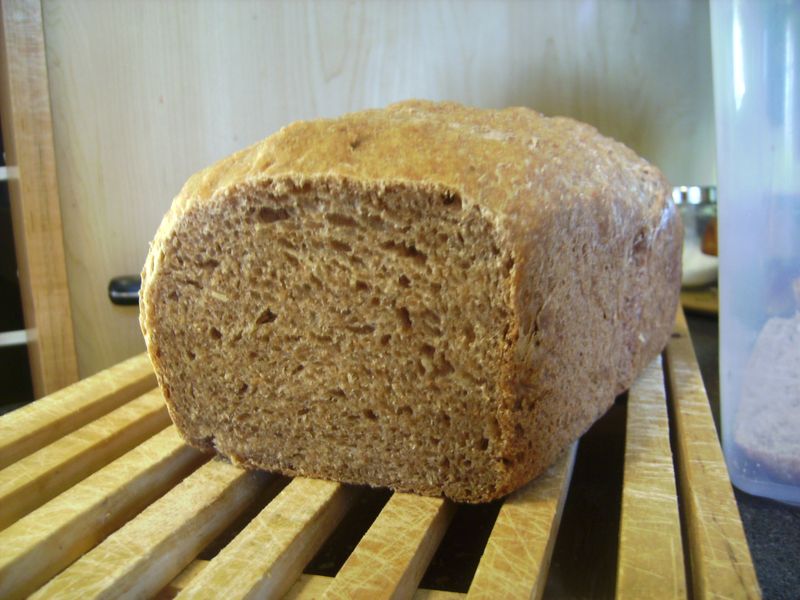
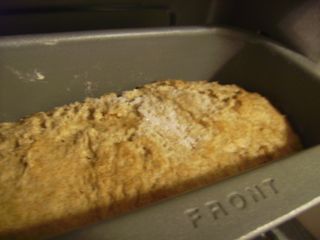
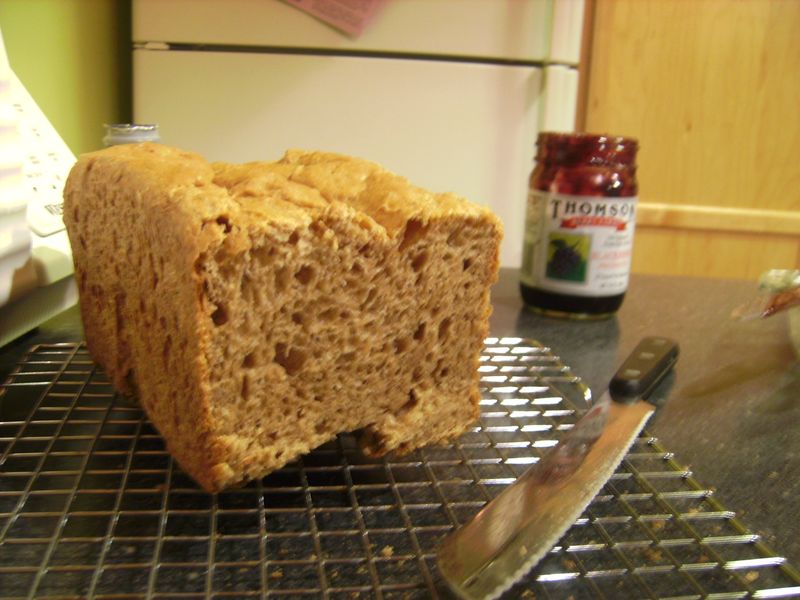
    Results of the no-added-gluten bread with 3/4 tsp, rather than 1/2 tsp, of yeast:

    Not quite perfection (the top is kind of gnarly), but the right amount of rise and a good texture.

    SANY0855

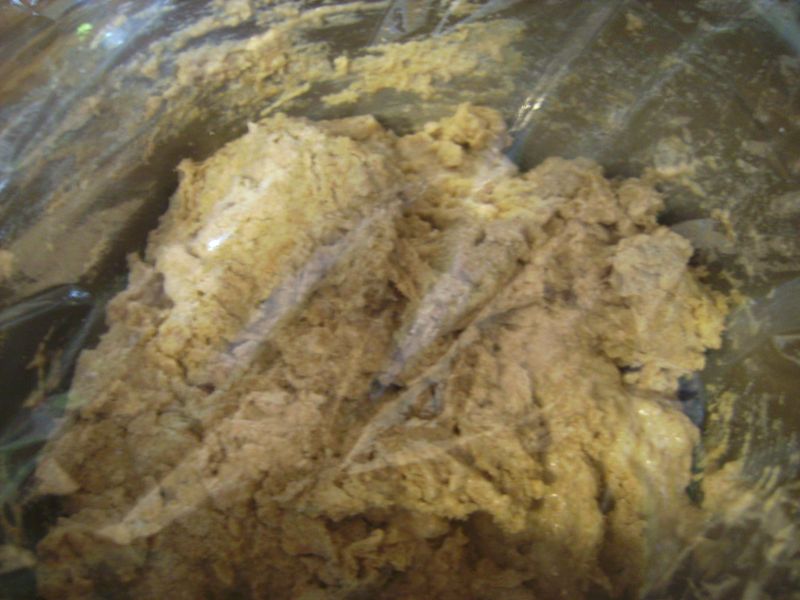
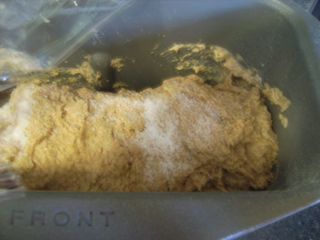
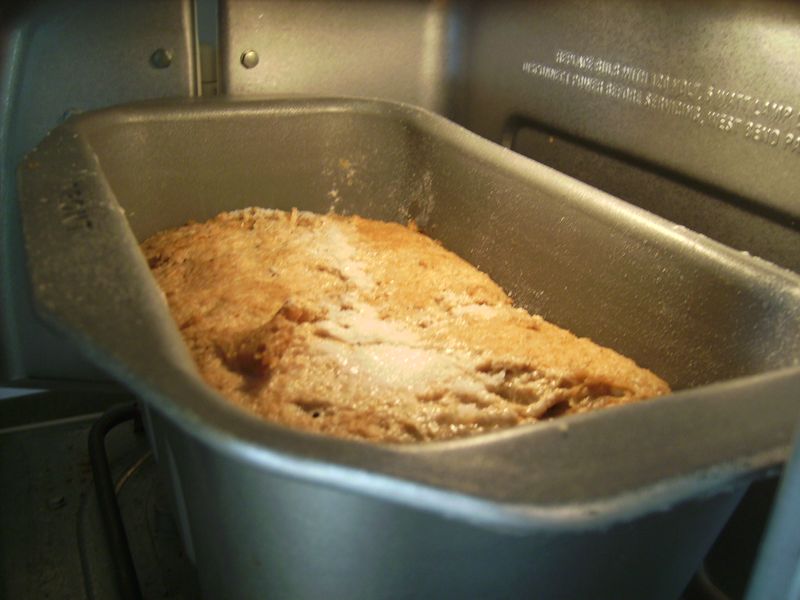
    Here it is soaking and rising in the pan before the machine came on:

    SANY0853

    So, to sum up, I started with a recipe for "buttermilk whole wheat bread" in the bread machine.  Here's how I adapted the recipe for soaking:

    • Left out the added wheat gluten 
    • Halved the yeast 
    • Reserved the salt and added it to the top of the dough after mixing  

    And here's the procedure I used with my bread machine:

    • Added to the bread pan 1 and 1/2 cups whole milk soured with 1 and 1/2 Tbsp white vinegar; 2 Tbsp coconut oil; 3 cups whole wheat flour; 1 and 1/2 Tbsp sugar; 3/4 tsp bread machine yeast
    • Locked the pan on the machine, set it on "quick bread," and allowed it to mix the dough.  Stopped the machine after the bread was mixed, when the machine entered the BAKE cycle. 
    • Sprinkled 1 tsp salt on top of the dough. 
    • Set the machine to "whole wheat" and set the timer such that the machine would not come on until the dough had rested and risen at least 8 hours in the pan. 

     The next thing I'll try to do is adapt my family's favorite recipes to this method. 


  • Seder.

    Our pastor's homily for the Mass of the Lord's Supper (Holy Thursday — my favorite Mass of the year) told me something I didn't know.  "There are traditionally four cups of wine drunk at the Passover meal," he said, "and the one you drink when you break the bread, the one described in John's Gospel when Jesus institutes the Eucharist, is the third of the four cups."  He went on to point out that Jesus makes a point of telling his disciples he isn't going to have the fourth cup that evening.  So they leave the upper room with the Passover meal incomplete.  This Passover celebration must include the Cross.

    I realized I actually didn't know that much about the Passover Seder.  I found theWikipedia entry enlightening, and I suppose there must be even better resources out there.  But if you know nothing about how the Passover meal is traditionally celebrated, it will surely help place in context the descriptions that appear in the various places in the New Testament.  Such as the breaking of the bread:

    At the head of the table is a Seder Plate containing various symbolic foods that will be eaten or pointed out during the course of the Seder. Placed nearby is a plate with three matzot [unleavened breads]….The three matzot…are connected to the three Patriarchs, Abraham, Isaac, and Jacob…

    The middle of the matzot on the Seder Plate is broken in two. The larger piece is hidden, to be used later as the afikoman, the "dessert" after the meal. The smaller piece is returned to its place between the other two matzos.

    Huh, the second of three breads is broken and part of it returns to the other two while the other part is hidden.  It's not hard to imagine how deeply the story resonated with those early Christians who had taken the message of Passover in with their mother's milk.


  • Same bread with sugar, but without gluten.

    Last time I left the sugar out of my low-yeast, long-soak-and-rise bread machine bread.  The results were pretty good.  This time I kept the sugar and left out the added gluten.

    SANY0852

    Both loaves — the one without sugar and the one without gluten — baked up to a similar texture, with a similar flavor.  They're both a little short, but they still have a wonderfully soft texture — I guess that's the soaking.  

    I think I will continue to put sugar in my bread, because we are all very fond of honey-oatmeal bread and molasses-rye bread.  If I always put some kind of sugar in the bread, then I'll get more-or-less consistent results, I guess.  But I think I will perhaps stop putting gluten in soaked bread recipes.

    I wonder, now, if I can get the loaf to rise a little higher (even without added gluten) if I add just a bit more yeast.  I think that will be the next experimental bread.  

  • Results of the no-added-sugar, soaked bread from the machine.

    So last time I took the sugar out and let the bread rise slowly while it soaked.  Here it is, all baked up:

    SANY0848

    The loaf is a little bit short but has a nice crumb and a good flavor.  I think that without sugar, one needs a little bit more yeast.  Something else to try.

    Since I ran out of gluten yesterday, though, I already know what experiment to run next…

  • What counts as “homemade?”

    Kind of a funny discussion over at Faith and Family Live.

    Eventually I decided that homemade food is more of a continuum than a single standard.


    For instance, many people would say that my enchiladas are not homemade because I use canned sauce.  What if I made my own sauce?  Would my enchiladas be homemade then?  But I could be making my own tortillas and my own cheese.  I could be cooking chickens raised in my backyard.  I could be growing and grinding my own corn for the tortillas!


    It seems that the line between “homemade” and “not homemade” is somewhat arbitrary, and different people draw it in different places.


    I, personally, like to take the approach of giving the cook the most credit possible.  I think that as long as you’re buying ingredients rather than the pre-made entire food item, you can call it homemade.


    So, in my mind: if you buy a cake it’s not homemade.  But if you make a cake from a box you can call it homemade (although you can’t call the frosting homemade if it’s from a can).  Pasta salad in a container from the deli is not homemade.  But if you cook some pasta and add bottled salad dressing, voila!  Homemade pasta salad.


    See the comments at the link for discussion.

    I have long disagreed with my friend Chris, a wonderful cook, about what sorts of things constitute "cheating" on so-called homemade stuff in the kitchen.  Let's say that Chris and I were both planning to prepare a dish of spiced bean tostadas, with guacamole.  Chris would tell me I was cheating on the beans:  I often use canned beans, but he nearly always cooks beans from dry.  I would say Chris was cheating with packaged tostada shells; I always use fresh, home-fried corn tortillas when we make tostadas. 

    Convenience "ingredients" I don't typically buy:  prepared spaghetti sauce, baking mixes of any kind, premade dough products, instant anything (except pudding). 

    Convenience ingredients I do use frequently:  canned tomatoes, beans, chili beans, and refried beans; Pace salsa; bottled Asian sauces; canned tuna and sardines and kippers and anchovies; frozen vegetables and fruit; box dried pasta.   Crackers.  Cans of soup for quick kid-lunches.

    I sort of split the difference on some things.  I keep canned enchilada sauce and canned chicken broth around for when I run out of time and homemade stock.  I make my own yogurt, but I usually have store yogurt too because I'm always forgetting to save some yogurt back for the starter. 

    There's a lot of stuff I keep around only because I feed 10 children on a regular basis.  The aforementioned instant pudding is very useful for finishing off extra milk, as is Ovaltine (Chocolate Malt Flavor).  There is a special corner of my pantry devoted to crackers, applesauce, fruit cocktail, pretzels, granola bars, and boxes of instant pudding, so when it's my turn to provide "tea snack" for everyone I can just grab a couple of things and go.  

    For some reason, I feel totally fine about instant pudding, but horribly guilty about feeding my family spaghetti sauce from a jar or brownies from a mix!   

  • Tweaking the bread-machine soaking recipe: No added sugar.

    I decided I really liked the soak-in-the-pan, low-yeast method, so I'm going to begin tweaking the basic recipe to see how the final result is changed.  

    The first thing I'm going to try is leaving out the added sugar, seeing how well the yeast performs without it.  So today's recipe is as follows:

    Whole-Wheat "Buttermilk" Bread

    1 and 1/2 cups whole milk, soured with 1 and 1/2 Tbsp white vinegar
    2 Tbsp coconut oil
    3 cups whole wheat flour
    1/2 tsp bread machine yeast
    1 and 1/2 Tbsp wheat gluten
    1 tsp salt

    Add soured milk, coconut oil, flour, and yeast to bread pan.  Mix 5 minutes on quick-bread cycle.  Stop the machine.  Sprinkle salt and gluten on top of the dough.  Set timer so that dough soaks at least 7 hours before machine comes on.


    I set up the machine about 3 p.m. and it will come on around 3 in the morning, so this loaf will get about 12 hours soaking time.  (Why's the gluten on top and not mixed in?  Simple, I forgot to add it till after mixing.  I don't think it will matter much.)

    Look for an update to this post with a photo, tomorrow morning.


  • Transition plans: Induced exercise #20.

    (Parts 1 2 3 5 6  7  8   10 11  12 13  14 15  16 17 18 and 19)

    Here's what I wrote a few days ago about transition plans:

    But even though the main plan needs to be simple, it also has to be ready for changes, expected and unexpected.  That's what the backup plan and the transition plan are for:  to keep your induced exercise from falling through when your circumstances change.   If they are to work, they (and you) must be ready before you need them….


    Transition plans are necessary when your vision for your induced exercise has "seasons" — traditional climate-based seasons ("I cross-country ski in the winter and bike in the summer") or life-change-based seasons ("I run and lift weights most of the time, but when I'm pregnant I prefer yoga and swimming") or a season of recovery ("I'm walking right now but when my knees get better I'm going to start running").  

    The transition plan prepares you for the change in seasons.  It helps you make a smooth transition between them so you're not caught off guard with the sudden failure of your workout plan (e.g., all the snow melts overnight and though your skis are still ready to go, your bike is in pieces in the garage!)  The primary goal of the transition plan is to maintain your discipline and your athletic identity as you cross from one season to another.

    If your exercise program involves a change of activities with the seasons, the kind of transition plan you need depends on the way your "seasons" fit together.  

     Consider the activity for your current season, and the activity you plan for the next season.  

    • Are they completely voluntary, so that you could choose to change from one season's activity to another at any time, or you could choose not to change?  (Example.  You like to bike in the summer and run in the winter, but you live in a climate where both are possible year round.)

    • Is there overlap, so that you move from the season in which only one activity is possible, to a time period in which you can do either, to the season in which only the other activity is possible?  (Example.  You run outdoors in the summer, and you pay for a gym membership half the year so you can swim in the winter.  In late fall and early spring, the weather is nice enough to run but your pool membership is also active.)
    • Is there an abrupt change expected, so that one day you will be able to engage in the first activity, and the next you must cease the first activity and begin the second?  (Example:  You golf at a course that will close for the season on a definite date; or you're swimming during pregnancy and you expect to start walking with the baby in a sling right after birth.) 
    • Or is there a gap, so that you move from the season of one activity to a time period in which neither activity is practicable before the start of the next season?  (Example:  You bike when there's no snow, and you cross-country ski when there's lots of snow, but the spotty slush of early and late winter is no good for either.)

    The key to making the leap without missing the stride is rehearsal and readiness.

    If you can, during this season you should occasionally substitute a rehearsal, a workout of your next season's activity.  Let's say you plan to bike in the summer evenings and take walks in the darker, snowier evenings of winter.   Even during the summer, every once in a while, plan to take a walk, just as you will when you're not able to bike.  Walk the route you expect to take during the winter.  Take with you the gear you expect to take in the winter (e.g., even if it's light into the night, take the flashlight and reflective clothing you'll wear for an evening).  Wearing the same clothes may be unreasonable because of the weather; however, gather that clothing and gear together and check that it's ready anyway before heading out without it.   If you notice any kinks in the routine (your kids keep stealing your flashlight; you only have one comfortable pair of walking shoes and you always have to search the house for them) you'll have time to address them before the seasons change.

    It's not a bad idea to have your next-season workout be part of your backup plan, by the way.  Maybe, for instance, you'll plan to walk any time it's raining.  That should give you some practice being ready for the change of seasons, at least if you're keeping your backup gear ready to go at a moment's notice.

    If there is significant overlap of two seasons, use that overlap time for a planned transition.  Take the example of the half-year gym membership.  As soon as the gym membership is active, but before the weather gets too cold to exercise outside, plan to change some (not all) of your workouts to the new season.  You'll be able to maintain your intensity in the activity you've been used to while you ramp up your intensity in the new activity.  And if there's any sort of kinks in the startup (you arrive at the gym for your first swim of the season and discover a big hole in your swimsuit) you won't be missing all your workouts for that week.  

    What if you have to stop one activity before the other activity starts?  Have a plan for a third activity, or else to use your backup plan, during the gap season.  If you've got a few weeks to kill between the fall of the first snow and the official opening of the cross-country ski trails, that's a great time to take an exercise class or pull out an exercise tape.  Whatever you choose, have your gear put together ahead of time so you're ready to start as soon as the first season ends, and maybe practice that transition activity a few times in advance as well.

    You can also do a sort of dress rehearsal.  Gather all your gear together and drive to the place where you will exercise next season — if you're a snowshoer, grab those winter clothes and the snowshoes and things and head to the park, even if it's 50 and sunny.  Then have a stroll or something, and go home and put the things away where you can easily get at them again when the snow starts to fall.  Or if you play racquetball Tuesday afternoons in the winter, arrange to meet your partner for a cup of coffee some Tuesday in advance of the change of seasons.  Bring your racquet and clothes (leave it in the car if you like.)

    If you're to have a smooth transition, all your gear for your next season — real and metaphorical — should be packed, ready, and waiting at the door for you to pick up the moment you know it's time to change.


  • More results…

    This time, of Experiment #4, the one where I soaked flour and sour milk for 24 h or so and then added it to the machine with sugar, yeast, salt, and gluten when I was ready to bake.   The idea behind this procedure is that I would just keep flour soaking in acidulated liquid all the time, in the fridge, and just take a lump of it out when I want to set up the bread machine.  Much like now I keep dry flour in the pantry, and scoop some out when I want to make bread. 

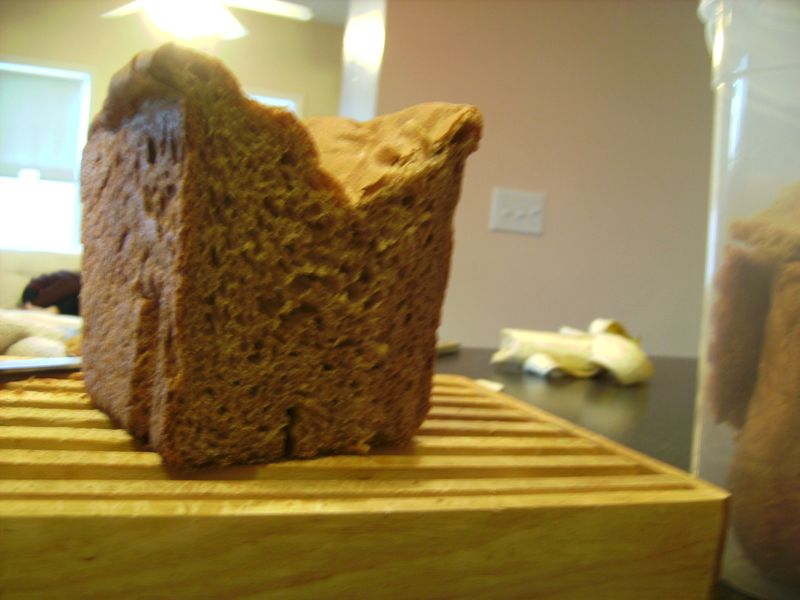
    It didn't turn out quite as nicely:

    SANY0840

    To be fair, a sudden schedule change left the bread sitting in the oven with me unable to take it out for a few hours.  Maybe it collapsed well after it was baked.  I don't know.

    It tastes fine.  But the Experiment #3 bread tastes more complex and, I don't know, warmer.  I definitely prefer it.

    This method has a couple of advantages.  The soaking flour doesn't take up the bread machine, so you can be soaking and baking at the same time.  And with the flour and liquid already mixed in, setting it up was easy, just throw a couple things into the pan….

    …almost too easy…

    **smack** (sound of my palm hitting my forehead).

    I think I left the oil out.  Maybe that's why it doesn't taste as nice.  

    Drat!  Have to repeat the experiment. 

    But first we have a lot of bread to eat.

  • Results of bread-soaking/machine experiment #3, the low-yeast slow rise. And… how would this method fit into my day?

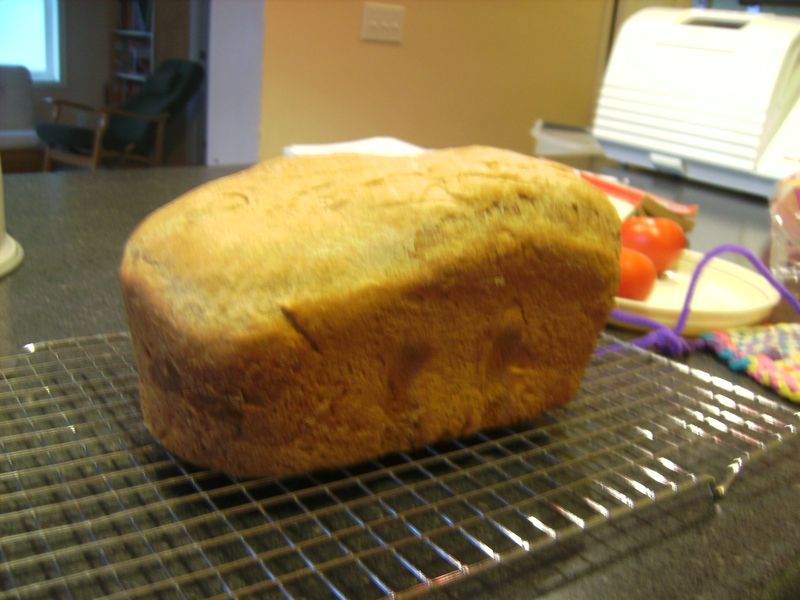
    So in my last post I told you of my experiment of making bread soaked (for something like twelve or thirteen hours) in the bread machine, all mixed up except for the salt on top, with a small amount of yeast.  Check this out:

    Oooh!
    SANY0821
    Aaah!
    SANY0837

    Mmm!  (It needs more salt, but that's the recipe, not the technique.)

    This is by far the nicest-looking, nicest-textured bread that's ever come out of my machine.  (I don't much mind gnarly tops and open crumb, so I haven't bothered to troubleshoot my recipes so they always come out perfect, nor am I usually around to check the dough condition during the knead cycle.)

    If I were to do this every day or every other day, how would that work out?  

    Well, let's see.  Suppose I want the bread to come out for breakfast:  that means the machine finishes at 6:30 a.m.  Breadmaking takes four hours, so it would come on around 2:30 in the morning.  I could set the timer no sooner than 5:30 p.m.  The minimum soaking time is 7 hours and what I tested was about 13 hours, so to get bread that's risen no more than this I'd need to mix the bread between 1:30 in the afternoon (setting the timer in the evening) and 7:30 p.m.  I could let it rise longer, beginning as soon as I got up in the morning, or as soon as I got the pan cleaned out from the previous day.

    In other words, a one-loaf-a-day, fresh-bread-at-breakfast baking schedule would look like this:

    6:30 a.m.  Take the bread out of the machine, let it cool in the pan while I start the coffee, shake it out of the pan and leave it to cool on a rack.  Fill pan with soapy water. Go upstairs to shower and dress while bread cools.

    7 a.m. Slice bread for breakfast, if desired.  Clean bread pan.

    Between 5:30 and 7:30 p.m.  Mix recipe in bread machine pan and knead for 5 minutes.  Reset bread machine.   Turn on the bread machine and set the timer to produce bread at 6:30 a.m.

    Optional longer soak:  Start the bread any time, but don't forget to set the timer in the evening!


    You bet I'm wishing I had a 24-h timer on my machine. 

    If I wanted fresh bread for dinner, I'd want the bread to come out of the oven around 5 p.m.  So the machine would come on around 1 p.m. and I could set the timer no sooner than 4 a.m.  Seven to 13 hours soaking time means mixing the bread between midnight and 6 a.m. Not gonna happen!  On the other hand, I could let it rise longer (probably — I would have to test it to be sure) and that would mean mixing the bread in the evening and setting the timer in the morning.  Do-able as long as I remember to set that timer.

    So a one-loaf-a-day, fresh-bread-for-dinner schedule would be:

    5 p.m-6:30 p.m.  Take the bread out of the machine for dinner.  Let it cool ten minutes in the pan, then shake it out of the pan and soak the bread pan.  Let bread cool 20 min before dinner.

    8 p.m. or so.  Wash the bread pan and mix the new bread.  Stick it in the machine.

    Morning.  Set the timer.

    That's not too bad either.

    We typically eat less than one loaf per day, so if I got one more bread box I could save extra and then just skip a day whenever we had too much bread.

    One disadvantage to this method is that the bread machine pan would be occupied for much of the day, which means fewer opportunities for spur-of-the-moment pizza dough or cinnamon rolls.  If I baked bread on a morning schedule, I could still use the machine to make dough for lunch, and I could decide in the afternoon to make something else for the breakfast bread.  There's also time to bake an (unsoaked) extra loaf of bread if necessary, in time for dinner!  If I baked bread on an evening schedule, lunch pizza could not happen unless I planned ahead and soaked the bread first in a separate bowl.  I suppose I could transfer the dough to a separate bowl if I suddenly decided to use the bread machine in the middle of the day.

    I'm thinking the morning schedule is a lot better.  

  • Bread-soaking/machine experiments 3 and 4.

    Since protecting the yeast with layers of dry ingredients worked so well in my two previous experiments with soaking flour in the bread machine, I decided to abandon other ideas of protecting the yeast from moisture during the soak.


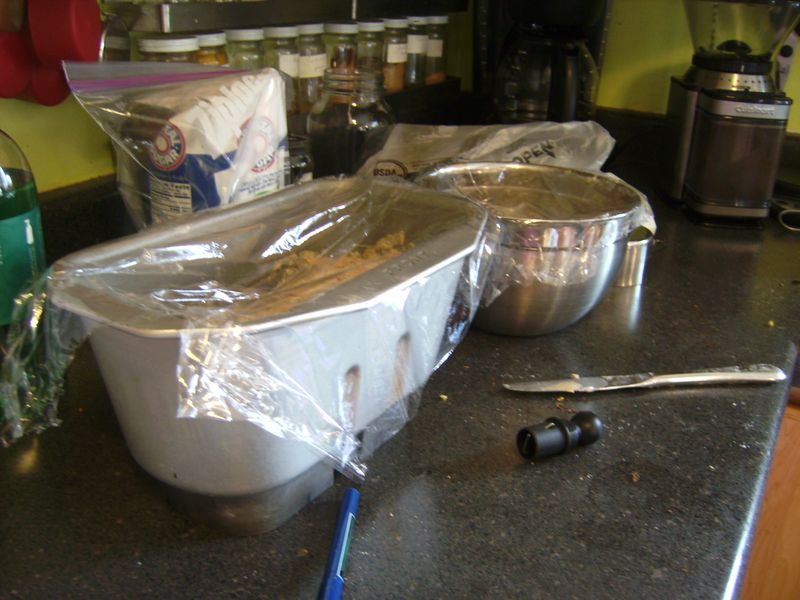
    My next two experiments are on the counter right now.


    SANY0814


    On the left, in the bread pan, we have Experiment #3, “What happens when the bread is pre-mixed with a little bit of yeast and allowed to rise slowly at room temperature while soaking?”


    On the right, in the mixing bowl, Experiment #4, “Is it more convenient to soak the flour and water separately and add it to the pan at bake time?”


    Let’s take a closer look at #3.  I modified the original recipe for whole-wheat buttermilk bread as follows:  I measured the soured milk, coconut oil, flour,  gluten, and sugar into the pan along with only one-half teaspoon of yeast.   I mixed the dough on the quick bread setting and unplugged the machine when it switched to BAKE.  Then I pulled the bread pan out and added the salt on top of the dough — I left it out of the mix so that the salt would not inhibit the reactions I’m trying to get while soaking, but I still want salt in my bread.


    SANY0816


    I debated whether I should leave the sugar out too, but in the end decided to add it because my worst-case scenario is that the yeast rises too much.  That’s worst because bread over-rising can make a mess in the breadmaker; bread under-rising just produces, well, flat bread.


    I covered the pan with plastic wrap and left it on the counter.  I’ll set the timer and stick it in the machine as soon as we get within 13 hours of breakfast.


    Now, let’s move on to Experiment #4 in the bowl:


    SANY0818


    Not much to see here.  This is just flour and soured milk, mixed in a bowl with a spoon.  It’s going to sit on my counter for a day, after which time I will transfer it to the bread pan and complete the recipe.
    I guess I should consult the official bearing blog epidemiologist to find out if I’m endangering anyone’s health here.  Since it’s ultimately going in the oven for an hour, I figured it would be okay…


    UPDATE.  About eight hours after mixing these up, #3 (the one with the small quantity of yeast) has risen appreciably in the pan.  Before and after:


    SANY0816    SANY0819


    Hmmm…

  • Results of bread-soaking experiment #2.

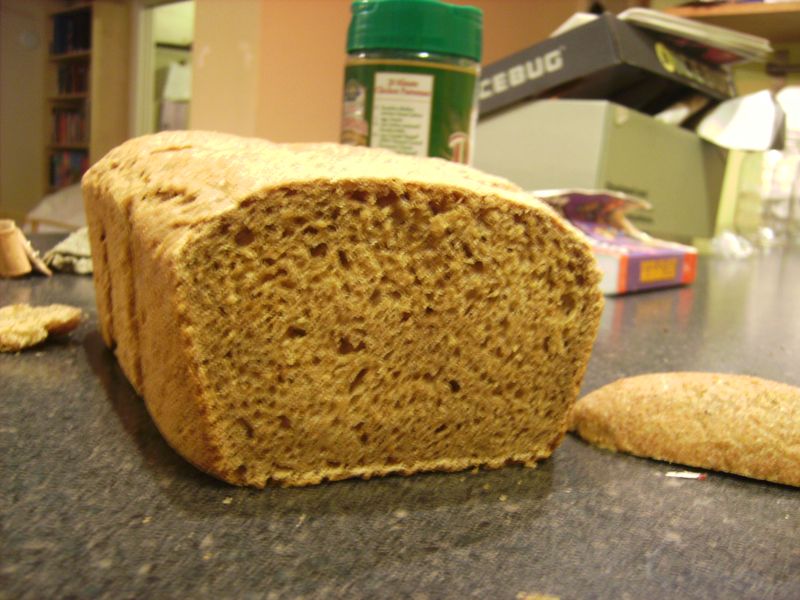
    Worked pretty well, I think:

    SANY0807

    The crumb is very open and spongy, a little more than I like in a sandwich bread (almost French-bready in texture, I think).  So there's something in the recipe that needs to be tweaked.  But the technique worked okay.  No explosions, no disasters, and the flour got to soak for 8 hours.