bearing blog


bear – ing n 1  the manner in which one comports oneself;  2  the act, power, or time of bringing forth offspring or fruit; 3 a machine part in which another part turns [a journal ~];  pl comprehension of one’s position, environment, or situation;   5  the act of moving while supporting the weight of something [the ~ of the cross].


  • Salesian spirituality: Four examples.

    Shifting gears a little bit to write about what I've been thinking as a spiritual anchor for my upcoming school year, which we'll be starting late.  

    Ever since I first got deeply into the Western classic Introduction to the Devout Life, by St. Francis de Sales, I've been reading bits here and there about the Salesian tradition of spirituality.   I've read bits about Benedictine and Dominican spirituality, thinking at first that these would appeal to me because of their intellectual foundation; but it's really the Salesian material that has spoken to my center.

    This path to devotion doesn't seem very common in my circles, and I think that's odd.  The dominant spiritual trends at my own parish appear to be those of St. Louis de Montfort, St. Josemaria Escriva, and (maybe most widespread) Carmelite; there's a Carmelite weekly study group, for instance.  

    I know that Carmelite spirituality promises a certain retreat from the world, of staying aloof from it in order to remain focused on the eternal.  St. Thérèse, the little Carmelite flower, brings it back down to earth in her "little" way of scrubbing floors and serving others with great love, while the mind remains turned away from worldly concerns.  I understand that the interior castle is far more expansive than our homes and workplaces, and that for those who are up to their elbows in the frustrations of daily life, Carmel offers a place of refreshment.  

    But Salesian spirituality seems to me tailor-made for ordinary moms, working mothers, anyone who is very, very busy with worldly concerns, wealthy as we are by global standards; and in a particular way, those who are daily enmeshed in the work of educating young people:

    • Francis de Sales was a spiritual director, most notably, of married women living in the world, women of a comfortable-enough social class, women with familial and social duties.  His Devout Life is directed at "Philothea," a female figure who is assumed to be able to scrape together a little time for solitary meditation, but not a lot.  He directs her to move back and forth between the prayer life and the ordinary life of duties, sanctifying the ordinary with acts of intention, and bringing the ordinary life to prayer in the form of frequent self-examination.   


    • Jane Frances de Chantal, Francis's protégée, was a widowed mother of four who had to defer her calling to religious life until she had provided for her children; the Order of the Visitation that she started with Francis's help in Annecy was an unconventional sisterhood of women, many of them older, some of them sick or disabled, who eschewed asceticism in favor of public, active outreach.


    • John Bosco was an Italian priest who dedicated his life to the education of disadvantaged and delinquent youth, whom he attracted to his "little oratory" with games and magic tricks.  He rejected the "repressive" or punitive systems of educating children; his own "Preventive System" of child discipline is "based entirely on reason and religion, and above all on kindness; therefore it excludes all violent punishment, and tries to do without even the slightest chastisement."  He called the religious institute he founded the "Society of St. Francis de Sales."


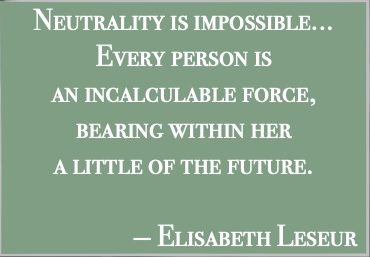
     I've explored quite a bit about St. Francis and Elisabeth Leseur here on the blog, although I haven't come close to exhausting the material I have.  In upcoming posts I hope to share thoughts on Don Bosco's "Preventive System," reflections on Jane Frances, and some of St. Francis's rules of life for the Visitation sisters he helped found.  Planning to tie all this together into some recommendations for worldly, well-off, working women — the group that St. Francis seems (to me) to speak to the most.  

    Come along and we'll see what we can see.


  • Pre-pre-departure.

    The big trip is looming closer.  We have arranged for neighbors to keep an eye on the house.  We have arranged for a friend to open the house and bring food to it the day we arrive.  We have a mountain guide and two "kids-and-family" city tours booked.  

    I haven't started panicking yet.  I'm still simply excited.

    For some reason, the part about it that I'm most excited for?  Just having Mark be off work for weeks, plural, and traveling with us instead of apart from us.  Lucky, lucky family that he was able to gather together all that time off in one place.

    + + +

    Last weekend I packed the 8yo's clothes completely, and gathered into a laundry basket the 4yo's clothes.

    IMG_0016

    My 8yo daughter's clothes, shoes, and accessores all fit in two nylon bags in that plastic bin.  I expect to manage the same for the 4yo's.  Later this weekend I'll pack mine and the baby's.

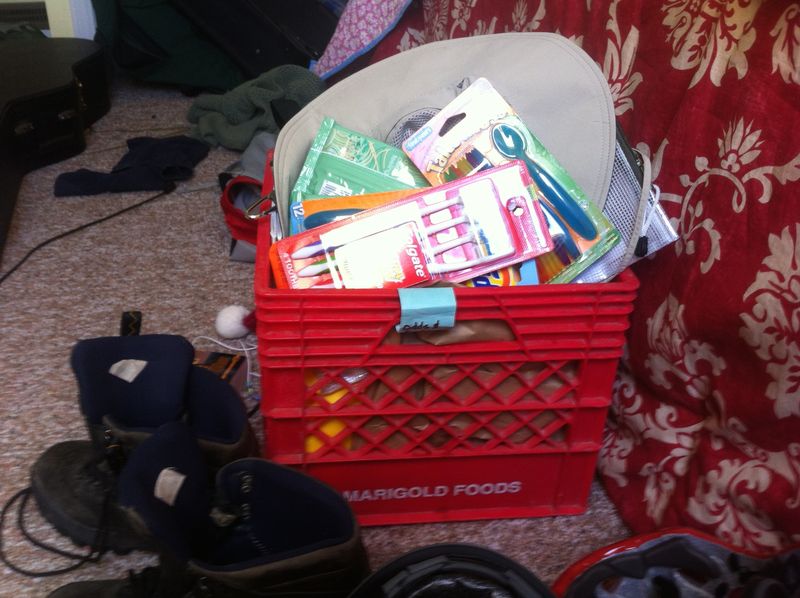
    Here we have a now-overflowing crate of random small things we want to take with us:

    IMG_0017

    Toothbrushes, gum, sunhats, disposable baby spoons, document wallet, guide books, glove cats, roll of masking tape…

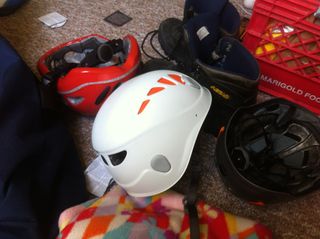
    Mark has a bag of climbing gear and ropes, and three cute little helmets:

    IMG_0018 IMG_0019

    I have set up a shutterfly account to upload our photos as we go.  I have assigned my 14yo/9th grader a journal to keep during the trip in order to squeeze a little school credit out of it.  I have also given my 8yo a journal because she asked for one.   I have several e-books saved in my Kindle library.  

    I have a refurbished iPhone with a UK phone number, even though I said I wanted to hold out against having a smartphone for as long as possible.  

    I have a set of resistance bands, so maybe I won't completely lose all the progress I made in the last six weeks that I've been weightlifting.

    I have packed two big zip-lock bags of toiletries, first aid, and medicines.  We have anti-diarrheals, decongestants, NSAIDs, migraine tablets, PEG laxatives, lip balm, bandages, gauze, tape, tweezers, clippers, antifungal cream, a baby thermometer, antihistamines, eyeglass wipes, diaper cream, Dum Dum pops, lidocaine gel, flossers, ponytail holders, throat lozenges, sunblock, immunization records.

    I've dealt with almost everything that needs to be dealt with before we get back or very soon after.  The homeschool paperwork has been sent in.  I have a new drivers license.  There are several dinners in the freezer.  All the schoolwork is ready to go as if we were starting on Monday.

    I feel as if my brain has been separated into a dozen tiny pieces and the shards are resting in various places in the house — in the school cabinet with the few papers and books that come along; in the closets with the clothes I haven't packed yet; in the car's glove box where I keep my spare sunglasses; in the medicine cabinet with a few items I still need to have out; in the filing cabinet with the passports; in the still-not-cleaned-out refrigerator; in the room upstairs, one little piece tucked away into each open suitcase. Resting each in their spot and pulsing quietly, sending out a little homing signal so that I can gather them all up when it's time to go.


  • Sane Mom Revolution: Discussion question, boys v. girls.

    "It is time for a Sane Mom Revolution, in which we decline to take any more of this crap."  – Light and Momentary

    —–

    I've been pushing a hashtag, here and on Facebook (where, fyi, I only friend friends; it isn't personal) and on Twitter:  #sanemomrevolution .  Check it out.  It's for sharing stories of kid-independence.  The stakes are high; a Reason/Rupe poll the other day showed that a large fraction of Americans (originally reported as 63%, later corrected to 43%) would criminalize letting 12-year-olds go to the park unsupervised.

    I find that the #sanemomrevolution sparks some interesting discussions, though.  Here's some of one I had on FB the other day.  What do you think?

     
    #Sanemomrevolution discussion question, parents of teenagers especially invited. So, I'm sending my 14yo son off on urban errands with the bus and the train and the bike and the mall and the downtown Target and library and things. I feel pretty confident about this. I find myself wondering: Will I feel as confident about sending my *daughter* (when she is 14) on similar errands? And if I don't, is that reasonable or unreasonable? Discuss.
     
     
    Me — "However I *feel* about it, I promise to try to be ruled by reason when the time comes."
     
     
    C.B. —  "Our neighbor's daughter, 14, recently went to the nearby park and waited for friends to arrive. She ended up getting beaten up by a bunch of kids there and required facial reconstruction surgery. And I thought I lived in a nice neighborhood. I want to join the #sanemomrevolution but after this I need to wait and see what the police do about it."
     
    C. B. — "She was sitting at the park at a picnic bench near the basketball courts and playground. It was during daylight hours, but close to dusk. That is all I know FOR sure."
     
    J. M. S. — "I do not know if it is reasonable or unreasonable, but I feel much more cautious about my daughter. Much."
     
    Me — "Troubling anecdotes like the one C. B. just shared, I am trying to consider what the Sane Mom does with them. Because it isn't right to ignore them; they exist in a context, though. Mostly I think they become data points about specific locations."
     
    C. P.  – "Who knows what will be in 6 years?"  

     Me — "Yeah, I can't help but think that part of my 'Will I feel the same?' uneasiness is because right now she's 8. Having been a 14yo girl myself at one point, I'm annoyed at myself for having extra protective impulses. And at the same time don't want to be stupid about it."

     C. B. — "I wish I knew more of the details so I COULD make a sane decision. Right now, our 14 year old girl walks her dog by herself. He's 55 lbs and goofy, so I don't know that he would "protect her" per se. We were just having a discussion. I want the 16 year old to ride 2 miles to the library on his bike and dad is worried."

    J. M. S. — "I'm curious about the data: are girls more vulnerable than boys? I know it is exceedingly unlikely that someone would snatch my 5yo daughter from the sidewalk, but my perception is that the risk is less teeny-tiny for her than it was for her brothers at 5 (still teeny-tiny, but less so). Teen girls get catcalled and propositioned more than teen boys do, but how does that actually affect them?"

    Me — "I get being worried about the risk of assault (and I would be more concerned if I had recent evidence that gangs of violent kids were roving my near neighborhood without interference by local police or parents). It's a matter of balancing that with the risk of your kid reaching age 18 without ever being allowed to take risks. (But as I said, if there had been a recent assault in my neighborhood I might wait for more info)"

    K. M. M. — "I'm not sure I feel that boys are less vulnerable than girls. You've read The Gift of Fear right? Does [your 14yo] know what to look for in grooming behavior from sexual predators? How to handle men in bathrooms? I would have said that I feel boys would be more likely to be beaten up by roving gangs of teenagers but I see the anecdote above kind of contradicts that."

     K. M. M. —  "But these are all issues that continue on well through college, and will need to be handled at any point. Maybe a self-defense class would be good for teenagers of either gender? I'm glad you're having this discussion, it's giving me a lot to think about. Although we're still not exactly in the urban public transit area."

    C. B.  – "I AM frustrated by not having more details. I understand the 14 year old's desire for privacy and the mom's respecting that. I just wish she would help me understand. During the Neighborhood Night Out, the police officer that visited our street talked to us a little bit about it and that while they don't think it was a "random" thing, they also don't think it was provoked by her behavior in anyway and asked for patience as they get more information. We also live where lots of drug deals go on – Parker's Picnic area was (don't know if it is anymore) a common "exchange location" and the park we live next to seems to be a magnet for kids to go down below near the river to party. Our seemingly nice suburban location seems more worrisome at the moment."
     
    K. J. C. — "I am more afraid of a daughter being sexually harassed or violated on her own in public in our culture. I base that fear on statistics. What I think might be the *feeling* part of it is, is this kind of assault worse for them than the types of assault my boys might be more statistically likely to encounter."

    K. M. M. — "I think that male statistics are grossly under reported because of stigma."

    K. J. C.  – "K.M.M. do you think there are underreported stats of men being catcalled or rubbed up against in the subway or bus, etc? Because I have so many of those stories I can't even number them, and my husband, who is unlikely to lie to me, has zero."

    Me — "I believe that men are propositioned less than women. I also believe they're non-sexually assaulted more often. Boys and girls might be equally at risk but from different kinds of risk."

     J. M. S. — "See, I just don't think that kind of crap is as common for boys. I think Kelly is right about underreporting, but even so: people feel license to comment on my daughter's appearance in a way that just doesn't happen for my sons once they're older than about 3. I mean, the stuff that happens around me is all well-intended: beautiful girl, cute haircut, nice outfit, blah blah blah. But I think it arises from an unspoken view that girls' physical selves are regarded as community property in a way that boys' are not. Agree or disagree?"

    J. T.  – "A woman is more likely to be groped. A man is more likely to get punched. Neither is fun."

    K. J. C.  – "I agree that neither is fun… I think where 'feeling' comes in, is, is it more damaging to the lives and psyche of our girls to experience *sexual* damage, or is the *physical* damage the same. My gut leans towards yeah, neither is fun, but the sexual part is more damaging. Which I base on no evidence."

    J. M. S. — "And that feels risky for me. Most of the world would never make the leap from "You are a beautiful girl and I want your mother to know that" to "You are a beautiful girl and I'm going to violate you," but how large is that most? NOT LARGE ENOUGH for me at this moment, I'm telling you."

    J. M. S.  – "If I had to pick between physical bullying and sexually tinged bullying, I'd pick physical any day of the week."

    K. M. M.  – "I agree that girls receive more of the catcalls and rubbing up against. But I agree with the others that there are different risks for the genders. How often do women get propositioned in bathrooms? How often do you think your daughter will hear 'Hey, come here, I want to show you something' by a woman in a bathroom stall who has a porn magazine in her hand? I think any discussion of who has it worse or who is more damaged is not productive. We need to take any individual's experience seriously and not diminish it by saying 'Well, so and so has it worse.'"

     Me — "I agree with that part — individuals' experiences can't be compared directly in that way. The question for the #sanemomrevolutionis whether sane parenting means treating girls' permissions/curfews/errands/adventures differently from boys.' "

     P. G. B. — "My kids are still little, but I am starting to let them outside in the back or in front of our house unsupervised for short periods. I get nervous about giving them more freedom, but I hope we allow them what they can handle. Ultimately I think it's about making sure they are mature enough to send them off on their own, and to teach them to be aware of surroundings at all times. Especially to keep their phones/music tucked away. A few years ago I was held up at gunpoint near the shoe zoo, on a Sunday afternoon. But I was yapping away on my iphone, covered in a bright green case, walking to my car, compelety unaware and with my guard down as I was in a "nice" neighborhood. I really do think awareness and being on guard makes a big difference and possible less of a target?"

     B. H.  – "I think any differences in permissions would be personality based, not sex based. I [male] was allowed a lot more independence on that kind of thing in my teens, both because I was better at not getting lost and because my brother had the kind of vagueness which projects "fun and easy to beat up" to other teens….Our oldest are girls, an I don't have an issue with letting the older ones (12 and 10) walk through town to the library and such. We don't live in an urban core, so I haven't had to deal with that so much."

     K. J. C. — "The reason I am considering potential consequences of each gender's more likely assault, is because it is an assessment of, do I treat my girls differently, because being raped is more likely to cause a lifetime of mental issues and will affect her sexuality forever, whereas being propositioned in a bathroom or punched in the face might not do the same to my boy? If true (and as I repeatedly say above, I have nothing to back it up with but "feel", which is why I'm musing) then YES I absolutely will treat my girls differently and curtail their freedom to just walk around in public as teens."

    Me — "I do think the question of "which risk do I feel ickier about, physical assault or sexual harassment" is germane to the discussion because one is more likely for boys and one more likely for girls."

     Me – I wonder if it does not feel just as violating (subjectively speaking) for a young male adolescent to be assaulted, if he doesn't have comparative experience with sexual violation. Many of us mothers have some experience either with sexual violation or sexual intimidation [not to do the yes all women thing again!] and if we haven't been non-sexually, physically assaulted as well, maybe that "doesn't seem so bad" to us.

    Me – Obviously *most* of our decisionmaking hinges on the perceived maturity of the specific kid in question, relative to perceived external circumstances… so all things being equal are the external circumstances also equal? Sexual assault in broad daylight or physical assault is quite rare (even if more rare for one gender than the other). Harassment, not so rare (and let's not forget that some young boys in some places will be more vulnerable to race-based harassment, an experience which I imagine feels quite violating). We really need to teach boys a similar set of awarenesses to fend off sexual harassment, because even if more rare overall than sexual harassment of females, we send boys (not usually girls) into all-male environments and males are more likely to be perpetrators.

    K. M. M.  – "From my perspective: 1) We want to help our adolescents to learn independence as well as how to assess the safety of situations while being aware of the dangers. 2) We need to be aware that both males and females are vulnerable to verbal, physical, and sexual aggressions, but of different types and in different situations. 3) We need to be able to assess what the dangers are for the particular kid and situation we are considering allowing."

    K. M. M. — "I really doubt of us would keep a daughter home while sending a son out late at night to a sketchy area because the "worst" that could happen to him is that he'd be beaten up while she might be raped. We're trying to give them freedom while avoiding obviously dangerous situations, right? I was thinking earlier on the idea that physical assault isn't violating–you often read that people feel violated by having their house robbed when they aren't home. Violation involves a loss of sense of security and feeling that your body or in the case of a house, personal space, was used by someone else and you had no control over it. I think someone absolutely could feel violated by being physically assaulted. If I can still have some ptsd symptoms regarding my c-section when I'm in a medical setting, then yes, someone could possibly have lifelong effects from a physical assault. Those feelings are probably different from violation and trauma from a sexual assault but I'd like my children to avoid feeling any sort of assault if possible."

    Me — "I wonder if my confidence in my kids' ability to navigate the city safely is on the high side because (a) I've lived in cities/urban-style suburbs pretty much all my life, and am not startled anymore by random encounters with people who don't look like me; (b) I perceive busy urban areas as objectively safer, because busier, than relatively isolated parts of the suburbs or rural areas; (c) my experience with harassment as a young woman was largely not in unsupervised situations but in "supervised" situations such as school or my first job as a teenager."

    Me — "Don't you sometimes feel that it sucks that the responsible thing to do is to be the bearer of the Bad News about the world outside? I feel like preparing my kids to avoid being violated by the outside world is itself damaging. And feels wrong because it's me who has to inflict it. Like inoculation."

    L. H. B. — "Well. My daughters are 16, 14, and 11. I haven't had a teenage son yet (he's 8) but I will guess that I do restrict them more than generally teenage boys are restricted in exercising their freedom. I try not to be irrational about it. The reality is, we live in a pretty safe small town. They walk within a mile radius or parents drive them places. Public transit is inconvenient. …

    My daughters each have a black belt in taekwondo, which is something of a comfort when they are walking to school alone on dark winter mornings. I try to encourage freedom by having them take care of errands on their own, but they are driven places, not biking or bussing, it's too far and takes too long. My 16yo is working on her driving license and for some reason, driving doesn't seem risky in the same way taking public transport does. 

    I get concerned comments sometimes from well meaning friends when they see my girls walking to school or shopping alone. I get stressed about being perceived as a Bad Mom or a negligent, foolish, and permissive one, more so because I am a widow and feel vulnerable myself (though I have a black belt too, it doesn't protect against determined violence). 

    My most irrational rule I think is that they can't wear dresses if walking to school in the morning. It just sets off my Spidey sense…vulnerable female walking alone in the dark! 

    In contrast, I walked to school alone at 5 several blocks, at 10 rode my bike all over, at 14 took the city bus to downtown Seattle to buy comics at the market and visit my hairdresser aunt, where I did get the catcalls and creepy guys following me, but nothing really bad happened."

    Me — "Liking the black belt idea in a big way, L. H. B."

    H. V. P. — "Rightly or wrongly, I am feeling better about my children being out in public without adults in pairs or, for my 9 yr old, groups.  It definitely was helpful to me when I was about her age and some middle school aged boys started throwing rocks, that my parents had arranged a walking co-op for me with other elementary school girls."

     M. S.  "As a scout mom, I believe in the buddy system. Groups of 2-3 just make safer errands/trips/events….."

    J. F.  – "My on-going rule is, "Is this kid likely to encounter a problem he or she won't be able to safely handle?" We teach our kids situational awareness and danger-avoidance / deterrence. Lots of open discussion of which dangers are found where, because our neighborhood is dangerous in different ways (see: loose dogs) than the national forest (see: hypothermia) than downtown (see: traffic). The goal is that by the time they're 16 (see: driver's license), they can independently go all the places they have any business being, and they can intelligently decide which times / places are the ones to avoid, and which times / places are the ones to take modest additional measures for personal safety. [Example: You take a stick when you go for a walk in my neighborhood. Universal rule. But downtown we don't need a stick, like you say, lots of safe people milling about, and no dogs.]"
     
     
    A number of very good points were raised in that discussion.  Let me sum up the ones I think are the most germane, and close with a personal observation.
     
     
    It's rare for teenagers to be assaulted by strangers.  It's not particularly rare for teenagers to be harmed by people close to them, and it's not particularly rare for teenagers to be verbally threatened and harassed, sexually or otherwise, even by strangers.
     
    Many of us who'd like to be counted as "sane moms" have direct experience with sexually-themed harassment that we have experienced as threatening; fewer, but still a significant number, have direct experience with unwanted sexual touching or outright assault.  We'd like to protect our kids from that, particularly our daughters.  
     
    Some of us do "feel" more protective when it comes to the threat of sexually-themed aggression.  We're maybe more protective of girls to the extent that we perceive them, and not boys, to be the target of sexually-themed aggression.  But as K.M.M. pointed out, boys can be such a target.  And as I noted later, boys experience a common risk that girls don't:  we send them regularly, alone, into environments where all the adults and older boys are male, i.e., public men's restrooms and locker rooms.  
     
    Individual maturity, problem-solving skill, and environment are all more important than arbitrary age-cut0ffs.     The Sane Mom attitude was, I think, best exemplified by J. F.'s "on-going rule" in the last comment:
     
    "Is this kid likely to encounter a problem he or she won't be able to safely handle?"
     
    This question depends on the kid, depends on the environment, and depends on how the parents have equipped the kid.  With a cell phone?  With a big stick?  With a healthy appreciation for the importance of keeping eyes and ears open, not distracted by music?  
     
    Careful decisions made on an individual case-by-case basis are likely to be perceived, even by the decisionmaker, as gender-based.  This will color our feelings about these individual decisions.  Gender is one of the most obvious differences that can be perceived about individuals, and usually the first observation we make about someone.  Perpetrators will assess it.  Nosy neighbors will assess it.  Our kids' gender is, in a crazy way, part of their environments as well as part of their selves, because it affects how they are going to be treated.    And so the question "is this an individual case-by-case assessment of an individual kid in an individual situation?  or is this a gender-based decision?" is kind of meaningless.
     
    This is what we are mainly up against: 
     
    There is a tension between "protecting" kids (of either gender) and "equipping them to protect themselves."  No getting around that.  Every time we step in to pre-emptively protect, we are removing an opportunity for them to build self-reliance.    Even the simple decision not to protect is part of equipping them, because they have to start navigating somewhere.  Protecting them as long as possible will mean that they emerge into adulthood without any of the shell that develops from encountering hazards on their own.
     
    I was sexually harassed at my first job, groped and subjected to demeaning language, not by another kid but by a 26-year-old man.  Do I wish my parents had prevented me from getting a job so I wouldn't get harassed?  No, I don't.  I'd rather have had the job with the harassment than no job and no harassment.  It might have been nice to have a different job with no harassment, but before it actually happened to me I would not have thought to screen jobs for the possibility.  I was 14.   It was a learning experience.  An extremely uncomfortable one that I still carry with me at times and don't like to think about.   But a learning experience nonetheless.
     
    At the same age, I was propositioned and forcibly embraced by a middle-aged man in a hotel elevator when I was on vacation with my grandmother in a foreign country.  Do I wish my grandmother had not allowed me to take the elevator down to the lobby by myself?  No.  My favorite memories of the trip are the parts where I was allowed to step away from the group and test my independence.  If my grandmother had acted to prevent the possibility of encountering weirdos in elevators, she would have prevented a lot of other experiences.
     
    The experience of being twice a victim of unwanted sexually-themed aggression at age 14 has for me been far outweighed by the experience of feeling independent and capable — working for pay, shopping on the street and buying things via a different language in a bustling European capital.  Granted, nothing "worse" happened to me, and something worse might've.  I might feel differently then… 
     
    It's serious business to decide for someone else that potential victimhood outweighs potential empowerment.    I'm glad that no one (in that circumstance) decided it for me, even with 25 years to look back on it — although I reiterate, I was wronged in both circumstances — not by my parents for letting me get a job, or for my grandmother for letting me explore, but by the assholes I worked with and the asshole I encountered in the elevator.
     
     Assholes are part of the environment out there.  Don't stay inside in case it rains; but bring an umbrella.  Perhaps a very heavy, pointy one.

     

  • Sane Mom Revolution. Let’s start here.

    I just created a new category:  Sane Mom Revolution.  This title is an homage/theft directed at Jamie, who came up with the phrasing in this great post that I've already written about.

    I decided the phrase was so awesome, and so exactly what is needed, that it should be a hashtag:  #sanemomrevolution.  I have not much chance of going viral with it, but I'll try.  Here's what I put on Twitter:

    —————————————————————————————-

    //platform.twitter.com/widgets.js

     —————————————————————————————–

    //platform.twitter.com/widgets.js

    //platform.twitter.com/widgets.js

    Jamie later wrote another post on the subject:

    But maybe my best argument today for a Sane Mom Revolution is this: my two teenagers, now 14 and 17, were slouching in front of screens this afternoon when I said, "Hey, did you guys want to see that Shakespeare tragedy? This matinee is your last chance. You'd have to go right now." I kid you not: they jumped up and put on their shoes. My oldest said, "What's the best way to walk to that building?" and then answered his own question. They marched over to the box office and bought their own tickets, and I have every confidence that they are sitting quietly through the performance right now.

    It might not be Shakespeare for your family…..maybe the leisure activity you hope your kids will enjoy as adults is running or biking or museum-ing or coffeehouse chess or something entirely different.

    Or maybe you just wish your kids could run down to CVS and pick up a new toothbrush while you cook dinner.

    Entertaining oneself in the real world, running errands capably alone– these are important life skills that do not descend on kids like an anvil made of competent adult-ness. It used to be completely normal for kids to walk themselves to the ice cream store, allowance in hand.

    I'm with Jamie on this.  We want it to be completely normal, once again.  Hence, this new category, and the hashtag.  There's not a lot there yet, but check in on #sanemomrevolution at Twitter and see if you don't have anything to add.

    Q.  Don't we already have Free Range Kids?  Isn't that a good hashtag to stick with?

    A.  We are all indebted to Lenore Skenazy for sending her 9-year-old on the subway, getting branded "Worst Mom In America," and subsequently writing a book and appearing on talk shows.  I heartily recommend her website for resources and inspiration.  However, one of her tools is shaming cops and nosy neighbors by publicizing outrageous stories about mothers being arrested for letting kids play in the park, etc.  

    I'm all for shaming these people, but repeatedly reading these stories is not without cost. The problem, so well articulated by Jamie, is that when we pass around stories of Moms Who Got Arrested And/Or Reported To CPS, it adds another layer of media-instilled fear.  We need success stories and conversation among other sane moms.  And that's what the hashtag #sanemomrevolution is for.  Not more outrage, but less.

    Q.  Is #sanemomrevolution just for success stories, then, or can we use it to discuss how to bring the revolution about?

    A.  Not just success stories, but questions and discussions among fellow sane moms.   Questions like:  How old was your kid when you first let him do X?  What real data do we have about risks to children?  What are the risks of "safety first?"  How do we evaluate our kids' readiness?  Stuff like that.  What #sanemomrevolution questions will have in common is that they are ordered towards encouraging age- and maturity-appropriate independence… not towards SAFETY AT ALL COSTS.

    Q.  Do you have other thoughts on this subject in the queue?

    A.  Indeed, I do, thanks to my FB friends I have a discussion all pre-loaded and ready to post soon.

    Q.  Do you envision a moderated discussion group of some kind for this?

    A.  I am seriously considering it, so stay tuned, and if you have suggestions for which platform to use, please leave them in the comments.


  • Twin friends.

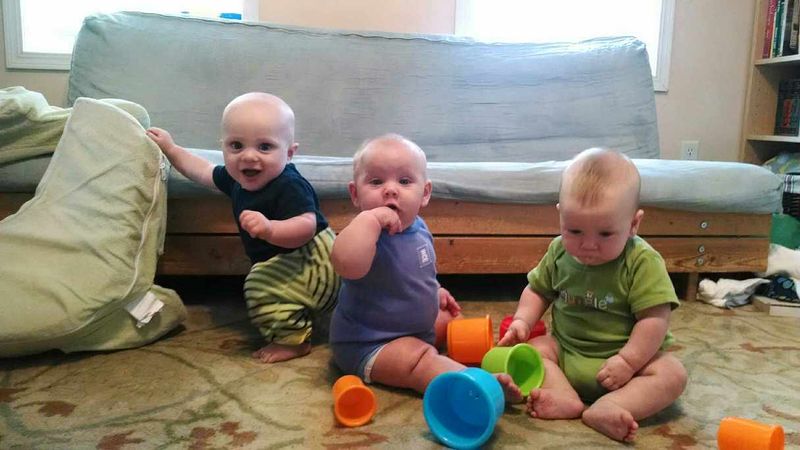
    H took this picture yesterday afternoon.   My 7mo is on the far left, with his twin friends who are 5 weeks younger.  H's E is in the middle (please to check out the knee crease on that chubster girl!) and O is on the right, determined that he will not look into the camera.  

    IMG_20140814_134606814

    Someday, if the long haul keeps getting longer, his co-schooling cohort.  


  • Weightbearing III. Three weeks in.

    I'm pleased with the results of lifting weights three times a week, so far.  

    The timing couldn't have been better for me.  Six months after giving birth, my weight had stalled out two-thirds of the way down from immediately postpartum.   I had been getting frustrated seeing the same number on the scale every morning.  Time for a different metric!  

    Watching your weight when you are strength training doesn't make a whole lot of sense unless you are an already-lean male and building muscle mass without having a bunch of fat to lose.  I found a cloth tape measure in my mending kit and measured around my hip and left thigh, and wrote those measurements down.  I'll come back in a month or so and see if there's any change.

    + + +

    The rapidly changing numbers representing how much weight I can lift are more interesting to me.   Here is the data for the worksets of my first ten workouts (weight in pounds):

    Squat, lbs

    x 5 reps x 3 sets

    Overhead press, lbs

    x 5 reps x 3 sets

    Dumbbell Bench Press, lbs

    x 5 reps x 3 sets

    Deadlift, lbs 

    x 5 reps x 1 set

    45 30
    50 60
    55 35 65
    60 30 69
    65 40 73
    70 34 75
    75

    42 (x 4 x 1, then fail)

    77
    85 40 (x 5 x 1, then fail) 79
    90 42 81
    95 34 x 8 x 3 84

    On my third workout I unracked the bar from the squat rack and it felt too light.  Possibly someone had switched it.  I took it away and went to get a different bar from the incline bench.  Nope.  That was the same 45-lb bar I'd struggled to lift the first time.  I really am getting noticeably stronger.

    The smallest plates at the gym are 2.5 lbs, so the smallest barbell increment is 5 lbs.  I can't go up 5 lbs each time in anything but the squat, and sooner or later I will hit the limit there, too.  In order to increase my deadlift (and eventually, my squat) by increments that are less than five pounds, I bought a set of "micro" plates.  They are eight little plates, color coded, two each in 1-lb, 3/4-lb, 1/2-pound, and 1/4-lb weights.  I wrote our last name on them in gold marker pen.  The microplates are necessary.  Last night I tried to deadlift 85 lbs (that's the 45-lb bar plus four 10-lb plates) and couldn't.  I took off the outermost pair of 10-lb plates and replaced them with two 5-lb plates, two 2.5-lb plates, and my pairs of 1-lb, 3/4-lb, and 1/4-lb plates.  I deadlifted 84 lbs, no problem.   That's an increment of 3 lbs over my last deadlift.

    The idea is to lift a weight every time that is heavier than the last time, even if it's just a little bit heavier.  But I still have an increment problem with the presses. One will resolve with time; the other, I'll probably have to solve with more gear.  

    First increment problem:  I do overhead presses, aka shoulder presses, aka military presses, with a barbell.  But I'm not yet able to press the 45-lb standard ("Olympic") bar, so I can't use my Oly-bar microplates.  I have to use the fixed-weight barbells, which have a narrower-diameter bar and are pre-loaded in five-pound increments; the lightest is 25.  We have a couple of two-pound wrist weights, the kind that wrap around and secure with velcro.   I managed to wrap one around the center of the bar (it hits my nose on the way up and down) to go from 40 to 42.  Hopefully  I can use two of them, on my wrists, to press 44 next time or maybe the time after that.  Then maybe I'll be able to press the 45-lb Oly bar and at that point I can use my microplates to inch up from there.

    Second increment problem:  I don't want to bench press with the barbell because, frankly, it scares me.  You need an attentive spotter or a proper squat cage to bench press safely, i.e., without risking dropping the bar on your throat or chest.  My Y, embarrassingly, has no cage.  I don't want to ask the staff to spot me for several reasons (one of which is just my normal resistance against talking to people unless I have to), and Mark cannot always come with me to spot.  So instead I am working with dumbbells, which are fixed-weight and come in five-pound increments, meaning that the smallest increment I can do with two dumbbells is 10 lbs.  And that is not going to happen.

    For the time being I'm using the pair of 2-lb wrist weights to divide that increment into 4- and 6-lb chunks, but it really isn't enough.  There are microweights available for fixed-weight dumbbells, most of them weighted magnets, but our Y dumbbells are rubber-coated and the customer reviews report mixed results trying to use magnetic weights on rubber-coated dumbbells.  More wrist weights would do the trick, I guess.  I tried 40 (pair of 20-lb dumbbells) and couldn't do it last night, so I backed down to 34 (pair of 15-lb weights plus the pair of 2-lb wrist weights) and, since that was really too light, I did more reps per set as a temporary solution; but I would really prefer to keep the reps at three sets of five and make the weight go up every time.

    + + + 

    One temporarily pleasant effect is that it is inadvisable to cut calories while training.   Rather, one is supposed to eat plenty of protein (rule of thumb:  one gram per pound of bodyweight per day) to give your body something with which to repair and construct muscle.  Accordingly I have totally abandoned my previous dietary strategy (moderate-carb, high-fat, moderate-protein) and am now eating luxurious breakfasts of three-egg omelettes with cheese and tomato, wonderful sandwiches of pita bread bulging with turkey and avocado, and fantastic dinners of steak and broccoli or poached salmon and chopped salad.  

    Also protein shakes post-workout.  I have a nifty little sports cup with a wire-whisk ball inside for shaking the whey protein up.  It tastes okay even with just water.  Chocolate is better than vanilla.

    But I don't think my overall calorie load is much higher than it was before, because I find I don't really want to snack much, and I cut back on bread and pasta and the like to make room for more protein.  Last night when the rest of the family ate chili (made by my 10-year-old!) on spaghetti, I had mine in a bowl without the pasta, for example.  Plenty of carbs in that meal anyway, what with the beans, and the watermelon we had on the side.

    Overall, weight training is interesting.  I have a little notebook, and there are numbers, and there is a lot of sitting around in the gym in between sets.  I get to eat large cheesy omelets and red meat.  Mark has joined me, so we can check each other's progress, and that's fun too.  I do miss swimming (not enough time to do both), but I can put up with it for the time being.

    Not yet sure what'll happen when I have to take a month off to travel, but I guess I'll cross that bridge when I come to it.


  • Detachment, fire hydrant edition.

    The weather was lovely high summer this morning as I walked from the car into church.

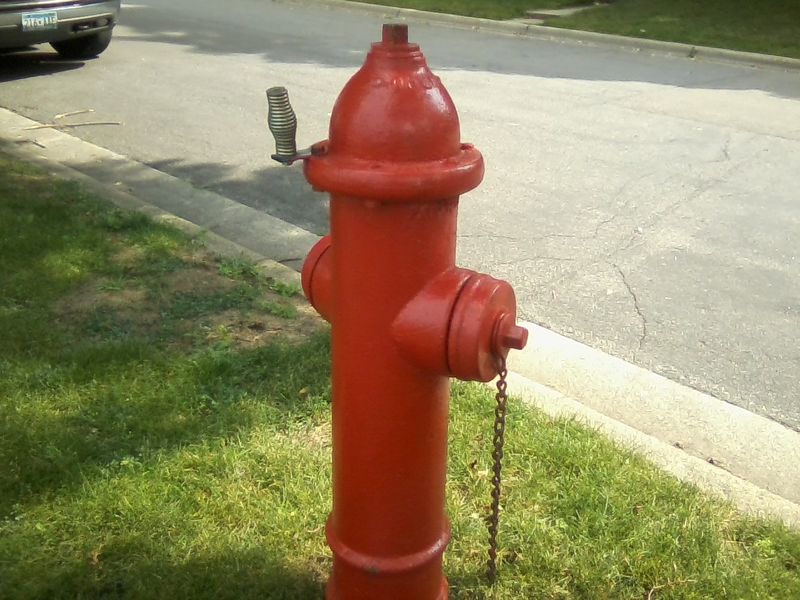
    However — as is usual when I have to park more than a half-block or so away, I was confronted by this reminder of the coming storm.

    0810141101-00

    I kind of hate Minnesota fire hydrants in the summer.  

    Memento mori

    no, not quite… 

    Memento ninguat, they seem to whisper as I pass.

    Are you from warmer climes?  Do you know what that funny spring-like protrusion is, bolted to the upper flange of the hydrant, on the left?

    I'll tell you.  Round about mid-October, someone from the city will come by and they will insert into that springy thing a "hydrant marker," which is a tall, red-and-white striped, flexible pole.  I grabbed this photo of a Minnesota hydrant  from pinterest here:

    49cc5f5244c2072d025bf570f5271524

    And you know what that's for, right?  

    So we can find the darn things come November or December when the first sparkly flakes come wafting down, followed by a few trillion of their closest friends.

    I wish they could make the springy holder thing blend into the background a little better.  I don't want to think about the impending doom, not now while the sun is shining and I have my sandals on.


  • Token economy: Little-kid edition.

    I have been writing about using a token economy (most recently here) to link allowance to chores, at least temporarily to build better habits among my three older children. The kids start each month with a jar of popsicle-stick tokens; each day they miss doing one of their chores, they lose a token; and at the end of the month, the lost tokens are deducted from their allowance payout.

    My four-year-old is not quite ready to handle the abstract idea of “allowance” and “deduct,” and I am choosing not to give him regular chores. Instead we are offering him little jobs here and there: fold the napkins, pick up the baby’s toys from the living room rug, put shoes away in the mudroom.

    When he does a job that we asked, he gets a star:

    (He designed the star page himself, complete with lion.)

    At the end of the month, when his siblings get their allowance with the appropriate deductions, the 4yo gets a nickel for every star on his page. He rushes up to put the precious nickels in his froggy bank. Then the page is ripped off (see the staples?) to reveal a blank one for the next month.

    He still often declines to do a job, but not every time. What I hope will happen is that he will start looking for jobs that need to be done and offering to do them. If he starts getting really useful I will give him a raise. Maybe to a dime per job.

    Last month he got nine nickels. It is a start.


  • Pleasant summer salad meal.

    Sometimes a  lot of crunchy vegetables can be the star of the show, and a very plain protein source is all you need.  And summer is the best time for that.

     On a summer weekend night we were suddenly invited to dinner — not "we'll make dinner for you!" but "let's get together and eat our dinners near each other!" and I threw my ingredients into a grocery bag and headed out the door.

    It was a funny jumble for sure.  A head of romaine lettuce, a tomato, three carrots, an English cucumber still in its plastic wrapper, two stalks of celery peeled off the bunch and tossed into the bag, a handful of parsley, a couple of lemons.   My bottle of olive oil was within a few tablespoons of empty, so I just stuck it in there. 

    For protein, I opened a two-pound package of frozen, Extremely Boring Skinless Salmon Fillets — the kind where each serving is individually sealed in plastic — pulled out six fillets and tossed them in the bag too.  And then, as an afterthought, I added an unopened jar of olive tapenade.  (Mark's parents had re-gifted it to us a couple of weeks ago.

    I opened up a plastic baggie and dumped in about a cup of couscous, and then added a handful of pine nuts from the bag in our freezer.  Off we went.

    + + +

    When I got to our friends' house, I chopped up the vegetables into large dice, and chopped up the lettuce and parsley too, and put it all in a big bowl.  (Romaine is absolutely the best lettuce for this — the perfect combination of tender and crunchy.)  I oiled a baking dish and put the salmon in.  I used the rest of the oil and most of the lemon to make a lemon dressing, which went on the salad; a squeeze of lemon went on the frozen salmon, and into the 400° oven it went.    I put the couscous and pine nuts in a bowl and added hot water for it to soak.   

    When the salmon was all cooked, the salad and couscous and fish all went on one plate.  I added a generous dab of the olive spread on top — some kind of pesto or salsa would probably have worked great too — and jumbled it all up into a salmon-salad-couscous mess.

    It was SO good.  Even though the salmon was terribly, terribly boring on its own — surely the meal would have been better had it been fresh salmon thrown on the grill, or seared skin-side down and finished under the broiler?      

    Maybe.  But it was good enough, and the salad was the star.  The salmon completed the meal, and together with the olive spread added its rich strong flavor, to make it all more interesting than it would have been alone.

    Sometimes "okay" is good enough.  Really good enough.


  • The token economy: slowing down? And, adding bathrooms.

    It's the end of another month, and I thought I'd check in about the token economy.

    Starting in April I wrote a few posts about using a "token economy" to link my kids' allowance to certain housekeeping chores.   

    Things fell off a bit this month because of some travel:  all of us out of town for a week, various children gone with grandparents and for scout camp; I was even out of town for a bit.  It was hard for me to remember to check rooms, and sometimes there weren't any children there to check.  They'll get more money than they deserve this time!  

    I did settle on one procedure:  If you go to camp for a week, and you put your room in order before you go, you'll get to keep your token for every day that week (even if a sibling messes up your room while you're gone, or if Mom cleans the house and tosses all the belongings she finds in through your room door).  If you don't tidy before you go, you'll lose the token for every day that week.  

    The schedule has been so weird that only two family dinners have been made by kids this month.  But we should get back to that in August, most of which we'll be home for.

    + + +

    August's new chore will be daily bathroom maintenance.  

    Our house has two and a half baths.  One full bath is part of the master suite, and the kids aren't supposed to use it unless the other two are occupied, so we won't have them clean it either.  The other two are a tiny main-floor powder room and an upstairs bathroom/laundry room combination.

    Three kids, two bathrooms, what to do?  I want to keep it simple:  both bathrooms presentable enough for guests every day, and have it be really clear whose job is whose.  The idea is that the bathroom task and the bedroom task must be done for each child to avoid losing his day's token.  Because it's all-or-nothing, the tasks must be simple, a daily minimum that will keep the room from getting out of control.  

    But, at the same time, I'm going to give them a fifty percent raise:  each of the 30 tokens will now be worth 75¢, but it'll be easier to lose.  (Making dinner for the family will earn an extra "bonus" dollar for the day).  So each child could get up to $26.50 in the month, if they made dinner once a week and never missed a chore.

    + + +

    I decided to assign my 13yo — who will turn 14 soon — sole responsibility for the powder room, which of course is what guests see most often.  It's to be cleaned up last thing before going upstairs to bed at night, and will be checked in the morning.  Every night he'll have to confirm that

    • trash is not full
    • there is TP on the roll and there is a spare roll
    • there is nothing on the floor
    • there is nothing on the counter, except the soap dispenser
    • sink is wiped, mirror is wiped, toilet is wiped, light switch and doorknob are not messy
    • there is a hand towel ready to be used.

    My 7yo, who is to turn eight next week, will share responsibility for the kids' full bath/laundry room with her 10yo brother.  I don't want a complicated alternating-days schedule; instead we'll have a clear division of tasks.  The 7yo's job, which has to happen after she has brushed her teeth and bathed, will be to ensure:

    • all bath toys are in the basket
    • there are no other toys
    • there is no laundry on the floor (if she finds her big brothers' dirty socks and such, she gets to fling them into the boys' room for them to deal with as part of their room-cleaning tasks)
    • the towels, bathing suits, gym bags, etc. are hung up, not on the floor
    • the shower curtain is pulled closed

    The 10yo's job, which has to happen after the 7yo is done, will be to check that 

    • trash is not full
    • no detergent is spilled on the floor
    • there is TP on the roll and there is a spare roll
    • the sink is wiped, the mirror is wiped, the toilet is wiped
    • the toothbrushes, toothpaste, and soap are neatly arranged
    • nothing else is on the sink
    • there is a hand towel ready to be used 
    • there is a clean bath mat neatly placed on the floor


    I bought two big bottles of Windex All-Surface cleaner, which is supposed to be good for both glass and countertops, and stowed one in each of the two bathrooms.  The kids know where cleaning rags are to be found.  I'll put up a checklist in each bathroom.

    + + +

    "Where are you going with this?" Mark wanted to know yesterday when I sought his opinion on how much to raise the values of the tokens.  "Are we going to be doing tokens forever, or is this just a learning tool?"

    I don't actually know yet.  Mainly, I needed to cut down on my daily workload and set clear expectations.  Perhaps we can toss the tokens later; I hope so.  Or perhaps we can keep them just for the younger children and the older children can "graduate" to a less rigid system.  I'm not sure.  But for now, it really is working; and there are still tasks left to add.  I've noticed since we got a new computer and put the old one in the upstairs office, the upstairs office keeps accumulating piles of pillows and blankets and extra chairs and odd pieces of paper with notes about upcoming Minecraft buildings on it.  And there's the game room, where the Wii and all the board games are:  constantly cluttered.  And the basement climbing gym is constantly acquiring new socks and hoodies on the floor…

    What I think this is doing for me is serving as a way to communicate my expectations.   Instead of fuming about a problem, or worse, resignedly fixing it myself, I want to be able to delegate without nagging.   I want kids to be in the habit of looking at a room and seeing if something needs to be done, and not assuming that some other person will make the problem disappear.  Picking up after themselves.  

    And — hey — I want to live in a tidier house without having to be the one to do all the tidying.  I — quite literally — have enough other things to do.


  • Weight bearing II: Adding deadlift.

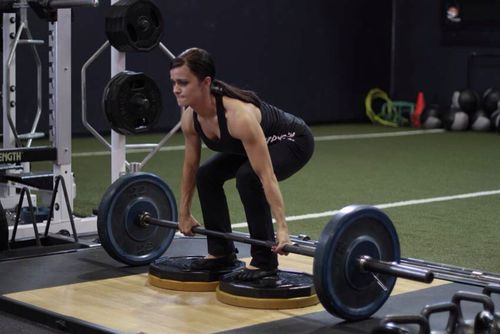
    I must be feeling gung ho about the new weight training program I started, because for the first time in quite a while, I dragged the kids to the gym in the middle of the day to avoid missing a workout. My teenage son carried the baby around for me while I took my time squatting and relearning the deadlift.

    The deadlift trains the back, with a bit of legs and grip-strength thrown in. It is tricky, because you need to have a neutral back, not rounded or hyperextended, and because you must take care not to get off balance. It is the lift where you “bend over and pick the bar up off the floor.” All you have to do is stand up, with the bar hanging from your arms. Nevertheless, it is easy to screw up.


    I hear it is not a popular exercise. You do not see many people deadlifting at my Y. But that is kind of funny, because it is hard to think of a move that builds a more useful kind of strength. It’s the move that trains you to pick up a heavy object from the floor without hurting your back. Think a big sack of rice or dog food or potting soil, there on the ground at the store, that you’ve got to get into your shopping cart, or a crate of full wine bottles that has to go in the trunk, or a 75-pound kid with a sprained ankle.

    Think deadlifts might be dangerous? Someday you are going to have to pick one of these things up, and it will go better if you know how to deadlift a bar that is even heavier.

    I started with the empty barbell lifted up on blocks to approximate its height when loaded with standard plates. I took my time with the first lift, carefully going through the steps of a sort of form checklist that appears in the book:

    • stand with heels 8-12″ apart and center bar over arch of foot
    • bend knees slightly so shins touch bar without pushing it forward
    • bend at the waist without dropping hips and grip the bar just outside of legs
    • rotate chest upward between arms and contract back to normal arch position
    • use back to drag bar up shins and past knees, then straighten up and drag bar up thighs.

    But I was pleased to note that the motion felt natural and easy to me. It is still in my motor memory from the time I tried to learn it some years ago (using this online resource).

    Come to think of it, I never really forgot it because after I learned to deadlift, I always and ever after used deadlifting form to lift heavy stuff; at least when lifting with the legs was impractical, such as getting a heavy box out of a deep car trunk, or certain kid-lifting scenarios.The key is first, to get the center of mass of you and the object close to being directly over the arch of your foot, and then, in the contraction of the back muscles: after grabbing the object, you take an instant to, as Rippetoe writes, “rotate your chest upward between your arms” and put a normal (but not hyperexteded) arch in your back. Just enough to make sure it isn’t rounded. Then go slowly so that if it turns out the load is too heavy, or too far from your body (= too much torque) you can stop before you hurt yourself trying.

    So without thinking, I have been practicing the deadlift for years.

    I lifted the 45-lb bar five times, then added 10 lbs and lifted another set of five, then added 5 more pounds for a third set of five, and called it good. So my starting deadlift is 60 lbs. I also added five pounds to my squat weight. (Still squatting outside the dumb, too-tall, fixed-height rack.)

    Next time will be the first lifting workout where I will do all three lifts. Then, after that, I am going to figure out the bench press.


  • Weight bearing (sometimes these titles write themselves).

    So… having got medical clearance last week, I went to the Y on Tuesday evening, not to swim, but to start a weight training program.

    Now.  If you know anything about me at all, I'm sure your first question is, "Erin!  What book are you using?"  So let's save time.  I'm using a pair of books authored by Mark Rippetoe:  

    Some googling will let you know that this author's style is not to everyone's taste (sample quote:  "The only legitimate use for a glove is to cover an injury… If your gym makes a lot of money selling gloves, you have another reason to look for a different gym.  And if you insist on using them, make sure they match your purse.")    

    Given that, I can recommend another educational and inspiring source that is similarly no-nonsense but much less likely to bring back PTSD from high school gym class:  stumptuous.com , written by Krista Scott-Dixon, who is only one inch taller than me.  If nothing else, her article "Don't Fear the Free Weights" is a great place to start.   

    + + +

    Nevertheless, the Rippetoe books are thorough, detailed, and — this part is important – simple in their approach for the novice.  I compared the advice in these books to another very popular weightlifting book The New Rules of Lifting for Women by Lou Schuler, and my impression was that the latter contains a lot of unnecessary shuffling around of many different exercises.  This might keep it from getting boring, but it also means a lot of time spent on the learning curve.  So:  not for me.

    Rippetoe suggests starting with four barbell exercises (links go to stumptuous.com so you can see what I am talking about):  

    The press and the bench press alternate, so you only do three at each workout.  That's it.   Alternate, three workouts a week.  Cardio not required.

    + + + 

    Speaking of books, there's one more in this history.  Of late, Mark's been implementing some of the principles in Training for the New Alpinism:  A Manual for the Climber as Athlete by House and Johnston.  I read through some of that book, and I liked its attitude of goal-specific training:  not so much making the motions of training match the motions of your sport, but training for the particular mix of endurance, strength, and technical skill that your sport calls for.  

    Mark's interested in skiing and ice climbing and rock climbing, maybe running a 5 or 10k here and there, always looking about three months ahead to the next trip.  My sport, on the other hand?  Life with kids, and staying mobile and strong and able to choose many activities as I get older.  I have modest but long-term goals.  

    + + +

    So, we read through the theory in the programming book together.  While I had waited for my doctor's appointment, Mark started re-acquainting himself with overhead press, bench press, and pullups (which make an appearance a bit farther along in Rippetoe's program but are nevertheless known to be a good exercise for climbing).  

    I spent a long time Tuesday afternoon, while the kids were messing around with some new Minecraft feature, carefully taking notes about the squat and the overhead press.  I've done both of them before, but it's been a long time; I think the last time I did weight training at all was before my 7yo was born.  

    I don't have any special weight lifting clothes or tape or anything.  I wore my running capris, my cross-country racing flats, and a tee shirt.  Mark wore the baby in the Boba carrier; I met him at the stairs after a few minutes warming up on a rowing machine.  "Thanks for coming with me," I told him.  "I know I've done this before, but I still feel like it's obvious I don't know what I'm doing."

    "Why don't you do the overhead press while I've got the baby here, and then I'll take him down to the child care while we both work on the squat."

    "Okay."

     I went to the A-frame rack of small barbells, because I knew I would not likely to be able to start with the empty Olympic bar; it weighs 45 lbs all by itself, and most people can't lift as much in the overhead press as in the other lifts.    "I'm only pressing fifty," Mark pointed out by way of reference.  The small bars weigh twenty pounds, and the smallest plates are 2.5, meaning that the lightest barbell is 25 pounds.  That is where I was to start.

    Mark pointed out that the top peg of the A-frame was just about the right height for me to take the barbell into the correct position.  And that is where the 25-pounder happened to be resting, so I gripped it and took it out of the rack, resting it at my collarbone.

    It wasn't that heavy.  I checked my notes:  elbows forward, overhand grip, thumbs encircling, wrists straight.  I rocked my body back and forth a couple of times, muttering, "Let's see…"

    "It's not that complicated," said Mark, "just push it up till you lock your elbows."

    I pushed it up to the ceiling and felt what it was like to be stable under the bar.  Once it is all the way up, it isn't hard to hold it there; your elbows lock and that's it, you are a pillar in compression.  The tough part is getting your face out of the way as the bar goes up and down around it, but that's harder-looking on paper than it was in the gym.   

    I brought it back down, and repeated it for a set of five.  I didn't need to slow down; I could do more weight than that. We switched it out for the thirty-pound bar, and that was more difficult; I could tell I would not be able to lift five additional pounds, but I could press thirty pounds for three sets of five with only a little slowdown.  So.  Thirty pounds.  I wrote it down.  

    Time for the squat.  Mark toted the baby downstairs while I performed a few bodyweight squats.  I am naturally quite flexible, my one genetic advantage, so it isn't hard for me to drop all the way down ("ass-to-grass," or ATG, as they say in the creepy bodybuilding forums).  My heels stay down and my knees don't hurt, and I don't have any bad habits like looking at the ceiling or arching my back.  

    When Mark returned, we headed over to the squat rack — and I instantly saw a problem.

    Eight years ago I squatted at the gym in a proper squat cage, aka "power cage."  These look like this:

    Squat_rack

    The cage has three functions for the squatter (or the bench presser).  

    • First, it holds the bar for you while you change the plates.  
    • Second, it holds the bar for you on a pair of hooks, the height of which you can adjust, while you get into position under the bar.
    • Third, it has a pair of adjustable safety rails that you set just below your range of motion.  They are supposed to catch the bar if you drop it or crumple under it, so it doesn't destroy the floor (or, in the case of the bench press, crush you to death).

    Unfortunately, in the intervening years, the Y got rid of the squat cage and replaced it with a squat rack.  These look like this:

    Legend-3138-Squat-Rack

    Ostensibly they perform the same three functions for the lifter who wishes to safely execute a squat.  The hooks hold the bar for you while you change plates and get into  position.  And there are safety rails to catch the barbell if you drop it.  

    However, the safety rails are not adjustable; they are fixed.  And guess what?  They're too tall for me.   If I were to squat inside such a rack, I'd get partway down and then the bar would go BANG and stop while I went the rest of the way down.

    And probably too tall for a lot of other people, too.  Even though I'm unusually short and unusually flexible, it seems to me that you only need to be unusually one or the other to hit the rack.  I googled around and found lots of complaints from below-average-height males about the squat racks at their gyms.  How annoying.

    I talked to a staff member named Joe who agreed that it was a major bummer and added that he heard they were going to get rid of it and replace it with a squat cage sometime in the fall.  

    Putting an aerobic step inside the cage felt very unsafe, and I couldn't easily stop partway down.  What I wound up doing was stepping back outside the safety rails, which is a stupid thing that nobody should ever do with a really, really heavy weight.  At this point I'm only lifting the 45-pound bar; if I drop it, nobody's likely to get hurt.  

    If I'm lucky enough to progress so fast that  the cage isn't here yet and I can't justify doing it without the safety, I'll just have to rope a couple of staff members into helping me — because the squat requires two spotters, one on each end of the barbell.  Either that or get Mark to spot from behind, a method which requires a certain level of comfort and/or intimacy with your spotter.

    WiscFit_SquatSpot1 Not a job for some random guy I just met at the cross cable machine.


    Three sets of five, and that was enough for the day.   

    When we fetched the baby back from his 20-minute stint in the child care, he wanted to go straight to me.  I tucked him in the crook of my arm and instantly felt the fatigue I'd given myself.  I was glad to transfer him to his car seat back at the van.  The next morning everything felt warm and just a wee bit sore:  not an unpleasant feeling, and I can tell that I worked hard.  A completely different feeling from the post-swim sensations I am used to.

    Next time, I learn the deadlift.