bearing blog


bear – ing n 1  the manner in which one comports oneself;  2  the act, power, or time of bringing forth offspring or fruit; 3 a machine part in which another part turns [a journal ~];  pl comprehension of one’s position, environment, or situation;   5  the act of moving while supporting the weight of something [the ~ of the cross].


  • Happy new year, happy new day.

    We rolled into town at nearly midnight on the first of January; Mark got up and went to work in time for a nine o'clock meeting; and here I am, back again, in my bathrobe, at my computer. 

    Piles of suitcases and boxes, bottles of wine, and new Christmas acquisitions are visible just over my shoulder.  The Advent wreath is on the shelf above the monitor, now a Christmas wreath:   I swapped the purple and pink candles for honey-colored beeswax, and the purple and pink ribbons for red, on the last day before we left town.  I just brought down a few empty laundry baskets.  The smaller children, the ones who slept in the car, are wandering about; I made them nachos for breakfast.  The bigger ones are sleeping in, and someone will fetch milk from the store as soon as they are awake, so maybe there can be cereal for lunch.

    + + +

    The exciting new things that we received as Christmas presents now must be wedged in somewhere in between the other things in our house.  I'll hand each of the younger children a garbage bag later, and challenge them to go into their rooms and open up the bins and find broken toys to throw away, older toys to hand down, perhaps some that have lost their shine to be squirreled away in the storage room and brought out later when (if) they are remembered.  Time to make room for some of this new stuff.   There is a new expansion set for a bulky building toy, so I'll dig in the basement for a larger bin to keep it in.  And then there's my own things:  I'll have to do the same myself:  pull out little-used items in the kitchen, find a place to store new ones.  There are many new items for the pantry that must find places.  I will have to defrag the bookshelves again.

    And there are all the shiny new plans for the new year that must somehow find a home in our everyday lives.

    + + +

    Neither Mark nor I are very big on New Year's resolutions exactly; but we often find ourselves, anytime we are on vacation or otherwise removed from our routines, saying "We really should start doing such and such" or "When I get home, I'm going to set up an appointment for this, that, and the other thing" or "I've left this thing for far too long, it's time to do it for real."   It's not so much that the New Year is the time to turn over a new leaf, it's just that we are nearly always away from home at the holidays, at the end of all things and the start of the next, and our everyday lives have retreated away into our imaginations, an idealized form of themselves; it's so easy to rearrange one's priorities in one's mind, like a puzzle which fits together effortlessly any way you wish, the picture's outlines soft and indistinct and agreeable in every shape.

    I am very tempted to make lists today.  Probably I will, at some point.  But I have resisted up till now, and I'll keep resisting a little longer.   I am starting today by doing, and will make the lists later, working hard to trust that the urgent and important tasks, the urgent and important Such and Such, will rise naturally to the top.

    I've already started.  

    Did you notice?


  • Love your neighbor wrong.

    Love your neighbor as yourself — one of the two great commandments — has sometimes been taken to imply "You cannot love your neighbor unless you first love yourself."  Let's take a look at that idea and see where it goes.

    Suppose we start by rejecting a wholly superficial reading of that statement, one that would have you grabbing the goods to yourself and making sure you are satisfied and comfortable before turning to help others at all. 

    Suppose we also set aside, as territory already well explored, the "airplane oxygen mask" analogy.  You know it:  it argues that you are justified in meeting your own basic needs before turning your attention to others, on the unselfish grounds that lack of those needs can make you useless to serve.  (Territory well explored or not, I wonder if this gives us a useful definition of which needs are "basic.")

    + + + 

    Here's the thing:  it's a commandment and, as far as I can tell, plainly enough stated that most translations come out essentially the same.  Love your neighbor as [you love] yourself.  

    C. S. Lewis (in Mere Christianity) pointed out succinctly the first step: 

    [w]e might try to understand exactly what loving your neighbor as yourself means. I have to love him as I love myself. Well, how exactly do I love myself?

    and, remembering that "neighbor" includes "enemies," went on to decide that "loving yourself" doesn't mean thinking yourself a good person, and it doesn't mean appreciating what you have done.  In another comment (from a Q & A session) Lewis implied that we love ourselves by always wanting what's good for ourselves, and said: "Love is… a steady wish for the loved person's ultimate good as far as it can be obtained."

    He's not wrong.  I think he probably implies (by saying "as far as it can be obtained") that loving means, also, trying to act in a way that works for and not against that good.  This is a great way to (theoretically) understand how to use "love your neighbor as yourself" to understand the answer to the question "how shall I love my neighbor?"

    What we're up against is:  And what about people who don't love themselves, or know how to love themselves?  Where do they start?

    + + +

    Remaining in the domain of smug theory, my first impulse is to point out that "love your neighbor as yourself" is the second great commandment, and so we should expect any incompleteness or difficulties in it to be resolved by the first one.  Which is, you might remember, to love God with all your heart, mind, soul, and strength.  Presumably if we manage to obey the first great commandment, we'll grok precisely how the second one makes sense.  And presumably (says the smug theorist), this really implies something more like "perhaps what Jesus said means you can't love your neighbor before you love yourself; but if so, it's just as likely that you can't love yourself before you love God.   So get your priorities in order.   If love of self must precede love of neighbor, surely love of God precedes love of self."

    I mean, it sounds right (says I, the smug theorist).

    + + + 

    But does one precede another in a time series?  I think not.  It's tempting to say "Well, once I've mastered loving God, I'll be able to master loving myself correctly, and then I can turn to loving my neighbor."  Except that we know that "loving God" is not a master-able skill in this world.  You're not going to figure it all out.  What you can do–what I think we're commanded to–is the hard work of trying to get better and better at it your whole life long.   So do that!

    And… knowing that you'll never have "mastered" loving God… you know that you cannot wait until mastery to start trying to love yourself correctly, with clear eyes. 

    Lewis gave a prescriptive definition of love.  If you love yourself correctly, you have a steady wish for your own ultimate good (and, I expect, it means also you act as far as you can to secure it).   But of course I can do this incorrectly.  Perhaps I don't really understand what my ultimate good is.  Perhaps I don't understand what actions will actually secure my good.  Perhaps I think I am helping myself when I actually am hurting myself.  

    (And many people might say:  perhaps I don't actually love myself at all; I deserve no ultimate good; when I see myself, I see a hated enemy; and "love your neighbor as yourself" is nonsense, or a prescription for lashing out.)

    What about that?  If I love myself wrong, should I even try to love my neighbor?  I'm bound to make mistakes.  That's maybe not too big a deal when we're talking about wishing someone's good, but sooner or later I will have to do something for them.  Will I screw up?  

    Often I try to give myself something that I think is good for me and it turns out not to be good for me (in the long run) at all.  I train myself or punish myself with suffering, and to my surprise it doesn't always make me stronger or better, but sometimes crushes and weakens me.  I indulge myself or nurture myself with comforts, and it doesn't always nourish me or heal me, but sometimes increases my demands and makes me soft.  I miss the mark all the time.  If I love my neighbor as myself, when I haven't figured out how to love myself correctly, won't I make those same mistakes?

    + + +

    Presumably, yes.

    The smug theorist is forced to conclude that if one cannot love God correctly, one cannot love oneself correctly, and therefore cannot love others correctly.  Since we never can love God perfectly, we'll never do the other two things correctly.

    But we can try to get better and better at it.

    And that means… practice.

    The first commandment is:  Love God with everything you have.   I understand that as telling me to do the hard work, every day, of getting better and better at loving God—wanting what God wants.  Loving truth.  Loving justice.  Loving mercy.  Loving creation.  Loving everything God created—including myself.

    The second commandment is:  Love your neighbor as you love yourself.  Present tense:  right now.   However I love myself—however imperfectly—however I try to give myself what is really good for me, whether it be something that brings pleasure or suffering—that's the model I'm to look to, in the moment.

    (Caveat:  It's an analogy, right?  Our ultimate good is always the same end, but the means by which it may be secured may differ.  This is a tricky bit, and comes down to seeing my neighbor as a unique human being of equal worth to myself.)

    I think we're basically being commanded to make stupid mistakes if necessary, but to continually try to be less stupid.   

    If I act, I am going to love my neighbor wrong.  I'm being told to do it anyway, with the understanding I have about what's true about me, and what's good for me.  And understanding (from knowing and loving God) that part of what's true about me is my uniqueness, meaning that what's good for me (here and now)—the means that help me secure my end— is not actually identical with what's good for my neighbor.  So, while modeling my love of my neighbor on my wanting-what's-ultimately-good-for-myself, I have to think outside the what's-good-for-me box a bit.  Something I'll never be able to do perfectly, even if I were able to want perfectly what's ultimately good for myself.  Which I'm not.

    But what it sounds like I'm being told is to do it anyway, today, as blundery as I might be.   And to do the work every day to understand my errors and correct them, within and without.


  • Hot takes and small talk.

    I read too much news, and not enough books.  Is it just that?  Is that the source of the writer's block?

    + + +

    I don't know if there are any well-established "reasons" why it's so terribly difficult to sit down and dash off blog posts these days. 

    It seems to be multifactorial, but not — not — because of a lack of time. I am pretty sure I get as much time sitting down, not attending to anything in particular, as I ever have. Maybe I should do another time study just to be sure.  But what it feels like to me is that I passed some threshold where, when I get a chance to sit down, all I want to do is take something in. 
    I won't say that it's entirely passive.  I have thoughts.  I have reactions.  But… I don't desire to share them, at least not enough to do the work.

    + + +

    What's going on here?  It could be a good sign, or it could be a bad one.

    Is it humility?  Have I decided that the world doesn't need my fresh takes on the latest thing that has come over the transom?  Well, it would be nice to think so, and (perhaps for that reason) I'll say it might be part of it.   

    This is true:  The last few years of revelations in civic and organizational politics have demolished a number of my assumptions.  Along with that, a very real awareness of how easy it is to be very wrong and (this is the tricky bit) nevertheless to think I am correct, or at least that I have a useful or interesting point of view that I ought to share.  I've done a lot more listening and reading, withholding judgment.   And the kinds of things I have been drawn to are less often the breathless takes and the analyses leading to a point, the kind of things that invite refutation and alignment.  More often they are personal recountings.    This happened to me, and this is how it affected me.   I have lost my taste for criticizing and analyzing these things.  Or at least, for putting them out into the world. 

     So much of the hot takes out there are worthless pap.   I am not employed to produce them honestly, so what do I gain from adding to the endless stream?   Don't I have something more productive to do?   

    And the answer is nearly always yes.

    I think this is true:  I don't want to write things anymore, even by accident, that aren't centering people as persons.   I used to think that all that was necessary was to step back and be perfectly reasonable, or at least as reasonable as possible, because right reason is never opposed to personalism.   

    That's not wrong!  But:

    (1) I'm not always right; and 

    (2) right reason may omit truth about persons, without ever making false statements; and

    (3) this omission is a kind of error that makes false pictures.


    I don't intend to be wrong.  I don't intend to omit significant truths from my analysis.  But I'm less interested in centering my intent.  I'm more interested in the effects of my words.  And I've become less tolerant of error, more perfectionist.  To put it bluntly, I don't want to hurt people.  (Not don't want to hurt people's feelings.  Don't want to hurt people.  There's a difference.)

    + + +

    That's the scrap that might be a bit of humility, borne of realizing how easy it is to be wrong about things.

    There's a scrap that's pride too:  I have a strong aversion to being wrong these days.

    One of the ways I figure things out is by writing them down, and often I've done this on the blog.  It's led to some lively conversations over the years, with back-and-forth between me and some of my favorite commentators, a number of which have become real friends.  I used to do this relatively freely and with an understanding that I might write something that turned out to be woefully boneheaded, but I was willing to do it because I wanted to put things out there to be tested for boneheadedness.

    I mean, I can still figure things out by writing them privately, sending emails to myself or (still my favorite) clearing out space in a coffeeshop and putting pen to paper for hours in a journal, then later going back and assembling it into some sort of logical order.  It still works pretty well.  But it lacks quality control:  it lacks the sounding board of putting it out there where smart people who disagree with me, and care enough to explain why, might find it.  

    Here is the easy, non-humility-based reason that I might say out loud in order to sound good:

    Well, it's not fear of the smart and caring people that's made me unwilling to hit the 'publish' button.  It's all those other people. 

     Do I want to go viral?  Nope. 

    Would it be okay if I went viral and suffered because I put out thoughts that were really true and really needed defending?  Ye-es….

      But am I actually sure that what I write will in fact be true enough, beautiful enough, or useful enough that it would be worth it?   

    Actually… no.

    There is, however, a strong possibility that I simply don't want to be wrong, and it no longer seems worth it (especially given that, truly, people jump on wrongness rather quickly these days) to throw out things that might be wrong on purpose, just so I could possibly make them better.

    + + +

    One of the frustrations I have about leaving the academy in my very early stages, as much as I don't miss the stress and the politics, is that I am no longer in touch with serious work, critical work, slow work.  Mark will remind me that academic science, being made by human beings, throws up a great deal of weeds and tangles, in the form of literally bad (not just disappointing) results and even more damaging, in the form of perverse incentives.  These make the good fruit hard to come by.  

    But that's nothing compared to the selection of articles that appear in the newspaper or come across one's social media feed.  I'm just completely tired of that being so often the way that information (or at least words) about research comes into my view.  I used to kind of like digging into those various news articles, tracking down the references, and finding out if they were really bunk or if there is anything to them, but I've lost my taste for even that.  It feels like a waste of time:  that it's better not to look at all.

    A better source for feeding my interest in news about what's going on in the research world has been to follow individual researchers on Twitter.  It's a narrower feed; but it's a better-quality, curated one.  And—interestingly enough—it rarely makes me want to pound out reactions.  Instead, because I'm aware that I don't have special expertise and am following them because I am legitimately interested in what they are writing, I… listen and learn?  And sometimes ask questions.

    + + +

    There's a real downside to this discrimination, and I shouldn't have been surprised to find that it's plaguing me, because it's part of a very old theme in my life.  

    Issuing instant reactions to the latest passing Moment, as intellectually frustrating as it might be, now has social utility.

    I have real friends (intelligent ones!  fun ones!  people whose takes I am interested in!) who have real conversations, online, sparked by news items diverted from the stream and shared in their own little tributaries.  If I disentangle myself from the stream, I miss out on those conversations.  The conversations are not always very deep, although they can be (it's a sampling frequency issue).  If I decide that the nuggets are too few and far between to make it worth dipping into the rushing stream of takes, then (for good or bad) I miss out on the nuggets.

    And (this is crucial) even if the nuggets are not worth the effort… I would also be saying that the relationships are not worth the effort.

    (here's the part that all this yammering has brought me to, which I literally did not realize until this very moment as a result of putting out all the verbiage above)

    Hot takes are the small talk of intellectuals on social media.

    + + +

    I do not like regular small talk in real life.  

    I was embarrassingly old and educated before I came to an intellectual understanding of the purpose it serves and realized that I needed to make use of it as a tool.

    It's where you start, for reasons of common humanity (maybe not ALL of humanity, but of a large enough majority that it's essentially everyone you run into in most organizations and societies).

    Without it, you often cannot get at the deeper stuff, even if it seems like you should be able to.

    + + +

    Do I need to come to a new understanding of the Hot Take?

    Maybe.  Maybe I do.


  • Harvard and MIT, and more Italian food.

    Thursday Mark suggested Cambridge, so we hopped on the T and headed to Harvard, aiming for the museum of natural history.

    9AFA943B-A1CE-4EE3-85AC-4EB13EA18AB6

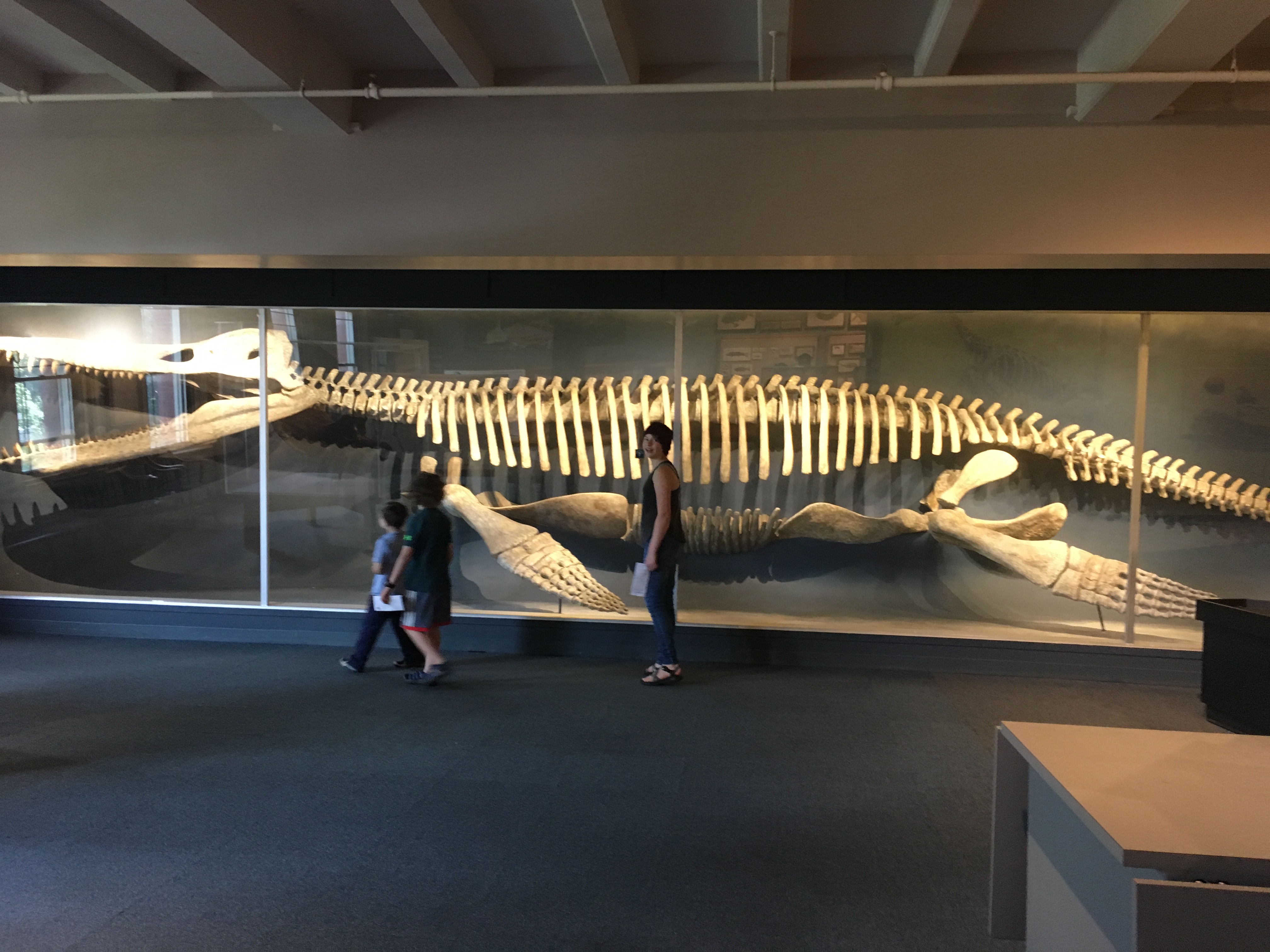
    Let me just say:  for not being enormously big, the Harvard natural history museum is fantastic.  I could have spent a very long time there.  (But, you know.  Children.  And also the parts that I wanted to see the most were not the ones the little ones wanted to see.  So I made do.)

    I have been to the London museum of natural history, and that one is pretty exciting in part because there are very famous specimens on display (Archaeopteryx! Darwin’s finches!  Mary Anning’s collection!  A dodo!) and this one has only a few such items and is much smaller.   And I have seen a vast quantity of very cool paleontological specimens at the museum in Utah.   But I never got the sense that having been to London and Utah had spoiled me for this one.  It is a sparkling collection, both literally and figuratively.  Just, well, perfectly curated.  

    We spent most of our time in here, for obvious reasons.

    18A9BB69-891E-4BBD-8255-E193B1BB020F
    18A9BB69-891E-4BBD-8255-E193B1BB020F

    I wish that I could have returned with my two older kids, both of whom are focusing on biology this upcoming school year, and encouraged them to make a careful study of two particular exhibits.  The glass models of botanical specimens, for my daughter who is about to study botany and also appreciates art.   And the entire section devoted to the evolutionary tree (including more hominin fossils than I have ever seen in one place), for my son who’s about to spend a year on evolutionary biology.  I just skimmed through it, but it’s a super exhibit.

    Lots and lots of taxidermied animals, three big whale skeletons, and a stellar rock room.  Honestly, this is at the top of my list for returning someday and spending the time I would like to spend.  

    I rewarded the little ones for their patience by buying them gift shop items:  the Box of Polished Rocks for the 9yo, the Two Plastic Pteranodons for the 5yo.  

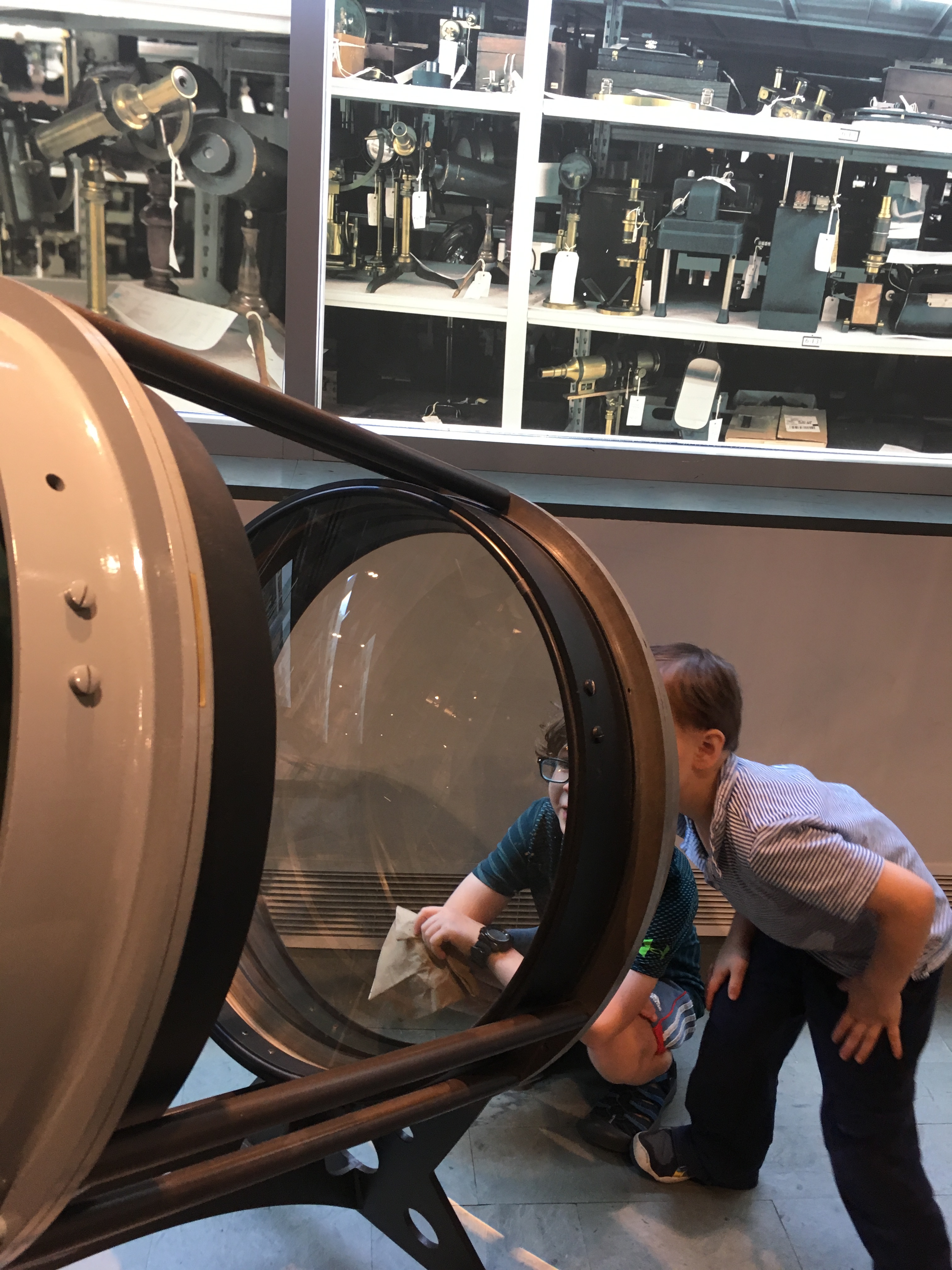
    On our way off campus we stopped at the Putnam Gallery, a tiny room which has some historical scientific instruments.  This was kind of fun, but for this one I really was spoiled by London.  When you’ve seen Joule’s own calorimeter and the clockworks that solved the longitude problem, what’s a few sextants?

    On the other hand, the cyclotron console was kind of cool, if only because they preserved the little notes and comic strips taped up on the wall and the carryout menus tacked to the corkboard.

    01A8A7BD-880B-47F3-98A2-B43318C851E4
    01A8A7BD-880B-47F3-98A2-B43318C851E4

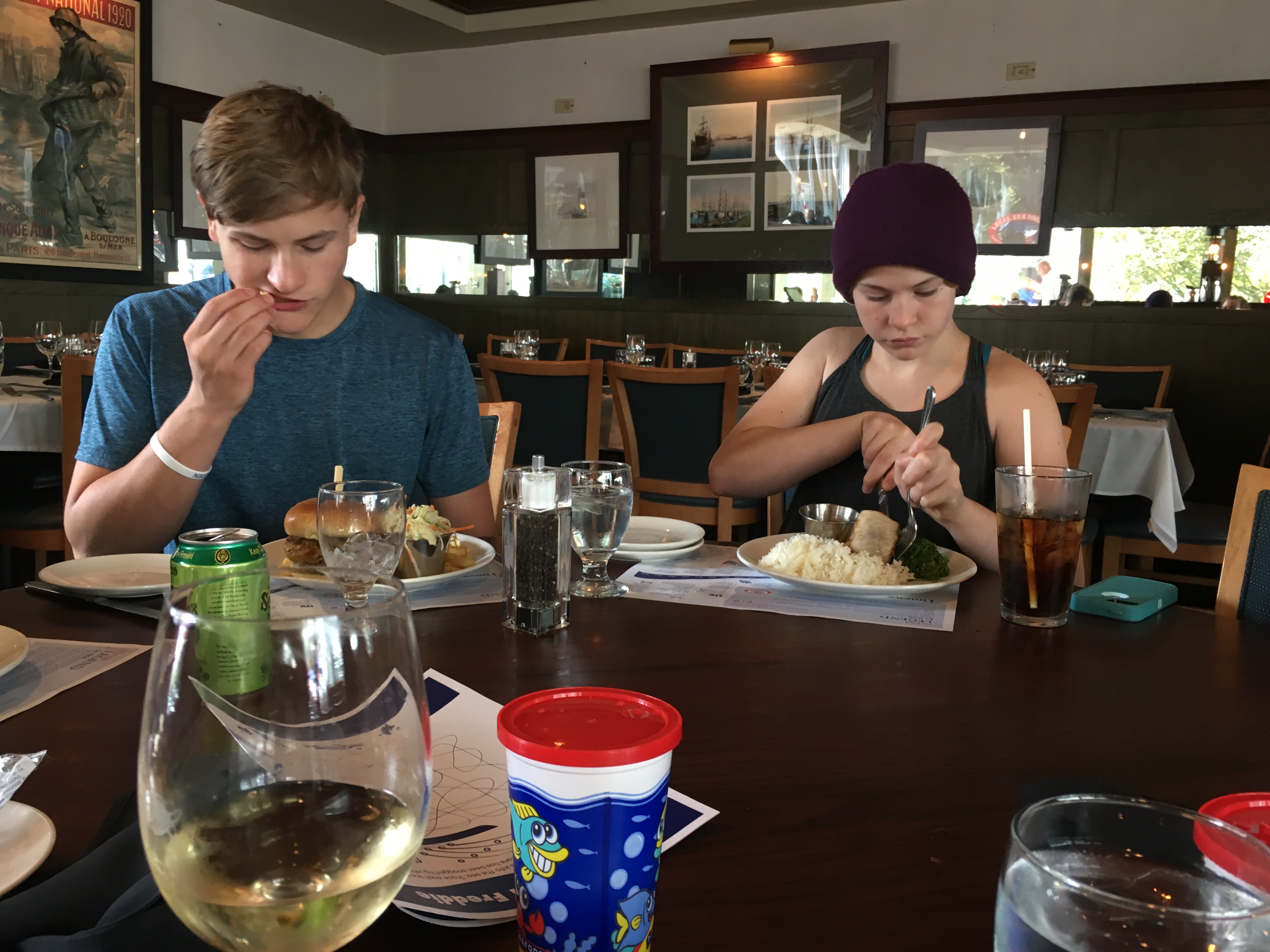
    We had lunch at Legal Seafoods.  I finally got my bowl of chowder, and a superior crab cake.  There is lobster on the kids’ menu, but the younguns wanted macaroni and cheese and hot dogs.

    3930AB64-D7B1-4D0B-AD57-6FA416739773

     And then we walked allllllll the way on Massachusetts Avenue to MIT, passing another Legal Seafoods on the way.  We stopped at the small MIT museum, where there were only a few things to see, and then headed back with very tired children.

      Mark and I went out later for another Italian dinner, including cannoli.  Something I didn’t anticipate as much as I should have:  how pleasurable it is to dine in a city that has a legitimate “little Italy.”  

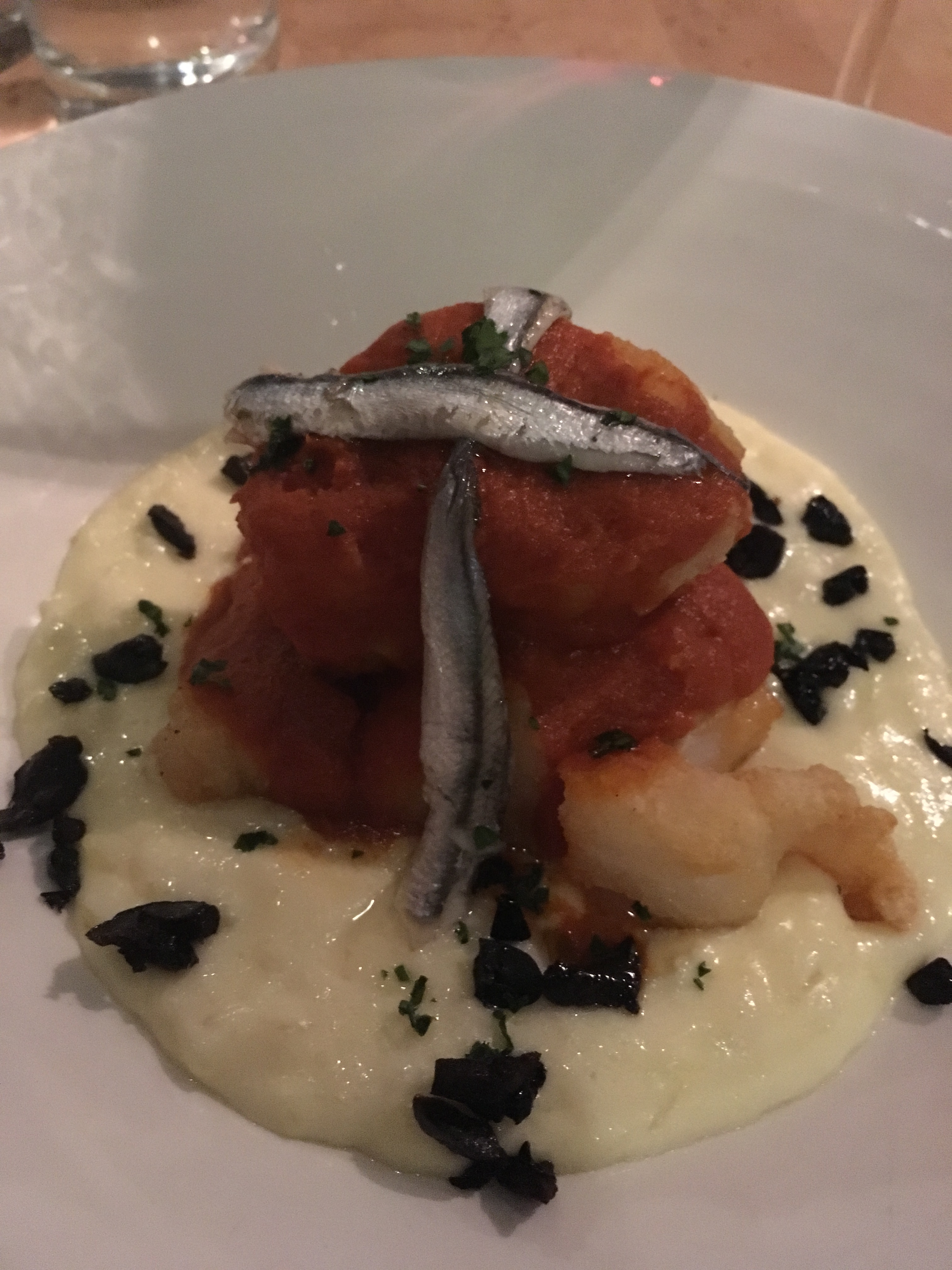
    I went with cod puttanesca this time, trying to hit the perfect fusion of New England and Italian food.  No pasta: cod on a bed of ethereal mashed potatoes, with the sauce deconstructed:  thin tomato sauce, olives scattered about, anchovies draped over.  Cod and potatoes go together like nothing else, and the light application of the strongly flavored elements of  the sauce made it just about perfect.

    7511AF67-5EE1-456B-AC32-435D8A3361AF

     Wine: Primitivo.

    I generally think I am pretty good at picking wine to go with dinner, and this evening I applied a bit of critical thinking to the matter to decide if I am right about this.

    I concluded:  there’s this very nice feature of matching wine with dinner on your own.   It requires three ingredients.  If:

    (1)  you are disposed to think highly of your own skill; and

    (2) you have at least a very basic level of competence, i.e., you have a general sense of what will go with red and white, sweet and dry; or you are capable of googling discreetly at the table; and

    (3) the restaurant has already done most of the work by having a well curated wine list; 

    then you will harness the power of cognitive bias to enjoy your own wine pairings and feel good about yourself while you have a delicious dinner.  

    So, I basically can’t go wrong in the North End.  QED.


  • More Boston.

    We have to pack and leave in a few hours, so: highlights.

    Wednesday.  Fancy macarons and pastries at a coffee shop on Newbury Street:

    D0912EB2-4AD9-42E1-AF68-B440A70C656E
    D0912EB2-4AD9-42E1-AF68-B440A70C656E

    Boston Common and Public Garden:

    3B5E48FD-D0B2-4F07-8D64-635EEFDE77C9

    3B5E48FD-D0B2-4F07-8D64-635EEFDE77C9
    3B5E48FD-D0B2-4F07-8D64-635EEFDE77C9

    That was a long walk, which we capped off by another longish one back to the North End for Italian food (dinner for lunch, as Mark put it).   Another thing we have learned about sightseeing with small people is that it pays to have a large and somewhat lengthy lunch for a good break in the sightseeing day, and then the afternoon siesta.

    E43591D8-C337-4B65-9B22-08C1BB5E6524
    E43591D8-C337-4B65-9B22-08C1BB5E6524

    We ordered a very pasta and meat-heavy lunch.  I am not sure why we didn’t mix it up a little with some salad.  Likely because everybody wanted something different when it came to the pasta and pizza.   Gnocchi, rigatoni with sausage, arancini, sausage-and-red-onion pizza, meatballs.  The arancini were really wonderful.  I am at a loss to understand why they cannot be had on restaurant menus wherever there is both risotto and deep-frying.

    + + +

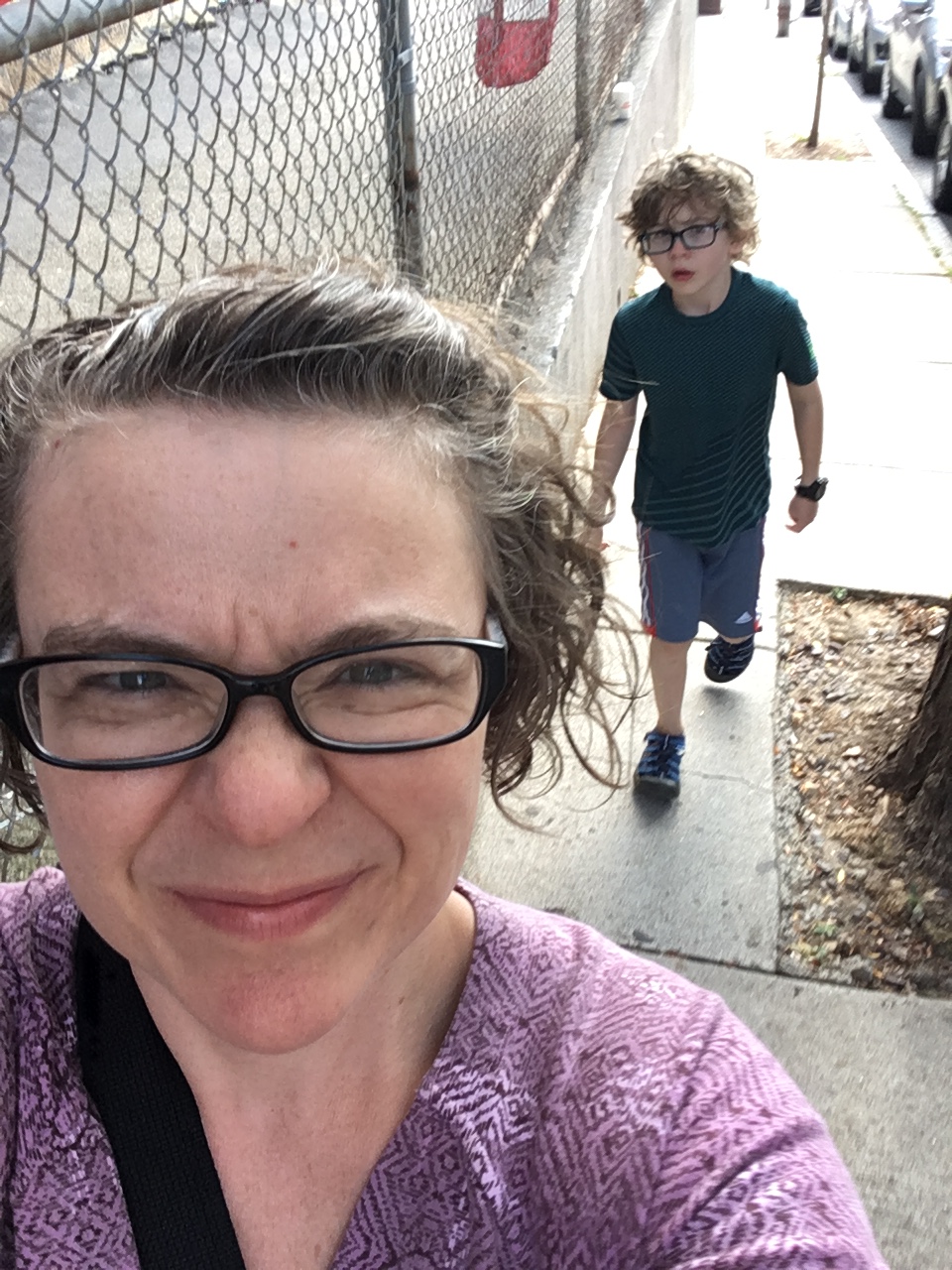
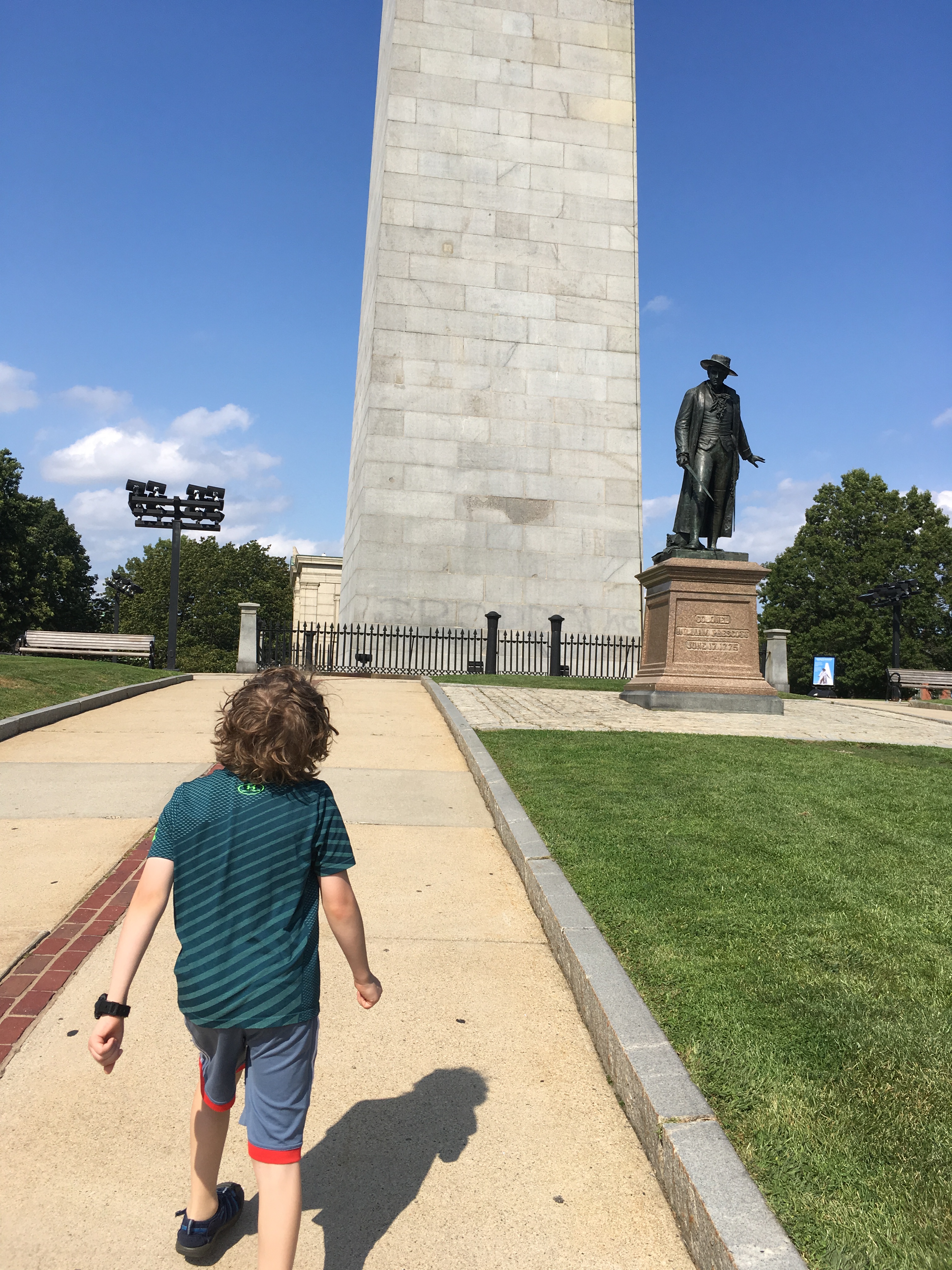
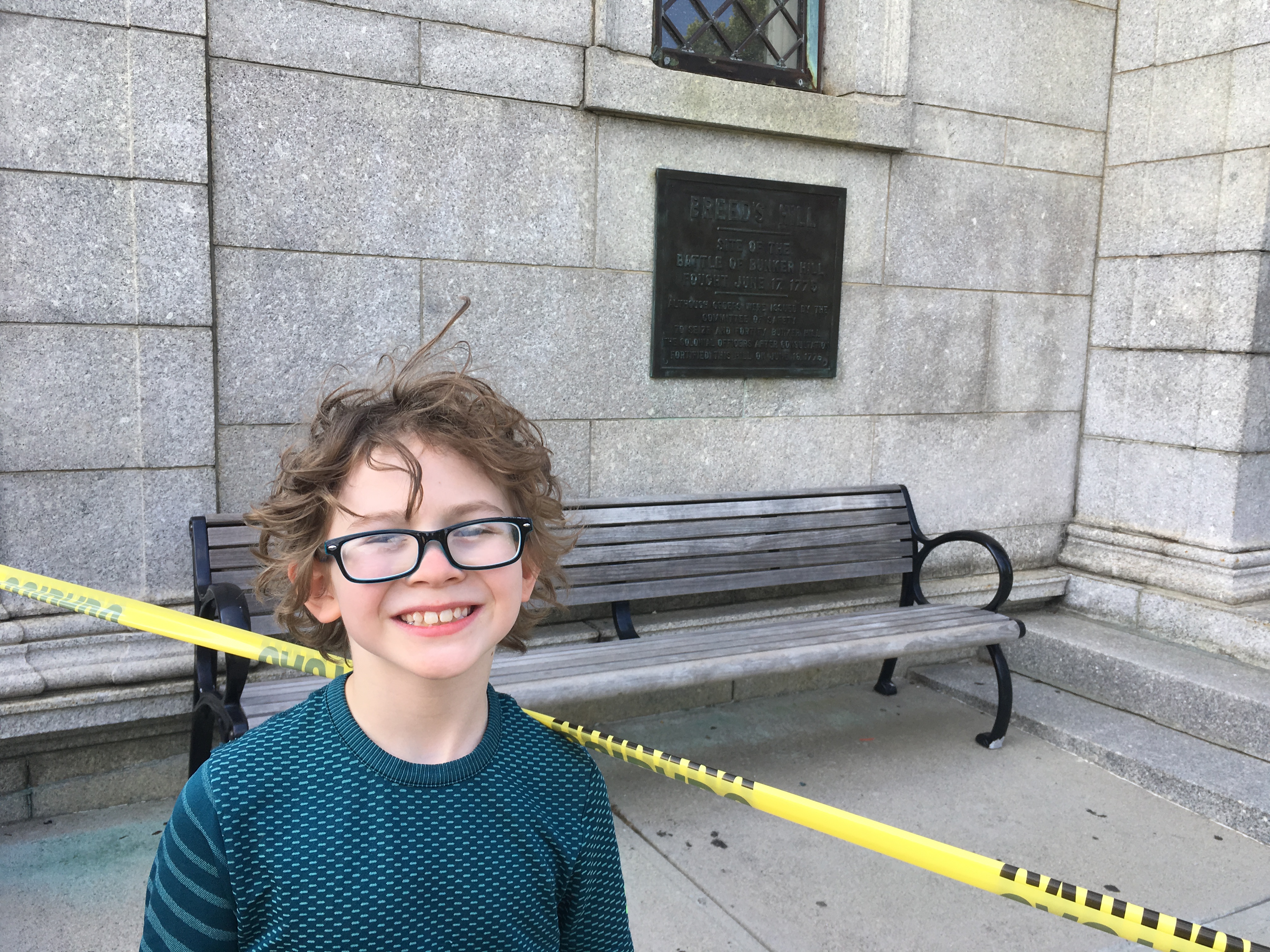
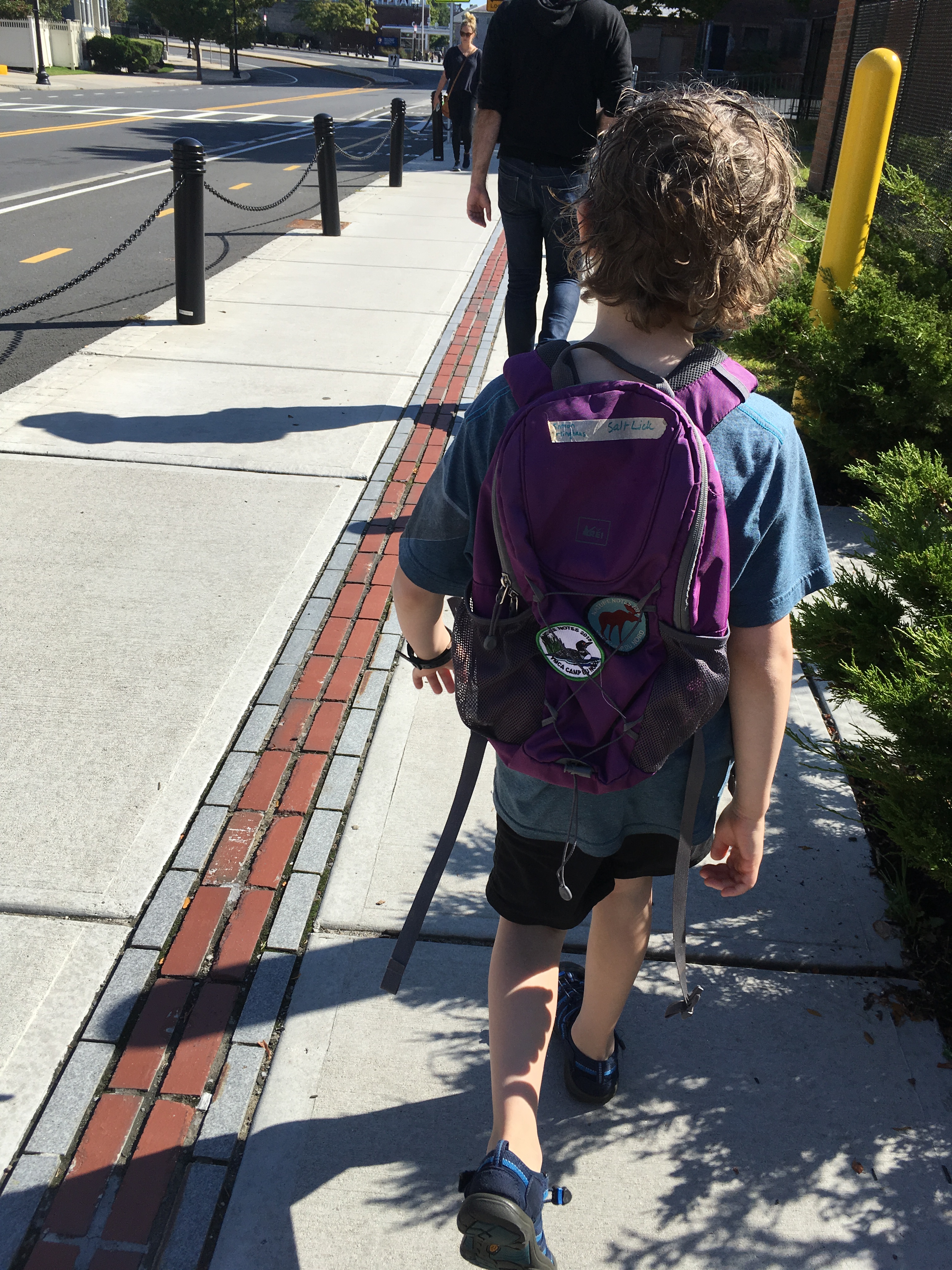
    Later, the 9yo wanted someone to take him to the Bunker Hill monument which is not far from where we are staying, so I dragged myself out of my nap and we went up together.  It was the hottest day of our week, and the place was not crowded.

    It’s a bit of a hike on the hilly streets of Charlestown, and then when you get there you can climb 294 stairs to the top.

    DCAB4B94-5031-4232-9AC2-B53630824A64

    DD328A50-F2D3-4C22-A5C9-C893C3E0994F


    C66D3BA4-7D86-4776-AF95-E451C3300035
    C66D3BA4-7D86-4776-AF95-E451C3300035

    Just as at most of the museums, I could have spent a lot longer at this one than the child accompanying me had patience for.  It is a tiny one, but has a nice big diorama with an audible narration that illuminates different parts of the battlefield and different groups of teeny soldiers as it recounts the tale.  There are also loads of then-and-now maps.  I am endlessly fascinated by trying to see,  in the paper maps of my youth and the zoom-and-swipe roadmaps on my phone, the vestiges of the past:  the Roman castra in a tiny gridded square of streets in an Italian town, the bridges across the Thames.

    Our own city is not very old as a city and likes to demolish old buildings anyway; but I am told that some of the odd-angled roads date back to old, old footpaths between river and lakes, older than the arrival of the men the streets are named for.  That is a history worth knowing more about.

    Anyway:  Boston has a longer history as a paved place than the Twin Cities, although the hills have been made low and much land made out of fill in the harbor, and it is fun to pick out recognizable features.  The old maps show a forked road along the Charlestown Neck that used to connect this little peninsula to the mainland; there is still a big forked road following what looks like the same path, although the neck has thickened, and you can use it on the map to find landmarks.  The very top of the real Bunker Hill, for instance (I can’t be the only one who, in elementary school, stored away factoids about the famous parts of the battle being on Breed’s Hill, right?).  There is a church there, and a cemetery, and for that reason it didn’t get carved up like the rest of Charlestown.   Little things like that.

    + + +

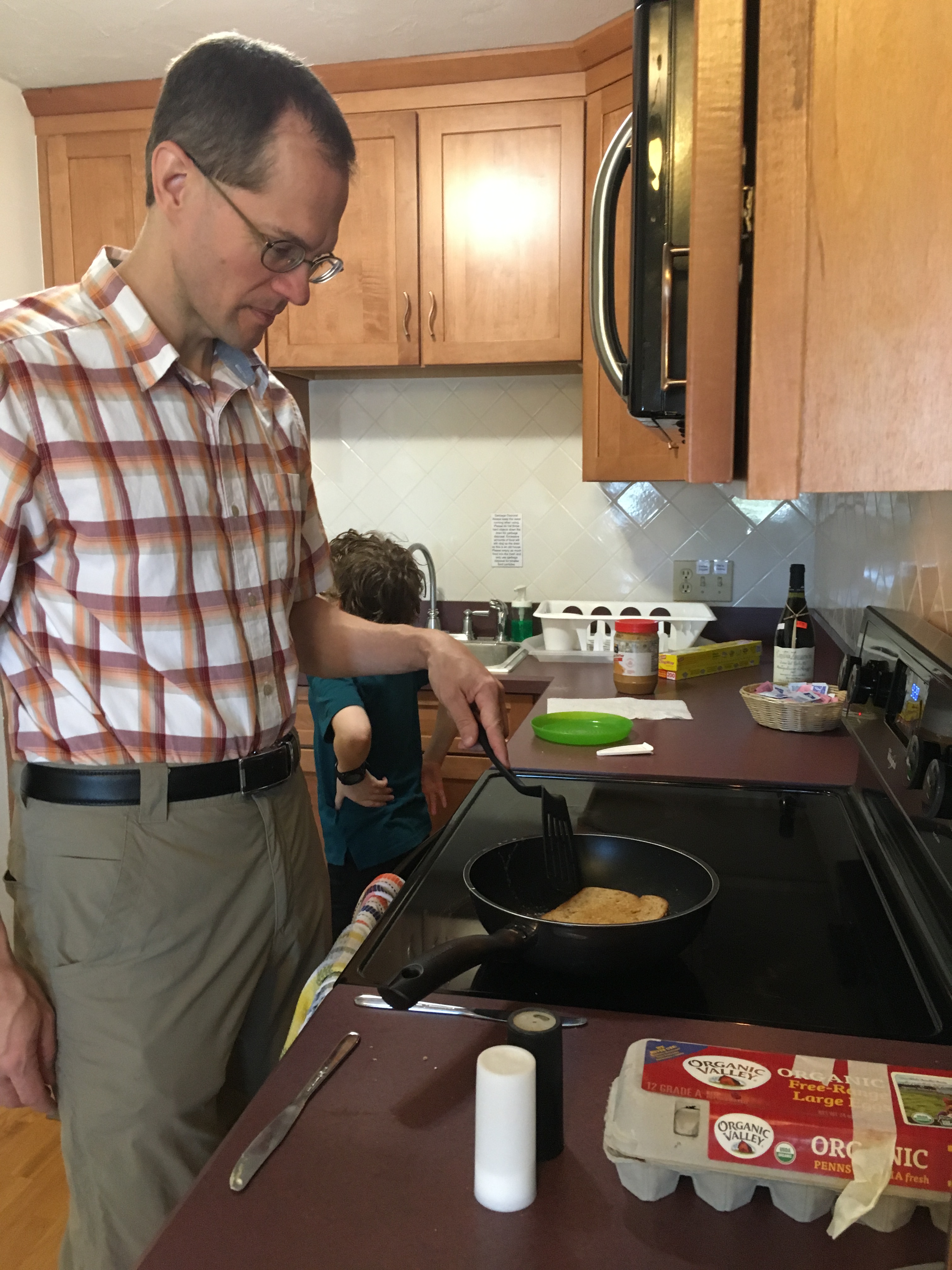
    I went shopping and bought vegetables and made dinner in the apartment, a coconut red curry soup with spirally wheat noodles and tofu and a bit of shrimp and lots of crisp vegetables on top.  So everyone got to rest, and eat food that was the exact opposite of the heavy Italian lunch.  And I got to make the food myself, something that I need to do every few days, it seems, even on vacation.


  • Two museum days (II).

    A brief continuation from the last post…

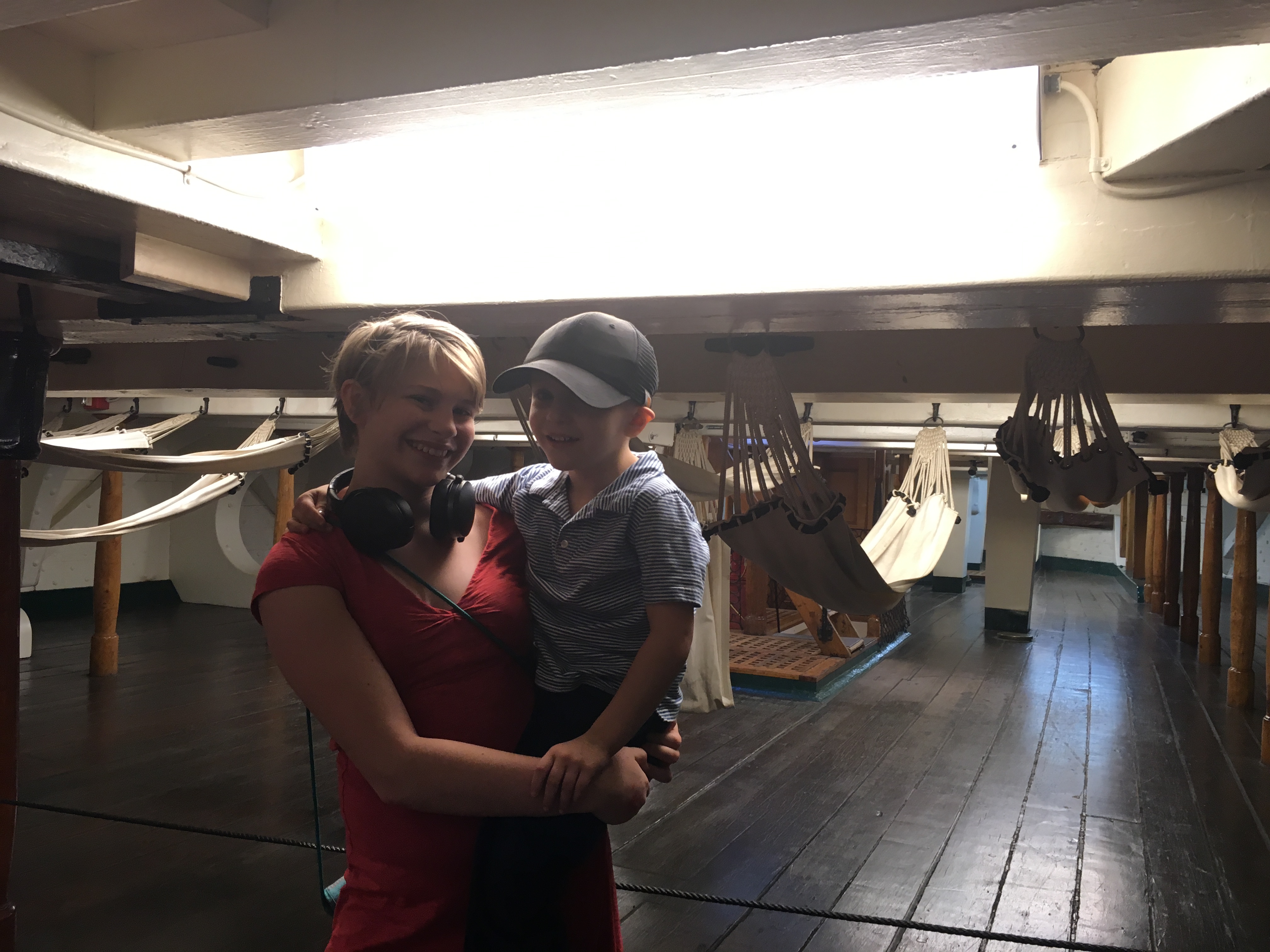
    Tuesday we headed down to the U. S. S. Constitution, where we had to show ID and go through a metal detector before boarding Old Ironsides.   Melanie had promised that seeing the ship would be “a treat,” and it was.

    3ED83640-D75A-41D4-989A-AF7458C18411
    3ED83640-D75A-41D4-989A-AF7458C18411
    3ED83640-D75A-41D4-989A-AF7458C18411

    Navy sailors in checked shirts answered the kids’ questions—how do you fire the guns?  how far can they shoot?    They answer in the first person:  we load them like so, when we looked out through the gunports we could see the British sailors looking back at us, our sides are made of white oak with live oak planking sandwiched between.  

    More questions.  What are the  pilings for, a few meters  out in the water?  (The 5yo hoped the pilings were for target practice.) 

    It’s really a lovely ship to tour.   Our family had toured the Cutty Sark in London and a big replica ship at the Genoa maritime museum, and this had a similar feel to it, with the added excitement of being a Real Ship Really Afloat And Sometimes They Take It Out For A Spin.

    BED54E85-4E4F-4945-92B8-480F11B6849E
    BED54E85-4E4F-4945-92B8-480F11B6849E


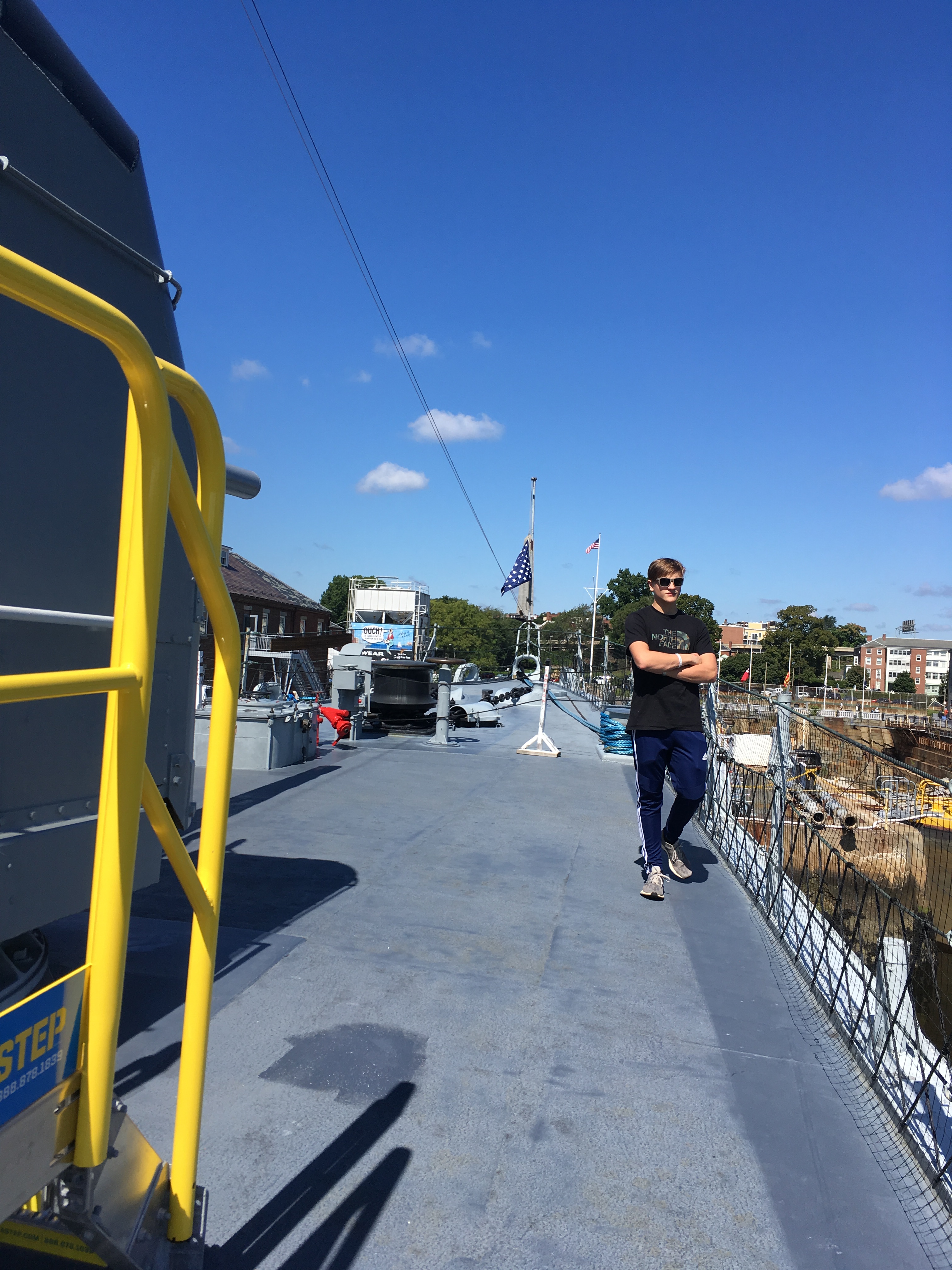
    Docked nearby is the U. S. S. Cassin Young, a destroyer.  “The metal ship,” the 5yo called it.  Also a good ship to explore, and I think the smaller children were equally impressed.

    FC875AA0-3F16-4AB4-92B4-27DA82334EA2

    C428BD9F-4835-464A-A8DD-5CB1B64B6E94

    We got a number of questions answered by a couple of men in USS Cassin Young caps who were painting (until one of the little boys started hopping from foot to foot and we had to leave to find the closest restroom).

    C428BD9F-4835-464A-A8DD-5CB1B64B6E94

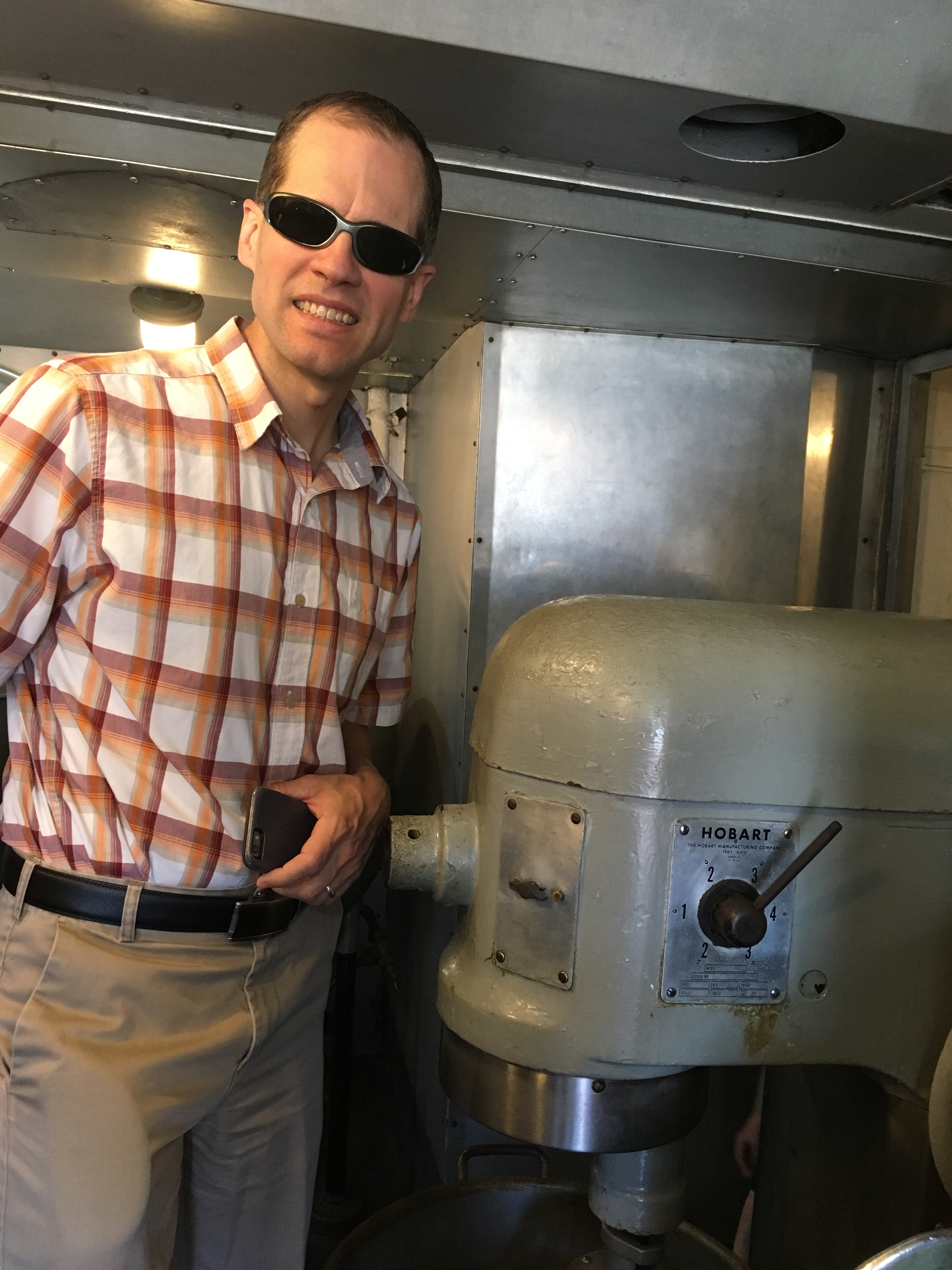
    Hobart mixer in the galley.  Troy, OH!

    After the restrooms we went to the museum, which was sizable and really very well designed for families.  There was a daily-life-of-sailors exhibit with a mock mast that children could climb upon to “shorten the sail,” and a little wind-tunnel tank with a model boat whose square sails you could turn to show how the sails can be “taken aback” to change direction (but not tack).   Two of our kids spent a good long time with an electronic design-your-wooden-warship game.  I was pleased with an elegant little demonstration where you could raise up three metal ball bearings and then magnetically drop them onto samples of three different woods, including the Georgia live oak.   The live oak is so hard, the ball bearing bounces back from it about three times as high as from the others.  There are also blocks of wood you can heft, to feel its density.

    Download 02AB829C-5BFB-40EA-8AC5-AC3CC04476A1

    The exhibit underlines that the people, mostly enslaved, who harvested the live oak had a nasty, difficult job to do under terrible conditions.   

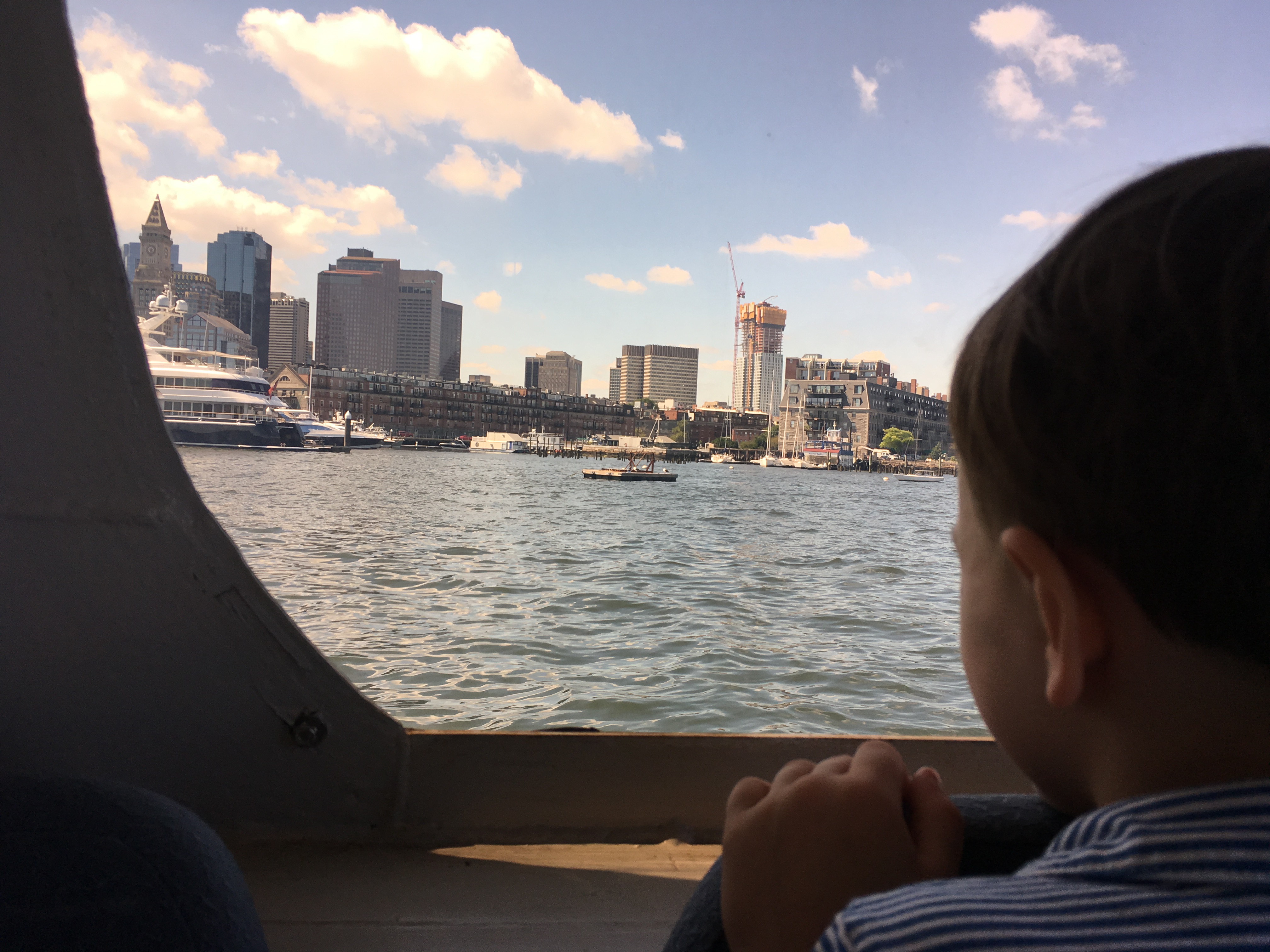
    Mark and I at least could have spent a lot longer at these two museums, but the younger children were getting hungry and hot.  So it was down to the ferry, and across to lunch (tavern-type restaurant with sandwiches and mac-and-cheese) and then the New England Aquarium.

    70ABF975-69B6-4378-841F-E38056FF65A0

    D24C770C-E1E1-4209-852A-B27176B3A26D
    D24C770C-E1E1-4209-852A-B27176B3A26D

    D24C770C-E1E1-4209-852A-B27176B3A26D

    Schooling!

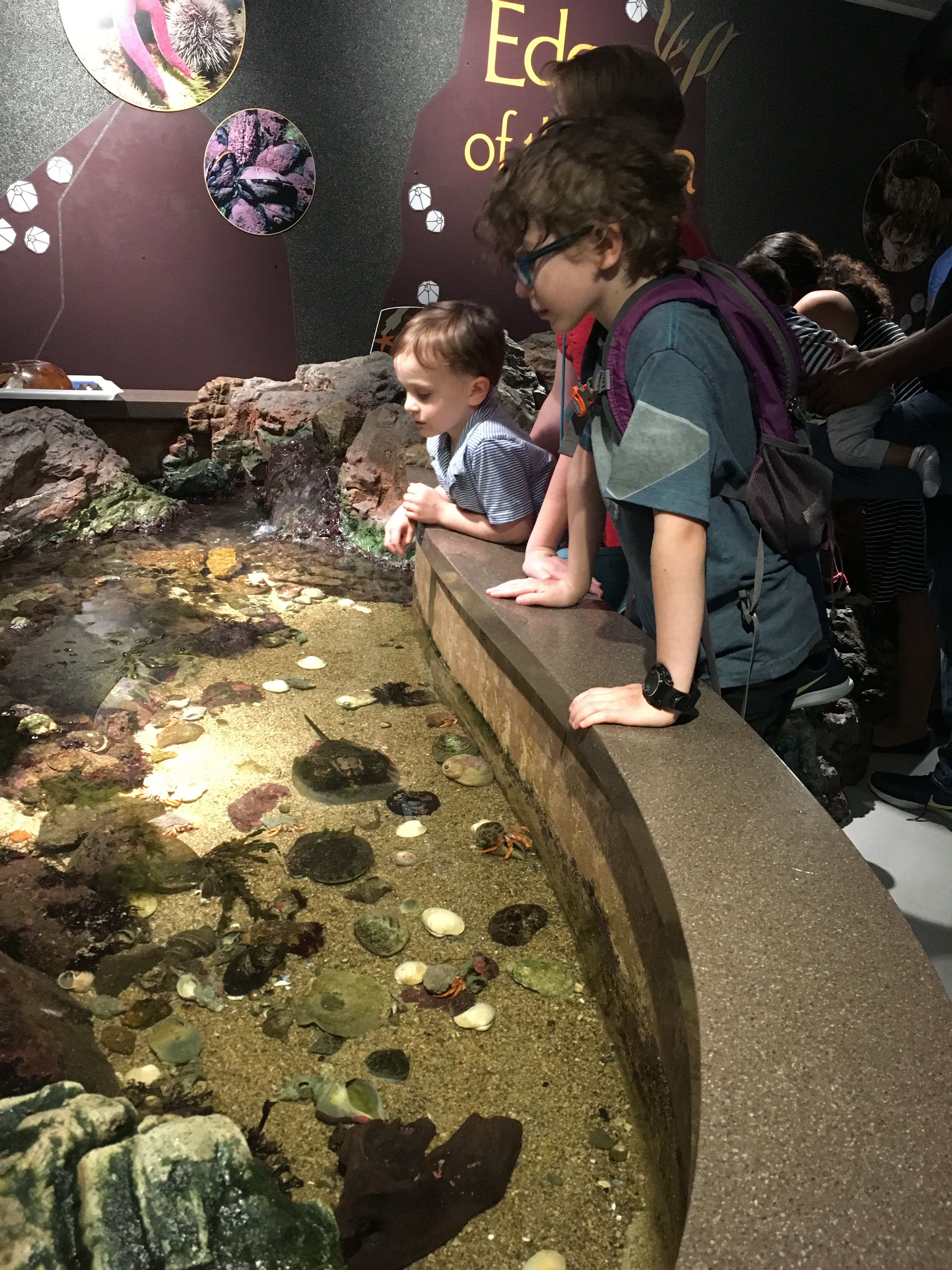
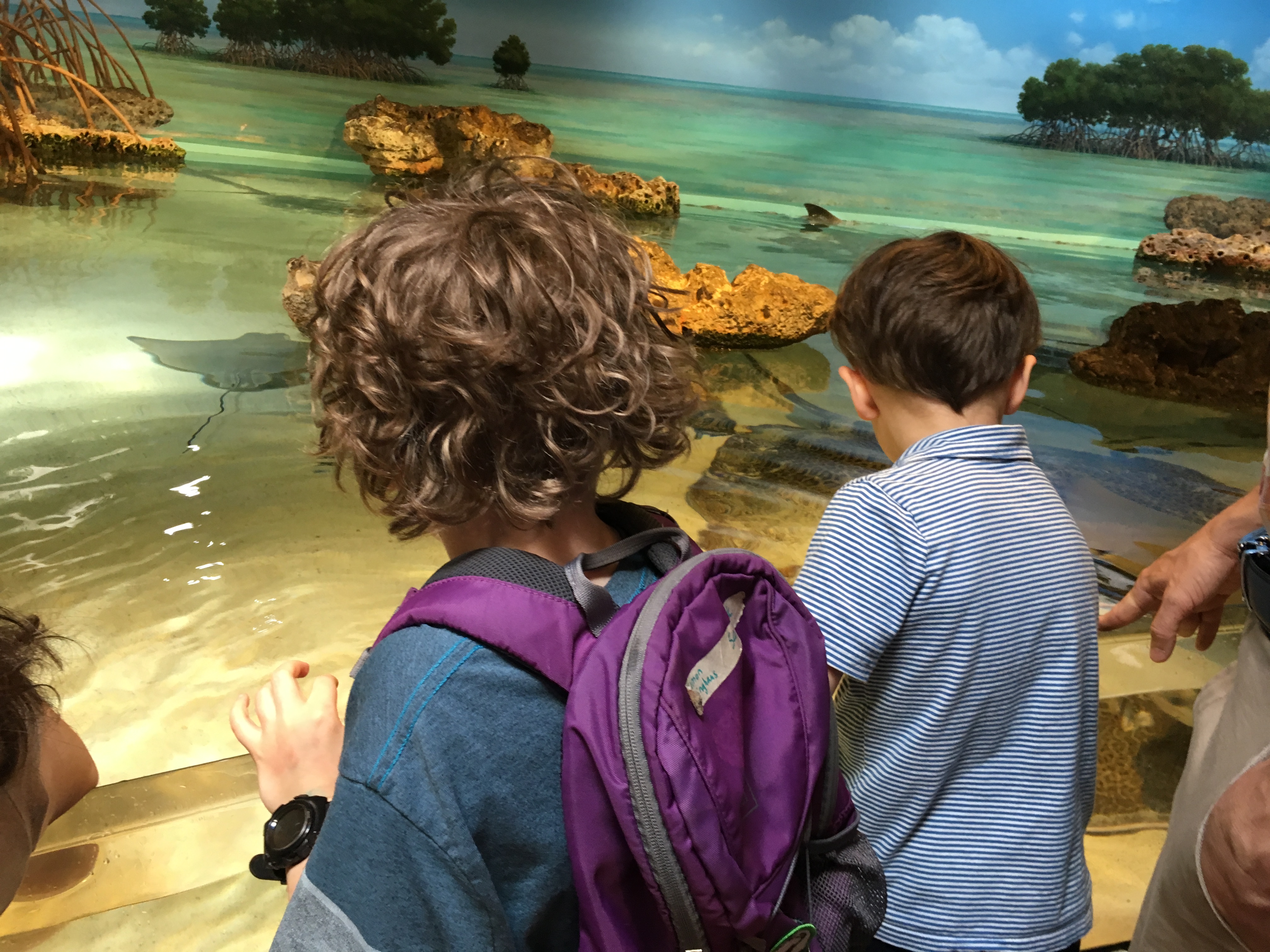
    Okay, so the best aquarium we’ve ever seen is the one in Genoa.  This one is much more compact but still pretty great.  Highlights for the little people:  the really big turtle in the Great Ocean Tank, the octopus tentacled against the glass, and the two touch tanks.  Some tiny moon jellies in an illuminated tube held by a docent, so you could see them up close.   (I love the sea jellies myself.)  Oh, and we watched penguins for a good long while.  The 9yo was very excited and amused to witness one pooping in the water.

    I let the 5yo drag us all over the aquarium at will, which meant we backtracked and wound up on the wrong level a lot, as I squinted at the map in the low light.   He was really happy, though.  This kid loves  fish and sharks and rays.  I am always charmed by the monomania of a small child who has a passion.  Really, I went to the aquarium so I could see the 5yo at the aquarium.

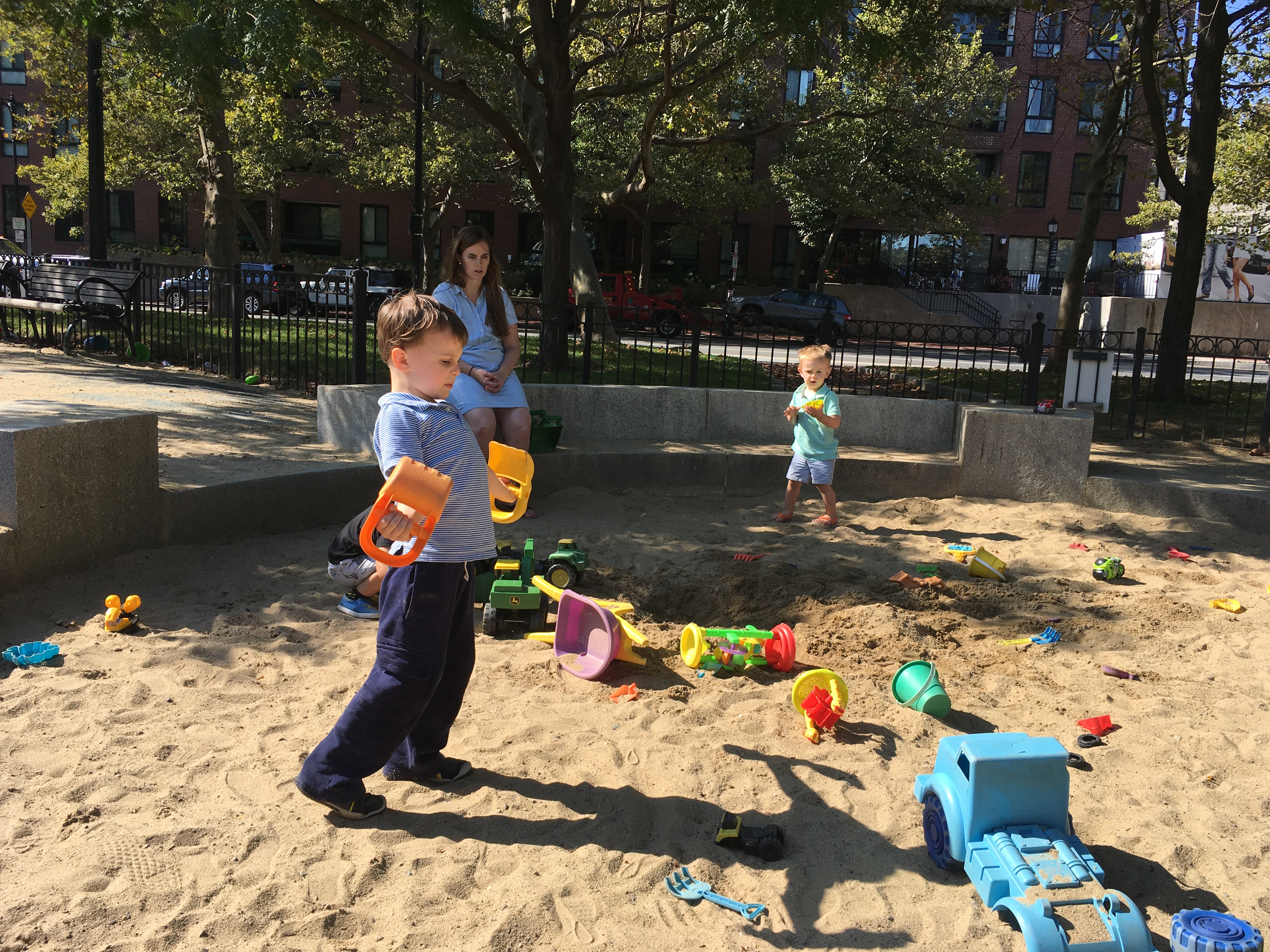
    On the way back:  some time playing in the playground.   I have come to believe that playground time is crucial to traveling with littles.  They remember it.

    F061124B-1BDE-427E-9745-2E75736354B7

    + + +

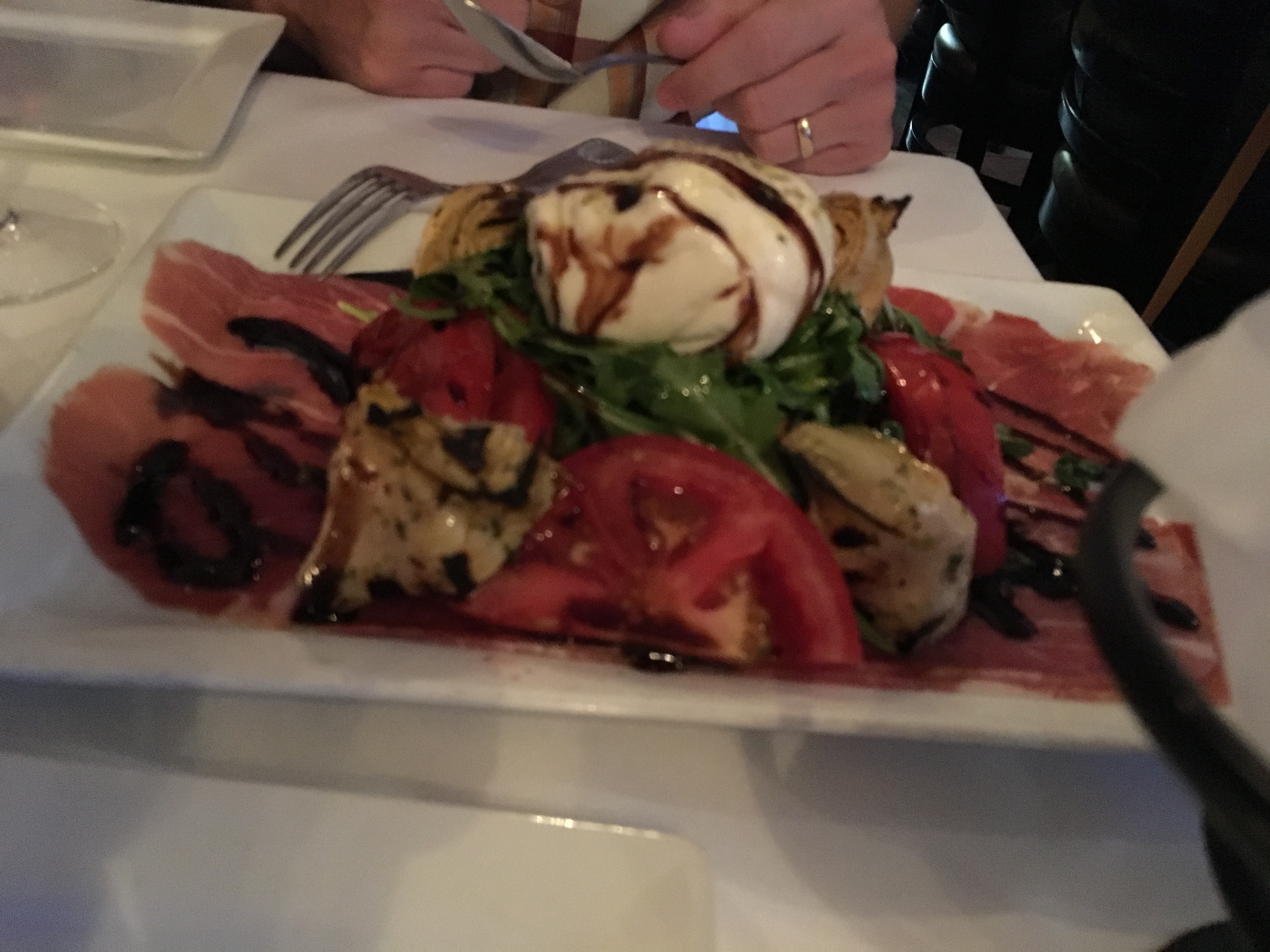
    That evening we gave the kids frozen pizzas and took the bus into the North End for an Italian dinner date.  Which was an occasion to reminisce about being in Italy for real.  Inside the restaurant, with wine and a huge pile of burrata and carciofi and proscuitto and arugula “appetizer” … it did not feel very different.  Buona sera.

    7F2EAB83-4D9B-44F8-A7AA-26876064AE25

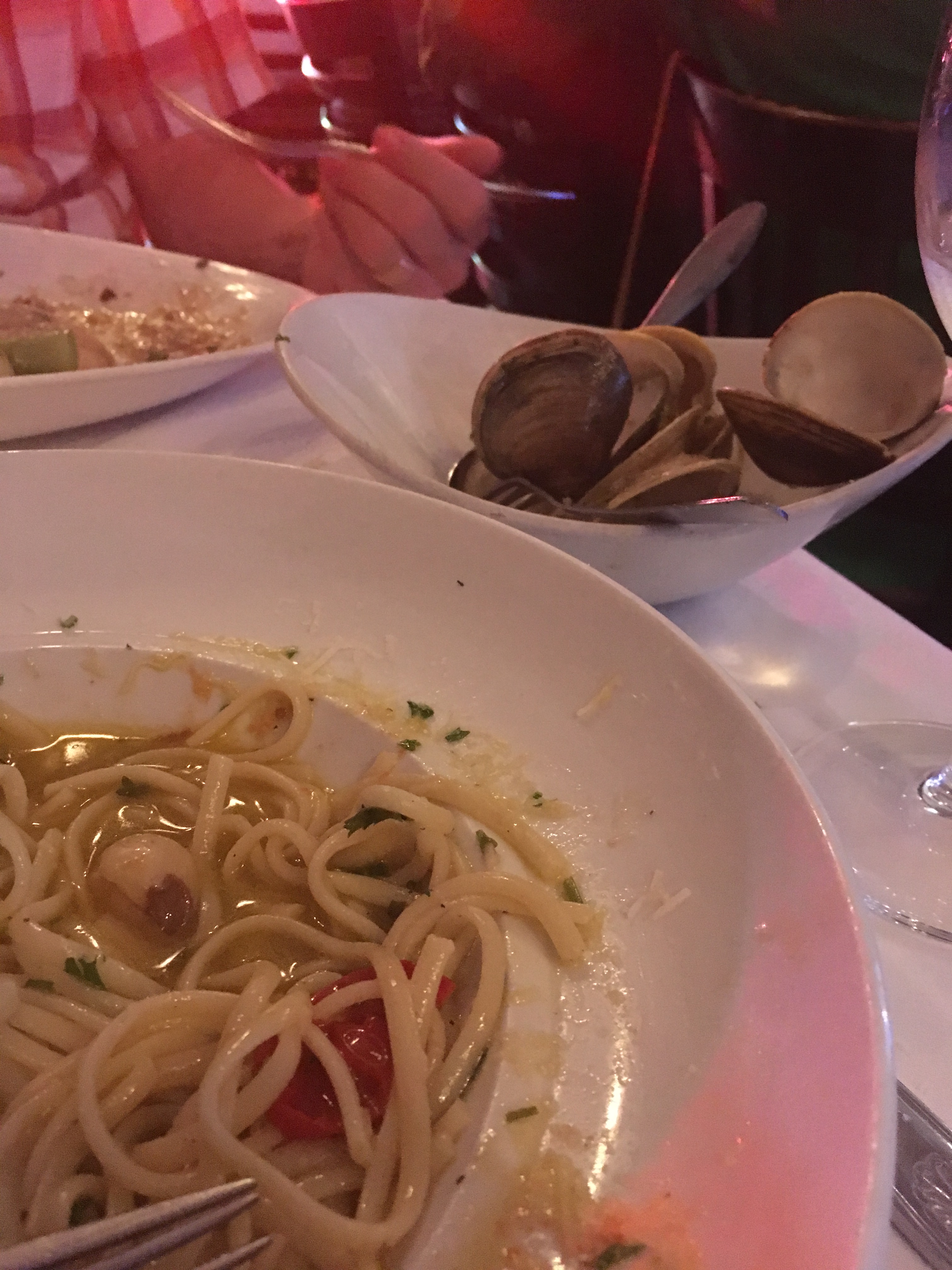
    Also my favorite, linguine alla vongole.  This seemed like the place to order it.

    63EC41ED-FECF-4839-BD86-12925C0AB872

    We finished with espresso for me and limoncello for Mark and a walk back to Charlestown.  Really lovely.


  • Two museum days. (I)

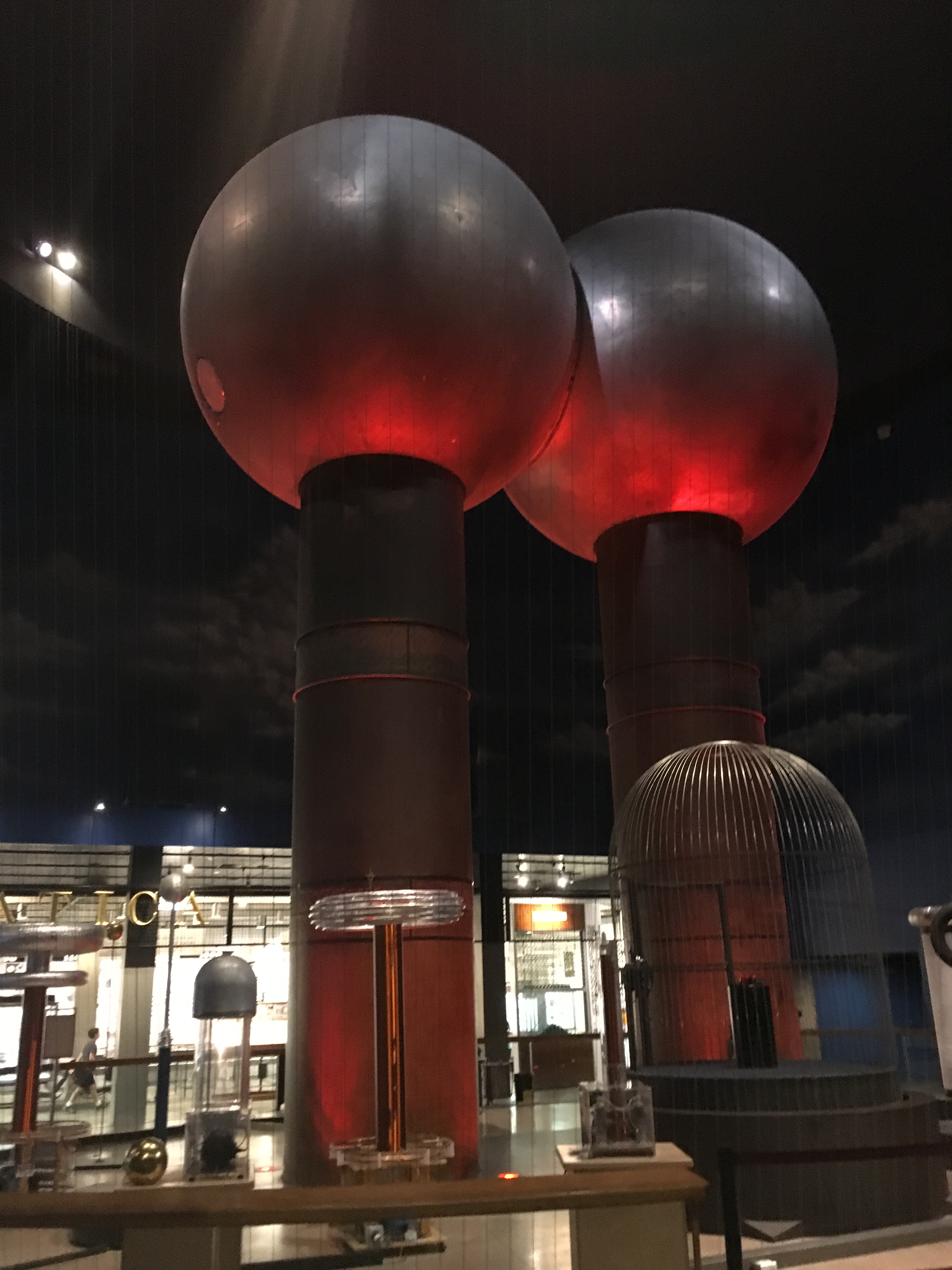
    On Monday, Labor Day, we headed for the Boston Museum of Science.  I had been there at the 9yo’s age and fondly remembered the giant van de Graaff generators and the lightning show, which to my delight is still running.

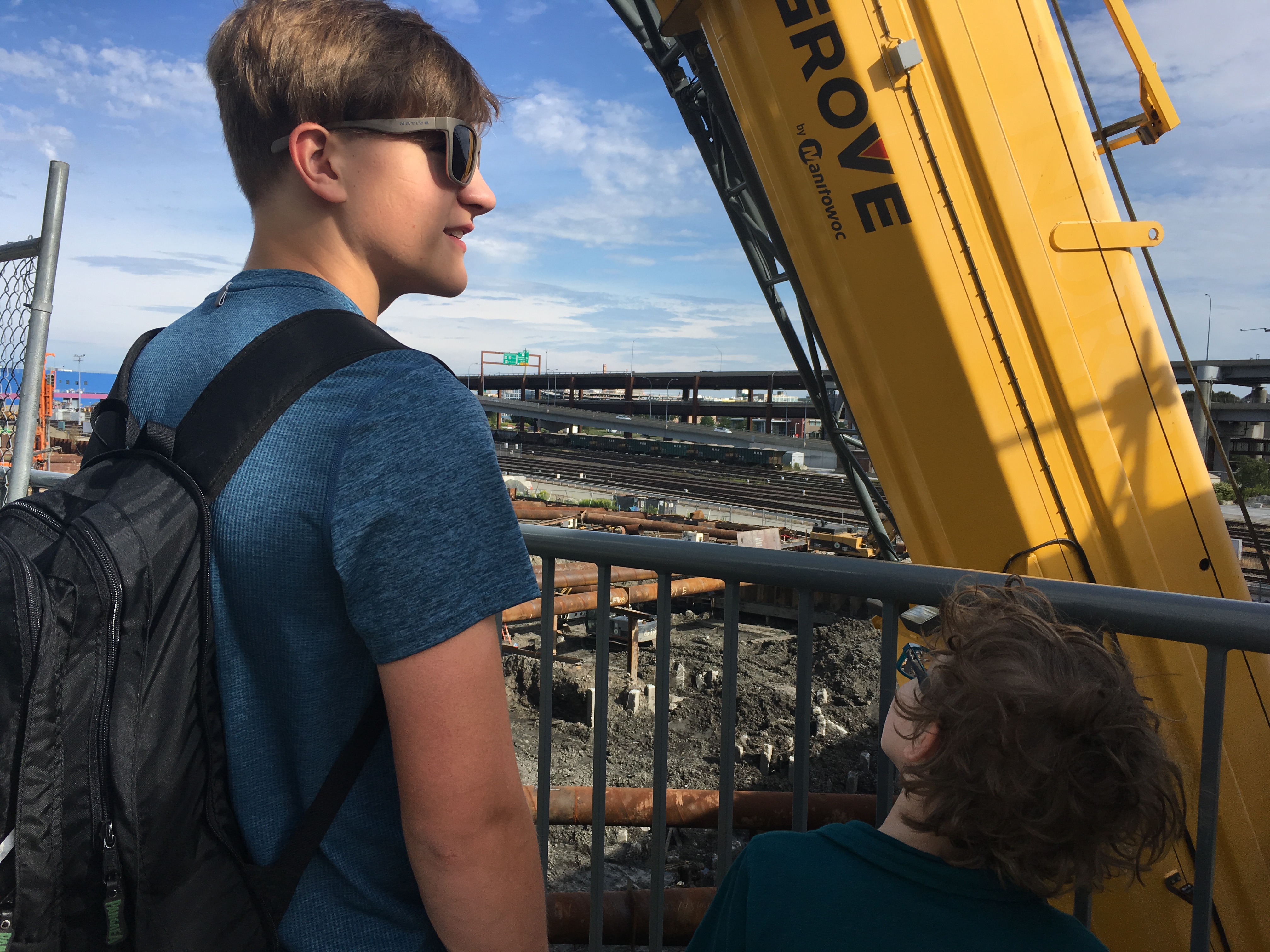
    This is on the same peninsula with where we are staying in Charlestown, so we walked there.  There is a long viaduct to cross, which took us over a lot of railroad tracks and an exciting construction site.

    C649D2CF-45B7-4CCA-80E5-74A2E8BBD6D9
    C649D2CF-45B7-4CCA-80E5-74A2E8BBD6D9

    The Boston Museum of Science is a good-sized museum with a lot of well-designed exhibits.  I think the  designers of the permanent exhibits here have done a better job, on the whole, than the ones at the Science Museum of Minnesota.  They seem to invite kids to sit down and interact for a longer time, rather than running around whamming buttons.

    Among the many imaginary jobs I fantasize about having is “science museum exhibit designer.”  I would like to study what sorts of features encourage different sorts of people to spend more time with the material.  

    As it is I am only left with a visitor’s impressions, not data, and of course the problem is that I am a particular sort of person, and probably an oddball of a visitor myself.

    One example of the kind of thing I think about in science museums:   It seems to me that a linear design that nudges you to pass by things one at a time (deciding at each location on the path whether to stay longer or move on) is better for deep engagement than the sort of exhibit where a big open room has many freestanding stations scattered about.  But maybe the big open room works better when sixty field-trip children descend on it at once.  This museum had a mix of both, though, and they both worked pretty well.  I must say it is a lot easier to go with Mark than if it is just me.

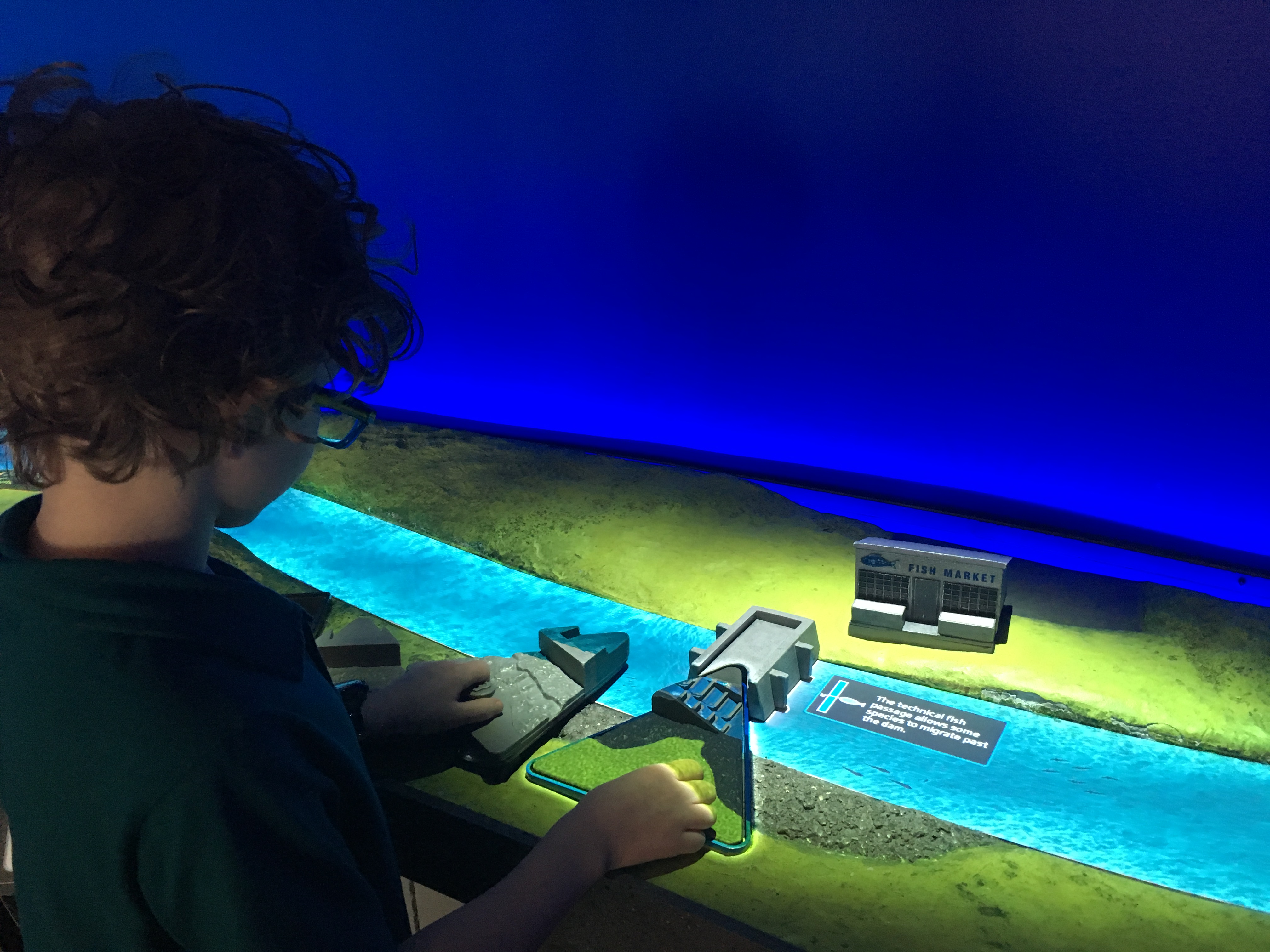
    One thing that surprised me:  a number of exhibits involved animated models that in my opinion worked extremely well.  There was a hands-on flow-of-a-river exhibit tucked away in a corner.  From a distance I saw the 9yo playing with it, moving blocks around in the river, and thought, “Oh, it’s like the river model in the Mill City Museum at home, where you build structures in a channel of moving water and see how the flow changes.”  But when I got closer I realized that the river was animated via projection from the ceiling, and switching out the blocks triggered a change in the story the animations were telling.  So—an interactive animation with a lot of physicality.  It didn’t teach the same thing as a flowing water channel wet lab, but it did what it did very well.

    36A45FB0-2D07-46D4-955B-63FD1BE826CE


    Another pleasant surprise was that my 5yo, unlike all his siblings at that age, was relatively uninterested in running around whamming buttons to see if anything would happen in less than two seconds.  He wanted to sit down and work his way through things, and spend lots of time on a single exhibit.   Such as working through a lovely little interactive where you get to touch and examine an animal skull, and then (by pressing buttons that let you make binary choices) decide which of three animals the skull came from.  Was it predator or prey?  Have a varied diet or a monotonous one?  Did it have a strong bite or a weak one?

    He sat there, with me and later his sister, reading the questions to him, and went through all six skulls.

    4FE6ADFD-C838-4CC7-80DA-F3D0FCA908FF

    Another thing he got totally absorbed in was a game where you select from a bin three different malaria-mitigation measures for a population of at-risk individuals, constrained by a rudimentary budget, and find out how well the combination worked based on how many animated mosquitos disappear from the screen.  We had to entice him away.

    DEAE7C6D-BD54-43D3-B3B5-043B18C28159

    As promised, we made it to the lightning show.  I was delighted, once inside the Theater of Electricity, to discover that the whole room was essentially unchanged from when I visited in the eighties.  The leaping aluminum disk, pinging into the air and clattering back down every few minutes as museum visitors charged the electromagnet and released it, I had forgotten but remembered as soon as I heard it again.  There is a decidedly old-school exhibit on the history of mathematics tucked into the back:  it has not changed either.  I remember the model of the Mobius strip, a little mechanized arrow clicking along on a track, traversing the whole thing to demonstrate its one-sidedness.   Lots of text and pictures.  Nobody would make this exhibit today.  But I remember it with fondness.

    And of course there is the world’s largest van de Graaff generator.  I walked around it, running my hands over the smooth wooden railing, and felt the same as I did at age eight when it towered above me, because of course it still does.  

    E32F563A-732E-4EB6-8DEB-5C39A88179AA

    And my 9yo loved the show, so there’s that.

    Later, after a long rest in the apartment, we ventured out in the pouring rain to a pizza restaurant at the other end of Charlestown.  It had a stellar beer and wine list and great food.   We split a few pizzas and salads, and I drank a sour named after a banh mi sandwich and then discovered a Ligurian rosé on the menu, which I never ever ever see, so I had to have that, and it was awesome.

    The little guy was still tired, and didn’t have much appetite.  He needed his sister’s hat and a napkin cape to stay warm, and later ate cereal in the apartment.   Hurray for a kitchen.

    0F385B70-07E7-46DB-B008-600FF58B92DB


  • Boston!

    I have been wanting to take a family trip to some city—any interesting city!—in the U.S. for some time now.  For a while I thought we might lug the kids to D.C., and then Mark’s parents decided to take them there (and to Gettysburg and Colonial Williamsburg) a year or so ago.  I didn’t really feel ready to tackle NYC, and I have been to Chicago myself enough times (and really it is close enough to drive for a long weekend).  

    What is reasonably educational, big but not too big, and features people I know from the internet?  Boston, of course.

    3D8E3DC0-4D80-465B-BEF2-48859A48A5B4

    Seriously, you can walk this entire area, which contains plenty to do for a week.

    + + +

    Mark insisted that I do all the planning of Things to Do, but he agreed to deal with the airplane tickets and rental home, for which I am grateful.  As for the former, that’s fairly straightforward: direct from MSP to Logan, many choices.  As for the latter, he says that back when we planned the trip he was only able to locate two places in the price range he was happy with, one near Fenway Park and one in Charlestown; he reserved the Charlestown one with plenty of time left to cancel and told me that if I could find something I liked better I was welcome to switch.  

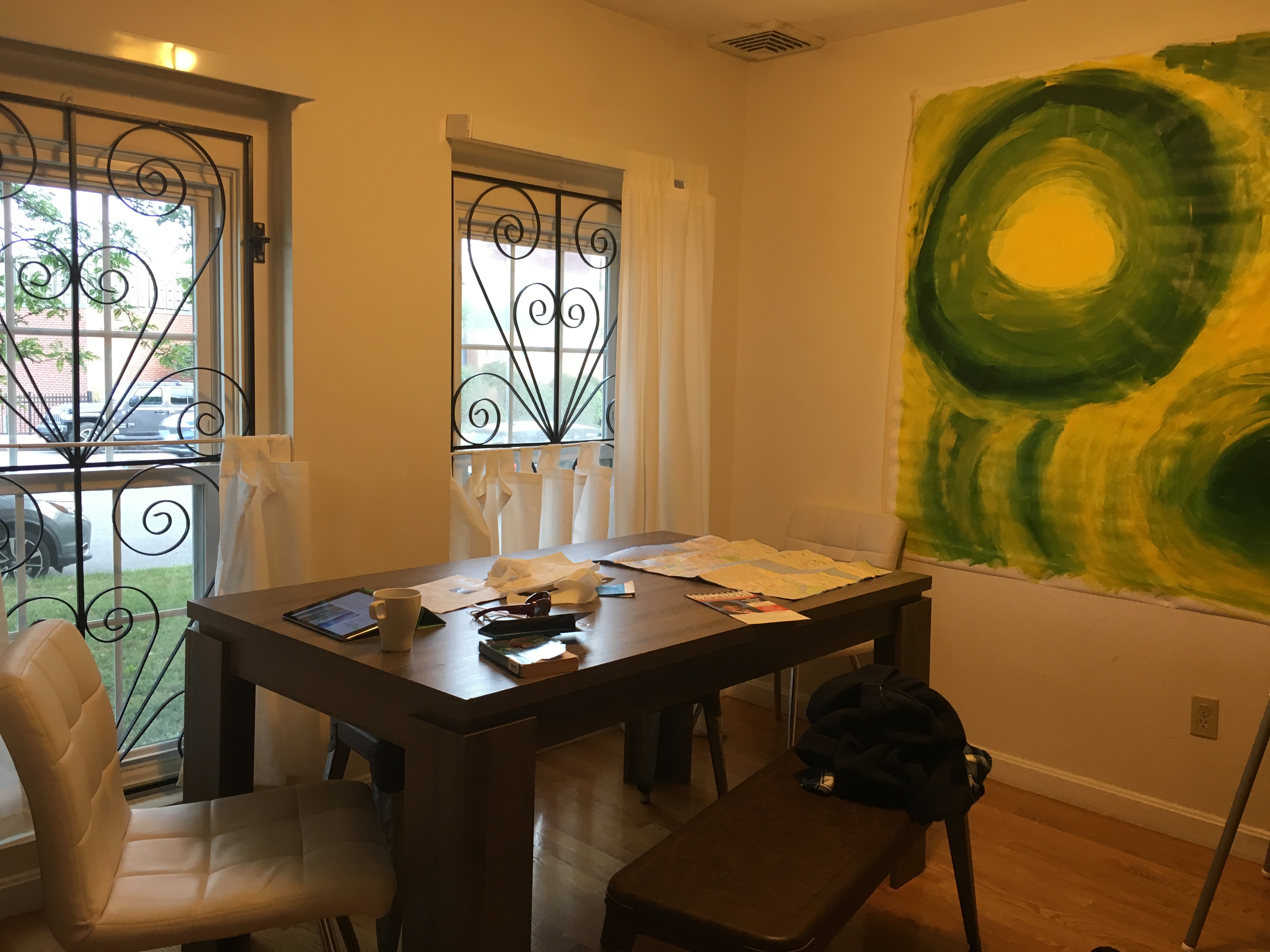
    I was not motivated to do that work, and now that we’re here I am perfectly happy with what he found.  It is an airy and open row house, a couple of blocks from a transit station (which he did on purpose) and across the street from a grocery store (which he did not do on purpose but I am glad about).   It faces a busy street, but as I suspect that you pay a premium for being able to see Charlestown’s charming brick and painted clapboard houses through your windows, I do not mind.  Everything is crisp and white, with sunny abstract paintings on fringed canvas stapled to the walls, and the utilitarian loveliness of a comfortable home that has no personal possessions in it whatsoever.

    799AC202-56CD-4B5C-8E13-B0DE8D68AEE6
    799AC202-56CD-4B5C-8E13-B0DE8D68AEE6

    I like staying in hotels when I am alone, but when traveling with a family for more than a day or two, nothing beats having a kitchen and enough room to spread out.  Besides, I rather like the fantasy of becoming a citizen for a couple of days, having a neighborhood to call one’s own and explore.  And if you are going to become a citizen of Boston for a couple of days, historic Charlestown will certainly do.   

    CED63AB5-71BE-4B13-BFC4-F6FD02F75FC5
    CED63AB5-71BE-4B13-BFC4-F6FD02F75FC5
    CED63AB5-71BE-4B13-BFC4-F6FD02F75FC5

    Saturday, after a long travel day of taxi van-airplane-airport shuttle-“the T”-walking, we found our apartment, ate a very late lunch at a local chain restaurant, bought groceries, and rested.  I wandered around Charlestown a bit, without going up towards the monument, peeking in closed coffee shops and reading the menus in the windows of restaurants, and went back out twice to buy first wine and then bottles of seltzer.  The kids ate quesadillas and cereal for dinner and collapsed early.

    Sunday I had exactly two plans:  go to Mass and then take the Red Line all the way to the end to meet People from the Internet….

    + + +

    Mass first, I will be brief.  We went to the eight o’clock at St. Mary-St. Catherine in Charlestown, in the old St. Mary’s church.  The building is lovely, a Gothic exterior and a wedding-cake of statuary and wood inside.  My 9yo studied the windows and the carvings with wide eyes.  I did too, especially the series of Marian windows on pewsitter’s right and the carved angels in the ceiling.  I poked Mark and told him to look up.  “They’re like ship’s figureheads!” he said.  

    I typically don’t take photos inside churches unless there are no worshippers present, but you can see photos and read about the building on the parish website.  Very much worth looking at.

    Mass was concelebrated by two visiting clergy, one of whom was being welcomed to the rectory just that week and would be doing graduate work at Boston College.   The new priest was introduced as being from south India; my guess is that the main celebrant is Nigerian.  He introduced himself as a missionary priest.  He gave a good, organized homily, with many references from Scripture, on the topic of humility as resting on the “two arms” of truthfulness and generosity.  Music: Gloria not sung, piano accompaniment, Gather-type hymns from the annual missalette.  Attendance:  few families at 8; the 10:30 is advertised as the “family mass.”  It was a warm and welcoming environment, with plenty for the  younger kids to look at, and a fantastic pew like a box that trapped the 5yo inside!

    + + +

    After Mass and breakfast in the apartment we headed for the T station, and an hour or so later were picked up in a big white van by…. Melanie Bettinelli of The Wine-Dark Sea!  

    2DEC7DF1-823D-4349-AEB3-36A08A1F64D3

    Domenico Bettinelli’s blog Bettnet was one of the first blogs I ever read way back when the blogosphere was taking off and the universe of Catholic blogs seemed smaller and friendlier.  Since then Melanie and I have interacted a lot more—hers has always been one of my favorites, and the rise of Facebook has allowed for those smaller but more frequent interactions, less like long thoughtful letters and more like an ongoing conversation.   I am pleased to report that coming into the Bettinelli’s house with my own boisterous family was one of those great experiences of feeling like you already have known each other IRL for years.  The younger kids flailed at each other with toy weapons and the older kids sat or stood in the kitchen and talked with the adults about tech and camping and saints and books.  We came before lunch and we left right before the kids’ bedtime, stuffed full of Melanie’s quiche and Dom’s fajitas and some really good craft beer, and I could have stayed for hours more.  

    The best way to make friends is to spend, like, eight to ten years not meeting them in person.  I swear.

    7987E0C4-182D-4290-8CB7-35C4701CC175
    7987E0C4-182D-4290-8CB7-35C4701CC175
    7987E0C4-182D-4290-8CB7-35C4701CC175
    7987E0C4-182D-4290-8CB7-35C4701CC175


  • When You Reach Me by Rebecca Stead.

    My first two offspring never quite got into reading for pleasure, something which baffled me.   When I was your age I carefully propped library books inside my school desk and tried to read them one line at a time by surreptitiously lifting up the lid-top of the desk while the teacher was talking!  You don't even have to go to school and if you ever came to me and said, "Mom, can I just finish this book instead of doing my math?" I'd completely fall for it!  I reminisce all the time about how I was allowed to buy a paperback book nearly every week when I was a kid!  Do you know what I would have given to get my hands on an e-book reader back in 1984?

    Truly you can't make your children love what you love.  They are their own persons.  My oldest turned into the sort of person who loves to read nonfiction, something I can relate to, and is perfectly happy to read novels for college literature classes and get A's on the papers.  Number two prefers audiobooks, a preference that is harder for me to wrap my mind around, but I can see that he and I have different modes of taking in information. 

    More like me are the next two.  The resident nine-year-old is by far the most voracious reader of my children so far, devouring series faster than we can keep up with him, and cheerfully re-reading his favorites over and over.   He's the one whose reading style I identify with the most.    The newly-minted 13yo also loves to read, maybe not quite so thirstily as her younger brother, and has a different taste in genres; she's always got a book going, though, and she seems to enjoy the literature H. assigns them to read for schoolwork (not always the same stuff I would read for pleasure, either).

    + + +

    When I started homeschooling, I had this idea that I would fill my house up with enticing books and the children would spend their spare time curled up on chairs reading them.  I would pretend to be annoyed that I had to drag them away from their paperback books to do their math, but I would let a little twinkle in my eye show that I was really pleased that they were engrossed in their reading.  Well, I have filled up my house with books and stocked e-readers with titles and allowed my kids complete freedom of the bookshelves but none of that has come to pass (ingrates!  do they know how much I would have loved to have freedom to read any hour of the day when I was their age?  the only thing that made all my brother's Little League practices tolerable was that I could bring a book and read for three hours while I slowly sunburned!). 

    Nevertheless, she persisted.   

    Most of the books I put in were books I remembered from my childhood, sometimes the ones I remembered loving, other times the ones I remembered other people loving.  This year after I reorganized my shelves, rotating the stock from the upstairs bookshelves to the schoolroom bookshelves with an eye to the ages of the children, I had a little space left over in my "novels for kids" zone, and decided to search out some more recent titles.

    51hkXRTC65L._SX337_BO1 204 203 200_ I'm not sure how I settled on When You Reach Me by Rebecca Stead.  Perhaps I saw a review somewhere; or perhaps a list of award-winning books, as it is the 2010 Newbery Medal recipient.  Just after having finished the latest Neal Stephenson tome, which was pretty good and took me several days, I bought Stead's slim paperback from Amazon and read it in a couple of nights. 

    It had been a long time since I read a children's (not "YA") book that was new to me.    And I fell into it like into the beanbag chair in my bedroom at home, the one next to the blue-painted bookshelf crammed full of my favorite, dog-eared paperbacks.    The feeling of reading this book was just the same as reading the best of the children's books that I loved as a preteen, loved a little bit into my teenage years past the time when my peer group had shifted to the books aimed at teenagers, until I started reading books aimed at grownups.

    + + +

    Here are the reasons why this is one of the great children's books.

    (1)  It is called a science fiction book by some of the reviewers, but it is mainly experienced as a mystery.  The main character finds herself in the middle of some very strange happenings in her neighborhood, little events that seem to be of great import, and also events that seem small but turn out to be very meaningful.  There are clues along the way, some of them obvious and some not so obvious, and the reader has the power of piecing them together if she is very, very attentive.   And if she is not perfectly attentive — well, I for one, on finishing the book, immediately turned back to the first page and read it again, in order to find as many of them as possible.

    In this way, it reminded me of another Newbery Medal book, the 1979 winner, The Westing Game by Ellen Raskin.  Yep, another one that I keep fruitlessly trying to get my kids to read.


    (2)  The book takes place in New York City during the 1978-1979 school year, and features children going about their days from school to home in the city with very little supervision, encountering alarming people who really aren't a threat and less-alarming people who do turn out to be a threat.  They have a great deal of freedom; they are cared for by adults who watch out for them, at home and at school, but those adults have their own concerns and do not micromanage the children's lives.  Rebecca Stead has said that she wrote the book in part to show her own children what it was like to have one's "first independence" in that earlier time.  This sense of being a child, vulnerable and at the same time expected to make one's own way around, is palpable in the book.  

    (3)  This is in part a school story:  there are a group of sixth-graders, interacting and whispering and wondering about each other.  Are my friends still my friends?  Does she like me or not?  Why is he acting so mean?  What's going on at home?   It is among the best example of the genre called "surviving middle school:" in which the only source of drama is the normal-sized drama of children living their children's lives in the social fishbowl of their peers, when even the smallest slights seem  terribly fraught with meaning.  The best of those books, of which there were many, took the children's feelings as serious as we children did.  This is one.  There are hints of serious, even dark, things going on in the other children's lives; there are hints of incipient romance; but it's all under the surface and not fully understood, part of the mystery of life.  I'll say it again:  it feels like the good children's books of my youth.

    (4)  Every character, from the ones who make only brief appearances to the ones who are central to the story, is finely drawn and fully human.  I especially loved the adults in the story, who are seen only from the young narrator Miranda's point of view, but whose actions tell the story of their interior lives.   Miranda's mother is especially beautifully drawn, and quietly commands two whole story arcs of her own, one of which is under the surface, barely noticeable.  There are also two school officials, barely mentioned, but who step in to do what they can to rescue a young person in trouble.   Some of the other children Miranda encounters.  You are left with a sense of the full humanity of the apparently-minor characters, in this story and in real life.

    (5)  There is a LOT going on in this book.  There are numerous storylines going all at once; each of the supporting characters, even the least important of them, could have been the main character of a whole novel of their own.   Indeed, in one sense Miranda is not the main character of this story at all; the story turns on her, but it can be argued that it is not actually about her.   And this reinforces the finely-drawn characters:  there is a secondary theme in the book, one that goes unstated:  every person has their own story in which they are the main character.  Everyone.  And we are all supporting characters in other people's stories.  

    + + +

    Madeleine L'Engle's classic novel A Wrinkle in Time (Newbery Medal, 1963!) is itself almost a character in this book, a deliberate homage.  Two characters bond over their common love for it.  But it's also a reference meant to make a connection between the styles and subject matter.  I expect Rebecca Stead hopes that her readers who enjoyed When You Reach Me will seek it out, and perhaps discover all of L'Engle's work, and maybe more of the great children's books of my youth.  Now that I think about it, maybe I myself was drawn to When You Reach Me because somewhere I learned of the deliberate invoking of L'Engle within its pages.    Whether the connections went forward in time, or back, I'm very glad they did.

    I recommend this book for ages nine and up, and particularly for any child who has loved, or will love, A Wrinkle in Time.


  • My kind of pep talk.

    I've been going around grumbling inside my head. "Our leaders suck and that sucks, and we can't do anything about it because everybody sucks."

    Yes, I'm that articulate inside my head these days.

    And outside my head?  Stunted, perhaps, by the lack of adequate vocabulary?

    I haven't been saying much out loud, at least not when it comes to anything related to leaders and authorities.  Dinner table conversation in that direction has largely petered out, and not necessarily been replaced by anything more wholesome; given a conversational vacuum, the children will squabble, or talk about cartoons.  There's always the latest technical challenge from Mark's job, or what the kids' schoolwork is like, and other normal things; but there's a gap that used to be filled with "Did you see where…[political or legal or Catholic-church-related news item]?" and it's mostly empty, because who wants to ruin dinner?

    Indeed, this post will also be short.

    + + +

    Why?  Why do we have such bad leaders?  Why?  Why?  Why?

    Even the "good" ones we have right now, or the good potential ones who might come along to replace the bad ones, well, likely they only seem good by comparison.    Add a little power to the mix and who knows what you'll get.

    The answer comes back bearing either despair or hope, depending on which way the coin comes down, or is it which way we turn it:   

    I, too, am a leader.  

    And I know what's in myself, what I hide and what I display, what I work for and what I let fall.

    + + + 

    I saw a video clip of an ice tsunami yesterday:  a sheet of ice gently approaching a sloped pebbly beach, and suddenly crumbling on itself and piling higher and higher, shoving sand and pebbles out of its way, overflowing like foam, building into an unclimbable wall. 

    Hqtxm4s

    Such is the effect of the force and weight of our small decisions, adding together.  

    It's neither an absolution nor a condemnation.  It's just that however placed, we all have the potential inside us, the potential to do terrible things, at least things that feel terrible and look terrible to the inner heart of someone who depends on us.   To lead badly.  To lead directly into the abyss and to take others with us.  

    Bloom where you are planted has a flip side.

    + + +

    And the source of both the dismay and the hope is the apparent smallness of what I can or must do about it.

    Our leaders suck, eh?  

    That's a figure of speech.

    Despair, the belief that everything, everyone, every system, is permanently broken, sucks too:  sucks you in, sucks the energy and light out of the room, sucks everything towards itself, creates an inflowing wind, one that's hard to push against.

    But what is broken outside myself is the same kind of thing that's broken within myself, and—difficult as it is, I know something about how the little breach in me is to be repaired.   And I know, too, who looks to me.  I am a leader as well.  

    So.  There's something I can do.   Now is the acceptable time.


  • Meta-popular science.

    One of my parallel non-fiction reads right now is The Tangled Tree by David Quammen.  It's a history of the understanding of horizontal gene transfer, so it's sort of a meta-story:  how the narrative of the origin of species has changed, especially how the shape and form of the representation of evolution's history as a tree has changed.  It's also a collection of stories about the scientists who worked on, are working on, the rather non-linear development of that knowledge.  It's well written and though I haven't finished it yet, I'm enjoying it and would recommend it.

    I'm reading it now because my second son is going to study biology this year with an emphasis on evolutionary biology.  My oldest chose that topic when it was his turn, and it's easy enough for me to repeat it (since I already designed the curriculum), and it's a convenient type of homeschooler biology because it doesn't require a lab. 

    (What's less convenient is finding a high-school level textbook.  I am here to tell you not to even try to find a commercial evolutionary biology textbook that is aimed at the homeschool market.  I use an introductory college text that is supposed to be accessible to non-STEM majors.)

    The college text is a few years old.  Most of the principles in it are still intact (especially since it is mostly about what happens in the world of multicellular animals).   But I'm aware that the evolutionary tree re: unicellular life has changed a great deal since genome-sequencing got easier and cheaper, and I needed a quick refresher that would bring me closer to up-to-date so I could add some corrections.   

    Of the major branches of scientific knowledge, biology is my weakest (I never took a class in it after ninth grade, and my ninth-grade teacher was crappy, those two things probably having something to do with one another).   So I picked up a book written for a popular audience, and I'm enjoying it, and learning enough that I can know when to say "oh, hey, the information going into the diagram on page eighty-whatever has probably been superseded—let's Google that to double check it."  So far so good.

    + + +

    I pick up popular books about other fields of science from time to time as well, including ones that I'm much more familiar with.  You all know that I have a great side interest in linguistics, for instance, and I periodically read popular stuff about that, especially applied fields like translation.  I have a couple of others going at the same time as The Tangled Tree.  One of them is a biography of Claude Shannon, who (to put it succinctly) invented all the mathematical theory behind data compression.  I got interested in this because Mark was telling me about the math and we became curious about the person who came up with it, and now we're working through it as a read-aloud together.   Another one is a bit of applied educational psychology which I'm reading to see if I can understand one of my offspring just a little bit better in order to help said offspring focus on learning.  I also have a history of the synthesis of the transuranium elements lined up, for after Mark and I finish the Shannon book, maybe for me to read aloud while he drives during our next road trip.

    I usually enjoy what I learn from such books.  But I have to tell you, I sometimes put them down with a feeling of unease and disappointment in myself.  It's difficult to put my finger on, but I think it's because I wonder if I have lost my ability (or the required patience) to dig through the literature itself, in a kind of atrophy of mental muscle.

    If that's happened, I don't regard it as an interior fault.  There are structural factors that come into play, such as the fact that for the first decade after my transmogrification it was a severe hassle to get hold of academic publications without an academic or industry affiliation.  (And it's not a lot better now, a subject about which I can rant at length, although it's moving in the correct direction.)  And also the nontrivial problem, left to the reader, of arranging the physical space and the boundaries on the scholar's, or the creative's time.   

    There's also the sheer volume of the literature—one always relies on word of mouth, social media now too of course, literature reviews that come out in this or that field and that summarize the changing shape of consensus or present multiple sides of an active debate.  The cream (or the flotsam, or even the scum!) rising to the top:  "Have you seen so-and-so's paper?"  Where do you start if you want to go straight to the primary source?  The only thing that makes sense if you value your time, and don't have students to track it down for you, is to begin with the tertiary or higher-order publications that catch your interest, and trace the citations backward.  We've done this with the Shannon book (to some extent), finding Shannon's master's thesis and reading enough of it to be certain that understanding the math behind it very well would require us to brush up with our old textbooks.  It is fun to do, this backwards-tracing, but it requires you to have a certain level of trust in the authors of the tertiaries-and-higher.  And that requires those authors not so much to be honest and smart scientists, but more honest and smart journalists.

    + + + 

    Behold the "Gell-Mann amnesia effect," which I unironically lift from Wikipedia:

    The Gell-Mann amnesia effect describes the phenomenon of experts believing news articles on topics outside of their fields of expertise, even after acknowledging that articles written in the same publication that are within the experts' fields of expertise are error-ridden and full of misunderstanding. The term was coined by author, film producer, and medical doctor Michael Crichton. He explains the irony of the term, saying it came about "because I once discussed it with Murray Gell-Mann, and by dropping a famous name I imply greater importance to myself, and to the effect, than it would otherwise have", and describes the term in his talk "Why Speculate?" in which he says:

    "Briefly stated, the Gell-Mann Amnesia effect is as follows. You open the newspaper to an article on some subject you know well. In Murray's case, physics. In mine, show business. You read the article and see the journalist has absolutely no understanding of either the facts or the issues. Often, the article is so wrong it actually presents the story backward — reversing cause and effect. I call these the 'wet streets cause rain' stories. Paper's full of them.

    "In any case, you read with exasperation or amusement the multiple errors in a story, and then turn the page to national or international affairs, and read as if the rest of the newspaper was somehow more accurate about Palestine than the baloney you just read. You turn the page, and forget what you know."

    The Gell-Mann effect is not a universal phenomenon, and some believe that there is increased distrust in news media when one notices errors in reporting.


    I'm aware of the Gell-Mann effect, and in the back of my mind as I read popular histories of science, or explanation of this or that phenomena, I've always got this tickle in the back of my mind of:  did this particular long-form journalist get it right?  Am I accepting this narrative because the writing is clear and the presentation is convincing?  Am I actually being misled here?  Would I think this matched up if I went back to the primary sources, the peer-reviewed articles, and formed my own judgment?

    And then I don't go back, most of the time, because I have to prioritize other activities in my rather full life.

    And I think that is why I feel a little sad when I read these books.  Trained as an academic, I learned how much I don't know.  Being a bit of an iconoclast, and not being hampered by any desire to be a team player, I walk around with a metaphorical mental stamp in my pocket that says "[citation needed.]"    I learned to say:  I do not know enough about this subject to have an informed opinion.  

    Years out of the academy, I also have ceased needing to have an opinion on everything.   But I haven't ceased wanting to know enough to have an opinion, and so I feel a little sad that I can't track everything down enough to do so.

    + + +

    One way for me to mentally make peace with that slight discontent:  I have developed an even stronger interest in sci-comm as sci-comm, in the way that technical information is adapted to suit the needs and background levels of the various audiences.   I'm endlessly fascinated with the way complex information changes, or remains constant, as it is transmitted to different ears or eyes and minds through different media. 

    Taking a step back and evaluating:  is this clear? is this correct? is this maintaining my attention? what is working and what is not?  This is a tool of detachment (I don't have to feel part of the intended audience) and also a way for me to think about what I am thinking.  I'm not sure whether it makes me a good scholar or a bad one, or really if it's just proof of being an ex-scholar; but it makes me feel more comfortable because I feel I've preserved my integrity.  These questions are something I can get at directly and immediately, unlike the content itself.  Of that, I must be satisfied (much more often than I'd like) to take someone else's word for it.


  • Sensory overload.

    I've mostly finished my planning for school next year, and everything is looking fairly tidy, and there's still a month of summer left.   I could… read a book or something?  

    The family is fairly busy: 

    The oldest, only home for three more weeks before he moves into his apartment at college, is working two jobs and taking Calc III online; yesterday evening while Mark and I were taking in the last two episodes of a Monty Python documentary, he was slouching around with headphones and my college linear algebra textbook. 

    (He's taking combinatorics next semester!  It's a kind of math I never had time for!  Vicariously thrilled.)

    The next oldest is on the Scouting BSA high adventure trip, which this year is on bikes.  I hear through the parental grapevine that he's getting pretty worn out by the end of the day.   The youngest two are doing youngest-two things:  sandboxes, Minecraft, building toys.

    Number three and I are preparing for a high adventure for her AHG troop:  four women and ten girls, we are plotting a four-day section hike on the Superior Hiking Trail later in August.   I am not the primary planner for this trip, and mostly am doing what other people tell me to do, which has been luxurious.  Also I am going to carry my own tent in which I get to sleep by myself (unless some disaster befalls one of the other tents) and this adaptation has made me feel very serene.

    + + +

    The story of my middle age is one of learning to be more gentle with myself, less demanding; less pretense of ambition and self-importance.  I frown at it sometimes, because I'm not entirely sure that I haven't overcorrected:  that in learning to say "no" to things and setting boundaries on my time and energy, I'm not relying too much on other people's (perhaps excessive) impulses to say "yes," and not letting others bear burdens that must be borne by somebody, that I could pick up if I cared to.

    It's tough to tease out.  Maybe it's a stage I'm going through, and I'll emerge with more purity of intention.   If so, I hope it happens soon.  I tend to fall into this trap of doing a lot, needing to be working all the time, busy all the time, not for kindness or a sense of community, but because I have this compulsion to not screw up—to not be seen as screwing up; a kind of modified perfectionism, where not everything has to be perfect, only the parts that I've decided have to be perfect.  Perfectionistic self-presentation, except that I don't care about looking like someone else's definition of perfect, only my own internal one, which includes a sort of curated collection of flaws.

    Anyway, I'm trying not to be so focused on looking like someone who Has It All Together, and a big part of that has been, when it's time to sign up for tasks, to (a) take on the ones that I find energizing instead of energy-draining; (b) to ask for, hmm, what's the right word here, sensory accommodations.  

    + + +

    Task selection, okay.  So one of the things that I hope is true is that I'm enough of an oddball that what energizes me is unappealing to other folks, so when I grab the tasks that I want, other people are breathing a sigh of relief that it isn't them.   When it's time to sign up for vacation Bible school, please let me work in the parish school kitchen, assemble snacks while obsessing about avoiding cross-contamination for kids with allergies, and run the noisy and steamy industrial dishwasher in the summer heat; please do not make me lead a room full of seven-year-olds in art projects.  When it's time to volunteer for the girls' troop, please let me schedule all of the boards of reviews and keep track of all the forms, or carry a thirty-pound pack on a section hike; please do not make me lead a room full of seven-year-olds in badge work for an entire year. 

    My fingers are crossed that somewhere is someone saying It's hard to do all these lesson plans, but at least I'm not serving snacks!  At least I'm not running those boards of reviews!  At least I'm not in charge of the spreadsheet!   At least I'm not pooping in the woods!

    As for the sensory accommodations.  Now I'm on shakier ground, but  I think maybe as a kid growing up, I was not exactly neurotypical?  And probably still am not, despite having learned some compensatory behaviors?  (I still feel perpetually a few years developmentally behind my peer set, which maybe is okay now that my peer set is in its mid-forties?  Don't know.) 

    One of the small mercies of the twenty-first century is a bit more gentleness and accepting of children who have, shall we say, "sensory issues."  I think there's less "suck it up, kid" and a bit more of cutting the tags out of clothing, or selling the clothing without tags in the first place, you know?  What comes to mind for me is an offhand story of a few years ago.  A friend who sent her child to a local Catholic school told me warmly about the unexpected accommodation the school made for her child, of letting her child wear soft knit navy pants instead of the too-stiff, betagged uniform twill; such a simple way to make her life easier every single morning and her child's days easier every single day, such an obvious thing to do for a child who needed it more than most kids, something that really didn't hurt anyone.   And yet it's the kind of thing that wasn't always done for kids.

    I'm trying to extend the same sort of thing to myself.

    There aren't a large number of troubles I have.  I'm not beset by food intolerances, or much to do with clothing now that I can choose my own freely (except for the sounds made by nearby corduroy or a certain type of finish texture on a certain type of nylon—eek, I've got chills running up my spine just thinking about it!) But there are a few things that do set me off.  Certain odors, certain sounds, and the lack of an escape route or shelter from whatever human beings happen to be surrounding me.   There's almost a synaesthesia about it—a syn-dysthesia, more like it.  There are sounds that make my teeth hurt and put a metallic taste in my mouth.  There are smells that make the back of my neck tickle.  There's a sudden and intense suffocation from the nearness of other human beings.

    It's been absurdly freeing to begin to think of these as not some kind of character flaw but instead as a sensory issue that I am allowed to accommodate in myself.   You know what?   I don't have to buy toothpaste that tastes too minty.  I don't have to use dishwashing liquid that has a scent that makes me want to flee the room.   I can turn off the radio if I can hear the newsreader's saliva gurgling in her mouth.

    And if I'd like to chaperone the tween girls' hiking trip and it's not actually vitally important that we save weight so much that I have to share a tent with other adults… I can carry my own tent.  

    + + +

    I realize I'm relying on other people to tell me if I'm causing a problem, this taking steps to alleviate the difficulties I have.  I don't read rooms very well.  I don't read minds, or faces, well at all; and I have practically no poker face of my own.  I am giving voice more often to something I should have said a lot earlier:  "Tell me if something else is needful; otherwise, I'll do this the way it works for me."  I don't mean to do what I want to do instead of what needs to be done, I mean choosing from what needs to be done, and doing it, with an eye to my charisms.  I would say I'm learning to set a boundary, except that it's not really a boundary I am setting for other people?  It's a boundary that exists in me; I'm learning to respect it.  

    Not that I never cross the boundary—yeah, I do stuff that doesn't feel great, who doesn't have to do that sometimes?—but that I'm aware of the consequences and I understand where my real limits are.  How to feed myself on a regular diet of solitude and flow, so that I have the energy to do what needs to be done, among people, with kindness, maybe even pleasantness; instead of pretending I can live on air.