bearing blog


bear – ing n 1  the manner in which one comports oneself;  2  the act, power, or time of bringing forth offspring or fruit; 3 a machine part in which another part turns [a journal ~];  pl comprehension of one’s position, environment, or situation;   5  the act of moving while supporting the weight of something [the ~ of the cross].


  • Jobs I might have liked.

    Bill Nye, on his show for kids, used to have a feature called "Way Cool Scientist" in which he featured some interesting science-related job.

    (My memory is that often the "Way Cool Scientists" were actually engineers or technicians, and I was a little bit annoyed that they all got lumped together).  

    (Also I would like to argue with They Might Be Giants's album Here Comes Science for the same reason. Didn't they notice that several of the songs are about engineering or technology?  But.  I digress.)

    Anyway, every once in a while I come across some cool kind of research, and I always think about it as "Maybe I should have majored in that.

    Here is a nifty slideshow about a cool bit of linguistic field research.  It looks just like the sort of thing I would have liked to study, if I had been a linguist instead of a chemical engineer.   I know, I know, these things always look a lot more glamorous when they're done than when they begin, usually with a lot of very tedious background research, trying to figure out what's already been done and what's left to figure out.  Actually the beginning can maybe be more exciting than the middle part, when the annoying intractable little problems start to crop up in earnest.  What I'm getting at is that I'm aware that when NSF decides to make a nifty slideshow about your research, they are cherry-picking the nifty parts on purpose, and editing out all the non-nifty parts, so that people will look at it and think:  Cool!  Let's make sure the government keeps giving money to the Nifty Science Foundation!  Still:  nifty.

    h/t Literal-Minded, in a post worth reading on its own and that explains a little more about linguistic clicks.

    (Disclosure:  My own doctoral research was funded partly by the NSF.)


  • Slipping.

    I am on the cusp of swearing off all recipes for curries and related spice blends in Indian or Thai cooking, throwing out all my cardamom pods and cinnamon sticks and dried tamarind, and switching entirely over to pre-blended spice packets.

    It started with the innocent suggestion (from Cooks' Illustrated if I recall correctly) that one could fake tom yum gai pretty well with a spoonful of green curry paste and maybe a piece of lemon grass. I tried it.  They are right.

     Yes, the best Thai restaurants in town make better tom yum gai.  But I don't.

    I just made my third rice cooker cheater's biriyani, consisting of (1) rice (2) water (3) coconut oil (4) packet of spice paste manufactured by "Kitchens of India" (5) bag frozen mixed vegetables (6) handful of raisins.

    It's better than any biriyani I ever made, and I got to basically ignore it while the rice cooker simmered.

    I am trying to decide if this means I lose my foodie street cred, or if it enhances it, now that I'm admitting that I would rather eat biriyani blended by someone in Kolkata than by a transplanted Ohioan in Minneapolis.

    Possibly I will soon stop trying to make my own pie crust.  It's a slippery slope.


  • How do you read Huckleberry Finn to children? Or do you?

    The recent news about an upcoming edition of Huckleberry Finn scrubbed of the word "nigger" sparked discussions all over.  I participated in the discussion at Ta-nehisi Coates's blog, (read the comments here — they are much better than the original post).

    At first I was tentatively in favor of the existence of such a thing, on the theory that so many students are deprived of the novel because the schools won't use it, maybe it would be better for them to get an abridged choice than none at all; and also because maybe it would be a more appropriate choice for very young kids, and parents might prefer that..   I retreated from that position some as the discussion went on, though.  If it is necessary, I guess it's of the necessary-evil sort.  

    Either way, I disagree that the idea is stupid or evil or even "a ridiculous bit of political correctness."   I think we can assume good intentions on the part of the redactors.  Look:  It's a problem when possibly the single most important American novel can't be used in many schools because of policies governing its vocabulary.  I also think it's fair to take people at their word who are made uncomfortable by the word "nigger" in Huck Finn — people of all colors.    Publishing a redacted version probably will get a form of the book into more classrooms, and may help some students read it who might reject it otherwise.  

    Is that better than fewer classrooms reading the real book?  I am not at all sure.  I'm a homeschooler who loves old books, and consequently I redact all the  time while reading aloud.  Most of the words I have to remove, however, are there because of the author's blind spots.  In HF, "nigger" is there because of the author's clear sight.  It's an artifact of its time and it is absolutely central to a complete understanding of the book.  We are still grappling with it BECAUSE of what it means in HF.  It's not incidental to its position in the canon of American literature.

    Some people wrote that if a child is too young to be exposed to the "offensive language" in HF, then they are too young for HF.  I am sympathetic to this argument to a point.  Obviously the entire power of the book is not going to be absorbed by young children, but that's not an argument against using it early.  I think the book might best be encountered twice:  once for the adventure story, later for the social criticism (strengthened by a love for the adventure story).   But if you're going to do it that way, I think it'sreasonable for the teaching parent to introduce the book in redacted and possibly abridged form.  We know our own kids.  

    I told a story in the discussion at TNC's blog:

    I am a homeschooling parent. My oldest is ten. We are white (which is relevant).

    Last year, I covered 19th-century U.S. History, with lots of focus on the Civil War, mostly using literature. One thing we did was study the writings of W.E.B. du Bois and Booker T. Washington in order to see the differences between their philosophies. I let the kids (my son and a friend his age) discover the similarities and differences themselves, though I had to select the text excerpts of course. 

    Anyway, I was pleased with what they learned, except for one thing. Afterward I had to aggressively train my son, who kept forgetting, in the fact that he can't walk around referring to people as "Negroes" or "colored." (as in: "Mom, I met a new friend at the Y today. Did you see him? It was that Negro boy with the blue shirt.") He just hadn't had any occasion to hear the words yet.

    SO. Coming around to Huck Finn. It's a great, great book, and it's a travesty that, if you are committed to using it exactly as it was written, you have to be EXTREMELY careful if you use it with children or else delay using it till high school. I was worried enough about my son innocently referring to another child as "Negro" because I didn't foresee him taking it in as ordinary vocabulary. I'm not about to expose him to "nigger" unless he's reached an age where I can be confident he can understand that it is not ordinary vocabulary.

    My friends who have read Huck Finn aloud to their elementary-school children have *all* bowdlerized it in the reading aloud, usually replacing "nigger" with "slave." It is a wonderful adventure story with much to teach middle-school kids, but I think it's reasonable for parents to choose not to burden YOUNGER children with the vocabulary of ethnic slurs. 

    Some people are framing this as a matter of delicate sensibilities; me, I don't want MY kid to accidentally hurt someone ELSE's feelings. I'd rather he not hear and possibly become desensitized to "nigger" until he's old enough to have a frank discussion about it.

    Discussion (and it's really great discussion, thought provoking) continued in the comments thread at this post here.  I came away from it feeling a little bit more confident about being able to overcome the language problem I described above.

    But I felt that it really culminated today:  This writer tells how he shared the book with his own children.    I think he's answered my question for how to deal with it.  What do you think about his approach?


  • Taking kids to restaurants.

    Jill Lewis at The Heavy Table, a local food blog, has a restaurant column called "Take the Kids?" in which she reviews restaurants from a family perspective.  A recent column about a local restaurant that generally gets rave reviews but didn't work as a family destination drew a comment from me that I thought I'd share.

    Thanks for the review.  We try to make a point of taking our four kids (ages 1, 4, 7, 10 now)  to a "real" restaurant at least once a month — how else are they going to learn how to behave? — but I'm not interested in places where they will be viewed with disdain!  

    The existence of a kids menu or discounted drinks or a so-called "family hour" doesn't much affect whether we feel out-of-place at a restaurant.  Every parent knows (I hope) that "family hour" at any restaurant is early on a weeknight!  If you ask me, the factors that make a restaurant really easy to enjoy with several young children are these:

    •  - some lively background noise to mask little outbursts (unless the children are sensitized to it — mine aren't).   
    • – high-backed booths (thank you, Black Sheep Pizza!) or tables tucked into corners 
    •  - unbreakable cups available on request 
    • – spacious bathrooms with changing tables
    •  - french fries in some form on the menu (face it, everybody loves french fries) 
    • – servers who behave as if children are people who might grow up to come there and spend money 

    Things that scare me away include

    •  tables that are made of slate so that a glass breaks just from being tipped over
    •  - glass-topped tables — they are LOUD  
    • – dangly tablecloths that little feet get tangled in 
    • – tippy chairs
    •  - layouts where the only tables for parties of six are smack in the middle of the room at giant round tables 

    One of the biggest factors is something that successful restaurants probably can't do much about without altering their customer base, and that has to do with the expectations of the other people who dine there.  Every restaurant has a "culture" (it may be different at lunch vs. dinner, or weekday vs. weekends, of course) of the customers who come there and have a certain expectation.  Some restaurants, kids just aren't what the diners expect when they go there.  And we're going to feel it if we walk in and people stare at us.  And so, you know, we're not going to come back.  

    Nothing wrong with that; our money will go where we feel comfortable.  There are plenty of restaurants around town who help us feel comfortable, some not what you would expect.  Wasabi [this is a hip, warehouse district sushi place] is one.  Muffuletta [another upscale restaurant in St. Paul with great weeknight discounts] is another.   

    It was a little tongue-in-cheek for me to write that about family hour being early on a weeknight — but when we try a new restaurant we always try to go at that time, since even if it turns out to be a bad fit for us, we won't be there at a busy time.  Another time we often go out is after 9 p.m. on a Thursday, after a show at the Children's Theater Company.  That often brings out the best in servers and other diners, since our kids are all dressed up and in a good mood.

    It seems that if a restaurant is also a bar, it is usually a good place to take kids.  People are more relaxed and noisy, and the servers tend to be more cheerful.  I don't know why that is.  Televisions are a problem though.

    I am not disdainful of restaurants that happen to have clinky tables and quiet dining environments with soft music — but I don't try to take my four children there because I know we will stand out like a sore thumb.  They just "aren't my style" at this stage in my life.  Maybe not in general, since I like background noise.  

    Can you list features of restaurants that make them "kid-friendly" or "kid-unfriendly," things that go deeper than whether they have a kid's menu or advertise themselves as a "family" restaurant?


  • Two recent posts about finding your tribe.

    From Kara at Mama Sweat:

    … have slowly been building my safety net of neighbors. You know what I mean: a neighbor you ask to go to the bus stop when you're stuck in traffic; a neighbor who will dog sit when you're out of town; a neighbor who will run with you when you don't feel like going it alone. I have found these blessedly nice people and even a bonus: the neighbor who can stitch up a wound in her own kitchen…

    Short of having sister wives, a good safety net of neighbors can ease the stress of motherhood, especially when it comes to childcare. The ultimate in friendship is being able to take on a friend's brood when she needs a quick getaway or her scheduled sitter has left her high and dry. Or, if you're me, you need a workout. Bad.
    So when my neighbor Cara (I know! Same name! I've never had a friend with my name before!) asked if I could watch her two boys for her I was honored that she would ask. When she offered to bring me lunch, I politely turned her down. I don't want lunch. I want the luxury of a workout in the middle of the day unencumbered by children.
    '
    Cara got what she needed. Kara got what she wanted. I think Cara and Kara have the beginning of something beautiful.


    From ChristyP at It's a new day every day:

    Two related items:
    1) One day last week I got home from work early to grumpy kids. The verbal one requesting to play with a friend. I called one who graciously said "Come over!". Kids played. We drank wine, and I (barely) helped her assemble dinner. We had leftovers at home. Afterwards, there was a Facebook exchange about playdates during 'the witching hour' and why didn't we do that more often.

    2) Yesterday a friend emailed to invite us over for the evening. I suggested cooperative dinner and delineated what I planned to make (sweet potato and corn chowder). Kids played. She and I cooked in parallel. We all ate together. No more effort for me (except the drive) than cooking for my own family, probably less in fact because the kids were entertained with an extra small person and her unfamiliar and therefore enticing toys.

    The lessons here will not be new to at least some of you (bearingblog readers), but I still think that they are worth repeating.

    1) Be open to possibility. 
    2) Take a chance then evaluate what worked and didn't (last night kids were too busy playing to eat very well and required more bedtime snack than usual).
    3) Reach out. I'm feeling inadequate on this point at the moment because in our current living situation we lack the room and chairs to entertain well (i.e. without guests sitting on the floor).
    4) It doesn't have to be perfect. 
    5) People you treat as family don't have to be related to you.
    6) Make a plan and then execute it.

    If it doesn't work with one person, try  someone else.  It's worth it.


  • Day in pictures.

    Breakfast at Blackbird Cafe in South Minneapolis.  The daily special: Root vegetable hash with roasted kale and bacon, topped with eggs over easy, hollandaise sauce and dried cherry tomatoes.

    Jan8-1


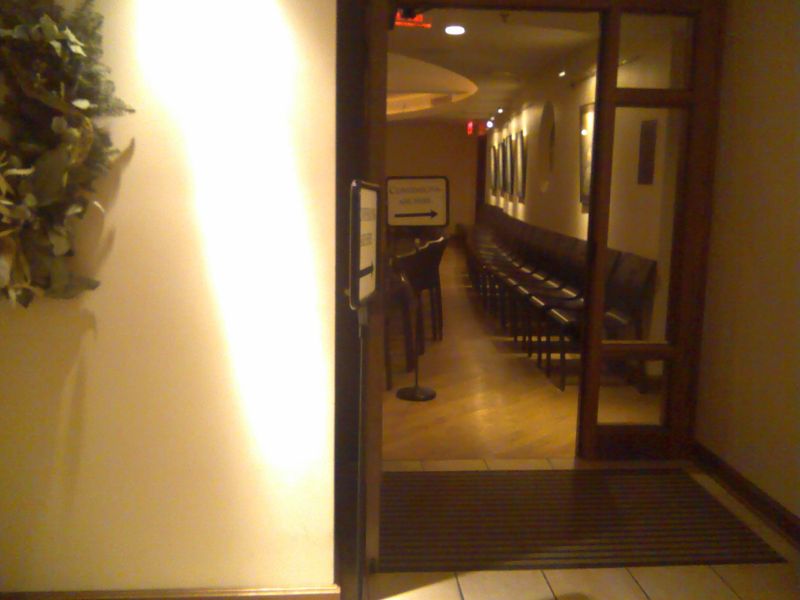
    Outside the St Joseph chapel at the Basilica, which has a Saturday morning confession hour.   About fifteen of us in line.

    Jan8-2


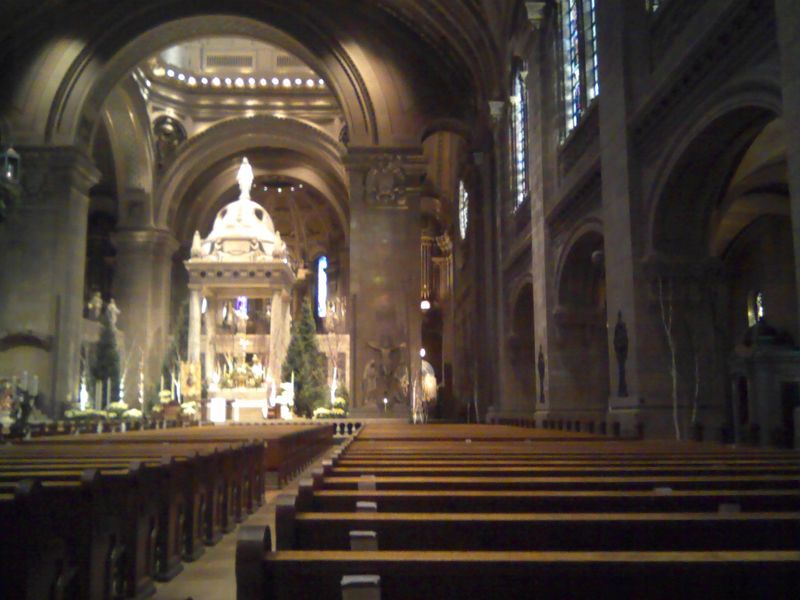
    Afterwards, a nice peaceful time in the church proper.  The Basilica of St. Mary is America's first basilica, did you know that?   I drive by it almost every day; I should stop in more often.  The clerestory windows are beautiful, and just look at that wonderful altar and canopy.  People were quietly taking down the Christmas greenery around the periphery of the church; I was glad that they had not yet touched the greenery in the center; it almost looked like the trees and flowering branches had grown up there around the altar.

    Jan8-3

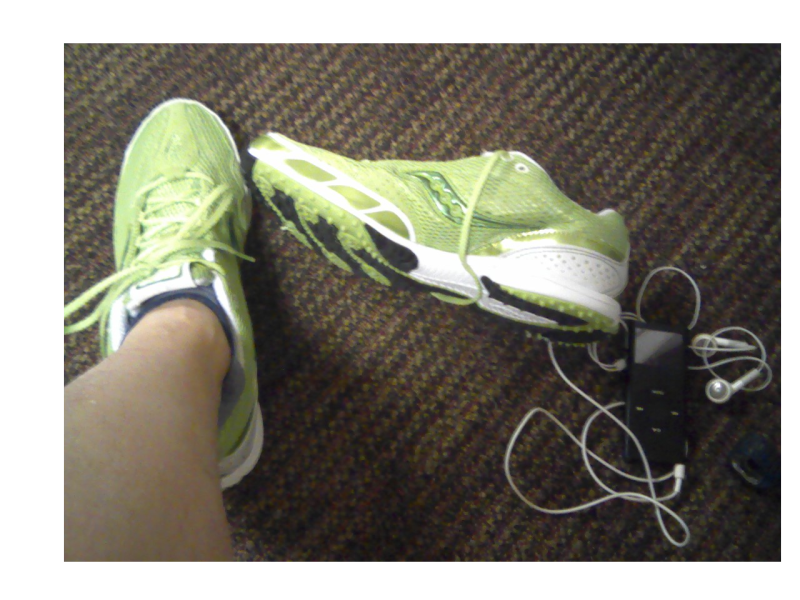
    Then a trip to the gym to try out my new, less-cushioned running shoes, expressly recommended for forefoot running.  Dig that color!  

    (Shoe is the Saucony Kilkenny, which I had to buy a size and a half larger than my usual size.  It is a cross-country flat racing shoe.)

    Jan8-4
    Later, a trip to the new location of Peapods, our favorite local boutique-y kids' store, for a new Maya Wrap baby sling.  Peapods is great!  They have an online store; check it out next time you need to buy a gift for your crunchiest friend's baby shower, or some cloth diapers, or natural baby toys, or a breastpump.

    And then I swung home to pick up my 7-year-old boy for a trip to another local store I love, Shoe Zoo, for dress shoes AND gym shoes. I remembered to bring my email coupon, and found the dress shoes in the outlet store, so I managed to save some money.   

    Some of which we immediately turned around and spent on cappuccino and chai.

    Jan8-5

    Day's not over yet… maybe I'll post some more later.


  • Guest post/bleg from ChristyP: Recruitment for an NFP study.

    Here's a guest post, with a request, from bearingblog friend, commenter, and epidemiologist Christy Porucznik, PhD, Assistant Professor in the Division of Public Health at the University of Utah.   The good Dr. Porucznik writes:

    Natural Family Planning (NFP) is a topic of interest to many different people. There are many different NFP methods based upon systematic observation of biomarkers – changes in cervical fluid and basal body temperature. There has been rigorous research on some of the methods.

    The Creighton Model FertilityCare System is a natural family planning method that teaches couples to recognize and chart the signs of fertility and infertility in the woman’s cycle and to use that knowledge to either achieve or avoid a pregnancy.  The method is natural, safe and effective, and it helps the couple understand their fertility.  Trained practitioners at FertilityCare Centers teach the Creighton Model across the country and internationally. 

    One facet of all types of NFP that doesn't translate well to research methods generally used for 'contraceptives' is the ability to use the method both to avoid a pregnancy and to achieve a pregnancy.  In usual contraception research, women planning to avoid pregnancy for a year are recruited into the study given the method to be researched and every pregnancy is considered to be a failure of the method. 

    University of Utah researchers are conducting an IRB-approved international study to evaluate the effectiveness of the Creighton Model for users wanting to avoid pregnancy.  While past studies have shown that the Creighton Model is a highly effective method, this study will use new ways to measure how well it works.  This is important because the knowledge gained will improve comparisons between the Creighton Model and other family planning methods.  The study will also explore intentions and behaviors of couples to avoid or achieve a pregnancy.

    Recruitment is ongoing.  At least 300 couples will be needed to conduct the study.  If you or someone you know are searching for a different method of family planning and wish to avoid pregnancy, you may be eligible for the study.  Not only will you be learning about your own fertility, but you will also be contributing to important research that will help future users of the Creighton Model.

    If you are interested or you would like to learn more about the Creighton Model or the study, please visithttp://medicine.utah.edu/dfpm/Research/CEIBA/index.htm,  call 801-231-6434, or email us at ceibastudy@gmail.com.

    This study is being funded by a grant through the Office of Population Affairs (under the U.S. Department of Health and Human Services) and the Health Studies Fund through the Department of Family and Preventive Medicine at the University of Utah.

    If you have questions for ChristyP, either about whether you're eligible for the study or how you can promote it, feel free to leave questions in the comments.


  • Introduction to the Devout Life 5-18: Final advice. And reader question.

     I'm planning on putting some thoughts down today or tomorrow in anticipation of the Feast of the Lord's Baptism on January 9, which was the day St. Francis recommended for beginning the annual review.  Which brings me to a question –

    I know some people are reading along with this series – I was wondering if anyone has been following along enough to pick up the book (or bookmark an online version) and is thinking about following St. Francis's method?  Is anyone (besides me) thinking of beginning an "annual review and renewal" on Sunday and going to use the book for it?  I ask because I could, if you like, open a daily comment thread for discussion over the ten days or so following 1/9.  Anyone interested?

    On the other hand, is there anyone who's waiting for me to finish nattering on about the book and organize my notes so they can attempt the Devout Life from the beginning?  If there's interest in that, then I'll be happy to start a daily comment thread for that purpose (but probably not till the end of the month or so — I might be able to manage the summing-up by Ash Wednesday, which will give me a good excuse not to give up the Internet for Lent).  Please don't wait on me, though.

    + + +

    For other posts in this series about St. Francis de Sales's most well-known work, follow this link to the index, also available in the right sidebar. 

    + + +

    This, the very last chapter of the book, isn't the last bit I'll write about.  I still have to come back and look at the Author's Preface, so hang in there.  

    Chapter 5-18 contains advice which pertains not to the annual renewal and review of devotion which is the stated theme of Part 5, but really to the whole book.  Let's look at the tips it contains, all of which have to do with preserving devotion throughout the year between the annual renewals.

    Renew your resolve on the first day of every month….

    So I guess you take a moment to do a little bit of mini-renewal once a month.  Sounds good — maybe coinciding with a monthly trip to the confessional.  I recently received the advice to go to confession monthly, something I've never tried, and so the suggestion to renew my resolve monthly is timely.

    …[A]t all times protest your determination to observe your resolve, saying with David, Life-giving are they commands, O Lord, never to be forgotten.

    "At all times"daily, whenever you think of it, and (I suppose) especially when tempted to despair.

    Should you experience any disorder in your soul, humble yourself upon your knees, your protestation in your hand, then read it through with heartfelt devotion and it will bring you relief.

    So, here is another mention of the written "protestation" that the reader who is trying to live Francis's program will have written out and signed when following the instructions in Part 1, and will perhaps have re-committed herself to during the most recent annual renewal.  I like very much the notion of having in hand an expression, in writing, of one's desires to become devout and one's promises to take action.  Keeps you honest.

    Confess openly that you wish to be devout; I say, that you wish to be devout, not that you are devout.  Never be ashamed of taking the ordinary means necessary to progress in the love of God.  Acknowledge quite frankly that you try to meditate and that you would rather die than fall into mortal sin; that you desire to frequent the sacraments and follow your confessor's advice…

    This frank profession of our desire to serve God and to consecrate ourselves whole-heartedly to his love is most pleasing to our Lord, who does not want us to be ashamed either of him or of his Cross; moreover, such frankness serves to silence the contrary suggestions of worldly people and commits us in honour to live up to what we profess.

    So:  "Don't be afraid to mention it to other people."   That last bit about committing us in honour to living up to what we profess has always been a sticking point for me.  

    We all know someone who hates the Church or rejects Christ because of the behavior of Christians he has known or imagined.  My own failures in the Christian life are painfully obvious and glaring.  I am not ashamed of the Cross; instead, how can I not bring shame upon the Cross by associating myself with it?  And yet that's such a self-centered way of looking at it, seeing my own faults as looming larger than the sacrifice that redeems the whole world.  On and on in an inward and downward spiral.  

     I guess St. Francis is asking us all to trust that if we speak the truth (yes, I try to love God and my neighbor; yes, it has turned out so far that I still SUCK AT IT) then we are doing what we can and must do, and He will take care of the results.

    The next line gives another reason for openly confessing our desire for devotion.

    Philosophers used to proclaim themselves philosophers that they might be allowed to live as such; so should we profess our desire to be devout that we may be allowed to live devoutly.

    Hm, perhaps this is translated, "If you repeat your desire to be devout often enough, all your naysayers will eventually give up bothering you about it."

    If anyone says that we can live devoutly without practicising all these exercises, do not deny it, but answer quietly that you are so weak that you need more help and assistance than others.

    There you go:  Truth and humility rolled into a nice little sound bite.  

    I would like to add that it might feel phony to say something like that, especially if you (like me) don't often think, "Gosh, I feel awful today.  What I really need is to get to Mass/adoration/prayer/etc."    

    The truth is:  I'm not constantly aware of my weakness.  I don't intuitively flee to the sacraments and to prayer.  Look, most of the time I go to Mass on Sunday because I have to, right?   I get dressed and get the kids dressed and herd everybody out of the door because that's what we always do on Sunday mornings.  It's not till I get there that I remember why I do it.  Oh yes — I forgot I would run into You here!

     So it sort of sounds fakey-pious for someone like me to say "Oh yes, you are right.  It's not necessary to do all these things to be devout.  But I need the help." 

    But I think I could say them.    Though I would not spontaneously speak such words from the depth of my heart, I cannot deny that they are true.  It is not a lie to repeat them.  This is why I love the Church.  I don't have to feel things are true to know they are true.  If it doesn't feel "true to my heart" to do and say the right thing, I can be true to another Heart instead.  This is a relief.

    Finally, Philothea, by all that is sacred in heaven and on earth, by your baptism, by the breasts which nourished your Saviour, by the heart with which he loves you, by the infinite mercy in which you hope, by all these things, I entreat you to continue and persevere in the practice of the devout life.  Our days pass away and death is at the door…

    [L]ook up to heaven and do not forsake it for anything on earth; look down into hell and do not cast yourself there for the sake of transitory things; look up to Jesus Christ; do not deny him for the sake of the world, and should the labours of the devout life seem hard to you, sing with St. Francis [of Assisi]:

    "Because I seek eternity, /All labours here are light to me."

    So the last bit of advice is simply:  Don't give up; keep your eyes on the point of all this, which is heaven.

    May Jesus reign, to whom, with the Father and the Holy Spirit, be honour and glory now and forever.  Amen.

    That's the end.  The next post will be about the Author's Preface — yes, that's right, the beginning.


  • “Wakefield’s article linking MMR vaccine and autism was fraudulent.”

    Wow. If the allegations referred to in this British Medical Journal editorial are true — that scientist Andrew Wakefield, who was being paid by law firms who wanted to sue vaccine companies, deliberately manufactured data linking vaccines to autism  — then Wakefield has blood on his hands.

    Count me in among the mothers who (back in 2000 when my first child was born) chose to vaccinate on a delayed and modified schedule in part because of the doubts engendered by reports like Wakefield’s 1998 paper in the respected British journal Lancet.

    It has been suggested for a long time that the preponderance of the evidence since Wakefield’s report tended to refute the alleged vaccine-autism connection, and I had come  to believe that it was in error — one of those common dead-end pathways in scientific research.  Eventually, the paper was even retracted, as does happen sometimes when there prove to be mistakes.   I no longer had a concern about vaccines and autism specifically.  I hadn’t been following the story closely since then, and so I wasn’t expecting a finding of fraud.

    Full disclosure:  I’m still unhappy with vaccines that have a fetal-tissue connection.  I still prefer to give kids one vaccine at a time the first time they get one, so that the cause of any reaction can be known.   I’m supportive of religious- and philosophical-exemption laws.  And I am aware of the concerns about vaccine reactions of other kinds, and am understanding of the nervousness with which many parents approach them, as well as being generally sympathetic with a low-medical-intervention and individual- rather than population-focused medicine.

    But this?  Outright falsification of medical data that affected vaccination decisions (and possibly disease outbreaks) in several countries, as well as influencing the direction of autism research?

    I can’t figure out whether I’m outraged more as a mother or as a scientist.

    (Knowing me, probably as a scientist.)

    Mainstream-type folks often like to characterize alternative-type folks as crackpots.  Homeschoolers know this.  Home-birth parents know this.  Folks who breastfeed longer than the U.S. average know this.  Consumers of alternative medicine of all kinds know this.  People who source some of their food outside the mainstream production/processing industry know this.  Hey, religious people know this.  It’s annoying to see experts whose knowledgeable advice you rely on, referred to as crackpots, or evil.

    It’s even more annoying when some of the  “experts” DO turn out to be  crackpots, or evil, or both.

    Chemistry blogger Derek Lowe weighs in:

    The 1998 paper that linked MMR vaccination with autism has had a long way to fall. It made, of course, a huge media sensation, and energized the whole vaccination/autism controversy that still (in spite of evidence) goes on. But it didn’t look very robust from the start, scientifically. And over the years it’s gone from “Really needs shoring up” to “hasn’t been reproduced” to “looks like there’s something wrong with it” to “main conclusions retracted” to the final, lowest level: outright fraud.

    Here’s a good history of the whole affair in the BMJ. And here’s the first part of a series of articles by Brian Deer, the journalist who dug into the study and found how fraudulent it really was. Not one of the 12 cases in Wakefield’s original study hold up; the data were manipulated in every single one to make it fit his hypothesis. His hypothesis that he was getting grant money for. His hypothesis that he was already planning lawsuits around, before the study even started.

    His hypothesis, I might add, that has led to completely unnecessary suffering among the unvaccinated children this scare has produced over the years, and has diverted enormous amounts of time, energy, and money away from useful study of autism. This sort of deliberate action is really hard to contemplate, as a reasonable human being – it’s like some sort of massive campaign to persuade people to throw bricks through the windows of ambulances.

    In a better world, we’d be getting expressions of sorrow and contrition from all the celebrities and others who’ve profited from this business. But that’s not going to happen, is it?

    Don’t hold your breath.


  • Co-schooling exchange.

    I'm setting up for a repeat of the coschooling-by-Skype that Hannah and I did on Tuesday.  This time I hope I've got things a little bit more pulled together.  I'm going to try to get all the other schooling done by lunchtime, and have a plan in place for the others during the Skype time (probably National Geographic videos on Netflix, possibly mixed in with the 7-y-o reading to the 4-y-o).

    In case you missed it, commenter Tabitha asked in the comment thread on that Skype post for some co-schooling tips, and Hannah appeared in the comments with about a dozen thoughts on the matter.   If you're interested in the idea of sharing homeschool days with another family, you might check it out (and of course there are more posts on co-schooling in the Co-schooling category).

    ADDED:  I have posted on "missed days" of co-schooling before — here is a long list of different things to do when one family has to cancel.


  • Introduction to the Devout Life General conclusions: 5-17, two objections.

    For other posts in this series about St. Francis de Sales's most well-known work, follow this link to the index, also available in the right sidebar. 

    + + +

    Part Five of Introduction to the Devout Life ends with two chapters that thematically belong outside it in a separate "Conclusion," as they refer back to the book as a whole.  

    (Hubris check:  I find myself itching to take St. Francis's masterpiece and cut it up and move the bits around and re-label a lot of the headings, as the writing is beautifully applicable to modern life but the organization is just a little bit, er, medieval.   No one is going to hire me to adapt it anytime soon, I suppose, so I'll have to content myself with a bunch of blog posts that maybe will work as a study guide when I have the chance to do a round-up.)

    So, anyway, 5-17 is called "An answer to two objections."  These are, I reiterate, hypothetical objections that "worldly people" will make to the entire contents of the book, not objections to the annual renewal that's presented in Part Five.  

    Objection 1:  "[A]nyone who tries to put all these counsels and instructions into practice will have no time for anything else."

    Objection 2:  "This Introduction is not suitable for everyone" because "I nearly always presume the gift of mental prayer in [the reader], whereas this is not always the case."

    Both of these objections boil down to "This so-called 'introduction' is too hard for ordinary people!"  Let's take a look at Francis's answers.

    (1)

    No time for anything else.  Remember that Francis is writing this book very specifically for people living in the world, who have a great deal of everyday duties.   I can tell you personally that the recommendations in this book are quite realistic, at least for this busy mother of four — what I have tried so far, I have found to be flexible and accommodating, and I remain optimistic that I could incorporate even more of its suggestions as I become more practiced.

     But here's Francis:

    It would be true if it were necessary to practice [all the counsels and instructions] every day, but, in fact, it is only necessary to practice them as and when the occasion demands.  Think of the innumerable laws in the civil code; they must all be observed by only when they apply, and this does not happen every day.

    So the first point is that, while his program is detailed as a whole, on any given day only some of it is necessary to put into practice.

    The second point is that we have examples of very busy people who nevertheless managed to put a great deal of time into the spiritual life:

    King David used to practice far more spiritual exercises than I have advocated, despite the fact that he was constantly occupied with very difficult affairs.  

    St Louis… used to hear two Masses every day, say Vespers and Compline with his chaplain, make his meditation, visit the hospitals, and go to confession and take the discipline every Friday, frequently attend sermons and take part in spiritual discussions; yet he never wasted any opportunity of working for the public good, and fulfilled his public duties with every care…

    He finishes with an appeal to Providence:

    Be courageous… in putting all of these instructions into practice as I have suggested and God will give you sufficient leisure and strength to fulfil all your duties… We always do enough, when God works with us.


    (2)

    Not everyone has the "gift of mental prayer."  I confess that this one stymies me a little bit.  I can't really imagine what it is not to be able to make a "mental prayer."  But it's pretty obvious that Francis thinks that "mental prayer" — which he implies is different from "vocal prayer" — is a skill that can be learned, and maybe must be learned by some people who don't naturally incline to it.

    I think what he means by the difference between "mental" and "vocal" prayer is one of these two things.

    Possibility 1 – "Mental" prayer is any prayer not spoken with the lips, but instead dwelt on by the mind – either prayer without words, or with words that unspool in the thoughts (sort of like a song that gets stuck in your head.  "Vocal" prayer is any prayer spoken with the lips and voice.

    Possibility 2 – By vocal prayer he means a prescribed text, such as the traditional prayers of the Church or a written meditation; by "mental" prayer he means spontaneous prayer in one's own words.

    I think the first one makes more sense, but I'm not entirely sure.  I find it easier to imagine "not being able" to come up with spontaneous words for prayer, but maybe when he talks about mental prayer being difficult for some people, he means that they are easily distracted.  On the other hand, perhaps here in our day we are more comfortable with spontaneous prayer than 16th-century French Catholics were; Protestant culture, in which we are steeped whether we like it or not, views spontaneous prayer as the norm, whereas it views prescribed prayer-texts with suspicion; maybe 16th-century French Catholics were sort of the other way around, and found spontaneous or creative prayer intimidating or perhaps a sign of arrogance, and maybe few people actually tried it much.  (I googled around and found this interesting roundup of writings on "mental prayer.")

    In any case, for our modern ears and attention-span, we can substitute the objection that not everyone is able to pray for very long without getting bored or distracted.  It amounts to the same problem anyway:  Worldly people will say that not everyone is able to attend to all this meditation stuff you're going on about.

    So what does Francis say about this obstacle?

    It is true that I have presumed this and it is also true that not everyone has the gift of mental prayer; nevertheless, there is no doubt that nearly all, even the most stupid, are capable of acquiring this gift, provided that they have a good spiritual director and are prepared to give it the attention it deserves.  

    In the rare cases where this is not possible a wise director can easily teach them how to read through the meditations carefully, or to listen to them being read out, in such a way that they compensate for this defect.

    I think Francis's answer — that almost anyone is able to learn to pray, and that the few who aren't can compensate by carefully reading along — applies just as well to the modern problem of distractions as it did to whatever medieval problem kept some people from thinking they had the gift of mental prayer.

    + + +

    This is not the only place in the book where Francis tries to refute objections from "the world" or "the worldly" — those show up in other places as well — it would be good to try to draw them all together — maybe I can do that in another post sometime.


  • Co-schooling via Skype.

    Hannah's 8yo threw up this morning while she was loading the car, so we tried something new today:  co-schooling via Skype.  

    After a few technical glitches, we agreed to connect at 12:30 and try to run through some of the older boys' schoolwork.  I moved one of my cool school desks in front of the computer desk to provide more table room.

    First Hannah went over the grammar lesson with our 10- and 11-y-olds.

    Skype lesson

    Then I taught Latin.  And finally we set the boys to working together over the connection on their history.

    Overall, I'd say it worked better than we thought it would.  But we learned a few things.

    (1) It really required supervision from both of us on both ends.  Which meant that it was kind of tough to keep tabs on what the other kids were doing at the same time as the 10 and 11 year old boys were having their learning time.  Even while Hannah was teaching, my 4yo and 7yo were wandering around feral, and eventually I set them up with Netflix to keep them out of my hair.

    (2) Which means that the best strategy on a Skype-co-schooling day is probably to do all the non-Skype schoolwork in the morning, and then settle down for a Skype session after lunch, without trying to do anything else at the same time.

    (3) And we have to have all the necessary papers printed out ahead of time and right at the ready.  Fortunately we both pulled it together well enough to email each other copies of all the stuff we'd be using.

    (4) It takes a few minutes for the silly faces and noises to stop. 

    (5) Little girls can also practice their nursery-rhyme recitations over Skype, by "challenging" each other to recite their memorized poems.

    (6) But we're not sure this would work at all with seven- and eight-year-old boys.  Based solely on the amount of silly faces and jumping and such that occurred every time one entered the frame.

    (7) It was even possible for us to sit down "together" and have our ritual of tea-and-how-did-the-teaching-go-for-you at the end.  Nice!

    I think we'll try it again on Thursday, as I fully expect Hannah's family to have several days of The Christmas Bug That Swept The Nation.  This time, I'll be more ready for the disruption.

     ADDED:  I have posted on "missed days" of co-schooling before – here is a long list of different things to do when one family has to cancel.