They linked to me, so I’m linking back under Quid Pro Quo on the right.
There’s some good stuff up on the front page right now. I particularly liked this moving post. Here’s another good one.

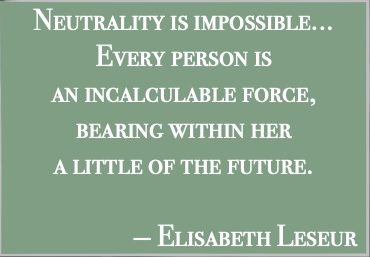
bear – ing n 1 the manner in which one comports oneself; 2 the act, power, or time of bringing forth offspring or fruit; 3 a machine part in which another part turns [a journal ~]; 4 pl comprehension of one’s position, environment, or situation; 5 the act of moving while supporting the weight of something [the ~ of the cross].
They linked to me, so I’m linking back under Quid Pro Quo on the right.
There’s some good stuff up on the front page right now. I particularly liked this moving post. Here’s another good one.
A good reflection over at Pontifications begins with this observation:
The truth of the matter, then, is that while God was always Father, he was not always Creator or Maker.
Short, but it’s a neat point, isn’t it?
The writer includes the caution against reading too much time-sense into "while" and "was always" and "was not always" — because, of course, one of the things Created or Made was time itself.
Instead, read it this way: Creatorhood is not an essential, inherent, or defining characteristic of God. God might have chosen not to create, only to be. But Fatherhood is indeed an essential, inherent, defining characteristic of God. God has always possessed Fatherhood and Sonship and… something… that proceeds from the union of Fatherhood and Sonship. Can we call it Love?
Whatever Fatherhood means within the Godhead, we give it that name because we were told to (cf. the Gospel of John); and what fatherhood means to us on Earth, it must mean because God created it in order to give God’s Fatherhood the same name, to tell us something about it.
First Fatherhood; then creation; then fatherhood. Some people fear that the current attack on fatherhood — the devaluing of men and the celebration of boys, the fatherless children, and the like — is a recent and depressingly successful diabolical attack, meant ultimately to destroy our concept of God as Father.
But how successful can these "recent" attacks be? Earthly fatherhood, we are told, has never been what God ordained it to be. There never was on earth a father or a son until after the fall, when Adam knew Eve his wife and she brought forth Cain. We have never seen a father of the kind God intended. And yet, by the time 30 A.D. rolled around, after millennia of further decay, God expected us to see and know enough about what fatherhood should be, enough that He still employed that impossibly archaic prelapsarian metaphor.
Can fatherhood today be farther from fatherhood in 30 A.D., than 30 A.D. was from before the Fall? I don’t think so. The glass is smeared heavily, but it could not have been crystal clear two thousand years ago. This is not to say that we shouldn’t bother keeping it as clear as we can, maybe even rubbing off some of the grime. The point is, fatherhood was a serviceable metaphor then, and it is serviceable now. And it can only be so if God expects us to understand, enough, what fatherhood means to Him. He expects us to comprehend the ideal even though all our examples are woefully imperfect. Yes, they are bad now, but they always have been very, very bad, compared to the father God made Adam to be.
An important point: Although the world has seen no father of the kind God intended, it has seen one son. We have a perfect example of Sonship, if we can only sift from Him the features that are essential, inherent, defining (begottenness, obedience) from the incidental (Middle-easternness, celibacy). It isn’t as easy as you would think (male? firstborn?)
Maggie Gallagher has been guest-blogging at the Volokh Conspiracy all week, patiently explaining the legal, economic, and social case against ratifiying same-sex unions as "marriages." The first post is here, October 17th at 10:34 a.m., or (for a while anyway) you can just go to the main page and scroll around.
This is Maggie’s goal for the week:
I’ve learned from much experience that when two intelligent people cannot even understand how the other person’s can possibly believe their own argument—that’s when something really interesting is going on.
I have no illusions I’m going to spend this week persuading people to change their minds on gay marriage. So I’d like to try to do something else big and important: to “achieve disagreement”. To figure out for myself, and maybe for you too, what has changed that makes the original, cross-cultural, historic understanding of marriage literally unintelligible to so many of this country’s best and brightest. In the process, maybe some advocates of gay marriage will understand why, quite apart from any disagreement about sexual orientation, so many Americans are deeply disturbed by the idea of gay marriage.
She’s trying to get opponents to understand her position.
I read somewhere (sorry to haul out that canard) that classically, a student of debate and rhetoric first had to learn to accurately summarize the position of the other side. Unless he could state the opponent’s position clearly, to the satisfaction of the debating opponent himself, the debater was not considered fit to make his own arguments.
It makes sense on two levels. First, why should you score points for arguing against a position you clearly cannot understand? Second, why should an intelligent and worthy opponent want to debate you if you cannot respect him enough to enunciate his position with your own voice?
The comments are quite hostile, but I have great hope that many regular VC readers will come away with a renewed appreciation for the arguments from "the other side."
Next week, Dale Carpenter, a proponent of same-sex marriage (and a lawprof from my own University of Minnesota), will be guest-blogging. I am looking forward to reading his arguments and hoping that through them I will be better able to understand and argue against the most cogent positions promoting SSM.
UPDATE: I asked one of her detractors, and by no means the least articulate, in the comments to try to summarize Maggie’s position accurately. He summed it as follows:
So, in her view:
1. Marriage is not marriage if two people marry who either know they are not interfertile….or have no intention of engendering babies together.
2. Use of AID, or adoption, doesn’t count. It’s still not marriage if the couple intend to adopt or plan to have children via artificial insemination.
See what I mean? He actually cannot do it. How on earth can two people argue if they mischaracterize each other so poorly?
Mark says that his high school buddy Tim Dixon will be the featured guest on NPR affiliate WITF-FM’s Desert Island Discs this Saturday at noon Eastern time, 11 AM central. On this program,
guests share the music they can’t live without. Every Saturday at noon, different "castaways" reveal what’s really important to them through their musical selections and discussions with host Ellen Hughes.
Wow! He must be some kind of local celebrity. After all,
Past castaways… have included Tom Ridge, Bob Edwards, "Auntie Anne" Beiler and Lorna Edmundson, president of Wilson College.
Bob Edwards! You da man, Tim.
Some suggestions. How about this? Or this? Or this?
(Listen online to WITF-FM here.)
 This used to be our side yard, with a lovely white picket fence. Now the fence panels lean to one side, and the posts stand alone.
..
..
..
 Here’s a crooked view of the lot from the street. Off to the left you can see our existing duplex. To the right is a tree with leaves turning yellow…
..
..
..
 It’s the river birch. I like to put my hand on its smooth, cool, translucent bark.
Sadly, it’s not long for this world. That’s because it is growing in my future dining room.
..
..
 Oscar and Milo don’t mind. They like the wooden stakes with pink flags that the surveyors put in.
..
..
..
 When you get your land surveyed, you sometimes learn interesting things about your neighbor’s houses. This fence is actually a couple of feet inside our property line. The addition to the neighbor’s house, a little bit wider than the red door that enters it, goes right up to our property line. Not only do we own their sidewalk, we own the grime on their siding.
It’s not the neighbors’ fault. They bought the house with the addition already there. Mark talked to them yesterday and they struck a deal where we would let them keep a strip wide enough to get from front yard to back yard, and they would let us cut down one of the trees.
Sorry about the placeholding dots. I’m still trying to figure this out.
…what’s up at the 52nd Catholic Carnival, hosted this week by Our Word and Welcome To It, another great Minneapolis blog.
I volunteered to host the Carnival in a couple of weeks. Will let you know!
We had a rare date on Saturday, since the grandparents were visiting; they took the kids. I put on a dress I’d been saving for an occasion that didn’t require breastfeeding. Hurray, a night out.
Mark said to me over dinner that when we get around to electing a female president, he won’t be able to stand reading all the media reports that gush on and on about what she’s wearing.
Something occurred to me. "You know, I always thought that the press’s obsession with prominent women’s clothes only showed how shallow they are, and how they don’t take women seriously, but maybe there’s more to it."
"What do you mean? There’s no point in going on and on about what the President’s wife is wearing. It’s annoying."
"The president’s wife maybe, because she’s not the politician we’re interested in. But clothes are used to send messages, and those messages might be important."
"Oh, come on. They can’t be worth all the space they’ll be given. And why would it be different with men?"
"Well, men’s clothes aren’t as variable. The suit is a sort of uniform. You can only paint with a very broad brush. Like, for instance, don’t the press always mention when at some public appearance, say in an auto factory, the President takes off his jacket, rolls up his sleeves? Isn’t he trying to send a message with that, and don’t they report it?"
"Well, sure, but it probably just says in shirt sleeves. You don’t have to go on and on about it."
"Right, because there’s not much to describe. But it makes a point. And that’s not the only thing," I went on. "Remember back when that one country had a popular revolution, and their banners were orange — "
"Right, the Ukraine. Well, there was a bit of a buzz once when Bush was thought to be wearing an orange tie, in some speech or something, around then. And then later Cheney did. That was an obvious message."
"Well, sure."
"And don’t you remember Condi and the boots?"
"What? Was this something only the blogs cared about?"
"No, no, everybody wrote about it. Condoleeza Rice, right after she was named Secretary of State, appeared somewhere — some other country, I forget why — in this amazing, sexy, unexpected ensemble. Black skirt, a trench coat sort of thing, showed a lot of leg. But the main thing that everyone noticed was the boots. Tall black leather boots, spike heels."
"Um, that seems unusual."
"Yeah, that was the thing. We’re so used to women politicians trying hard to appear understated. This was an outfit that was calculated to get attention and to get the media talking about it. Everybody compared it to The Matrix. It said a lot."
"Like, what did it say?"
"Well, to me it said I am going to kick some serious ass. It might also have been saying, I am not going to be your run-of-the-mill Secretary of State. Anyway, my point is that the press spent a lot of time discussing it, and I think that was justified, because that outfit was meant to send a substantial message. Or rather, it was what she wanted them to do. She exploited them perfectly."
"Okay."
"And my point is that if we do have a woman president, what she wears will probably be very, very carefully considered, for that reason. There are a lot more messages that can be sent with women’s clothes than with men’s. And an evening gown is a bigger banner than a tie."
"Well, I still contend that the press will probably expend a lot more energy reporting on a female president’s clothes than the message warrants."
"Undoubtedly. I’m thinking of having the panna cotta. How about you?"
"Mmm. Flourless chocolate torte."
Testing, testing.
 Milo, trying to grab the new itsy-bitsy, cheap digital camera I bought just for this kind of thing.
What do you think? Still blurry, I know, I know.
An amazing post, not so much on death and dying, as on a death, a dying.
Alicia at Fructus Ventris links to a sad story of a boy who died of brain infection that spread from a toothache. The toothache went untreated because, when he showed up for the root canal, he was an unaccompanied minor. She makes a point that I otherwise would have missed:
The minor child is this story essentially died because he did not get an urgent surgical procedure because he did not have a parent present. No one thought it important to take him across state lines to a state with more lenient laws on parental consent. No one thought that he needed an attorney or a judge to protect his right to have this (in this case) life-saving procedure performed. The legal requirement for parental consent (and payment?) was met. And due to the delay, a relatively minor condition festered until it became fatal.
Do you suppose people will be clamoring for the repeal of laws requiring parental consent for dental work?
According to that same NYT article I linked in the last post,
In 25 years, the number of priests in the United States has declined 26 percent, to 42,500, as the number of Roman Catholics rose 29 percent, to 65 million.
Priesthood is not a job: it is a vocation, comparable to marriage. So how has marriage been doing?
Since 1960, the decline of those married among all persons age 15 and older has been twelve percentage points—and over 23 points among black females. It should be noted that these data include both people who have never married and those who have married and then divorced.
…In order partially to control for a decline in married adults simply due to delayed first marriages, we have looked at changes in the percentage of persons age 35 through 44 who were married. Since 1960, there has been a drop of almost 19 percentage points for married men and over 16 points for married women. A slight increase in the percentage of married people in this age group occurred beginning in 1999, for unknown reasons, but this increase now appears to have ended.
The number of marriages, or rather the proportion of marriageable people who are married, has declined too.
I wonder if the root cause is a general fear, not of the priesthood, but of commitment?
Of course, the proper comparison, to evaluate the relative effect on priesthood and on marriage, is this: (decline in number of married men/number of adult men) compared to (decline in number of Roman Catholic priests/number of adult Roman Catholic men).
You could also look at the decline in vocations compared to the decline in marriages. From the marriage article:
Americans have become less likely to marry. This is reflected in a decline of more than 40 percent, from 1970 to 2002, in the annual number of marriages per 1000 unmarried adult women.
A claim (unverified, sorry) quoted in this article says that vocations have declined 60 percent since 1975.
That’s not all that far off. If vocations to marriage AND vocations to the celibate life are both declining sharply, perhaps the decline in vocations to the celibate life is not entirely due to dissatisfaction with the idea of celibacy.
Admittedly, the decline in American marriages is not quite as sharp as the decline in American religious vocations. But the difference is small enough that we should consider them in relation to one another, and not necessarily as independent.
Recent Comments
Recent Posts
Categories
…more to come later
 bearing blog