bearing blog


bear – ing n 1  the manner in which one comports oneself;  2  the act, power, or time of bringing forth offspring or fruit; 3 a machine part in which another part turns [a journal ~];  pl comprehension of one’s position, environment, or situation;   5  the act of moving while supporting the weight of something [the ~ of the cross].


  • Tween-related maternal depression: what about family size?

    Time for a short mental-health blog post while I work on a different, longer one behind the scenes.

    This article at NPR is going around on Facebook today: “Being Mom to a Middle Schooler Can Be The Toughest Gig of All:

    Many women assume that the first year of motherhood is the most precarious time for their mental health. But a recent study published in Developmental Psychology finds that maternal depression is actually most common among mothers of middle school children as they catapult into the tween years.

    …[The study authors] discovered that the years surrounding the onset of adolescence are among the most difficult times for mothers. During this period of transition, women can feel lonely, empty and dissatisfied with their mothering roles. The researchers also found that compared to mothers of infants, these women experience the lowest levels of maternal happiness and are even more stressed out than new parents.

    Luthar says that tweener moms reported feeling the most unhappy or depressed when their children are in middle school, but that the transition begins when children are 10 years old. Parents of teens are actually happier than parents of middle schoolers.

    Two of my five children have already passed from tween years into teen years, and my third is entering that stage. I am familiar with how tricky it can be to adjust my parenting style towards each individual child in the years between ten and thirteen — it encompasses a big change in autonomy, skills, and responsibility. They go from being baby-sat to being babysitters; they learn to walk to the store to buy a carton of milk; they learn to cook dinner, to manage their own schoolwork time, to make judgments about the media they consume. There is a lot going on, for sure, and it is not always easy. Sometimes I have despaired of my own competence — whether I could figure out the right balance between guidance and self-guidance, between rules and freedom, for each young person.

    But I was struck by one big difference between my experience and the experiences of the women who were profiled in the article:

    I have never been totally immersed in my own feelings of incompetence. And that is, I believe, because I never have and never will have all my children going through those years at once.

    When my very first child turned ten, I also had a seven-year-old, a four-year-old, and a baby. You might think that this would be tough, and of course I was very busy and frequently overwhelmed by how much there was to do. I had feelings of incompetence. But I wasn’t paralyzed by feelings of incompetence (as if I had time for that) — I believe that’s because I got to feel competent at the same time.

    Raising a ten-year-old was hard because it was new to me. And I was leery about my seven-year-old turning eight, because I remembered it being difficult to teach an eight-year-old. But at the same time as I was struggling to figure those out, I had the privilege of mothering a four-year-old who was utterly delightful, as all four-year-olds have been in my experience. And I was carrying around on my hip in a wrap sling a beautiful eight-month-old nursling that year, too — lucky me, because I have always felt at the height of my powers with those nursing babies. Despite having a cerebral and analytical approach to life in general, I always felt able to tap into an intuitive, biological mothering style, towards babies, that has rarely steered me wrong during the first three years of life.

    From the article:

    Brizendine says that for most women, estrogen and progesterone levels start decreasing after age 42. With estrogen depletion, women may feel less nurturing. As a result, they can feel more agitated with themselves, their partners and their children. Additionally, mothering tweens doesn’t offer the hormonal reward — the oxytocin “love rush” — that caring for little children provides.

    But see, I am 42, and I am still caring for little children. I always wanted to have a teenager and a baby at the same time, and I got that. I got all the benefits of oxytocin (am still getting it — my three-year-old nurses a couple of times a day) at the same time as I get to teach physics and set teens up with drivers’ ed.

    Just as things were only starting to get tricky at the upper end of my family, I was deeply immersed in parenting children during the years when I feel most competent and powerful. At least given that I did not suffer from any clinical depression, I could never have been fooled into thinking I was a bad mother in general, even if I might have wondered if I was any good at this older-kid thing.

    I am looking forward to the mirror image of my experience at the end of my childraising years. When my very youngest becomes a tween, I will not have any babies or preschoolers to enjoy at the same time; but I will still have two teenagers in the house and grown-up children to enjoy as well. I will have, I hope, the perspective of having ferried several kids to the other side.

    In short, for me — grown woman that I am — there are no “years surrounding the onset of adolescence.” Each child will have his or her tween years, but I will not have any years that are all-tween, all-the-time. I could be wrong about the causality, but it seems like the broad age-span of my offspring has helped me feel less incompetent, less of a good-mom impostor, at every stage than I might have otherwise.

    Smaller families and shorter periods of child-raising have accompanied many changes in living standards that are regarded generally as positive, I know, but there are unlooked-for consequences to all social change. I wonder if the feeling of “I totally don’t know what I am doing here” is more widespread than it used to be when four kids wasn’t a completely ridiculous number of children to have.


  • An algorithm for co-schooling in the face of norovirus.

    H and I have been getting together twice a week for years now, sometimes with a third family, for co-schooling. We have always tried to minimize the number of skipped days, so that the kids' education doesn't get too interrupted and so we can keep a steady routine; and that's felt more important as children have grown into high school students.

    A long time ago, we made up our minds that there was no point in skipping school days together because of rhinovirus symptoms. Colds last a long time, and when you only go three days without seeing one another, chances are good we already passed it on. We also don't typically skip school for conjunctivitis, head lice, or strep (once the antibiotics have started).


    We do typically skip school if someone has been vomiting recently. Nobody wants to pass that along! But we had always lacked an algorithm for deciding when to resume getting together after symptoms have disappeared.

    Part of that has been that our families have different attitudes about GI illness. This is in turn because we tend to experience GI illness differently.

    H and her kids always seem to be hit very hard by any stomach bug, a couple of times every winter. The children need to be rehydrated a teaspoon at a time and can't keep anything down for days, everyone is miserable, and her older kids are petrified of catching the bug. So in H's family, as soon as someone shows sign of illness, H and her older kids go into high-alert transmission prevention:

    • Well people isolate themselves to a different floor of the house with its own bathroom
    • The ill person uses only one bathroom
    • No well people except H cares for sick people, unless she is too sick to do it herself
    • Ill people and the person caring for them don't cook or prepare food
    • Everything is laundered with bleach on the sanitize cycle
    • Dishes are washed on the sanitize cycle
    • Surfaces are disinfected as soon after vomiting as is practical using a wet bleach solution left to sit 5-15 minutes
    • Until the twin toddlers are recovered, they stay on the main level of the house only
    • H sleeps with the twin toddlers on a blanket on the wood floor so all sleep surfaces are bleachable or washable in the machine
    • H personally supervises all toddler vomiting, toileting and handwashing
    • Young recently-potty-trained children must wear diapers
    • Vomit basins are disinfected with bleach between episodes
    • Hard toys that children had while sick are disinfected with bleach

    In other words, it's really important to H and her kids that they try as hard as they possibly can to avoid passing the bug to each other.

    Whereas, in my family, my kids tend to throw up a couple of times and sleep a bit more, and then feel pretty good in between vomitings. And I know that you have to work hard to avoid transmitting, say, a norovirus in close quarters. So my attitude has tended to be more like, "We are all doomed anyway; let's just get this over quickly."  I tend to put the sick kid on a couch with an iPad and a bucket and go about my business, but with extra handwashing and a supply of saltines, applesauce, and Gatorade on hand.

    I suspect that over the years this difference in attitude has caused H to regard me, privately, as astonishingly lax; and me to regard H, privately, as bordering on obsessive. (She'd be the first to tell you that the obsession originates not in her but in her older kids, who voluntarily isolate themselves and compulsively wash their hands until the danger appears to be past.)

    + + +

    One thing that's guaranteed to happen every time:  a phone conversation between me and H where we wonder, "Is it safe for us to get together or should we skip another school day?"

    We recently passed an apparent norovirus around between our families, and got to talking about developing an algorithm for figuring out how long we should wait, after someone has GI symptoms and then they resolve, before getting together again.  The problem is, we had a lot of unanswered questions.

    We do want to avoid passing the bug to people who are still well, but what is a reasonable time to wait?  We knew that people can pass noro to each other for weeks, and it truly isn't feasible to skip our school days together for more than a few weeks — especially when the risk of transmission drops fairly low. Also, is it even possible to prevent transmission? Maybe waiting an extra half-week will make a difference, but on the other hand maybe we would have been doomed anyway. And given that we get together every 3 or 4 days, has everyone in one family already been exposed before one kid starts throwing up in the middle of the night? And given our asymmetric attitudes toward illness, should we have an asymmetric algorithm for infection prevention? We were not sure.

    Fortunately, this blog has its own epidemiologist on retainer: commenter ChristyP, also known as my friend from high school and college, also known as Prof. Christy Porucznik of the Department of Family and Preventive Medicine at the medical school at the University of Utah. 

    I sent Christy an email with the subject line "Practical Epidemiology Question!" and included data about our get-together schedule. She replied (the following has been lightly edited, and two emails have been combined, for blog-reading clarity):

    Contagious period (= time of viral shedding in stool) for norovirus can be up to 6 weeks (Centers for Disease Control website says 2 weeks or more, my advisor in grad school was doing a trial and it was on the order of 6 weeks in some people).

    I'd go for a similar algorithm as used in public schools and daycare centers which is exclusion from school (in your case, attempt to isolate the sick person) for 24 hours after last vomiting.

    Incubation period is 24–48 hours (median of 36 hours), and if an exposed household has gone 2 incubation periods without a new case then you are likely home-free. If practical within a household, you might be able to reduce transmission by reserving one bathroom for use of the sick person and try to keep everyone else out of there. In your situation, I wouldn't see a reason to exclude a kid who wasn't ill from co-schooling unless s/he had a massive exposure (nearby when a sibling vomited or participated in cleanup).

    In a norovirus situation parents are likely doomed, but also able to practice Excellent Hygiene Behavior. I would even Clorox-wipe your glasses, wash your face and rinse out your mouth in addition to any exposed skin if you were nearby someone vomiting. If you can, you might even employ a vomit shirt (or lab coat) so that you don't inadvertently carry the particles from the room of doom to the rest of the house. The infectious dose is SO LOW. It's on the order of 10 virus particles and they aerosolize! A really intense family hygiene suggestion is to make sure that toothbrushes are in a closed container so that they are not inadvertently contaminated by aerosolized evacuations generated in the same room. Also close the toilet lid. Every time. But that doesn't help with people actively engaged in generating biological aerosols by vomiting.

    It is possible that one is shedding virus before the dramatic GI symptoms start, but the time that a person is most contagious is when s/he is experiencing vomiting and/or diarrhea, which is thankfully short. The virus is relatively hardy and can persist on surfaces longer than one might expect (hence long outbreaks on cruise ships and in hotels). Changing towels frequently is probably a good idea….

    FWIW, there are several strains of norovirus, and immunity to the strain you most recently had lasts only about 12 weeks.

    When I teach Infectious Disease Epidemiology I say that caring for someone with norovirus is the surest way to see your own future. I will also share here one of my favorite bits of advice to share at La Leche League meetings, which is that when your child is still in the vomiting-every-hour phase is when you should prep some snacks that s/he can grab from the fridge the next day, when the child is feeling fine but starving and you are the sick one.

    I went back to H and issued my judgment about the correct algorithm, using the more conservative estimate (48h) for the incubation period.

    Co-Schooling Gastrointestinal Illness Algorithm

    Rule 1:   If anyone gets GI symptoms, skip the next scheduled co-schooling day.

    We only go 75 hours between meetings, and it takes 96 hours to find out if the other household has escaped.


    Rule 2:    When GI symptoms appear in the first family:

    • If we last met more than 48 h ago, consider the second family unexposed.
    • If we last met less than 48 h ago, consider the second family possibly exposed.
    • But if the second family makes it to 96 hours with no symptoms, consider them again to be unexposed.

    This rule doesn't bear directly on co-school cancellations, but it does help the second family decide what precautions would be prudent.


    Rule 3:   If everyone in one family has been sick, we can return to co-schooling after they have all gone 24 hours without symptoms.

    Rule 4:   If only some people in one family have been sick, we can return to co-schooling when the sick family has gone 96 hours without symptoms.

    This is under the assumption that the not-yet-sick could be incubating the illness and could show symptoms at any time, combined with a strong preference to avoid exposing the unexposed.


    Rule 5:   If there are some who have been sick and some who have not been sick yet in BOTH families, we can get together after 

    • my family has gone without symptoms for 48 hours, and
    • H's family has gone without symptoms for 24 hours.

    The asymmetry is because H's family is more willing to try to avoid exposing family members; as soon as one person in my house gets sick, I assume we're all going to get it anyway, so I don't care about skipping school to wait out an entire incubation period.  H, however, does think it worthwhile to try.


     Rule 6:  If unexposed people are to meet at a house where some have been sick within the past couple of weeks, we must aggressively disinfect surfaces they might reasonably come in contact with.

     This means the kitchen, first-floor bathroom, first-floor light switches and doorknobs and the like; if the very young children haven't all been sick already, then the hard toys too.  Older unexposed people should take responsibility for themselves to practice good handwashing and the like.


    Rule 7:  When recovered people first meet at an unexposed household, the whole family should shower or bathe before coming and wash hands on arrival.

    This sounds like it should go without saying, but it's worth remembering since our younger kids don't ordinarily bathe more often than once a week or so in the winter because of dry skin.


    + + +

    In addition to the rules for get-togethers, there are two best-practice guidelines, to be followed if practical:


    Guideline 1:   To limit spreading the virus to public areas in the house, consider isolating sick people to a single bedroom and bathroom upstairs that is not used often by guests.

    Because norovirus can persist on surfaces for weeks, the best practice is to keep it off those surfaces in the first place — especially the ones guests and visitors are likely to use.


    Guideline 2:  Carefully supervise young children's toileting for 2 to 6 weeks after they have been ill.

    They need to be monitored to make sure they wipe, wash hands, put their pants back on, and don't leave used potties lying around.


    + + +

    It's too late for these rules and guidelines to save us in the current round of noro, but we can keep this in our back pocket for the next time.   


  • Coming apart at the joints.

    I mentioned this past summer that I Did Something To My Hip while running routinely around the lake up here.  It was the first time I'd ever had a running-related injury, and I couldn't stop exclaiming in shock and surprise about how odd it was that something like an easy jog around the lake might, for weeks, send pain shooting down my right leg and up into my back.

    At the time I tentatively self-diagnosed the problem as bursitis and decided to treat it with NSAIDs, iliotibial-band stretches, and ice for a while.  I resolved to go see the sports medicine doctor if it didn't get better in about six weeks.  

    And it did!  Mostly.  There's still a little bit of irritation there, but I've apparently gotten used to it as it's receded in to the background; I only notice it if I concentrate while I move the joint, and then I'm not sure that I'm not imagining it.  

    So I never did go to the sports medicine doctor.

    (Why can't I just say "sports doctor?"  It sounds wrong.  But "sports medicine doctor" sounds redundant, although clearly there should also exist sports medicine nurses and the like.  If there is such a thing as "sports medicine" and doctors practice medicine, there should be "sports doctors."   A quick look at Wikipedia has taught me just now that the preferred term is "sports and exercise medicine," abbreviated SEM.  "SEM doctor?"  "Sports and exercise medicine doctor?" "Sports and exercise doctor?"  Whatever.  Mostly Mark and I get around it by calling her Dr. F.)

    + + +

    On a Monday three weeks ago I found myself absent-mindedly rubbing my left hand and twisting my rings.  The ring finger felt very slightly sore.  I commented about it to H — "I wonder if I caught my ring on something" — but didn't think much more about it until one morning a few days later.

    On that day I woke up with my whole left hand stiff and sore — curling the fingers hurt.  I flexed it experimentally and as I moved each finger I thought I could detect that the pain was in that left ring finger, and the pain in the other fingers was just an accident of the nerves, referred pain.  The pain seemed to get better as I worked the hand, and indeed, an hour after waking up it was completely gone.

    The experience repeated the next day and the next, and rather than going away slowly as I'd expect if I had "caught my ring on something," it only seemed to get worse.  But every day the pain was gone after a couple of hours of being up and around.  One night I got up several times in the night with a sick child, instead of sleeping straight through; that morning I didn't have any pain, but it was back again the next morning that I'd been well-rested.

    Hmmm.

    I moved my rings to the other hand, in case the knuckle swelled up, and started reading and taking notes.

    IMG_2072

    + + +

    If you Google "joint pain in the morning," you get lots of arthritis links.  This seemed to be a premature possibility.  Really?  I'm only 42.  But on the other hand, I have a bilateral family history of psoriasis (father, mother's sister) and also a family history of connective tissue disorders (oldest son).   So.  I called the nurse hotline provided by our insurance company and asked whether to wait and see, go to my primary care provider, who is a family doctor — family medicine doctor? — I guess by analogy sports doctor should work — or go straight to the sports doctor Dr. F.  They sent me to the PCP, so I went.

    I got a hand X-ray.   I didn't get to see it because I didn't have time to stick around that long, and instead agreed to be telephoned with results.  The results came back:  nothing visibly wrong with the joint.  No visible inflammation or deterioration.

    I guess that's good, although, you know, it still hurts.

    So my instructions are to "monitor, ibuprofen if helpful.  If worsening, swelling, catching, locking, other changes, then see sports medicine specialist."

    Hey!  "Sports medicine specialist."  

    At least the doctor's visit solved that problem.

    Now I guess I just wait to see if it gets worse.  

    + + + 

    I suppose we are all aging at the rate of one second per second.  I have enjoyed many years relatively free of injuries, for which I am grateful.  Mark has not been so lucky:  he is constantly rehabilitating one thing or another.  He's just gone ahead and made the sports medicine specialist his primary care provider — did you know you can do that?  A good idea for active individuals whose biggest problem is joint and muscle injury — and this week he consulted a physical therapist for the first time, and will probably start going in for weekly appointments.  

    When you are relatively pain-free and flexible, as many of us are when we are younger, you can interpret most pain as a warning sign and as a signal to stop what you're doing and rest.  But when pain becomes part of your daily life, it no longer makes sense to calculate:  "If I am in pain, that is not a good day to exercise, or to do my daily work."  Provided that the pain is not disabling, it becomes necessary to do the daily things despite the pain, that and the exercise we do to maintain fitness and strength.  For a long time I have been able to say, "I will skip my workout, because part of me is hurting; I'll rest, and get better faster."  But those are the words of someone who is privileged with confidence that there will be a day without pain, quite soon.  

    Maybe I am now entering the phase of life where I cannot use a little pain as an excuse to take a day off, because the days without a little pain will not be numerous enough.   I suppose it happens to a lot of people eventually.  I suppose, too, that the more active you are in conjunction with your pain, the more easily you can see which activities seem to help and which activities seem to make it worse, and maybe the quicker you can be to adapt your activities to best manage your strength and flexibility and comfort.

    We are planning to go to the climbing gym tonight – a very finger-strength-centered sort of physical activity! I guess I'll take a page from Mark's book and start today, managing soreness and activity simultaneously, instead of either-or.  And beginning to find out what makes it worse and what makes it better, without being focused on making it go away.


  • Anxiety and peace.

    I have this theory that it is possible, if difficult, for a person who is sick or physically suffering to find mental peace in the midst of it. That it helps anyone to know that suffering isn't total and can't last forever; that it helps a humanist to know that, since everyone suffers, in his suffering he shares in a common humanity that links him to everyone who has lived; that it helps the Christian to believe that suffering has redemptive value and to ask for grace.

    I have a little experience with this, but not lots. Mostly when I have been physically ill — and I have never dealt with misery that was both terrible and indefinite — I have retreated to bed, resolutely consuming fluids and determinedly resting, planning to be done with it as quickly and responsibly as possible. I have five childbirths to look back on, of course, and in only one of them (number two) do I remember the physical sensations coming at me faster than I felt I could cope; and that one was over before too long. I know that mild discomfort, the kind that is too mild to justify retreating to bed, makes me irritated and whiny, so that I can't help but let everyone around me know that I have an ache; I limp, I wince.

    Still I have this theory that one could achieve mental peace in physical suffering of illnesses, the sorts of things that happen to some unlucky people. Gratitude, perspective, transcendence, fellow-feeling, petition, and redemption are all accessible — in theory — to people who are physically suffering, alone or in combination. A few sufferers, the lucky from among the unlucky, even report gratitude for the suffering itself, for the lessons it has taught and the graces it has conferred. We can believe those tales without casting aspersions on sufferers who don't manage to find gratitude and peace, I think, since everyone is entitled to tell his own story. So it is possible, and maybe it even is possible to everyone, if we knew how to access it.

    Mind you, though, nobody thinks that the inner peace, when it comes, makes the suffering go away.

    + + +

    So what about mental suffering? Can you find inner peace when you suffer from crippling anxiety? Can you rejoice in clinical depression?

    It seems that anxiety, compulsions, depressions, addictions, are illnesses like any other; if they are more mysterious, still they seem to be thorns in the flesh. So just like any other kind of illness, the suffering they create is real in the body. Therefore they ought to be subject to the same "rules" of redemption. They are a way to share in the world's great penance, in the suffering of Christ. They also don't last forever, and connect us to the great mass of humankind stretching back through and beyond history. We can ask for grace to help us bear them.

    But it seems a bit of a contradiction in terms to imagine that one can find or be graced with peace in the midst of, say, anxiety. I can imagine being at inner peace in the midst of suffering pain from a pulled muscle or an intestinal illness. I can imagine being at inner peace despite physical limitations from damaged limbs or a weakened immune system. But what can it mean to have found peace at the same time as experiencing the suffering that comes from anxiety? How can peace and anxiety co-exist, be co-experienced in the same consciousness?

    I do not have a clinically diagnosed anxiety disorder or compulsion disorder, but I have a compulsive-type personality and I experience subclinical anxiety in certain situations. It is often heightened at the holidays. I was sitting meditatively the other day and contemplating the roil of tension that swirled in my brain, knowing that worry and perfectionism is not the reason for the season, and unsure what the most transcendent and redemptive response to this particular misery might be.

    Obviously one asks politely for the grace to cope with one's duties despite the suffering, and one can also ask that it be taken away if that is convenient, please. And I am able to acknowledge that the anxiousness won't last forever, that I will have good days as well as rough ones over the next few weeks, that I will be past the roughest patch eventually, and I won't have to live with it for longer than the rest of my life.

    But is the redemptive peace in this sort of suffering found by detaching oneself from it, denying it, forcing oneself up and out of it as much as one can? Or is it found by entering fully into the suffering somehow?

    With respect to ordinary, physical pain, it seems that common spiritual advice is never to squelch and deny your sensations, but to embrace the cross so as better to bear up under it. But is embracing a cross of anxiety and depression a way to find peace, or a rejection of it? Does this kind of cross work in the reverse of the physical one? Or is there a way to experience and embrace the cross of anxiety in your body and mind, while experiencing calm and peace in some third area of your consciousness — your full human person — at the same time? And what does that feel like, and how would you know when it is happening?

    Or do you just have to trust — based on what you know of what you have done, said, thought in response to your pain — that it is there, insensible, radiating outward from some center you cannot touch or see?

    I don't have answers to this question.


  • Children, safety, and the sixth commandment.

    At home we say that my six-year-old, who will turn seven in January, is in first grade. He is an outgoing and cheerful child who loves to meet people. So I was really looking forward to starting him in religious ed at our parish this year, because that is one of the first "classroom" experiences our kids tend to have. Meanwhile, I looked forward to starting him slowly at home with memory work from the St. Joseph First Communion Catechism, as I have done for all the other kids. I have a little personalized copybook printed just for him, and we take two years to work through memorizing and copying the answers to the questions:

    Who made me?

    "God made me."

    Did God make all things?

    "Yes, God made all things."

    Why did God make me?

    "God made me to show his goodness and to make me happy with Him in Heaven."

    It is not just memorizing and copy work, although I find it is a good vehicle for practicing handwriting and for stretching the child's memory. As I introduce each one we talk about it: what it means, why we use some words and not others, sometimes different ways to think about the answers, which of the answers seem easy to grasp and which answers are so difficult that grownups still argue about them when they go to college and other grownups write whole books about what they mean. Six- and seven-year-olds, I find, are proud to be learning about things that are so important and difficult that grownups argue about them.

    We add one or two of these per week, and to get through the whole First Communion catechism it takes about two school years, so I start in first grade. By the time second grade rolls around and the parish sends home the packet of things To Be Learned before First Confession and then First Communion, our children have hardly balked at learning the Ten Commandments and the Act of Contrition and the Five Steps To Prepare For Making A Good Confession and the like. I have rolled it right into their copybook and each year it has become part of the memory work.

    + + +

    But as I have said, I look forward to enrolling our kids in our very good parish religious ed program in part because I like them to have a classroom experience with other kids and a teacher, just that little experience of collegiality and being a school-kid, complete with chairs and desks and chalkboards, evenings in the parish school.

    So I was more than a little disappointed when my 6yo arrived for his first day and there weren't any other first graders in his class.

    Demographics, the religious ed director told me. The recession. There are only about 15 six-year-olds among all the families registered in the parish, and the others go to the school and so they don't need Wednesday night religious ed. There just were not a lot of kids born in 2009-2010. My ten-year-old daughter in the same parish had 43 First Communicants in her cohort, maybe a dozen of whom were in religious ed classes with her.

    The school was willing to devote a first grade teacher to my one little boy, but in the end — he will turn seven this year — we decided to send him to second grade, and so everything is accelerated. It is the better option for him under the circumstances, but I wanted for him to get a year older first. I wanted to have time to teach him my way for a little while.

    + + +

    I was talking with a good friend over coffee the other day. She wanted to pick my brain about sex education for children and teenagers, something that I thought was kind of funny because she seems like the sort of person who would have absolutely no difficulty talking about anything at all with anyone. But as we talked it became clear that she is thinking hard about how to thread the needle between a healthy sex-positivity and anything goes, between encouraging moral behavior and fueling shame (or worse, shaming others), between a culture of chastity and the dark side of what she called "purity culture" (the notion that purity can be lost and afterwards you are permanently worth less; cf. comparing human beings, usually girls, to used wads of chewing gum and the like).

    I am not sure I added anything to that idea other than "back to the Theology of the Body for you!" Because that is what authentic and sex-positive Catholicism looks like. But we talked a little bit about our different styles and how she is very assertive ("let's sit down, son, it is time for us to talk about Internet porn") and at least for young children I tend to be watchful about questions and respond to them instead. I don't want to burden them, too early, with things that they might not be ready for, I said. But as they grow older I try to spark the questions when it seems time, mostly via artful curriculum choices. So, for instance, my 10yo daughter and 13yo son are both getting Life Science this year with human reproduction included. I tend to stick to the clinical and academic, and I surround it with the social and moral context to it as we go, as it seems necessary.

    I called that a "retreat" compared to her style, but she didn't think so. "The other Catholic homeschoolers I run with, it seems like they are afraid to teach their kids about the biology, because it might get them interested in sex." She felt social pressure.

    "But what did you mean, specifically," she asked me, "about 'burdening' them too early? Like, what specific knowledge is a burden to a child who is too young for it?"

    And that question really gave me pause. I realized I had been saying that for a long time, without ever articulating something specific to myself. I ended up telling her that I remembered a deep sense of revulsion, something not quite shame or fear, but a desire to get away, at the ages of eight-nine-ten if ever one of my parents wanted to speak to me about sex or puberty or any such thing. I have heard it said that this is a natural impulse, possibly self-protective, that many children have; I have also wondered if I felt unusually unsafe in that territory because that was around the time that my own family broke down around me, and there was no context in which it would have been safe to discuss morality or justice or consent. So I don't know, but the memory of that feeling of horror has made me reluctant to impose the feeling on my own kids. I "retreat" (at least in theory — we shall see if I managed it, I guess) to a clear and age-appropriate explication of biology and a clear and age-appropriate explication of our duty to act justly to other human beings and never to use them as a means to an end, and draw the connections when I get the chance.

    + + +

    From that conversation I discovered at least one thing that I think can burden a child too young for it, and that is a certain way of looking at the sixth commandment: "Thou shalt not commit adultery."

    My six-year-old, the one thrust a bit too soon into the first-communion-prep program, is supposed to memorize the ten commandments because of the first-confession-prep which precedes it. Memorizing the ten commandments is completely fine with me. I get that the ten commandments can also be used as a handy memory aid when one is examining one's conscience. But I have always been a little bit bothered by the "child's ten commandments" they offered to us to make it easy for the kids.

    "God comes first" is fine. "God's name is holy" is fine. "God's day is holy" is fine. All of them are fine until you get to number six, and then the children are offered as an alternative to "Thou shalt not commit adultery,"

    "Be pure."

    And — I don't want to teach a six-year-old that this is what the sixth commandment means.

    For one thing, it isn't accurate.

    For another thing, none of the real ten commandments are about what you should "be" — they are about what you should "do." Breaking one does not change you from who you are — a human being, a child of God — into something else.

    For a third thing, "thou shalt not commit adultery" is a call to acting justly towards others, whereas "be pure" sounds like something you do within yourself, without reference to anyone except yourself and God.

    I know where this comes from. It comes from the commendable practice of using the ten commandments as a sort of mnemonic for examinations of conscience, or possibly from the way that the Catechism organizes its discussion of the moral life around the structure of the ten commandments. All the possible sins against chastity are gathered together in section six.

    And the teachers are trying to come up with a way that they can teach the children to start obeying the sixth commandment right away. They think "Be pure" is a child-sized version of it.

    "Be chaste" would be better, I think.

    But even better would be to teach the seven-year-olds this: Seven-year-olds cannot violate the sixth commandment.

    The sixth commandment is for their sake. It is meant to protect them. But it is not aimed at them.

    When they get older, they will need to incorporate it into their own behavior.

    But right now, it is not aimed at them.

    The St. Joseph First Communion Catechism pointedly reassures its readers that young children do not commit mortal sin. Before going on to explain that grownups do commit grave sins, and sometimes so do even big boys and girls, it says about young children: God protects them in a special way. They learn about both venial and mortal sin now for completeness, and because later they will have to wrestle with both kinds; but for now we reassure them that they cannot endanger their own souls at the age of seven.

    I like this formula, and I think we should adopt it for the sixth commandment.

    I don't think seven-year-olds need to be burdened with the worry about whether they are "being" pure.

    I think seven-year-olds should understand clearly that if they are exposed to unchastity in their families, if someone inapproriately sexualizes them, if they come upon explicit materials or media — it is because someone else has sinned against them.

    + + +

    This post turned out way more rambly than I thought it would, but it has been helpful.

    I always have taught the meaning of "Thou shalt not commit adultery" to my young children like this: It exists to protect children and families. The sixth commandment means that mothers and fathers should work hard to make a safe home for children. It means, "Do not find another person who is not your husband or wife to be with," because children need to grow up with their mother and their father.

    I have always felt confident about teaching that. In part because kids get it: They know that their parents, and other adults, are supposed to take care of them and keep them safe. And also because as they get older, they can come to understand that all of chastity serves justice for children. Chastity exists to put the needs of children above the desires of adults. I want my kids to know my marriage as a mantle of safety wrapped around them, and I want them to remember that mantle when they grow up and know where it came from, and what that means for their own decisions.


    Will they be safe people for children?

    Not "be pure" but "be safe."

    image from https://s3.amazonaws.com/feather-client-files-aviary-prod-us-east-1/2016-11-29/fb9e8d48-0332-4a4d-84f1-ed5dda769198.png

    "Be safe," in the sense of "be a person who offers safety to others." Especially children, I think I will be more purposeful about rejecting the "be pure" formulation, starting today. Even when we are well-meaning, we take serious risks when we teach simplified versions of the words of Scripture or of sound doctrine. It may be more difficult, but it is always safer to stick with the original.



  • Many faces.

    I will probably stop writing about politics soon enough — I mean, start writing about other things.

    Winter blew in on Friday, many weeks late here in Minneapolis: the morning rain turned into spitting snow, and the temperature fell, permitting a crust of ice crystals to linger on the sidewalk grates around the boulevard trees, the window-ledges, the corners of windshields. Saturday morning as I started this post, I was wearing a warm hat and a scarf and a double layer of light jackets, lingering over my fourth pour of coffee and considering buying a pot of ginger tea to rent my booth a little longer without adding caffeine.

    One of the reasons why it’s so difficult to pin down the worries about the incoming presidential administration is that there is so damn much that is wrong with it. Every time I have written a post I look back on it later, annoyed with myself for leaving out some point that might even be more important than the ones I remembered to mention.

    During campaign season, I didn’t mind at all telling people that I thought both frontrunners had disqualified themselves, for completely different sets of reasons that made comparison a pointless exercise. At the very end I decided to promote Bad Candidate over Insane Candidate (as the French said in 2002 about the Chirac-Le Pen matchup, “Votez l’escroc, pas facho“) although, confident that Mrs. Clinton’s supporters would win Minnesota without my help, I voted third party.

    (I was more confident than I should have been, but I wasn’t wrong.)

    Campaign season was pretty terrible, what with people arguing over which of two very bad candidates was the worse. Now it strikes me that we are still — sort of — having a “which is worse?” argument.

    Which attribute of President Trump will be the worst thing about President Donald Trump?

    We are having this argument, implicitly if not explicitly, because we are wondering which battles to pick. Which of the appointees, for example, are relatively good news — the best we can expect, or someone who will temper President Trump’s excesses, or genuinely qualified people in a position to do some good? Which are bad news? Which are really bad news? We can’t know the answer without knowing which of Trump’s faces is likely to be the biggest problem. And that means… we won’t know the answer until we get there. Which is too bad, because we do have to pick those battles. The Republican-controlled Senate is going to approve most of the appointees. They might oppose some of them, if we press hard enough on them. But which ones should we press about?

    A subjective list of the faces of President Donald Trump (still forcing myself to write it out every time) which large numbers of people will oppose:

    President Trump, the Republican. Allow me to indulge myself, conservative readers, in identifying this as something that many ordinary people consider to be a problem in more normal times; that is why there are so many straight-ticket Democrat voters, because a lot of the country doesn’t like Republican policies. Allow me to indulge myself, liberal readers, in identifying this as the smallest of all the potential problems with Donald Trump: the likelihood that he will advance a number of subjectively wrong-headed policies that are ordinarily associated with Republican presidents. (I say this knowing that different readers will identify different sets of said policies as wrong-headed.) He isn’t the first president called a Republican and he (probably) isn’t going to be the last.

    President Trump, the liar who would promise anything to get what he wants. Not going to lie, over the next few months I and many others will be relieved to see some of the worst campaign promises turn out to have been lies to get elected. I wish we knew in advance which ones would go down easy, and which would go down without a fight. But the greater lesson of Candidate Trump the Liar is that he will turn into President Trump the Liar. I am glad that he could not be trusted to immediately press to jail his political opponents. Will we remember that he cannot be trusted to do anything else that sounds good to enough supporters? Will we get too exhausted to keep pointing out every falsehood he blathers because it is what he thinks people want to hear? Does the truth even matter?

    President Trump, the admitted assaulter of women and otherwise apparent moral reprobate. As dismaying as this is, in terms of affecting the presidency it is largely over as an issue. The damage is already done. The battle has moved into more private spaces: into the Republican party, which now has an uphill battle to recover what is left of its image; into Christian communities, where, to put it as neutrally as possible for one with a dog in the fight, bitter divisions have been revealed; into families, where our children will mature four to eight more years with a proudly homewrecking pussy-grabber as a head of state that was welcomed by many self-styled moral leaders.

    President Trump, the white nationalist, or at least the exploiter of white-nationalist undercurrents in the American social fabric. I am tired of people arguing about whether Trump is or isn’t personally sincerely racist, as if it matters. I don’t think the man has a personally sincere bone in his body about anything. Whatever he himself thinks, he has extended a hand up to the white nationalist elements of the United States. Every one seems to have taken a step forward from the margins in a giant game of “Mother May I?” Vague feelings of resentment have become considered opinions, private opinions have become voiced ones, and safety-in-numbers means that real harassment and threats become normalized — not to mention violence and property damage. On the one hand, I suppose it is better to be aware that white nationalism and antisemitism are still here and that real people are still really hurt by them. On the other hand, the less we are aware of them because social pressure drives them underground everywhere, then (I think) the less there actually will be. Anyway, this face of Mr. Trump is a truly dangerous one, and to the extent that any of his appointees carry a whiff of white nationalism, we must call on the Senate to oppose them.

    Note: Here I am not talking about ordinary Republican policies that we might view as detrimental to minority groups, but to overt white nationalism (remember the pick-your-battles lecture from earlier?) To give an example, I am as opposed to the War On Some Drugs and to mass incarceration as anyone, and I believe systemic racism is a huge part of the foundation on which that folly rests — but it’s not in the same category as white nationalism. It probably has more victims and needs to be opposed, but opposed through ordinary political action because (sadly) it is an ordinary policy, in the sense that many ordinary policies have bad consequences. Overt white nationalism is dangerous in an entirely different way.

    President Trump, the ignorant and incurious about the way government works. This renders him vulnerable to becoming somebody else’s useful idiot, and weakening American interests as the state is captured to serve foreign interests or enrich someone. In theory this problem could be mitigated if good people step up to serve in a Trump administration and if opportunists or additional ignorant people are rejected; there r
    emains considerable hope of this outcome, especially if the Senate does its job with the “advice and consent.”

    President Trump, the corrupt businessman, currying favors from foreign governments and corporations. This appears already to have started in Argentina and Scotland. Even if President Trump does not ask for favors, deals will be offered to him without him having to ask. And he doesn’t appear even to understand why he should avoid the appearance of conflicts of interests, let alone why he should want to. This idea of his children running his businesses in a “blind trust?” It is not blind if your children are running it, and it is definitely not blind if the people running your business come to meetings with you and foreign leaders.

    President Trump, the narcissist desperate for his regular supply of adulation, hungry for respect and fawning admiration. This is the source of the childish temper tantrums at everyone who dares to criticize him, from Broadway creatives to CNN and the New York Times. He can’t abide criticism of any kind, and he can’t interface with any reality that contains criticism of him. Maybe he thought the power that came with the presidency would mean people would not dare to criticize him. He aims, I believe, to shape a future in which people do not dare to criticize the President of the United States. And that brings us to…

    President Trump, the authoritarian. If I had to guess, I would bet money that this is the most dangerous face of President Trump (although it stems immediately from the narcissist). All of the above are bad; all could cause considerable suffering directly and indirectly, but in the worst case scenario, each problem would pass into history at the end of a President Trump’s first term. Authoritarianism, however, is a cancer which threatens to spread at all times within our government. The revelations of NSA domestic spying without sufficient civilian oversight is just one example of the violation of popular sovereignty and of limited government that has surfaced during the previous administration (to choose one that has bipartisan appeal). President Trump will have entered office, in part, on a strongman’s promises, praising foreign strongmen. Build the wall (no mention of legislature involvement), appoint justices who will certainly overturn Roe v. Wade (no mention of the inappropriateness of pre-screening members of the judiciary based on how they promise to rule in specific instances), lock up his political opponents… all of this is bad news, no matter what party it comes from. And it’s worrying that he came into office in part by firing up a large segment of the population with excitement about Constitutional violations.

    Good and bad policies come and go. People with integrity, and people stained with corruption, come and go. Even different intepretations of American ideals like fairness, equality, and justice — right ones, and wrong ones — can come and go. Authoritarianism threatens to carry its gilded throne into the halls of government, seize on some excuse like the need for security and order in these dangerous and unpredictable times (all times are dangerous and unpredictable), and never leave again. I think Fascist President Trump is the worst President Trump. Fighting that also has the advantage of being, potentially, a bipartisan effort.

    + + +

    I told you this post was going to be about picking battles. None of us can fight all of them. Maybe the most important thing for me to do in the next 4-8 years is just to teach civics to the approximately eight kids I can expect to tutor over that time period, especially inculcating a respect for the protective effect of not-always-intuitive features of the Constitution. Donate some money to local organizations that support refugees and other newcomers to the U. S. Donate some money to organizations that litigate for First and Fourth Amendment rights.

    I think it is about time I put some thought into how I live online, too. It is not virtual. It is a real part of my life, where I interact with real people, disseminate ideas, listen to ideas, take some personal risk. I dislike virtue-signaling of all kinds in the outside world, deliberately don’t sport bumper stickers on my actual car, avoid talking politics in person. I don’t like the way political differences have often turned into fear and distrust towards one’s neighbor, but at the same time I acknowledge that fear and distrust is only a symptom sometimes of serious problems that aren’t being addressed.

    What to do? What to do that will make a difference instead of just satisfying the urge to look like making a difference? What battles to pick, or to eschew battles at all and find a different sort of good to do?


  • Charges in the Philando Castile shooting.

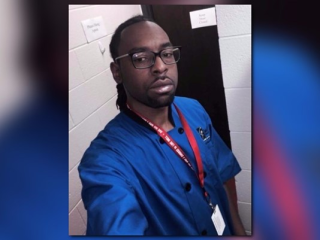
    Earlier this year I wrote a couple of posts in the aftermath of the shooting of Philando Castile, a cafeteria supervisor in a St. Paul elementary school.  Castile was a concealed carry permit holder who was shot during a traffic stop by a panicked policeman in Falcon Heights, not far from where I used to live at the edge of Minneapolis.  

    (First post:  Not so much about Mr. Castile as about bumper stickers and jumping to conclusions.)

    (Second post:  About Mr. Castile — appropriately — being laid to rest from the Catholic Cathedral of St. Paul at the request of his mother.)

    2Q==_1467875063259_3796446_ver1.0

    "Mr. Phil," as the kids called him, dressed as the kids saw him every day in the school cafeteria. Photo: Family/Facebook

    There is an update in the case.  Ramsey County Attorney John Choi announced today that the officer who killed Mr. Castile is to be charged with second-degree manslaughter in Mr. Castile's death, as well as — because of the woman and child who were in the car — two felony counts of dangerous discharge of a firearm.

     From the linked Minnesota Public Radio article:

    Ramsey County Attorney John Choi announced Wednesday that he has charged police officer Jeronimo Yanez in the July 6 killing of Philando Castile during a traffic stop in Falcon Heights.

    …"I know my decision will be difficult for some in our community to accept, but in order to achieve justice we must be willing to do the right thing no matter how hard it may seem," Choi said while announcing the charges.

    Castile, a 32-year-old school cafeteria supervisor, was shot by Yanez after he was pulled over during a traffic stop in Falcon Heights on the night of July 6.

    Minnesota law justifies the use of deadly force by a police officer, Choi said, only when it's necessary to protect the officer or others from great bodily harm or death. He said the use of Yanez's use of force was not justified.

    …Choi went over the timeline leading up to Castile's death. He said Yanez signaled to another officer that he was pulling Castile's car over because his "wide-set nose" matched the description of a robbery suspect.

    Yanez turned on his squad lights, and Castile pulled over eight seconds later. It was just one minute later that Yanez shot Castile seven times, killing him.

    Castile handed over his insurance card and "calmly" told Yanez that he had a firearm. Yanez said, "OK, don't reach for it then." Castile told Yanez he wasn't pulling out the gun. Yanez screamed, "Don't pull it out," and took his firearm out of the holster. He fired.

    "Officer Yanez pulled his left arm out of the car and then fired seven shots in rapid succession into the vehicle," Choi said. "Philando Castile moaned and said his final words, 'I wasn't reaching for it.' "

    "No reasonable officer, knowing, seeing and hearing what Officer Yanez did at the time, would have used deadly force under these circumstances," Choi said. "The totality of the circumstances indicate that Officer Yanez's use of deadly force against Philando Castile during the July 6 death was not necessary, was objectively unreasonable and was inconsistent with generally accepted police practices."

    I am seeing mostly praise of the DA's office, with some anger that the charge is manslaughter instead of murder or that the maximum sentence (ten years in prison) is too low — it's on the order of some sentences for nonviolent sale of drugs here in Minnesota.  

    I can't really speak to the sentencing, but reading the Minnesota statutes defining second-degree manslaughter versus the ones defining homicide, it strikes me that the charge is correct if the facts are as stated.  

    • Second degree manslaughter is defined in MN as causing the death of another by "culpable negligence whereby the person creates an unreasonable risk, and consciously takes chances of causing death or great bodily harm to another."
    • Second-degree murder requires intent to kill, for which I doubt there's evidence, or else that the homicide took place during commission of a crime or in violation of a restraining order. 
    • Murder in the third degree requires "perpetrating an act eminently dangerous to others and evincing a depraved mind, without regard for human life" — you could certainly make an argument that the shooter appeared to act without regard for Mr. Castile's life, but it's tough to prove that.
    • An argument that the shooter acted in self-defense requires a finding that the shooter reasonably believed deadly force was necessary to prevent grave harm or loss of life — and the DA affirmed today that he believes the officer's fear was not reasonable.

    This is a very, very sad case.  I am glad to see that it was investigated thoroughly and that charges were brought.  Many people harshly criticized Ms. Diamond Reynolds, Mr. Castile's girlfriend whose four-year-old daughter was with them in the car, for having the presence of mind to send out live-streaming video of the shrieking officer and the bleeding, dying man in the front seat.  It was as if her cool head and quick thinking was itself somehow offensive, a proof of guilt or of an agenda.  That video — along with some from the officer's dash-cam — turned out to be crucial evidence that led to the DA's bringing charges.

    Community reporting works.

    + + +

    One of the things that disturbed me about the media coverage of Mr. Castile's death was the relative silence of gun rights organizations, especially the NRA.  The story that quickly spread was one of a man who had a legal permit to carry a weapon in Minnesota, was not carrying in violation of any laws, and who did everything he was supposed to do when pulled over for the traffic stop.  Surely the apparently unprovoked killing of a cooperating concealed-carry permit holder by a jumpy cop should raise the ire of Second Amendment groups, as it's definitely going to have a chilling effect on the exercise of Second Amendment rights.  

    Yet the NRA took two days to make a statement at all, and when it finally did, it made a very weak one.  This left a lot of people, including me, wondering if they were only prepared to fight for the rights of white gun owners.

    The local group Minnesota Gun Owners Caucus did better, releasing a statement soon after Mr. Castile's death and talking to local news reporters today.  

    Minnesota law does not require permit holders to reveal they are carrying a gun unless they are asked by police….Castile did not say he had a permit, but he did say he had a gun. In general, that is what firearms instructors teach, according to Rob Doar, a leader of the Minnesota Gun Owners Caucus and a firearms safety instructor.

    Castile did not reach for a gun, did not move his hands and did not resist. Doar says Castile appeared to do everything by the book.

    “I recommend that you turn the car off, you turn the lights on in the vehicle, you keep your hands on the wheel,” Doar said. “I do believe that Philando Castile acted as a responsible permit holder.”

    I'm still not seeing a lot of media reports covering the angle of "Do people who aren't white have full access to their Second Amendment rights?"  Let's hope that some news organizations start looking into it during the upcoming — probably high-profile — manslaughter trial of Officer Jeronimo Yanez.


  • On making phone calls to action.

    After yesterday's somewhat cathartic post, today I'm just tired.  

    The one-week aftermath of the election leaves me with a familiar sort of unease.  Usually this kind means I'm past deadline on an important project, or I'm putting off opening my email because I know there are 500 unread messages in it, or winter's coming soon and the kids only have sandals still, or it's November and any day now relatives will start emailing me wanting to know what all the children want for Christmas.  

    There's something that needs to be done, and I have enough on my plate with the ordinary tasks of life.  

    IMG_2039 

    So what's to be done?  (Besides the ordinary tasks of life, I mean, offered in cheerful generosity when possible.)

    + + +

    A couple of weeks ago I posted on Facebook:  "I just ordered a pizza and had to talk to a real live human being over the phone."  Friendly commenters teased me, some sympathizing, with mock horror.  I think some of them understand for real.  I can't be the only one.

    I hate talking on the phone, and even ordering a pizza requires me to overcome an actual aversion.  I am accustomed, now, to pay-at-the-pump, Amazon shopping, and online takeout orders.  I don't even talk to friends anymore, thanks to FB and texting and email, and I like it that way.  

    When by chance I actually have to call someone, even for a simple transaction like these, I almost have to rehearse how it's going to go, or I get stage fright.

    When they pick up, I'm going to say, "Hi!  This is for delivery…." 

    + + +

    So it was with a little bit of dismay, along with interest, that I read this Twitter thread by Emily Ellsworth:

    I worked for Congress for 6 years, and here's what I learned about how they listen to constituents.

    First, tweeting or writing on Facebook is largely ineffective.  I never looked at those comments except to remove the harassing ones.

    Second, writing a letter to the district office (state) is better than sending an email or writing a letter to DC.

    But, the most effective thing is to actually call them on the phone.  At their district (state) office.  They have to talk to you there.


    (Do go read the rest.)

    Interested because I suddenly feel like I should maybe contact my Congressional representative and my senators about stuff, and dismayed because apparently the best thing to do is (shudder) talk on the phone.

    + + +

    What stuff should I contact them about, anyway?  I don't think I'm ready to, since I don't know my script.

    Problem number one is that I have a generalized sense of Must Do Something or Say Something, which I probably ought to narrow down.


    14-sign-guy-trump.w190.h190

    Photo: alexmleo on Twitter

     Problem number two is that my Congressional representative and both senators are Democrats.  Note:  I have no problem with having a Democrat for a senator or for a representative, any more than I have a problem with having most of my neighbors be Democrats (in fact, I hear that sort of thing is correlated).   The problem is that I would really like to urge Republicans to oppose President-elect Trump's bad policies, rather than urging Democrats to do so, since I think they're going to do that anyway.

    + + +

    Pausing for a public service announcement:  If your state has a Republican senator or two, consider contacting them to request that they not automatically rubber-stamp all of President Trump's appointments that are subject to Senate approval by simple majority?  

    Some of the proposed appointees, we hope, will be competent, qualified, and fair — or at least, partisan in an ordinary-Republican sort of way.  It's probably not helpful to complain about those people, and I would argue, we should be encouraging normal behavior.

    But let's face it:  at this point many of us are worried that Donald Trump will appoint at least some people who are incompetent, or interest-conflicted cronies, or white-nationalists.   Targeting those appointments for opposition might work.  But it's the Republican senators we need to call and urge not to approve them.  

    So:  if you have a Republican senator, maybe give them a call?  I don't think Al Franken needs me to tell him to oppose a Republican president, you know?

    + + +

    And if you have a Republican representative (again, I don't), perhaps you might call him or her and request that they sign on to a letter being circulated by Congressional Democrats demanding that Trump rescind antisemite Steve Bannon's appointment, or if that doesn't work, that they author their own or otherwise add pressure from the Republican side.

    For all I know it's crazy to expect Congressional Republicans to do anything openly to resist Trump's bad appointments, but maybe it's worth a try.

    + + +

    So, with my representative being a prominent Democrat, I wonder if there's anything I could call up and say that could make a difference.  I would really like to see Congress as a whole take its power back from the executive branch —  I have the impression that Republicans agree with more than Democrats do at a philosophical level, but both are guilty of forgetting it when "their guy" is in the Oval Office.  I would like to see subsidiarity respected:  not a knee-jerk "everything back to the states" response, but a careful consideration about which matters naturally belong to the federal government and which could be entrusted to states and communities.  

    If the federal government were less important than it is, if the executive branch was still being effectively checked by Congress, we would not have to fear dangerously awful presidents as much as we do now — not because we might not get awful people elected to the presidency, but because they would not be able to so as much damage. I don't know how to put that into words on the phone.  

    Or maybe I don't know how to make that more specific.   It is more difficult than working out in advance the optimal order in which to describe the toppings on my pizza, you know.


  • Emotional reactions.

    Can we have a moratorium, please, on calling the many upset and frightened people, post-election, "crybabies?"

    And otherwise mocking and sneering at them, or anyone, for being upset or worried by this election?  Or for coping with it in any peaceful way?

    It's dumb.  It lumps an enormous class of individuals into one faceless mass, as if everyone who's upset is upset for the same reasons instead of being upset for a wide variety of reasons.  Furthermore, the sneerers selectively choose their favorite strawman reason, rather than their favorite noble one, and choose to paint the crowd with a wide negative brush.  

    Finally, it's unkind.

    + + +

    200px-Caravaggio_-_Sette_opere_di_Misericordia

    I lead a relatively privileged life and so I am not worried, not very much, about coming to personal harm as a result of the recent election of Donald Trump to the presidency of the United States.  I do not expect to be targeted by any gleeful thugs, nor to have my property or my place of worship vandalized.  

    I have a little bit of fear that I might be caught in a situation where justice might require me to speak up and put myself at risk.  This is not much, either.

    So on the one hand I am not qualified to comment about the authenticity of the fears other people are feeling.

    On the other… I do have some experience with the way that reports of a few frightening incidents around the country — and there have been such incidents of intimidation and harassment — have a way of getting under your skin.

    I know this, because of trying to be part of the Sane Mom Revolution.  Parents everywhere have been cowed into raising their children with extra shelter, not enough outdoor play, and a ridiculous amount of supervision because of a few frightening incidents around the country — sometimes directly (you can't play at the park because I'm afraid you won't be safe there) and sometimes indirectly (you can't play at the park because I heard that one of the neighbors once called CPS on a mother for letting her kid play at the park).   Not only that, but institutions are reinforcing it with illiberal rules:  Kids having to be in the direct line of sight of a parent while inside a library, for example.

    It's a self-perpetuating cycle of safety fears.  It's very hard to push back against, and it gets to you:  you catch yourself being frightened, even when you know intellectually that the specter of kidnapping and sexual predation is not actually part of a real trend or threat, that it's a bunch of isolated rare events that have been blown up by media.

    It still frightens people even if they know that.

    And by the way:  it's too soon to know whether the reports of intimidation and harassment are, or aren't, a real trend.

    And by the way:  Even the intimidating graffiti and signs that are supposedly "hoaxes" perpetrated by anti-Trump people?  That doesn't make them any less intimidating or scary.  Why should the political orientation matter?  Why does it matter whether the 'Go Home [Slur]' sign-painter wanted to honestly scare you into leaving the neighborhood, or wanted to deceitfully scare you into rising up and fighting back?  It's intimidation either way.   

    + + +

    The sixth spiritual work of mercy is "console the afflicted."  

    "Consolation" can mean helping the afflicted see that the situation is better than it looks, if that is true (and I don't think any of us know yet whether it is true).  To judge that requires a good deal of prudence.  

    I don't stake my honor on the claim that I have enough prudence to know.  I do stake my honor on the assertion that it is not "consolation" to call the afflicted crybabies and whiners, nor to dismiss them as not really afflicted.

    + + +

    I'm having my own emotional reactions to the election of President Trump, and I'll lay them out here frankly.


    Chief among them is surreal disbelief:  that we seem to be living in a parody sketch.  I really do find myself going about my day busy with things and then suddenly feeling a heavy weight drop into the pit of my stomach and remembering:  No, it really, really happened.  It isn't a joke.  It isn't a Bloom County strip.  It isn't a Simpsons sketch or a riff on The Producers.   Donald Trump is our next president.

    Sometimes I start hyperventilating a little, or I tear up.

    I know.

    Crybaby.

    Not.  It's real.  I'm horrified.  I didn't think it would really happen.

    + + +

    And even though I didn't think it would really happen and so maybe I'm part of the problem, I'm angry.  So very angry.

    Not that much at Trump voters as a whole, who voted for a wide variety of reasons and so don't deserve (any more than the sad and angry people) to be painted with a wide and universally negative brush.

    I'm angry at all the influential, supremely privileged people – people even more privileged than me, even less likely to hurt from a Trump presidency than I am — who thought it was HI-LARIOUS that Trump ran.  

    John Oliver will do for an example. In a response to the news that Trump was considering running for president:  "Do it," Oliver challenged, grinning widely as his audience cheered and laughed.  "Do it!  Look at me!  Do it!  I will personally write you a campaign check!  Now!  On behalf of this country, which does not want you to be president, but which badly wants you to run."

    Stupid.  Stupid.  Stupid.  Did they not know how this works?  

    "I didn't think it would happen."

    Well.  Maybe you shouldn't have enabled it then.

    This goes for every media outlet who thought Trump was ridiculous and awful and gave him free airtime because he was ridiculous and awful.

    This goes for anyone who may have voted for Trump in an open primary in order to make the GOP as weak as possible.  

    It goes for everybody who celebrated, or even minimized the awfulness of it all, because it was a sure victory for the Democrats when Trump was named the Republican nominee.

    It goes everybody who thought that what was obviously bad for the Republicans must also be good for the country.   

    Bad! Bad! Bad!  I'm angry at you.  Could you not see it as simply bad?  Why can we not all sincerely hope, in a first-past-the-post election, that both parties put forth their best possible candidates? 

    The enemy of your enemy is not always your friend.  

    + + +

    That's me being mad at entertainment-class liberals.  I'm so mad at the GOP that I am not even in a place where I can effectively write about it.  Really.  Not anywhere near there yet.

    + + +

    Finally:  I'm struggling personally with feelings that — I wanted to call them private feelings, but I guess I'm airing them now — feelings that I can only describe as personally traumatic.

    First of all — this part is an update — I can't bear to listen to Trump speak.  I make people mute it and put on headphones.  I wait to read the transcript, if for some reason  I want to know what he said.

    This is because I had a probable narcissist in my life once, a very deceitful narcissist, who was charming in public and vicious behind closed doors, a wealthy serial adulterer who flashed the keys to his Porsche, who worked behind the scenes to pit family members against one another, who liked to make fun of children, and who reacted with irrational aggression to strangers and family members who failed to show him sufficient respect or stood in his way whenever money was on the line.

    Donald Trump reminds me of him, and I can't bear to listen to his voice for that reason.  I know I have harped more than is probably helpful on the theme of "Trump has narcissistic personality disorder" here on this blog.   It's because I have seen the danger of the double faces it presents, and I have been worried since the beginning of the campaign that the "charming" is more visible than the "vicious," because that's been my experience.

    The other personal trauma:  I had a really rough time during the week of the tape of Trump leering aloud, "grab 'em by the pussy."

    I cried a lot.

    I expect there are other people out there, mostly women, probably some men too, who felt exposed and raw every time that piece was played or quoted.

    I find myself thinking that I don't even deserve to feel upset because my own experiences with men grabbing me without my consent, verbally harassing me, and in situations where I was afraid to complain about it — I was not even an adult, I didn't know how to cope with it — are few and long ago.

    But hearing the words over and over again brought it back.

    The tape was old news, but it was new news that many people who should know better, people in positions of power, people I knew personally, were today excusing and minimizing the description of assault.  I was harassed and bodily touched as a young and relatively powerless teen.  There are more people around than I thought who today think that this kind of hurting people is normal, even expected.

    It was new news to me that people would frame "they let you when you're a star" as some kind of proof that Trump was talking about consent.

    They also let you when you're their much older co-worker and they're afraid they might lose their job.

    They also let you when you're alone in an elevator with them and you're much larger than they are and they're afraid of what else you might do and so they're just trying to make it to the next floor.

    It's not consent.

    And it's not excusable.

    And it's infuriating, upsetting, and tears prick my eyes, just thinking about how many people… don't think it's a deal-breaker.

    + + +

    Our job is to do good work.  The year of mercy is coming to an end.  Let's pay it forward.

    https://en.wikipedia.org/wiki/Works_of_mercy

    For your neighbor's bodily well-being:

    1. To feed the hungry.
    2. To give drink to the thirsty.
    3. To clothe the naked.
    4. To welcome the stranger. (Previously referred to as "harbor the harborless" and "shelter the homeless")
    5. To visit the sick.
    6. To visit the imprisoned. (Previously referred to as "ransom the captive")
    7. To bury the dead.

    For your neighbor's spirit:

    1. To instruct the ignorant.
    2. To counsel the doubtful.
    3. To admonish sinners.
    4. To bear patiently those who wrong us.
    5. To forgive offenses.
    6. To console the afflicted.
    7. To pray for the living and the dead.


  • Boundaries and bubbles.

    Today I went on a run around the lake. We are having unseasonably warm weather here in Minneapolis, which is supposed to end after a week or so; the leaves are still on the trees, the sky is clear and blue, and as yet there’s been no snow and little frost. The path around Lake Calhoun is wide, tree-canopied, and inviting: it passes two playgrounds, swings by a busy uptown intersection, then close to where the lake laps against a wall and the waves bound and rebound, crisscrossing each other on their way in and out, dissolving into turbulence. At many places along the path there are lovely views of the skyscrapers of downtown, which from many glass surfaces reflect the sky-colors; when it’s clear, at sunrise or sunset, the whole skyline sometimes turns a brilliant shade of aquamarine.


    I love my adopted hometown, and I am fond of the familiar views that give me a sense of place. I thought about all the people in all the hometowns across the country, waking up and walking the dog, or driving to and from jobs, or hanging out with family, looking at the views they see every day: views that I could only see and appreciate with visitor’s eyes. I know not everyone loves the place where they live, but my wish for everyone in all the places is to see something beautiful that means “home.”

    + + +

    I realized today that I live in a bubble online that I have created around myself. It is not a bubble of liberals nor a bubble of conservatives, not a bubble of Catholics or of homeschoolers or of mothers. Indeed my Twitter feed and my timeline have people from across the political spectrum and who do many different jobs and who belong to different religions or no religion at all. With most of my privacy settings to “friends of friends” I often hear from new people. I believe in reading arguments I don’t automatically agree with. I believe in listening to people tell their stories, even if they come with agendas.

    But I do live in a bubble from which I will readily expel anyone that violates a certain value I have, and that value is civil discourse. Say what you like, say it firmly, even say it sharply in order to best make your point. But I will mute you, block you, or unfriend you if you persistently make ad hominem attacks on the other people in the discussion. Likewise, if you use abusive language or excuse abuse. Likewise if you use slurs aimed at racial minorities, slurs for gay people, or gendered and racialized terms of abuse, intimidation, or mockery. Likewise if you attempt to use a person’s legal or social vulnerability to intimidate them.

    I mentioned that I set my privacy settings to “friends of friends” because I enjoy hearing from new people. This is true, but one thing that makes it possible is my willingness to block and mute friends-of-friends whose discourse is so uncivil or unpleasant that I don’t wish to see it on my wall. No one needs to know that I have done it; I don’t generally mention that I have blocked someone, because why give an unpleasant person any more oxygen?

    I have blocked friends of friends for making sexually and racially charged jokes in the comments under a post about breastfeeding advocacy in minority communities.

    I have blocked an immediate family member of my own for pointedly mentioning to one of my friends, a homeschooling advocate who had disagreed with him in my comments, that he was “friends with the superintendent of her district,” and then contacting her repeately in private messages after she told him to stop. (Friends: I have your back.)

    I have blocked friends of friends for making unwelcome sexual comments about images I have posted (that my own friends have “liked.”)

    I regularly hide from view posts that dehumanize, that express unjust prejudice against people of different religious beliefs, or that mock people for having strong feelings or disabilities.

    I readily mute people who bother me on Twitter in an uncivil manner. No, not because I disagree with them. Because they are asses. There’s a difference.

    If you stir shit online where you think I can see it, and you don’t get a rise out of me, know that it’s probably because I have found a convenient way to ignore you.

    + + +

    I mentioned in my post yesterday how I was swinging from place to place, trying to find where I stand post-election. I think I am narrowing that place down a bit, and I am doing it by setting boundaries around myself not to keep undesirable people out, but to rein myself in.

    Building a little fence, saying I will only go so far in such and such a direction.

    Some of that I expressed in a comment I made on Jamie’s post

    I’m struggling to find a place that

    — does not normalize this president-elect

    — does not further marginalize the poor and rural voters who chose him

    — respects the free and fair election process

    — sees clearly the reality of this new political order and acts rightly within it

    — distinguishes between the things the president will want to do that are bad ideas because they are, you know, normal wrong political policies I would normally oppose, and the things that come out of his narcissistic cruelty or that would cause structural damage to the republic that transcend politics

    — finds common ground among the many people with disparate political philosophies who are dismayed at the character of the president so we can work together and speak together to limit damage to the republic from the latter example above

    A tough place to be.

    The more I think about it, the more I can see that I am setting boundaries for myself. I don’t know what my final attitude will be, exactly. But I know what I don’t want it to venture into, and I am building little fences that say “This far and no further.” I won’t normalize Trump’s behavior or minimize his psychological unfitness. I won’t strike back at, marginalize further, or dehumanize the poor and rural voters who chose him. I won’t undermine the free and fair electoral process. I won’t be trapped myself in denial or paralyzed by dismay. I won’t mistake ordinary partisan politics for fundamental existential threats to the republic, and vice versa. I won’t let political disagreement between myself and other #nevertrumpers — whether they are to my left or to my right — dissuade me from trying to communicate and work with them to minimize the damage that a Trump presidency might do.

    Since then I have added a few more boundaries.

    I won’t denigrate anyone for being upset or frightened, or for coping with that upset and fear in any peaceful and respectful way.

    I won’t wish that things will go so poorly for certain causes that I will get to say “I told you so” to people that trusted Trump to promote them.

    I won’t teach my kids that President Trump’s unworthiness means we don’t pray for him or wish his ultimate good.

    I won’t despair.

    + + +

    Here’s hoping I draw strength from the bubble I live in, the one I am not sorry for, not one bit.


  • Processing votes in a swing state: and the broken stair.

    It seems that the election of Donald J. Trump to the presidency of the United States has done what nothing else could: spur me to blog daily.

    I'm still reeling. Swinging. Did I sound like I made some kind of sense the other day? My mood is like we used to say about the weather in Ohio when I was growing up there: if you don't like it, wait a minute.

    Sometimes I'm: Okay, time to move on. The election is over and the election mentality won't help us now. What is the best thing to do in the current situation?

    Sometimes I'm paralyzed by disbelief. I keep waking up with a sense of vague dread and unsettlement which takes a few minutes to understand before it hits me that the American people have elected Donald J. Trump to the presidency of the United States. This is why I keep making myself type things like The American people have elected Donald J. Trump to the presdency of the United States, in its full shameful glory. Cauterizing the disbelief. Before the election I joked about Bill the Cat. (The newspaper comics of my childhood featured a cartoon cat which, for a while, had had its brain replaced by Donald Trump, and which periodically ran for president.) The ludicrous image which leaps to mind these days, not sure why, is Fred Willard playing the Global CEO in the movie WALL-E. Maybe because Fred Willard does batshit crazy so well, and I am rolling all his roles mentally into one.

    Sometimes I am: Let's try hard to understand how this happened and what the voters were thinking and let's stop slinging insults around and let's all just radiate peace and love to everyone around us and let it radiate outward to the whole world. I am not a politician, or a professor, and my soapbox is not very elevated. I am a mother of children and my job is to raise them right and if I do my job faithfully there will be a little more love and respect in the world and blah blah blah, you see where I am going with this.

    Sometimes I have a surge of political activism and I think: Now there are people both on the left and the right who range from "kind of worried" to "scared out of their minds" about either the geopolitical or the domestic implications of a Trump Administration (Trump Administration. Trump Administration. Trump Administration.) Maybe those people will be able to join together to enact some useful political change that could mitigate the damage? I will write my Democratic congressman and tell him to fight the good fight! I will share petitions on Twitter to put a layer of Congressional oversight between the president and the nuclear codes!

    Sometimes I think this new "wear a safety pin to show worried marginalized people you are a safe person" idea (Google it; I had to) is a great thing and sometimes I think it'll accomplish nothing but virtue signaling; I would like to hear from some of the worried marginalized people themselves before making a final judgment.

    Sometimes I am just angry that the bully won, and so did all his lapdogs and hangers-on. People like Ann Coulter won. This is proof of the fallenness of the human race, as if we needed more. I am actually more angry at the enablers and lapdogs and hangers-on, the Wormtongues, than I am at Donald J. Trump the president-elect because, as I have written before, I think Trump is mentally ill, a sick man, and not entirely at fault for being the person that he is, but the enablers and lapdogs and hangers-on have not got that excuse.

    + + +

    Today I find myself nodding in agreement with Jamie at Light and Momentary, in her post entitled "Sore Losers:"

    I do not apologize for holding the leader of the free world to a high standard. I do not apologize for recognizing the plain truth that Donald J. Trump fails to meet that standard. I do not apologize for expecting the president of the United States to be a person who is, at a minimum, reasonably truthful and reasonably capable of putting a coherent sentence together.

    I will not back down from my assertion that someone who has not managed to learn by age 70 that adults don't talk about genitals in the public sphere — either the size of their own or the grab-ability of someone else's — is unfit for polite society, let alone the highest office in the land. I will never rest easy about the judgment of a man whose only metric for evaluating women is how hot they are…

    For those of us who said #neverTrump there is a bit of a balancing act here: we must deplore violence (I do) and support the peaceful transfer of power (I do) while also steadfastly refusing to normalize this gravely abnormal election (I'm going to do that too). I have an obligation to show respect for civil authority. But I have no obligation — quite the reverse, I would argue — to pretend I don't notice when someone seems untethered from reality.

    It is not normal human behavior to assert repeatedly that you never said something that you actually said on video. If I talked to the family of someone who did so while also demonstrating paranoid and vengeful behavior, I would recommend that they take him immediately to a neuropsychologist for a thorough evaluation. Instead he is taking his family to the White House. This concerns me.

    We cannot explain this away. We can certainly hope that his presidency is not marked by the volatility and the — I can't think of another word here — the lunacy that made his candidacy so singular. There has been a movement throughout his campaign to explain away his errors in judgment. I will not link to the Catholics4Trump page that asserts he wasn't really mocking a disabled reporter (he was just gesturing, they assure us), but it crossed and re-crossed my Facebook feed. I decline to accept their justification for his clearly aberrant behavior. And let me be very clear: I do not apologize for doing so.

    Jamie's post reminded me of a concept that maybe not everyone who reads here is familiar with, the "broken stair" analogy. I first encountered it in an online support group for people who have an abusive family member, but I have also seen it used to refer to mental illness in a family or in an organization; either way it will work. Wikipedia (I just looked there for the first time) has it listed as a "missing stair" and says it refers originally to rapists within a particular community, but has since been expanded to other concepts. Here is the essence, from the Wikipedia article:

    Missing stair is a term used to describe a sexual predator who many people know cannot be trusted, but who, rather than excluding, they work around by trying to quietly warn others. The analogy is to a structural fault in a house, such as a missing stair, that everyone who lives in the house has gotten used to and warns newcomers about, rather than fixing.

    "[It is] something you're so used to working around, you never stop to ask "what if we actually fixed this?" Eventually you take it for granted that working around this guy is just a fact of life, and if he hurts someone, that's the fault of whoever didn't apply the workarounds correctly."

    We have to get used to the idea of President Trump (President Trump, President Trump) enough that we can act effectively in this new reality. But we don't have to — we mustn't — get used to him enough that he and what he represents become a missing stair.

    (Updated to clarify:  Distinguish between run-of-the-mill differences between liberal and conservative solutions to problems, and the fundamental unhealthy and dangerous features of Trumpism.  The broken stair is not "stuff I disagree with" or even "stuff everyone would disagree with if they saw it my way.  I argue that part of the Democrats' problem is that lots of then called out every single Republican as a broken stair, and inured people to their warnings.)

    We mustn't get to the point where we say, "I can work within this new reality, so everyone else should too."

    We need to keep calling him out and pointing out that he is a broken and bent man, and his presidency (though real) results from a deeply weird and broken structural problem in the country that needs to be fixed.

    I doubt we will all agree on the nature of the underlying structural fault. Did the ground shift under the foundation? Was the wood rotten? Did someone — a resident, an intruder — take an ax to this spot just above the landing? If we just replace the stair, will that be the end of it, or is there something else we all have to train our eyes to see?

    That question is not answerable yet from where I sit, and even if we were to reach consensus on it we might all be wrong.

    But damn it, at least let's go on seeing that a broken stair is a problem in and of itself. It is not the fault of the people who trip on it or who now hesitate at the foot of the flight.

    -———

    *Don't quibble with me about how the American people did not really elect Trump because the national popular vote went to Mrs. Clinton, or because only about a quarter of eligible voters cast votes for him, or because the electoral college is intentionally undemocratic, or because none of your friends voted for him. We knew the rules before the game started; turning nonvoters into voters is part of the task of a campaign; the popular vote margin, compared to the number of people who could have voted but didn't, is so small as to represent mere noise and could have been different if the weather had been different (I think; ask Nate Silver). To say otherwise is to persist in denial. Tempting denial, but isn't it always?


  • Draining executive power: a bipartisan cause for the next four years.

    Principled conservatives, and liberals of good faith have never had so much in common as they do now. We’re both dismayed.

    Let’s do this.

    Let’s work together. Immediately.


    Let’s deprive Donald J. Trump — and whoever comes after him — of the most worrying powers that the executive branch holds. Powers that by the design of our country’s founders rightfully belong to Congress, the people’s tribune, the seat of representative democracy in this republic.

    Let’s put a layer of Congressional approval between the chief executive and the nuclear codes.

    Let’s end the cowardly practice of writing blank-check legislation that lets the executive branch — the Presidential administration and its agencies — craft unilaterally most of the rules that govern Americans’ daily lives.

    Let’s have more and more transparent Congressional oversight over matters deemed crucial for national security.

    Let’s stop calling checks and balances “obstruction,” and accept that the President has to earn the support of enough members of Congress (remember? our representatives? our assembled voices in Washington?) to enact his policies.

    Let’s demand that our Congressional representatives remember that they are representatives of their whole districts, that our Senators are representatives of their whole states — not just of the folks who belong to the same party. That their first loyalty needs to be to their constituents of either party, and not to the President even if he is of their own party. They need to protect the enumerated powers of Congress against executive overreach.

    Let’s do it now, while there are a lot of people in both parties who recognize the inherent danger of having an unhinged person in such a powerful position. I hope that it is clear to all that the fundamental structual problem is not this particular man’s character and emotional fragility, but the fact that so much power has become concentrated in one office in the national capital.

    We need to rediscover federalism, checks and balances, and the separation of powers. And what’s more, now is the time to get it done.

    + + +

    I hope my more liberal readers will not take it as a slight, but only as a factual observation, that (in general) progressives and the Democratic party have worked over the generations to concentrate power in the federal government and remove it from regional, state, and local oversight. Probably some powerful people have promoted this in order to consolidate their own power and influence, but most of the proponents have been well meaning — the goal being to make sure that citizens all over the country enjoy the same rights, prosperity, safety, and freedoms.

    Conversely, in general, conservatives strongly value regional and local autonomy and have worked to reduce federal programs and regulations. Probably some powerful people have promoted this in order to advance their own economic interests or preserve their in-group’s place in the social hierarchy, but most of the proponents have been well meaning — the goal being to solve problems efficiently at the local level where people understand them, preserve personal freedoms, and to keep the accumulated weight and cost of regulations from dragging the economy down.

    We are in a place now where progressives — like principled conservatives — wish to rein in the power of the federal executive. The principled conservatives are still around. Many of them are not only opposed to the currently swollen federal executive power in general, but are actually opposed to the program of the new Republican president-elect in specific. This is a rare chance to work together to do something that could really be good for the country.

    + + +

    I think that soon, after the initial shock dies down and people in the government start getting back to work, I am going to write my Congressional representative — Keith Ellison (D-MN) — and congratulate him on his re-election to Congress. I will propose that he and the other Democratic members of Congress, as well as any Republicans who are troubled by the overreach of executive power that we saw in the last couple of administrations and who have serious concerns about the fitness of President-Elect Trump and his authoritarian tendencies, consider what they can do immediately to drain the power from the executive branch and return it to where it belongs: with our representatives and senators.

    A good place to start was suggested by my friend Ed on Facebook. HR 6179 would “prohibit the conduct of a first-use nuclear strike absent a declaration of war by Congress.”

    Let’s start by getting the president’s fingers off the nuclear button. Then we can start peeling his fingers away from everywhere they have no business digging into.