bearing blog


bear – ing n 1  the manner in which one comports oneself;  2  the act, power, or time of bringing forth offspring or fruit; 3 a machine part in which another part turns [a journal ~];  pl comprehension of one’s position, environment, or situation;   5  the act of moving while supporting the weight of something [the ~ of the cross].


  • An Ohio shopping story.

    Yesterday I went to Northgate Mall here in southern Ohio to hit some of the pre-Thanksgiving sales and replace some outgrown outshrunk pieces of clothing. 

    Tired and in a hurry on my way out, I hoped to grab a sparkly top that could be paired with black pants for possible posh holiday party attendance (hey, you never know).  Found a red sparkly sleeveless turtleneck in Dillard's, a department store, and rushed with my bags into the nearest fitting room.  I tried on the top, it fit, I was just about to run back out and pay for it when I noticed hanging on the rack of clothes that had been left inside the fitting room a sleek, buttery, chocolate-brown leather coat.

    I am not much of a fashion plate, but one item that I am forever noticing on other women and forever coveting, and always thinking that now isn't the time to buy such a thing, is the sleek zip-up leather coat.  I haven't bought one because I have been holding out for the right time to pay money for a really nice one.   This one was everything I ever wanted.  It was long, cut with a little swing to it, and the collar was perfectly minimalist, and the zipper was perfectly sleek and flat.  I checked the tag — size was right — I took it off the hanger and put it on.  I didn't want to even peek at the price tag yet.

    Ooh.  This was the coat I had been looking for my whole life.  Maybe now is the time to buy such a thing, I said to myself.  It fits me.   It would sure motivate me not to gain the weight back. I bet I look fantastic in it.  Let's see…

    I opened the louvered door and walked out into the main fitting room to stand in front of the triple mirror.  Wow.  Wow.  I was still admiring myself and trying to get up the nerve to look at the price tag when a saleslady walked in and asked pleasantly, "Is there anything I can help you with?"

    "I don't know," I said, "got three or four hundred dollars I can borrow?"  She laughed and said she might have three or four dollars.  I sighed and took the coat off.  "Gosh, I love this coat," I said, "I don't even know how much it is."  I started looking for the price tag, thinking to myself:  will I buy this if it's not TOO expensive?  Not on the collar… not on the left cuff…

    Suddenly the saleslady gasped and put her hand to her mouth.  And she turned and called:  "Doris!  Is this your coat?"

    I looked up and there was Doris, an older lady wearing an employee nametag, barreling toward me with a look of indignation on her face.  She snatched the coat and marched off.

    "Where did you get that coat?" demanded the first saleslady, pointing.  "Did you get it from that room back there?"

    "Uh, well, yeah, I was just trying on this sweater and –"

    "That's not a fitting room!" she snapped.  "That's where we keep our coats and things!"

    I looked around me.  I was, unmistakably, in a fitting room.  The sign over the door said "FITTING ROOMS."  "But it is a fitting room!"  I said.

    "No it's not!  It doesn't even look like a fitting room!  There are CLOTHES in it!" she said.

    "There are clothes in ALL the fitting rooms!" I pointed out.  "Oh, and by the way," I added, holding out the sparkly sweater, "could you please ring this up for me?"

    I went back to retrieve my bags and inspected the fitting room again.  OK, now that I wasn't in such a hurry, I saw that there was an extra rack in the fitting room, and that some of the coats and scarves hung up on it had little paper handwritten tags looped around the hangers:  "Janice," "Susan."  And, of course, that the items didn't have department store tags or security ink bombs. 

    I returned to the counter.  The saleslady (not Doris — she was nowhere to be seen) had calmed down and was apologetic.  "The store doesn't give us anyplace to put our things," she explained.  "We don't have a locker room or even a closet.  We have to put them somewhere, so we put them there."

    "Don't you think it might be a good idea to hang a sign on the door?" I suggested. 

    "Well now, that would be a good idea.  I think I'll go and do that right now.  Sign here," she pointed and handed my bag with my new sweater across the counter.  "And have a nice day."

    "You too."  I paused.  "Tell Doris she has really good taste."

    "She certainly does," said the saleslady.  "That lady has so many clothes!  And she's SO TINY.  She can wear anything.  Well!  Have a lovely holiday."

    Yes, yes I will.


  • Nausea.

    Margaret (Pregnant) in Minnesota, told by her doctor to avoid "white" carbs, and craving nothing but Tostitos, wants to know what to do about it — see the comments to the previous post.  Comment here or there or at this thread on Margaret's blog.

    I suggested switching to whole-grain crackers as a first step, but trying almonds out and seeing how they work; after all, they're protein/fat/carbs all in one, practically a meal in a shell.  Pregnancy is weird (like I have to tell my readers this) — sometimes you HAVE to eat just what sounds good, but other times it's worth it to try something else, even if it's not exactly what you crave, and see if it does the job just as well. 

    If you google around you will see that almonds are a frequently recommended tummy-settling snack.  Maybe if you tell yourself that they are a natural anti-nausea remedy, you will be able to harness the placebo effect too!

    At some point I hope to get pregnant again and will probably have to continue being careful about my own diet — the prospect scares me more than a little, trying to navigate through the cravings to a healthful diet for pregnancy support– so I'm with you in spirit, Margaret…


  • More about delayed gratification.

    In comments to the post about delayed gratification, Christy P writes something worth highlighting.

    I think you got it there – you redefined your goals, and therefore success, into ones that were quantifiable and achievable not just on a daily basis but multiple times each day. Rather than focusing on a primary goal that seems so far away "Lose 40 pounds", you kept that as not just a secondary but even a tertiary or quaternary goal. The primaries were "Eat an appropriate amount at this opportunity", "Exercise today", "Let myself feel hungry for two hours from 10AM to noon". Each time you achieved one of these goals, it made you into an achiever, and if you didn't at one meal, then you weren't a complete failure, because you had a string of successes in your back pocket. It is really like the idea of intentional living. Making choices with thought behind them instead of reflexive action.

    We talk about small goals in other parts of life, but I think the concept gets neglected with good eating and physical activity. Those lifestyle choices are seen as such an all or nothing prospect that people lose perspective.

    I hadn't really thought about it, but she's right — if anything, we undermine short-term health goals.  You're supposed to exercise so many minutes PER WEEK, for example.  Doesn't that make it sound like a long-term commitment?  Oh, and by the way, you should get checked by your doctor before starting!  God forbid you should decide to take a walk around the block TODAY! 

    But another question — how can a person create that motivation within herself, the motivation to seek the behavior change for its own sake and not just for the long term results?  I didn't really realize what I was doing at the time.

    There is some precedent for this in mainstream weight loss advice. Haven't you seen recommendations to get exercise for its own sake?  To find a physical activity that you enjoy, whatever it is, and then get out and do it regularly?  What you don't see is a recommendation to learn to prefer eating less.  It's generally assumed that eating less always feels yucky and is only chosen in order to lose weight.  (You do see a recommendation to develop a taste for healthy food instead of unhealthy food, but that's a little different.)

    I don't really know how I started to desire to eat less.  I do know some of the mental images I cultivate to maintain that desire. 

    —I think about the evenings, Mark out of town, when I would order pizza for myself and the kids, and eat an entire medium pizza by myself while surfing the web. (plus a 20-ounce Coke and a big salad) This image horrifies me now, even though once upon a time I used to sort of look forward to it.   

    —I think about my lapses in and out of bulimia in my younger days.  That's pretty disgusting. 

    —And — I'm not really sure if doing this is good for my attitude towards my fellow human being, but I'll throw it out there anyway — I go to restaurants with buffets or salad bars, I sit near the buffet, and I watch people and their plates.  I find a fat person and I look at his plate and see what he eats.  I wish I could tell you that often the fat person I see has filled her plate with fresh greens and a reasonable portion of healthful entrees.  Haven't ever seen it in months of peoplewatching.  I watch them and they pile the plates high and go back for seconds, thirds, fourths, then desserts.  I watch the fat people eat and eat and eat — I watch them get breadstick appetizers before their pizzas, and dessert pizzas after their pizzas — I watch them supersize their fries and I say to myself:  "Self:  That was you, and that could be you again if you don't watch it."

    I had to be grossed out by the behavior, not just by the results of the behavior. 

    Is it possible to MAKE yourself change that attitude?  Is it possible to MAKE yourself be motivated by the short-term reality instead of the long-term dream?  If so, how do you make yourself feel that way?  I don't know because I've never tried to do it on purpose, I've only discovered it by accident.


  • How to answer the question, and a musing on delayed gratification.

    So maybe readers can help me out with this one.

    What do I tell people who ask me “How did you do it?  How did you lose all the weight?”

    You know that the answer is long and complicated, not something that is easily distilled into a sound bite.  On the eating level, I have developed something like two dozen different strategies to help me control gluttony.  The exercise is easy to explain, but its effect is, I believe, mostly on my confidence and mental state.  And then there’s the motivational strategies — there are probably a dozen of those too.

    I get the question a lot though.  “Look at you!  How did you do it?”

    Yesterday my inner technical editor realized that there isn’t a single answer or a single set of answers, because the inquiry represents two distinct questions:

    1) What strategy and supporting tactics did you employ?  what did you DO?
    2) Why did you succeed this time and not the other times?  How did you stick to it?

    Some people are looking for an answer to (1), others to (2).

    I also have to ask myself, what can I say that will really be helpful to other people?  My interlocutor might not need to lose weight, but maybe she will tell my story to someone who does.  Most people believe that “eat less, exercise more” is oversimple — that is, though, what I did.  The only layer of complexity I added to it was that I chose to seek out “eating less” and “exercising more” each for their own sake.  I became motivated to eat less because I didn’t want to feel disgusted by myself anymore.  [Editing note much later:  Not a healthy source of motivation.  I reject it now.]   I became motivated to exercise more because I wanted to be a person who exercised.

    Instead of delayed gratification (I ate less and exercised more and then I lost weight and that made me happy) I achieved sooner gratification (at that meal I ate less, I succeeded at defeating gluttony; this morning I exercised, I succeeded at swimming so many yards).  It is so much easier to be motivated when the gratification is close in time to the decision point.


  • Stuffing.

    Thanksgiving week, for me, began Saturday morning and ends next Saturday night (so it's really eight days).  In that week I count 6 meals-on-the-road, 3 restaurant meals, and 3 family holiday get-together meals.  Plus all the normal eating.

    I will be content to remain more-or-less steady, a half a pound above my target weight.

    Last night dinner at a fancy seafood restaurant.  I followed the "fill up on vegetables" strategy: a giant salad with dressing on the side, baked fish with broccoli and red pepper, and I had them swap the rice pilaf for a second side dish of asparagus.  I was far too full to even think about dessert, so ended with cappucino.

    I am not sure about the "fill up on vegetables" strategy.  When I first started back in May, I was determined to practice getting hungry, to learn to be unafraid of hunger feelings.  Filling up on vegetables denied me opportunities to practice feeling hungry instead of stuffed.  Later I decided I'd had enough practice with that and started pounding the Brussels sprouts.  But I'm not sure — maybe it is better to avoid ever "filling up" on anything.  Is it still gluttony if you stuff yourself with plain okra?

    Maybe the important thing is to have both those tools in my toolbox.  I can fill up on vegetables when there are vegetables available (plain ones anyway; butter-soaked asparagus and dressing-soaked salads have limits).  And if there are not healthful food choices around, I can practice my staying-hungry skills until I get within striking range of some lettuce. 

    [Editing note.  Years and years later, I wish I’d done a better job distinguishing gluttony from other problems with food, like clinical eating disorders and other kinds of compulsiveness.  

    I want to emphasize that, whereas I identified some behaviors in myself that probably qualified as self-centered gluttony in the technical sense, I am not and never have been qualified to make that distinction for anyone else.

    I hope to add some commentary to all the posts that have this problem as I find the time to review them.  Here’s a more recent post where I acknowledge some of the problematic material I wrote and set new ground rules for myself going forward.]


  • Sushi strategy.

    We got carryout from a great local sushi restaurant today, and had to wolf it down quickly with our dinner guest, Mark's friend Eric from work.  They were headed out tonight to Midwest Mountaineering  for the Outdoor Adventure Expo – to hear U.S. expedition leader Mike Farris give a public presentation about the accidents on K2 earlier this year that killed 11 climbers.  Anyway, they were in a hurry, so we got sushi, ate it, and sent them on their way.

    I'm overfull.  I used some of my strategies, but I made mistakes and learned from them too.  Here's what went right and wrong.

     - Right:  I ordered two salads (a seaweed salad and a regular lettuce salad) and had them before I turned to the other stuff.

     - Right:  I brewed up some coffee to end the meal with.  This is getting to be a regular tradition and it really helps me put the brakes on.  But I really need to start the coffee before I sit down for the meal, so it's ready when I need it.

     - Wrong:  I should have had miso soup too.  It's mostly water and might have slowed me down.

    – Wrong:  Mark suggested we eat "family style," with a lot of different things spread out on the table and everybody takes what looks good:  spicy tuna roll, salmon avocado roll, "crazy  roll" (which turned out to be tempura-fried), some udon  noodles, katsu don, gyoza, etc.  Note to self:  THIS IS NEVER A GOOD IDEA. Obviously I should be able to take a reasonable amount and just stop there, right? Wrong.  I had seconds.  And thirds.  I failed to anticipate that it would be hard to pass up the seconds and thirds.

    – Wrong:  I thought it didn't matter what kind of sushi we got.  I really didn't need all that rice.

    OK, I think I've learned my lesson.  Next time, I opt out of the family style smorgasbord thing.  Next time I order the two salads, or salad and miso, and *I order a single hand roll for ME.*  I already know that a typical hand roll — this is different from the ordinary sushi rolls that are cut into chunks you eat with chopsticks, it's more an ice-cream-cone shaped thing  – is about the right size for me.   But when there is a big pile of maki on the table, I lose count of how many I've had.  

    Let everybody else eat family style.  I need my dinner to be more circumscribed — literally, by the edge of my own plate.


  • Wool socks aren’t enough.

    In answer to commenter Christy, who noticed that I said I'm cold:  I'm already wearing wool socks all the time.  And long underwear.  And…

    Photo 53

    I'm still cold all the time.  I just bought some flannel pj's, which helps at night, but I'm wearing the hat to bed.  No.  I do not take it off.  For anything.

    The only thing that makes it better, for a little while, is a really hot, overlong shower.  I think this is one reason why I have no trouble motivating myself to swim.  I find myself shivering in the car on the way to the Y, looking forward to the nice long hot shower at the end. 


  • 107.8.

    The first measurement below my target.

    Yes, it's necessary.  My target weight range is between 106.8 and 109.2;  as I've said, I want my weight to fluctuate around 108, not above it.   My 5-day running average still has not reached 108, though.

    Weight-maintenance experts — see Thin For Life by Anne Fletcher and Refuse to Regain by Barbara Berkeley — recommend setting an upper maintenance limit (Berkeley calls it the Scream Weight) a few pounds above your target; if you see that number on the scale, you must act immediately to reverse the gain.

    Mark, who occasionally has to design process controls for a living, took a look at the normal variation in my weight measurements and based on his statistical analysis, suggested a whole set of triggers.  I am supposed to immediately start weight loss mode if I see:

    Rule 1.  One scale reading above 111.6 

    Rule 2.  Two out of three consecutive readings above 110.4

    Rule 3.  Four out of five consecutive readings above 109.2

    Rule 4.  Seven in a row above the target of 108

    By the way, the rules are symmetrical.  I'm also supposed to enter "weight gain" mode — whatever THAT looks like — if I have one scale reading below 104.4, or two out of three below 105.6, and so on.  I am not too worried about this happening, but you never know.  So there you go, everyone who is worried I will become anorexic.  I have a plan to avoid that, just in case.


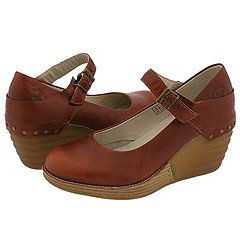
  • Manolo for me!

    OK, I love reading Manolo the Shoeblogger because he's funny and erudite.

    Very rarely do I react viscerally to the shoes.

    But OMG these, recommended today for folks on their feet all day, are so me.  I want them.  (Has the Manolo ever recommended the Doc Martens before today?  And is there a rule that when one links to the Manolo, one must lapse into the excess of the definite article that characterizes the writing style of the Manolo?)

    6900-611763-d

    In the name of all that is decent and holy, what have I become?

  • Immutable humanity.

    Great post by John Scalzi:  technology changes, but people don't really change.

    Lots of technology has come and gone during the decade and a half between 1994 and now, but the belief that the transformational nature of technology has created a generation that other generations don’t quite get has apparently remained constant. Which is, of course, to my larger point: Technology changes, but people really don’t…


    What’s on exhibit here is precisely what was on exhibit in the asg-x newsgroup in 1994, and was almost certainly on exhibit in similarly then-technologically-advanced media in whatever era you might choose to look at: A communal myth of generational exceptionalism: the belief (or at least a strong suspicion) that one’s social and technological accouterments, and how one uses them, signal a wholesale break from previous generations, and that one’s generation is therefore quite obviously unique and special.


    But if there’s any benefit to getting older, it’s realizing just what absolute crap this sort of thinking actually is. Technology changes, social trends change, hairstyles change, but people – the actual human animals inside all that technology, sociology and tonsorial grooming — are the same as they have been for thousands of years. Grab a time machine, go back to ancient Egypt, and swap an infant there with an infant from today, and in twenty years you’ll likely find two people perfectly well integrated into their cultures because there is no difference in the human animal between now and then. Even within generations (which are an artificial construct in themselves, but never mind that now) there’s enough variation to drive you a little batty: The same generation that gave us the hippies went for Nixon in 1972, and that same generation gave us both Bill Clinton and George W. Bush. Go figure.


    Don't buy into the idea that our generation is different from their generation or from the kids'.  We are used to different stuff, that's all.


  • The power of routine, or, is it a good or bad idea to be flexible?

    One thing I'm discovering is that I screw up — eat too much — far more easily when I'm deviating from my usual schedule.

    I realize it very quickly these days.  Now that I'm out of "practice," I feel uncomfortably full just a few minutes after overdoing it.  

    This happened to me today.  Usually, I have breakfast when I wake, lunch at 12:30, and dinner at 6 or 6:30; I usually don't eat solid food after dinner's over, except maybe a piece of chocolate.  On Thursdays, the kids have swimming lessons from 6 to 6:40, so that's our Family Gym Night.  On Thursdays we have dinner around 7:15.  I have a midafternoon snack, and I get dinner ready in advance so I don't nibble while preparing it, and usually there's no problem.

    For a couple of reasons, tonight Mark and I decided I should feed the kids and myself an early dinner BEFORE meeting him at the gym for swimming.  I made scrambled eggs and ham and toast for them.  And I ate… OK, you're going to think this is weird, but I ate an entire package of Brussels sprouts.  So far so good, but then I went on and had some of the ham and eggs and  toast too, and also some leftover rice noodles, and … what was I thinking?  Right NOW I am thinking "ooooff I feel so full."  But what was going on with that?  

    A mess of stuff.  I skipped the 3:30  snack because I was going to eat dinner at five or so, an hour early.  And then by the time 4:15 rolled around, I wasn't HUNGRY exactly, but I started to want to eat.  I was cold, for one thing.  I am cold all the time now, I guess for want of insulation.  And the thought of eating something hot started to consume me.  So I started cooking the Brussels sprouts.  And then the eggs.  And then the eggs were done before the sprouts.  And then the kids didn't finish the eggs.  And then they left a bunch of toast on their plates.  And I started thinking, "Gosh, if I don't eat extra now, I'll be pretty hungry later, seeing as how I never eat a bedtime snack anymore!"  (Mental note:  Beware, beware of the "I'd better eat more now so I'm not hungry later" line of thought.  It is evil.)  I don't know.  Somewhere in there came the thought that I should eat some chocolate to send a signal to myself that my dinner was done.  Somehow I decided I needed to send that signal a couple of times.   

    I'm OK now.  I have a cup of coffee in front of me.  And I have to leave for swimming soon.  And I feel alarmingly full.  And I know, I just know, that I would not have done this — basically a binge, which is only sort of redeemed by the fact that it's mostly Brussels sprouts by weight — if I had planned on eating dinner after swimming as usual.

    This all underscores to me that even though I am not overweight anymore, I still have a problem.  Euphemisms, sheesh.  I have an unhealthy attachment to food and to being unhungry.  I have developed a lot of coping strategies, and I can't let go of them, at least not yet.   One of those strategies is, more or less, a strict schedule for my meals and snacks.  I have seen that I change it at my peril.  

    It comes on top of a recent conversation I had with Mark.  He thinks I should start being more flexible. Especially with regard to exercise.  I still refuse to miss a swimming workout.  I still swim every Monday and every Thursday.  When our pool was closed for repairs over the summer, I drove across town to another one, even if it seriously messed up our family's schedule.  I am already making plans to drive 20 minutes into town from my in-laws' so that I can swim at the Y near their house when we stay with them later.  He wants me to quit swimming so much and take up something more portable, like running, that I can do even if swimming becomes unworkable on a particular day.

    He has a point.  I am not ready, though, to change my routines.  I lost the weight by doing what I have been doing.  I don't want to do something else.  Mark thinks it's time for me to move on.   He has been fantastically supportive, and has never complained about the stresses I put on our family with my workouts and the scheduling of meals — at least not until now.   I know from experience that I can change my routines, but I also know from experience that I have to change them slowly, experiment with them, see what works — not just jump from one to the other.  Safe "flexibility" is a carefully curated toolbox of strategies, each proven to work in different situations.  I have had time to develop only a few.  This is going to take me years.

    I think he looks at me and sees someone who has solved her weight problem.  But I am me, and I know what I am, and I am not someone who has solved her weight problem.  I am a person who still lives with it, because my "problem" is the cause, not the symptom; the weight is gone, but I have the same biochemistry, the same psychology, I always have.  I am not stable here.  I am not robust.  I am a recovering obese person, and maybe always will be.   


  • Licorice. And a tea link.

    I love licorice.  If my kids buy a bag of jelly beans or spice drops, I'm sure to hover over, begging for all the black ones.  (Purple too, if it's clove flavor.)  I don't keep a lot of candy around for myself, and am trying to develop a  taste for the obligatory Daily Square of Dark Chocolate that is supposed to be my antioxidant-packed sweet-tooth indulgence; but every once in a while, black licorice calls out to me. 

     Lately I can't get the idea of eating an entire bag of black gumdrops out of my mind.  So I got a little bag of Hershey's boutique licorice at Target and have been allowing myself ONE after dinner, leaving the dark chocolate to Mark.  (Believe me, sticking to one is a good idea.  I have a fighting chance of stopping after one.  I count licorice as prehistoric people are said to have counted:  "one, two, many.")  I can report that it is very nice licorice, but I am still unsatisfied.

    I think it's time for me to investigate other sources of licorice flavor, like xylitol gum or herb tea or flavored black tea.

    By the way, the two tea links go to TeaSource, a St. Paul tea merchant that I totally recommend.  Check out the herbal teas — especially Margaret's Soother (peppermint, clove, and licorice!) and Evening in Missoula, which are two of my favorites.  If you need a random emergency gift to take home with you for Christmas, just in case you forgot somebody, it's hard to go wrong with a packet or two of boutique herb tea.