bearing blog


bear – ing n 1  the manner in which one comports oneself;  2  the act, power, or time of bringing forth offspring or fruit; 3 a machine part in which another part turns [a journal ~];  pl comprehension of one’s position, environment, or situation;   5  the act of moving while supporting the weight of something [the ~ of the cross].


  • Bland and cautious: Two posts that say something I meant to say.

    First, from Darwin, a few weeks ago.

    [T]here are a good many people who know me in real life who read the blog. More than that, after writing a blog for four-and-a-half years, you get to think of a number of your long-time readers and commenters are friends. The blog becomes like a corner coffee house or bar where the same characters assemble regularly — with the occasional stranger dropping in as well — and discuss a range of topics, with everyone knowing the basic terrain of who everyone else is and where everyone is coming from.

    The way in which a blog can serve as a combination magazine and coffee shop is, to me, one of the most appealing elements of the medium. It's more personable than simply sending one's words out into the void, knowing that someone out there is reading them but seldom sure of what others think about them. 

    At the same time, however, this community element to blog writing makes one particularly aware of the difficulties of writing within a community. As the number of people I know (whether locally or online) who are blog readers increases, I increasingly find myself thinking, "If I write about that, so-and-so might be offended."

    Next, from Betty Duffy, and indirectly Pentimento, more recently.

    On one of the shelves in the bookstore, I picked up a book for grown-ups that looked interesting. I read the back cover, absorbed the synopsis, then looked for an author bio. “Well what do you know,” I thought, “It’s that angry man on the internet,” and re-shelved the book. I’d recently happened upon the author’s blog, on which he peeled apart the writings of some bad Catholic with whom he took issue.

    The author bugged me, not because of his lack of charity. Mean people are a curiosity. He bugged me because his self-appointed Catholic gate-keeping functioned as a sort of literary terrorism, scaring anyone who writes with a “Catholic” next to his or her name out of writing anything interesting.

    As Pentimento suggests in a recent comment here:

    “If your Catholicism is an openly-stated aspect of your writing and your consciousness, you may find that some of your equally open and self-conscious co-religionists are standing by waiting to judge the way you express your faith and tally how well you live up to it…. I was surprised a year or so ago to receive deeply hurtful criticisms in my comboxes from some who thought my writing was inappropriate, and from others who called my faith into question and even slandered me in the comboxes of a friend. My best friend in real life… took me to task after that because she thought my writing had become bland and cautious.”

    Who wouldn’t write cautiously when our writing about our personal experiences as a member of this Catholic Community faces such vicious scrutiny? 

    …Here then, is one Catholic blogger who will say without shame, I write this blog only because I enjoy doing it. It is not my apostolate. I might lead you astray. I might cuss. 

    I've been a little stilted lately. Like Darwin, I don't conceal my identity terribly hard on my blog. I'm not trying to shield it from friends and family. But I recognize the signs of hesitation sometimes when I write about politics, morality, sometimes even the petty arenas of judgmentalism that arise from parenting style, schooling style, liturgical preferences. No wonder I take refuge in posting so many recipes.

    I appreciate posts like this by Darwin and Betty, whose writing I have admired for its candidness. It's nice to be reminded that others are dealing with the same kind of internal censor. And I am beginning to appreciate the value of the blog as a learning environment for… what — sensitivity maybe? There is a balance to be learned:  a balance between honesty and truth, and charity to the real people who might see themselves (rightly or wrongly) between the lines.

    What is the good and true purpose of this blog? It is not my apostolate, either (though see Betty's followup to her post quoted above). I don't write in an attempt to entertain others — not much anyway — nor to have a soapbox — okay, I do my share of venting, I admit it. Even though I pad it with a lot of fluff and kid-pictures and recipes and "funny things that happened to me" bits, things that would be better suited to Facebook if I was the sort of person to have 293 "friends," there is a "main purpose" belied by the actual word-count I spend on various side purposes.

    Once during Christmas vacation midway through graduate school, I sat down with a pencil and a new legal pad and I wrote the date at the top and a title, "On the isotropic and unidirectional compactions of compressible packed spheres" or something like that, and I began at the very beginning and I wrote for hours and went straight through, as if I was explaining to someone with absolutely no background, everything I knew, guessed, and was trying to demonstrate about my thesis topic.  I made few corrections and I drew a lot of pictures along the way.  I filled the legal pad over the course of a few days.  With surprisingly few changes, that legal pad became a large chunk of the explication my doctoral thesis, and I still consider it one of the most viscerally satisfying pieces of writing I ever did.

    The reason I want to blog is the same reason I have always used that kind of derivation, and also the reason I have always journaled, and also the reason I have always savored (when I can get them) long conversations over a bottle of something or other: figuring something out, breaking sloppy reality down to its elements and reconstructing it into a model that I can wrap my mind around and say "This much I understand."

    Lately I think I have been overwhelmed by the thought of who might be reading, and have lost some of the courage I need to lay out what's on my mind.

    Well then.  PASS THE BOTTLE.

  • History headaches.

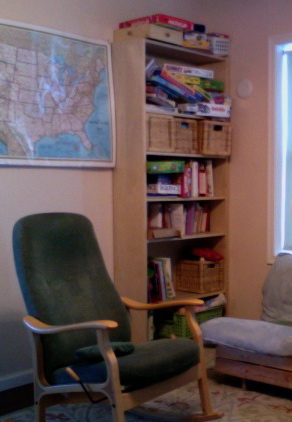
    We have a few weeks left in our 18-week literature-based unit study of the Civil War:  up ahead are two weeks on Reconstruction, and two weeks I called "Aftermath" which should take us through Plessy v. Ferguson and lay the groundwork, I hope, for grasping the Civil Rights movement when we study it next year.

     I started out very stressed that I hadn't worked out an exact week-by-week schedule of readings, but as I went on, planning just one or two weeks ahead from a master list I had prepared before the beginning of the year, I relaxed into a routine.  I am definitely getting better at flexibility.  And I am finding that it's far better to pick a few good, lengthy books that go into details, than to try to cram EVERYTHING in.   

     For example, we spent two weeks on one gem of a book about the Monitor and the Merrimack, and two weeks on another book about nothing but Lee's surrender to Grant at Appomattox — and let me tell you, I always thought of that latter event as being worthy of one or two paragraphs, as it had appeared in all the American History texts I'd ever read before.  How amazing to read it all fleshed out into a 180-page book — a gripping read, really.  Notes passed back and forth between the two generals; the constant threat of a deadly skirmish breaking out just as the surrender deal was about to go through; the drama of the negotiation of the terms of surrender; striking and contrasting portraits of the two very different men who met that day; the comical, frantic bidding for souvenirs from Mr. McLean's sitting room after the surrendering was over.

    I'm surprising myself.  I always thought I would be the sort to insist on memorization of key dates and things.  Instead, I'm hitting my stride with an approach of "bringing the era to life," the best I can, through good stories and biographies.  The children are really, really interested in it.  History is, after all, a collection of stories, and who doesn't like a good story?   

    This leaves me 18 weeks to "do," um, the rest of the 19th century in America.  WOW was it hard to make decisions about that.  Finally I just laid a printout of my book list on the table and moved eighteen pennies around on the pages until it seemed I'd distributed the best books evenly.  So:

    • 3 weeks on pre-Civil War leadership and foreign policy.
    • 4 weeks on expansion of the United States.
    • 3 weeks on immigration, urbanization, and social change.
    • 3 weeks on daily life, art, and entertainment.
    • 2 weeks on technology and economics.
    • 2 weeks on innovations in transportation and communication.
    • 1 week on post-Civil War leadership and foreign policy.

    The reference spine is Joy Hakim's A History of US.  I plan to anchor the century in biographies, choosing them mostly for the quality of the writing, which leaves me with the lives of Andrew Jackson, Crazy Horse, Elizabeth Cady Stanton, Luther Burbank, the Wright brothers, John Muir, and Teddy Roosevelt.   (How's that for a survey?)*   A handful of other really good books should round it out, covering topics like the Monroe Doctrine, stagecoaches, railroads, captains of industry, labor unions, the Edison-Westinghouse rivalry, settlers in southwestern Ohio, one-room schoolhouses, and European waves of immigration.   Whew.  Even with all this work done, I'm still sort of making it up as I go along… but it's actually working, I think.

    ____________

    *Don't forget we did spend the first half of the year on the Civil War, which gave us the opportunity to read biographies of Dred and Harriet Scott, Frederick Douglass, Sojourner Truth, Harriet Tubman, Lee and Grant, and  Abraham Lincoln … and coming up we have bios of Booker T. Washington, W. E. B. Dubois, and Ida B. Wells-Barnett. 


  • Snow.

    "Six inches!  Maybe I should declare a snow day, what do you think?"

    "Doesn't the superintendent of schools get to decide that?"

    "Um… okay… I forget, is that you, or is that me?"

    "Maybe I should just let you declare a one-hour delay."

    "Mark.  This is bigger than that.   I declare a one-hour delay every time I find an extra cup of coffee left in the pot."


  • Attention wider culture.

    "Ave Maria" and "Dona Nobis Pacem" are not Christmas songs.

    Not that they're inappropriate for the season.  I'm just saying.


  • Another reason to look forward to the new English translation of the Mass — I hope.

    Neal at Literal-Minded highlights something that's always driven me crazy about the Apostle's Creed.  Like, I notice it almost every time I'm at Mass and it distracts me.

    I noticed this part in the middle:

    "Jesus Christ … who was conceived by the Holy Spirit, born of the Virgin Mary, suffered, died, and was buried."

    It’s another multiple-level coordination! The full verb phrases are "was conceived by the Holy Spirit," "suffered," "died," and "was buried." Buried among them is the participial verb phrase "born of the Virgin Mary," with the "was" that would complete it understood from the first VP. To be perfectly parallel, the passage would have to be one of the following:

    Jesus Christ … who was conceived by the Holy Spirit, was born of the Virgin Mary, suffered, died, and was buried.

    
Jesus Christ … who was conceived by the Holy Spirit and born of the Virgin Mary, suffered, died, and was buried.

    There are a few other linguistic observations I’ve collected at church, but never put into posts of their own, so I might as well put them here….

    Neal goes on to point out several other things he's noticed.

    Of course, we are going to get a new English translation of the Mass sometime in the next few years. I wonder if they'll fix this glaring problem with multiple-level coordination. I should totally write a letter to the Pope about it.


  • The secret to happiness is often: lower your standards. Oh, and a cooking bleg on behalf of my long-suffering husband.

    My fourth pregnancy has definitely turned a corner.  A few weeks ago, busy and energetic, hardly noticing any discomfort, and bragging about how great I feel, I caught a cold. Emerging from it just before Thanksgiving, I suddenly discovered myself seven months pregnant and feeling every minute of that.  How did that happen?

    Adjustments must be made.

    No more picking up the crates of milk, eggs, and cheese from the dairy drop on Tuesday mornings on my way over to Hannah's house; Hannah will get them, and put them in my car.   No more helping Mark clean up after dinner.  As I discovered the last time we went to the gym, no more treadmill walking faster than 2.9 miles per hour, apparently.  This morning, with Mark off volunteering to help farm ice for a local ice-climbing festival next weekend, and with school-related stuff to do in the afternoon, I elected to skip the children's swimming lessons with all the up and down stairs between the child care and the locker rooms and the carrying MJ around in the pool.

    Most importantly, lowering my standards.  Yesterday, with Mark taking a vacation day from work to compensate for being gone all Saturday, I had high hopes of teaching a full morning-school schedule and then spending the afternoon cleaning and straightening the schoolroom and rearranging the furniture (in preparation for setting up the Christmas tree in there later on), and then straightening up and culling the board-game shelf (in preparation for getting new games as Christmas presents), and then making dinner and making the grocery list so Mark could take the kids to the store, at which time I would finally plan next semester's American history lesson in a quiet house.

    Instead, I crawled up to the bedroom soon after lunch and went flop next to Mark, who was updating the family budget with his shoes off and his computer on his lap.  "I can't do it," I panted, still breathless from the effort of climbing the stairs.  "I can either rest all afternoon and maybe make dinner and the grocery list… or I can rest all afternoon and NOT make dinner and the grocery list… or I can maybe go back downstairs and do some of the organizing I wanted to do, and DEFINITELY not make dinner.  Um…" I added as an afterthought, "what do you think about that?"

    He eyed me with the slightest hint of a smirk and said, "That depends.  Are you really tired, or are you just whiny?"

    "Really tired." 

    "Then just let me know if I have to figure something out for dinner."  He went back to the budget, and I lay there for a while and gathered my strength, and then went back downstairs to work on the board games.

    Proof that I didn't waste my time, a before and an after:

    Blog1 Blog2
     

    And inside the boxes it looks even better.  Let's just say that many ziploc bags were deployed.  And by the way, two of those square wicker baskets were jammed full of odd, neglected game pieces and instructions and cards, and now they are empty.  Yay!

    And let's just say that Mark made dinner and also cleaned it up.  And he did go to the store — I managed to produce the grocery list after all.   

    (Now you may be wondering why I am bothering with minutiae like schoolroom furniture rearrangement and counting and bagging all the little wooden track pieces in TransAmerica, when I am unable to feed, school, or clothe my family — did I mention I never got around to any laundry this week?   The reason is that I have some kind of mental illness whereby I cannot concentrate on ANYTHING if the level of disorder in the house rises above a certain minimum.  This can be debilitating at times, given that I have small children.  And given that occasionally I am gnawed at by the awareness even of invisible disorder, like the insides of all the game boxes.  I had to do something yesterday or I was going to be paralyzed.)

    * * * 

    So anyway, the bleg.  Whenever I collapse on the floor for whatever reason and implore Mark to make dinner happen, he always makes the same thing:  pasta with veggie-riffic red sauce and Parmesan.  I am not complaining and neither are the children.  Mark's veggie pasta sauce is very, very good, thick and chunky with lots of slow-sauteed sweet red peppers and carrots and onions, plus whatever odds and ends of vegetables he finds in the fridge.   Sometimes he puts bacon in it and then it's even better.  (I never make veggie pasta sauce like that because I think of "spaghetti and tomato sauce" as something to be produced quickly, with a minimum of effort).   It was Mark who commented as we were devouring ours that maybe he ought to consider expanding his repertoire of "emergency" dinners beyond one dish.

    It's not that the man can't cook; he can follow a recipe as well as anyone, and actually there are other things that he makes with some frequency, since he's usually on the hook for feeding kids lunch on the weekend and dinner once in a while.   He makes really good lasagna, too, and has cultivated one fantastic special-occasion dessert (chocolate pots de creme).  It's not that he doesn't like to cook, either, more that I like to cook more than he does and he has willingly ceded most food prep and planning to me over the course of our eleven-year marriage. But I think what he means is that there's really only the one thing that he makes that's his "own" and that is truly superb AND that he can make on short notice (i.e. when I spring it on him) from the kinds of things we usually have around in the pantry.

    With a new baby coming, I bet he could use some suggestions.  So in that spirit, with the understanding that gender role reversal with regards to the usual cook vs. the occasional cook is accepted and welcomed in this thread although the necessary disclaimers have been omitted for brevity:  What's a good Dad's-making-dinner menu at your house?   


  • Milk, updated.

    In May I blogged about a group of women who'd volunteered for several months to nurse a baby whose mother had died soon after childbirth.  

    According to CNN:  That baby, Charles Moses Martin Goodrich, is now nearly a year old, and still nursed daily.

    Just as these moms have cuddled and nourished Moses, their own children feel embraced in the Goodrich home and often beeline to where the snacks are stored. Husbands read to Julia while their wives nurse the baby, and Robbie bonds with families who've become an extension of his own.

    Mothers who've stopped breast-feeding still check in and come by for regular visits. The group stays in touch on Facebook, by phone and over shared meals and walks. Friendships, outside the Goodrich household, have been formed. They all gathered to celebrate when Moses ate his first solids.

    "It's a valuable gift for everyone involved," said Tina Taylor, 39, who prolonged the nursing of her own youngest child so she could continue feeding Moses. "It's taught us the importance of family, community and sharing."

    Taylor and the more than two dozen other women who've nursed Moses know they cannot replace what was lost hours after he was born. But the father they've reached out to help says they've given his son something he could have never provided on his own.

    "He's a healthy, happy, well-adjusted boy," he said, "who has always known a mother's love."

    Nice to see such a great follow-up.


  • Want to avoid tibial stress fractures?

    As reported in the NYT:  If you're a woman, strengthen your calves.  If you're a man, shorten your stride.


  • Sourdough pizza crust.

    An ongoing series, apparently:   Adventures in Sourdough.  I made a pretty good sourdough pizza crust last night, with no jar yeast.  

    Pizza, like bagels and pretzels, seems as if it should be well matched to sourdough, since many types of pizza take a denser, chewier crust.  As long as you don't want a very fluffy and thick kind of crust it should work well, right?

    Here's what I did.  I refreshed sourdough overnight, giving me about 2 cups of sourdough starter to work with after setting aside the fridge portion.  One cup went into sandwich bread and I used the other cup for pizza.

    In the morning:

    In the bowl of a food processor fitted with the chopping blade I blended

    • 1 cup whole wheat flour
    • 2 cups bread flour
    • 1 Tbsp gluten
    • 2 scant tsp salt

    (I like my pizza dough at least 50% white, and for a first attempt at sourdough I didn't want to overdo it.)

    In a measuring cup I mixed

    • 1 cup sourdough starter
    • 1/2 cup filtered water
    • 2 Tbsp olive oil

    With the food processor running, I poured the contents of the measuring cup all at once down the feed tube and let it go for a while.  It was a little crumbly so I added a couple of tablespoons of water, and then it formed a dough ball.  I turned the dough out onto a floured board and kneaded it for a few minutes, then transferred it to a well-oiled bowl and turned it to coat the ball with oil. I covered it with plastic wrap and a plate and set the bowl on a heating pad for the day.

    At dinner-making time:

    I preheated the oven to the maximum, 550 F in my oven because I am not a crazy person, and put a baking stone on the bottom rack of the oven.

    The dough ball had about doubled in size.  I gently tore it into three pieces; the dough was definitely more delicate, moister and spongier, less elastic than a yeasted pizza dough.  I pressed it out on a cornmeal-sprinkled pizza peel.  Because it wasn't quite so elastic, it was not difficult to press out with gentle finger pressure.  I let the pizzas rest a bit and then baked the naked crusts for  7 minutes for smaller pizzas, 10 for larger ones.  The dough was so moist that I was worried it would get soggy if I didn't prebake it.

    I pulled the pizzas out of the oven (I did these in batches, by the way) and topped them before baking them again.  I don't remember how long they baked the second time; I always judge by how brown they get.

    (Pizza type #1:  Tomato-paste-plus-diced-tomatoes sauce, shredded bagged pizza-mix cheese, and pepperoni.)

    (Pizza type #2:  Barbecue-sauce-plus-tomato-paste-plus-diced-tomatoes sauce, shredded cooked chicken, red onion, red peppers, banana peppers, and shredded Jack cheese.   I added the cheese near the end of baking because I don't like it to brown on this particular pizza.)

    Result:

    The sourdough crust was crackly and firm, with a very pleasant tang.  The cornmeal embedded in the bottom gave it a pleasant crunch.  It stood up well to the heavy load of toppings on my barbecue chicken pizza.  It was not a chewy, fluffy "hand-tossed" type pizza, nor a New-York-style, floppy, foldable type.  If that's what you're going for, you're going to have to do something different.  What, I'm not sure!

    Now that I have seen how the sourdough behaves on baking, I know two things I will do differently next time.  Also one thing I might do differently.

    First, when I press out the crust, I'll go ahead and press it out evenly flat to the very edge.  This time I left a "rim" on the outside, in the style of a hand-tossed pizza, and left that rim un-topped; but it didn't really work, because the sourdough didn't puff up as much in the oven as a yeast dough would.  The rim tasted great, but was really chewy and a little hard.  I think that this sort of pizza is better suited for the thin-and-crackly crust style that's topped all the way out to the edge and cut into square pieces (think Cassano's, Donato's, or Milano's, O my fellow native southwestern-Ohioans).   I would say to leave it a little thicker if you're going to give it really sloppy toppings, thinner if you're doing something like parmesan-rosemary-olive oil.  

    Second, I'll remember to prick the crust before par-baking it.  There were a few big poofy bubbles in the large crust.  Not a big deal, but inelegant.

    Third, I would like to try letting the pizza shells rise longer after pressing them out.  That might mean letting it rise less in the bowl and shaping the shells earlier in the day, or it might mean letting it rise overnight in the bowl, shaping the shells in the morning, and letting them have a long second rise.  The latter technique would make the crusts even more sour, but perhaps a bit lighter.


  • Candor and blessing.

    MrsDarwin writes eloquently about unexpected pregnancy.

    Don't we feel sometimes, in the face of so much anti-child sentiment, that we have to keep smiling regardless of ambivalence we might feel about new pregnancies?    

    I've written a couple of posts trying to talk through some of my own issues with control, worries about having a larger family, and both times somebody picked them up and quoted them on a Catholic mom site and I got kind of slammed for what I said.  At least I felt slammed.  I mean, this comment appeared on Arwen's blog:

    … the post plus the comment thread gave me hives. It's hard for me to put my finger on what it was. Perhaps the treatment of a family like an assembly line, where an increase in productivity goes along with improvements in efficiency in putting out the "product." Maybe it was the total sense of entitlement with which these good people were discussing their future children. Nary a "god willing", or an "if all goes well" in the lot. Maybe it was the fact that putatively religious people can discuss decisions about having children without one reference to prayerful discernment. Maybe it was the blatantly judgmental attitude pointed toward people with more closely spaced children–and the implication that they must be "cutting corners" somehow in the quality of their parenting. I guess that is one reason to be thankful for my infertility–I have been forced to accept that I am not in charge of this thing. God is! There is no perfect baby spacing, no perfect family size. One child is as perfect a number of children as three or ten. The one thing I do know is that if you are making the decision to please yourself only, then it's probably the wrong one.

    and in another comment: Could you be any more condescending?

    Well, I was trying to point out my own personal flaws in the post, and let me tell you, it's hard to express that there are choices you don't want to make without, apparently, offending people who have made those choices. I felt sick for a couple of days after that as I watched it percolate through St. Blog's.  What did I do wrong?  Was it forgetting to include the disclaimer at the beginning (MrsDarwin included hers, I noticed)?  Clearly I didn't mention God enough.

    It's too bad that kind of thing has to happen; it quashes some conversations that should be had, and also some public introspection that can help people work through their struggles.  Like — you're not allowed to struggle with this issue, get over it before anyone sees you.

    Felicitations to Darwin and MrsDarwin.

    (A related post of mine from a year ago touched on this:  We need to remember when we read other mothers' posts and comments about child spacing, NFP, and sex, that most of the women are writing with a degree of necessary self-censorship to protect the privacy of the husband-wife relationship.  When we let those posts and comments affect us, we have to remember that we aren't seeing the whole story, and we shouldn't be seeing the whole story.)

    Man, am I having formatting troubles this morning.  What's up?


  • Dendrochronology is one thing, citation trees are another.

    OK, so now that we know that much of the global-warming raw data was thrown out, supposedly back in the 80's, so that none of the models relying on that data can be checked, I have a question.

    What exactly does the citation tree look like?

    Who cites that data that can't now be reviewed?  Who cites the models built on that data?  Who cites the people who cite the models built on that data?   

    It's probably relatively easy to build a straightforward citation tree, since those links are all documented and hyperlinked in places like the Science Citation Index (SCIFINDER).  Harder would be to exclude the citations that are made merely as a nod to predecessors or for completeness in the review of the relevant literature, because to be fair what we're interested in is not hat-tips, but documentation of work building on previous work, taking it for granted that said previous work was rigorous.  

    Look, I've written a literature review, done it a couple of times in fact.  I've written a model (not a very GOOD one), making assumptions which I supported by arguing from other people's data.  I'd be pretty pissed off if I found out that those other people didn't actually, y'know, HAVE the data they said they had, especially if they knew it for 20-plus years and sat on that truth while other people decided it was a good idea to trust them and base their graduate theses or maybe even entire research programs upon that trust.