

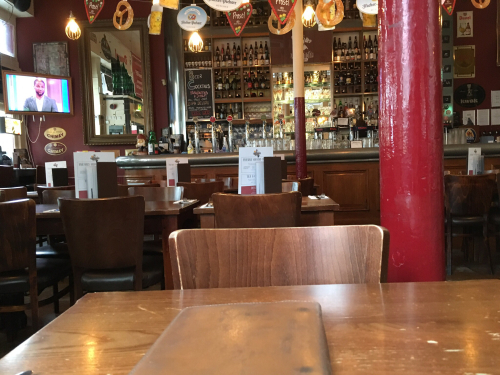
Spicy tomato juice, eggs Benedict—perfect except poached a bit hard—and two cups of coffee.

Then I came back, picked up two kids, and took them to see Harrods.
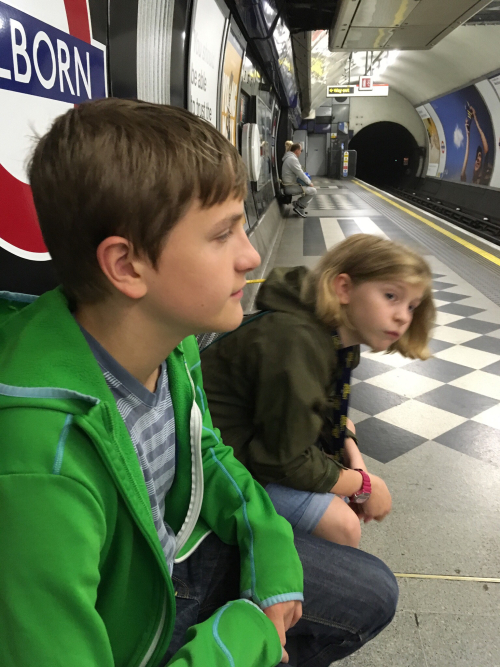
The 13yo split off from us to walk around on his own and buy lunch.
Me? I suddenly realized I was about to have a migraine and hurried desperately through the gilded and granite entry, holding the 11yo tightly by the hand to keep from losing her in the crowd, in search of water to take my sumatriptan tablet.
The directory said there was a coffee shop in the basement, so I hoped to buy a bottle of water, but when I got there it turned out, like everything else, to be Exquisite, and was “wait to be seated” only. I stood there for a moment, and then plunged into the shop, accosted a waitress, and essentially begged for a glass of water to take my medication. I may have been pale and trembling by then. She kindly gave me one, and let me sit in the booth for a moment. Hurray.
+ + +
That over, I knew I wouldn’t feel well for a while, so we walked slowly and looked and looked. Fortunately, you can feast more sumptuously with the eyes than with the stomach.
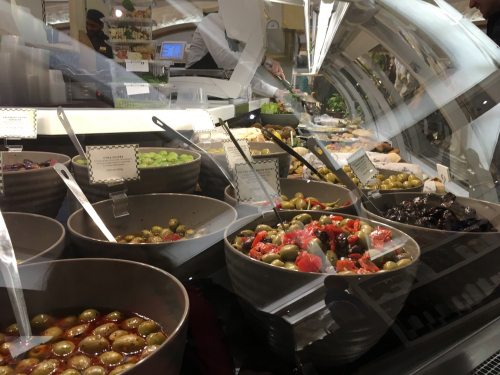
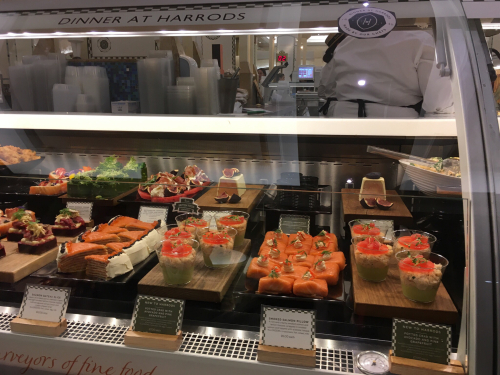
Oh my. The Harrods food hall:

From there we went up to the Toy Kingdom:

The LEGO Harrods:

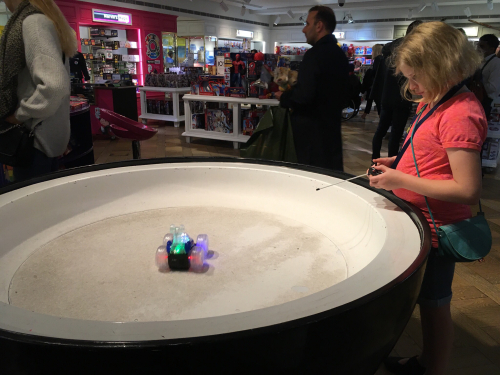
There were some things out for demonstration. My daughter loved this RC car.
W
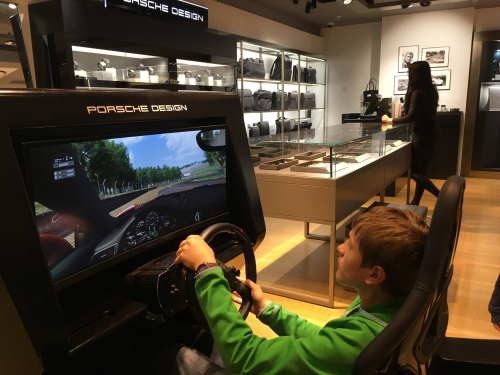
e found the 13yo in the Porsche Design accessories department, where they sell sunglasses and watches, playing this driving simulator that was set up there:
Then we walked to the Science Museum for a go. Google Maps took us through a neighborhood with something-Mews as its street name, and indeed, the houses were made of former stables:

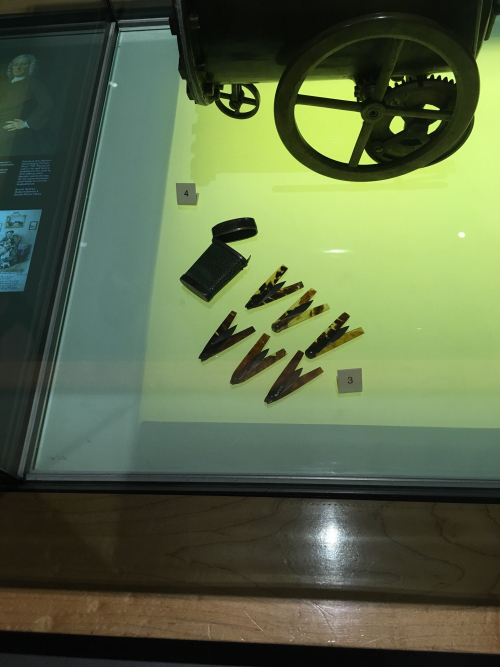
Touchable model of a control unit for a 1968 Honeywell computer:

And this room-sized marvel, the Hartree Differential Analyzer, which solved differential equations by integrating with an analogue machine:

A “logic demonstrator:”

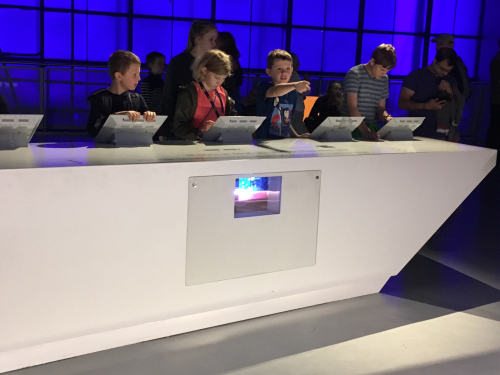
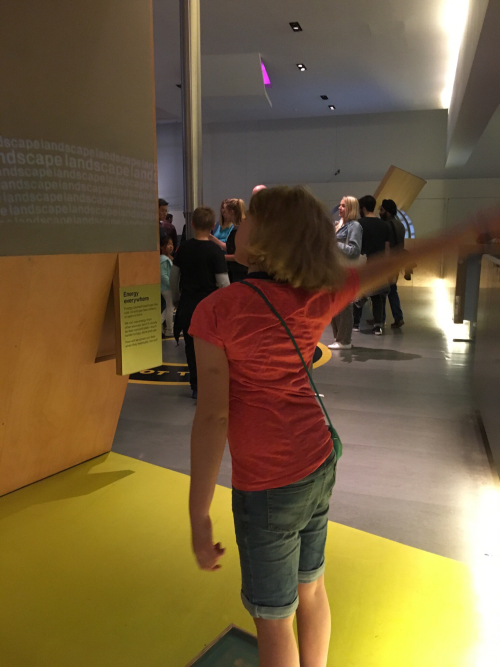
An energy game in which windmilling your arms did, I don’t know, a thing:
We collected the 13yo in the main gallery and headed home, rather tired.
They’ve gotten quite good at standing on the right.

Mark and I went to the grocery store and picked up ready-to-eat odds and ends (salad with crunchy carrots and sweet corn; cold roast-beef-and-Stilton sandwich) and a few things to go in the oven: pizza, prawn toast, egg rolls, gyoza. We all ate our fill, and then Mark and I headed out into the night, aiming for another pub.
This time, The Cock.
+ + +
I want to say right now that Mark and I owe the heartiest thanks to reader and commenter Kathgreenwood for suggesting that we follow the map of Samuel Smith’s pubs when looking for a place to spend the evening.
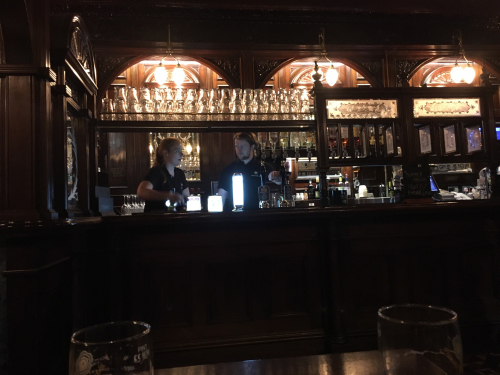
They are top-notch. No music or television, just a place where people gather, drink, and talk. Beautifully upkept—we watched the barkeep carefully polishing the already-gleaming brass with gloved hands:
And the beer? The best.
Old Brewery Bitter has been the best of the cask-conditioned ales I’ve had while here. Today we branched out. I started with a pint of Extra Stout and Mark a pint of IPA. Then we switched to the fruit beer. I stuck with apricot, and Mark tried strawberry:
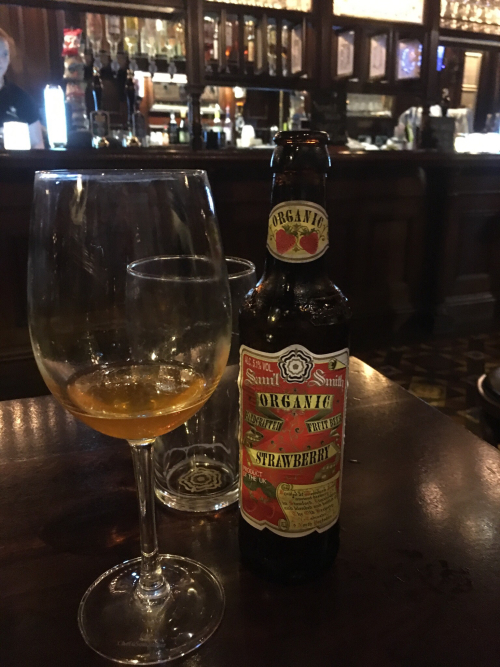
Before tasting he stuck the glass under my nose. “Sniff,” he ordered.
I inhaled deeply, closed my eyes. After a moment, I said: “Jam.”
It smelled exactly like a freshly opened jar of home-canned strawberry jam. Not the vegetal notes of a fresh raw strawberry, but the scent of simmered, sugared fruit. Then I tasted.
Readers, if you taste this, you may never call a mere red wine “jammy” again.
It is sweeter and more fruit-forward than the apricot, the beer taste not blending so much as fading into the background. It isn’t as balanced; while I could see drinking the apricot with certain spicy meals, as you might drink plum wine or Gewurztraminer, this was dessert. Delicious, strawberry dessert.
+ + +
Partway through the fruit beer we started reading about the abovementioned differential analyzer, which was famously built for the first time using an off-the-shelf children’s erector set (Meccano) with a few specially made parts, namely a polished glass disc and a steel knife-edged integrator wheel. We tried to work out how it worked, with the help of an article about it I found from a New Zealand enthusiasts’ club.
While digital computers are the descendants of finger-counting and abacuses and arithmetical algorithms, the article explained, analog computers like the integrator are the descendants of graphical solutions and surveying equipment.
They are called “analog” because they rely on proportions and ratios: a physical quantity is input into the machine, and transformed by proportion into a quantity inside the machine that is mechanically manipulated and may be output via another proportional transformation.
We figured out how the disc and wheel work pretty quickly. Rotation of a polished glass disc through a certain number of radians is one step along the x axis in a finite-difference algorithm. Resting on the disc, and rolling as the disc turns, measuring arc distance, is a steel integrator wheel. The wheel’s radial distance from the center of the disc, as the disc turns through x radians, is controllable: by moving it towards the center or rim as the disc turns, you are inputting the function y(x) to be integrated. The arc length it rolls out over a differential turn of the disc is y dx. Count how many rotations the wheel makes as the disc turns, and you are finding the area under the curve.
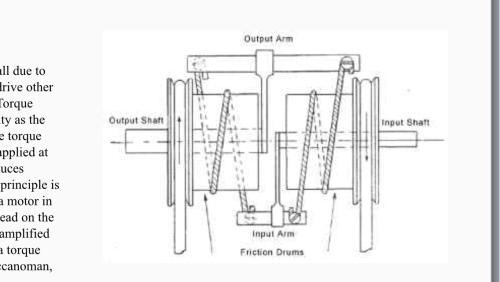
It took much pointing and literal handwaving, and another pint of beer, for us to make sense of the other important part, the torque amplifier:
 p
pThe torque amplifier is necessary because there’s very little friction between wheel and disc, and yet the output shaft has to drive a bunch of other parts downstream in order for you to produce something you can read, like a plot.
I will leave it as an exercise for the reader. Or you can just move on to my review of:
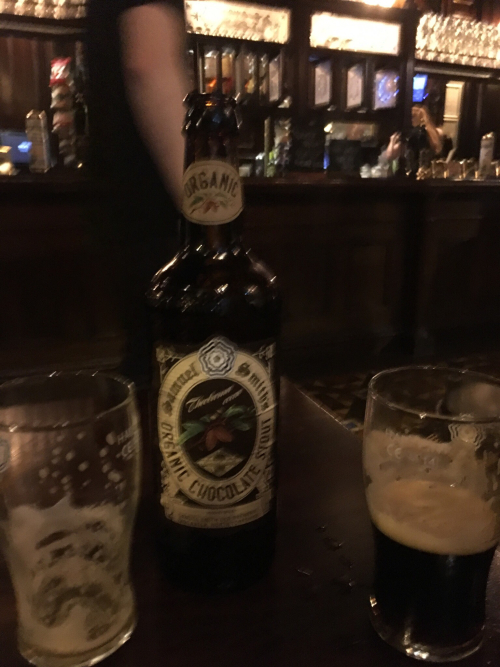
Sam Smith’s Organic Chocolate Stout.
You thought the fruit beers were dessert? This tastes like frothy cocoa, in a beer.
Only because it is full of cocoa, and sugar.
Purists might object to putting cocoa and sugar in a beer. These purists would be wrong.
I may be ruined for life, and spend all my beer shopping time seeking out rare Sam Smith’s beers in Minneapolis.
+ + +
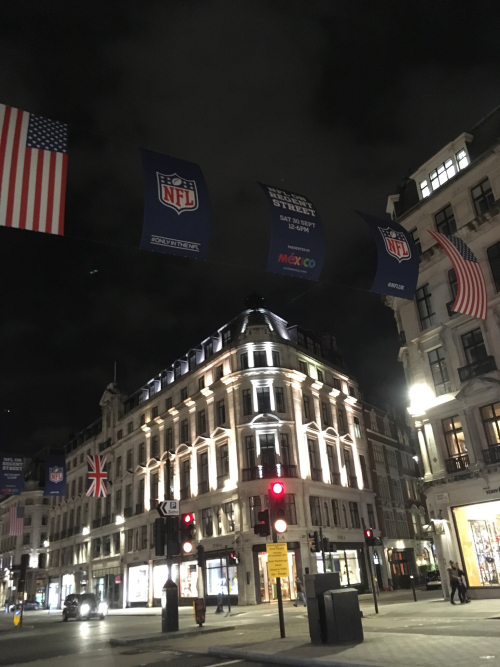
Odd display along Regent Street on the way home. Apparently there are American football teams playing in the U. K., sponsored by Mexico. Go figure.
This was by far the most fun evening that I have had here. Two and a quarter pints of beer might be the reason, or it was the company, or the force diagrams. Perhaps the lovely pub atmosphere, the stamped-tin ceiling and the brass. The barkeeps who were happy to explain why there were little glass louvers mounted at eye level above the bar (historical class separation: open to order your drink, close to maintain the illusion that the workingmen behind the bar would not hear the gentlefolk’s conversation). The quartet of tattooed folks at the next table, who were there when we arrived and still there when we left just at closing time.
I thought it was oversold, but there is really nothing at all like “the pub” at home. Everything that is sort of like it, isn’t even close: the coffee shop, the brewpub, the bar and grill, the neighborhood bar, the neighborhood café, the country club, the bed and breakfast, even the occasional “British Pub Themed Restaurant,” none of them have all the pieces. Such a beautiful thing—I sincerely hope that Londoners appreciate this thing that they have on practically every corner.
I have been to Paris, Rome, Seville, Madrid, Toronto, Lisbon, Marrakech, Lyon, Florence, Nice, and a handful of small towns (not to mention a number of large U.S. cities). In all seriousness, London sweeps them all aside. Heart, stolen.
 Posted with Blogsy

 bearing blog