
(part I, part II, part III, part IV, part V, part VI)
Well, I've gotten quite behind in my beerblogging, so I thought I would check in.
Stouts
I think before I started this project I had only familiarized myself with one stout: Guinness, of course. It had been a long time since I'd had one, and with the exception of a sip here and there from Mark's glass over the past few years — back when I was still ordering wine in restaurants — I'd hardly ever tasted any other kind. But I remembered liking Guinness, so I was looking forward to revisiting it.
Stouts are dark ales, roasty-tasting, with notes of chocolate or coffee. They can look almost black in the glass, which is kind of intimidating — but fear not! Stouts are often quite low in alcohol, so they're perfect for a lightweight like me.
(Guinness, in fact, can compete with light beers in lightness:
- 16 oz of Miller High Life Lite: 4.2 percent alcohol, 147 calories
- 16 oz of Guinness Stout: 4 percent alcohol, 168 calories
Seriously, if you want a light beer, wouldn't you rather have the Guinness?)
I wanted to try a new beer, though, so I bought some Murphy's Irish Stout in a draught can and started with that. The Murphy's was… oddly boring to me. Mark liked it, but I could not shake the impression — between the teensy bubbles from the widget can, and the flat taste, that the beer was too cold to taste it properly. It was like the flavor was there, somewhere, but I just couldn't get to it. I don't think I'll buy it again.
I tried Samuel Smith's Oatmeal Stout and liked that very much. It seemed almost thick and viscous. "It's not, and you should know better," scolded Mark, "the viscosity of beer can't possibly be much different from water. It's not like it has a significant fraction of polymer suspended in it or something."
"Then what makes it that way?" I asked. "I can see when I pour it that it's not obviously viscous, but it feels that way in the mouth. Like cream." I took another pull and thought. "Could it be the bubbles?" I asked, beginning to ponder the Stokes-Einstein equation, but mostly I just wanted to drink the beer.
Then I tried Left Hand Brewing Company's Milk Stout. A milk stout has extra, unfermentable sugars added to it — usually lactose. This makes for a sweet, chocolatey sort of beer. The LHBC milk stout was nice, coffee-ish, gently bitter, and pleasant. It doesn't need food, it's good all by itself. It had that same, tricky-to-describe feeling of viscosity in the mouth, almost sort of swelling up and rolling over the tongue. I liked it a lot.
A milk stout that you might find easily in an ordinary beer store is Samuel Adams Cream Stout. It's not quite as special as the LHBC Milk Stout, but you can tell it's the same style, and it's very pleasant.
As I work my way through styles of beer, I am noticing something very useful — almost a general principle. And it's this:
It doesn't seem possible to go very wrong with a Sam Adams beer.
Practically every style I've tried, the Sam Adams version has been a sturdy, reliable, not-very-exciting, but accurate example. The cream stout is a serviceable cream stout. The Noble Pils is a decent pilsner beer. Plain old ordinary Boston Lager is a fine beer to drink if you just want A Beer.
This is very useful to know, because Sam Adams is, well, mass-market beer. You can get it all over the country, and in a lot of restaurants it might be the only beer fancier than Miller. If someone offers to pick up some beer for you and says "What do you like?" and you don't want to sound really picky or send them on a wild goose chase, you could say "You know, I like a lot of stuff, maybe some Sam Adams" and whatever they get will probably be fine.
I didn't say it would be exciting, just that it would be fine.
But I digress. After drinking some more Irish stouts and generally being disappointed with them, I stopped to get a four-pack of Guinness Draught cans so I could make some Irish stew. Opened one of the cans to drink while I cooked and —
— well, I had forgotten. Guinness is really good. There is a reason why it is the cliché Irish stout. It's the definitive Irish stout. It's full-flavored and lovely, and better than any of the other ones I tried. I don't know if I will ever buy another [Irish] stout again (at least until I visit the UK someday). Guinness, I'm sorry I was unfaithful. It's only you from here on out.
There are still a lot of other stouts left in the world to try — still haven't delved into the world of chocolate stouts — but for the time being I have to move on.
+ + +
English Pale Ales
Right before I went to the beer store to shop for stouts, I asked Mark, "What style of beer should we try next?"
"Can't we do IPAs?" he asked.
I decided that we couldn't properly study hoppy, bitter India Pale Ales until we first explored the English ales that are their parents. So instead of coming home with a cart full of IPA, I came home with bottles of Fuller's London Pride and Fuller's Extra Special Bitter (ESB). I also had draught cans of Tetley's English Ale, "Old Speckled Hen," and Boddington's Pub Ale .
Then I got one four-pack of Samuel Smith's India Ale to appease Mark.
I thought the Fullers ESB had a pineapple-y nose, but I liked it. Similar reaction to the Fuller's London Pride. They both have a sort of fruitiness to them.
I wanted to like "Old Speckled Hen" because of its cool name and retro can, but in the end I didn't. 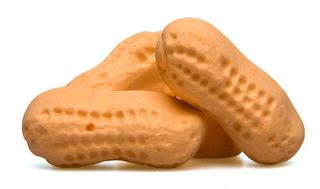 It had a strange artificially-sweet note to it… couldn't quite place it… Cotton candy? Marshmallows? Circus peanuts, I think.
On the other hand, the Tetley's appealed to me a lot. Even though I couldn't quite say why. It's very smooth and light, easy to drink, and low-alcohol; it's pale without a lot of flavor, but still nice — like drinking iced tea, I guess. I can drink a whole pint without feeling it. It was really good with a sandwich when I was thirsty. I kept coming back to the fridge over the next couple of weeks, wondering "Maybe I still might have a Tetley's hiding in back?"
The Boddington's is probably even better, but it's really the Tetley's I enjoyed the most.
Finally, the Sam Smith. It struck me as a perfect balance between malty and hoppy. Mark still prefers American IPAs, which punch you in the mouth with hops: "Too hoppy to enjoy the malt," he said, "and not hoppy enough to be the kind of beer I like." But I thought it was just right. I have food notes for it: we had it with a chickpea-and-chicken stew, seasoned with coriander and cumin. The India Ale added a citrusy note that worked nicely. In my opinion.
+ + +
On deck: Bocks and Belgians — abbey ales, that is. Planning to open a dubbel tonight and have it with sausages and grapes.


 bearing blog