bearing blog


bear – ing n 1  the manner in which one comports oneself;  2  the act, power, or time of bringing forth offspring or fruit; 3 a machine part in which another part turns [a journal ~];  pl comprehension of one’s position, environment, or situation;   5  the act of moving while supporting the weight of something [the ~ of the cross].


  • Morning link: Marriage “dissolution” by consent.

    Darwin links to some very good blogging by Monseigneur Charles Pope of the Archdiocese of Washington, laying out the principles of Catholic doctrine that are relevant to a very difficult and sad marriage case. Darwi says about it,

    I've been consistently impressed with Msgr. Charles Pope's contributions over at the Archdiocese of Washington blog. He's one of those priest bloggers who brings a strongly pastoral sensibility to his writing without ever compromising the necessity of presenting the truth as it is. 

    His post yesterday, responding to a Washington Post human interest story about a woman who supposedly "learns the true meaning of 'in sickness and in health'" by divorcing her now-disabled husband in order to remarry (while promising to continue to care for the disabled husband), is a great example of this. 

    Discussion on DarwinCatholic is interesting and worth reading, delving into questions of how heavily consent should be weighed in various legal matters.   Like Darwin, I'm impressed by the Monseigneur's blogging.   


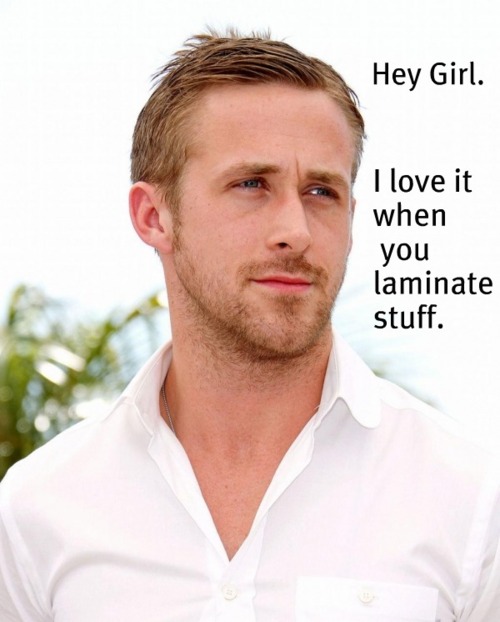
  • Hey girl.

    A year or two ago I found out through FB that several women who had been high school classmates, and whom I hadn't seen or spoken to since graduation, were homeschooling their kids.  We had a few brief exchanges, and it was fun to discover that we had that in common, especially in the cases where we hadn't had much in common at all when we were in high school.

    That's a little preamble to pointing out this Tumblr site that Anne H, who went to high school with me, put together.  Have fun reading Homeschool Ryan Gosling.

    Tumblr_lyjaf5rNRu1rotea0o1_500


  • Knowing what I know now: how to choose a habit.

    On the post about reinforcing habits for life, Christine asks in the comments:

           “Do you think these exercises – habit listing and making steps a few at a time – could work for someone in the weight loss phase as well as it does for your weight maintenance phase? I haven’t started eating habits work but have a stellar exercise habit in place since November. Mostly I stress eat so I would probably start with a few habits to begin that relate to those weaknesses. Maybe you would say of course. . . or maybe it is too slow an approach for someone who has 40 lbs to lose. I am going to reread your journey of weight loss soon. But knowing what you know about yourself now, might you have taken this approach from the start? Thanks.”

    Knowing what I know about myself now…. What do I know now that I didn’t know then?

       – that the habit of exercise would not cause me to lose weight on its own, but would give me confidence to change my other habits, which in turn would give me more confidence in my physical training
      – that I would learn not to fear normal hunger, even to embrace it
      – that my husband was willing to go to extraordinary lengths to help me reinforce my new habits, if only I would not give up on them
      – that success is easier and more rewarding when it is measured primarily by behavior (did I do what I planned today, or not?) or performance (how many minutes did I run today?) than when it is measured by numbers on a scale or measuring tape or clothing tag
     – but that the numbers on the scale (and other objective measures of health and fitness) were and are still helpful in selecting behaviors to measure myself against. If I succeed at adopting a new habit, that is real success, but if the habit does not improve or maintain my health, I know I should add or substitute a different one
      – that I would be motivated to work on many habits at once by consistent weight loss, but that maintenance would require me to take them only a few at a time
      – that I could make permanent (or, realistically, indefinite) changes more readily than I could make temporary ones.

    Christine, the “right” answer to the question is probably “One permanent habit at a time is definitely the best way to go for losing weight.” But I would be lying if I said that is how I did it when I went through my forty-pound weight loss. I did that in about six months, primarily by counting and tracking total calories and preplanning my day’s menus — the guiding principle being “Have whatever I want in whatever combination seems right, as long as I keep the daily calories under such-and-such.” I did the calorie-tracking thing because I knew that limiting calories would make me hungry, and I had recently had an epiphany of sorts that, having tried all manner of other diets that promised I would not have to be hungry, I was ready to try being hungry for a change.

    (Double meaning absolutely intended.)

    And it did not take long for me to realize that in order to meet those calorie goals, I had to develop certain behaviors. I remember that one of the first new behaviors I tried was toting my midmorning snack around with me, because I was nervous that I would get hungry while I was out, and that this would require me to eat something not on my plan. I discovered that if I had the snack with me, knowing I could have it at any time, I felt so much less fearful and less inclined to eat in order to *prevent* hunger. Anyway, the truth is that I did a lot of my weight loss using a not-very-sustainable behavior (calorie tracking), but that along the way I learned about the importance of sustainable ones. I am not sure I could have found it so useful had I not been losing weight so quickly that the weight loss itself was exciting and motivating.

    Then again, maybe I should not be so dismissive about the calorie tracking. Perhaps the daily calorie total is a little bit like the numbers on the scale that I mentioned above: a secondary, objective measurement against which the usefulness of behaviors and habits can be evaluated (provided that you have the time and inclination to do it — and by the way, it isn’t something that needs to be done every day).

    In other words, success can be measured by asking the question, “have I strengthened my desired habit(s) today or not?” But the habits themselves can be measured against the question, “Has this habit resulted in physical improvement — has my performance improved? is my weight trending the way I want it to? am I bringing my caloric intake closer to the number I want it to be, or did this habit make it easier to hit the calorie goal?”

    So I guess if I had it to do over again (! Let’s hope not) I would still count and track calories, but I think I would distance my sense of success a little bit more from the calorie total. Success means reinforcing good, permanent habits. Tracking calories, like stepping on the scale, is a way to find out if the habits are good — not a way to find out if *I* am good.  

    + + +

    As for you and your situation, Christine, the first thing I want to say is WAY TO GO on the exercise. I know it sounds a little bit like silly cheerleading, but this is exactly what I did — got the confidence to change my eating habits only after having established a working exercise habit. I am a real believer in the power of physical strength to transform itself into personal strength.  

    The second thing I want to suggest is to try imagining yourself in the future, “cured” of whatever unhealthy eating behaviors you wish you were liberated from. What does that look like? What is the key difference? For me, I knew I ate too much at meals and generally thought too much about food; the terminology that I still feel summed up my problem behavior was “gluttony,” an inordinate attachment to food.* I selected my habits with an eye towards beating that tendency into submission by facing my fear of hunger.

    You have identified (to me) “stress eating” as a problem behavior. Can you imagine yourself as a person who doesn’t do that anymore? What does it look like? Have you got other ways of coping with stress in that imaginary future? Have you, when you are not stressed, prepared your environment (e.g. by removing comfort foods from the places where you typically stress-eat) so that, when you become stressed, it is easy to avoid falling into stress eating? Have you, when you are not stressed, set clear and objective boundaries for yourself (such as set times and places for eating and not eating) so that, even when you are stressed, you can detour around the food supply and find other ways to cope? Have you reduced the frequency of stress events to reduce the number of temptations? Imagine that permanent future as clearly as you can.

    Then make a list of behaviors that you can experiment with, starting with one. I really think you can do any sort of thing, but I suggest that you start with something that is clear and objective and that can be practiced proactively and at least daily. *The more often you find opportunities to practice each habit, the faster it can become second nature.*

      The thing about stress eating is that stress does not necessarily happen to us daily. The first habit you try probably shouldn’t be something like “When I am stressed, I will do such and such instead of eating” because that means you have to wait until you are stressed to practice it, and that is kind of the worst time to try something new. Instead, it should be something that you practice daily in order to develop the habit, knowing that the real test of the habit will be when the stress arrives.

    Let me give you an example. I never really suffered *much* from stress eating or emotional eating, with one exception: when my husband would go on a business trip and leave me with the kids for a few days, I would feel lonely and sorry for myself and would tend to order pizza (“for the kids,” har har) and eat an entire medium pizza by myself, chewing sullenly while zoning out in front of the Internet. This happened roughly once a month. Not frequently enough to develop a “habit” of “when Mark is out of town I eat the same amount I usually eat, not a whole medium pizza at one sitting.” I could make a *plan* to do this, but a plan is far more easily derailed by temptation than is a habit.

    The *habit* that counteracts this very destructive behavior — along with other destructive behaviors — is a daily habit of portion control at dinner. The habit is defined very clearly: My dinner has to fit on a plate of a certain size. So every day for a long time I emphasized the habit of filling my 8-1/2 inch dinner plate, once, and stopping when the plate was empty. I would have had a few weeks of this behavior under my belt before it would be “tested” by the next spousal business trip. Then, knowing that I wanted to reinforce the habit, I would have had a few choices. I could skip pizza night (although the children expected it). I could order pizza, although I would not need to order as much of it. I could plan to eat a plateful of pizza and no more, which would meet the standards of my new rule and would count as success. I could get a salad and put the salad on half my plate, filling the rest of it with pizza, which would probably feel better. I could order a sandwich and coleslaw and chips instead of pizza, since that would fit pretty well on the plate and look nice. Any of these would look like “success” according to my defined habit. But the point is, that the habit was defined and practiced many, many times outside the stress situation, and then it was strong enough to carry me into the stress situation and out the other side.  

    How to tell, then, whether the one-plate habit is a good habit for me? Well — a good test would have been to find out if, indeed, I managed to stick to it even when stressed by my husband’s business trip. Indeed, this habit survived the business trip, and many others. (Later on, I added another relevant habit, that of partitioning my daily dinner plate so it was at least fifty percent vegetables, which also cut down on the loneliness-induced pizza consumption. It did result in a lot of loneliness-induced Brussels sprouts consumption, but that is rather less destructive.)

    So to sum up: start with a habit that seems a good candidate for a *permanent* habit. Make it one that is clearly and objectively defined, and one that you can practice at least every day, whether you are stressed or not. But make it one that somehow counteracts one of the behaviors that you identify as a problem behavior for you.  

    How does that sound?

    *[Editing note.  Years and years later, I wish I’d done a better job distinguishing gluttony from other problems with food, like clinical eating disorders and other kinds of compulsiveness.  

    I want to emphasize that, whereas I identified some behaviors in myself that probably qualified as self-centered gluttony in the technical sense, I am not and never have been qualified to make that distinction for anyone else.  I  touch on what I’m talking about a little more clearly partway through this post.

    I hope to add some commentary to all the posts that have this problem as I find the time to review them.  Here’s a more recent post where I acknowledge some of the problematic material I wrote and set new ground rules for myself going forward.]


  • Handwriting worksheet maker — online.

    These look pretty cool. You can use it to make custom-text worksheets in print, cursive, and D'nealian.  If you have a color printer, so much the better, but it looked fine to me in black and white.

    H/t to Christy P. for passing the link on to me.


  • Microposting.

    Boy, I just haven't had it in me to make many posts lately.  I'm going to try to break out of the rut by posting some shorter, less edited thoughts in the next few days.  If you are friends with me on FB, expect some duplication here and there.


  • I take it back, that on-off habits thing.

    All right, I said I was going to handle weight maintenance in a certain way, and I'm officially going back on my word.  

    + + +

    So when I first got near my goal weight, you may remember, I was going to chart my weight on a little chart that Mark made for me modeled after a statistical process control chart.  Cue the theramin music as we go back, back in time to early 2009

    6a00d8341c50d953ef010536e9ef4d970b-800wi

    Mark made up the chart, and the "rules" at the top.  

    It's like this:  I am supposed to begin doing something to bring my weight back to the middle whenever any of the conditions described in the rules are met.  I cannot return to normal behavior until the running average of five measurements in a row crosses the midline again.

    This is great, except that I have not gotten around to defining "normal behavior," nor the positive and negative types of "doing something."  Right now "normal behavior" is "more or less eat what I want" and "doing something" is "eat less than I want."  (I have only slipped into the land of underweight-must-eat-more once.)

    Yes, that was the plan.  Watch the weight wiggle back and forth between the control limits, and if it creeps up too far, add "habits" until it creeps back down again.

    After many months of frustrated struggling at an average weight a few pounds higher than my target, I am now officially renouncing this strategy.

    It looks too much like "going on a diet" and "going off a diet" and "going on a diet again."  It messes with my head.  

    On the surface it seemed like a good idea:  toggle habits on and off, to turn the balance one way or another, and keep the weight under control just exactly as if I were a manufacturing process.  But I, unlike a collection of heat exchangers and reactors, have a psychology, and you know what?  It kind of sucks to tell myself, "Well, I won't have any wine, or desserts, until I get five weight readings in a row below such-and-such a weight."  It makes me feel deprived and dejected, and do you know what?  Once I got the five weight readings in a row, and toggled my "habits" back to "maintenance level," the weight did not stay down.   I was not aware of it, but I must have been overreacting in the other direction:  indulging to pay myself back for the deprivation.

    This is not the way I want to do things.

    And anyway, the terminology should have been a clue.  Hello — "toggle" habits on and off?  If you do that with a behavior, it isn't a habit!  I don't want to be in an endless cycle of deprivation and indulgence.  That's what I tried to give up.  

    I want sustainable living at a sustainable weight.  

    + + +

    So, right around Thanksgiving, I abandoned that approach (though I'm still making the weight chart, and it's still important, as you will see.)  And remarkably, as soon as I did, my weight returned down to the target level, and I've been maintaining it with much LESS effort since then.

    + + +

    Here's my new strategy:

    Watch the scale, and if the weight begins to creep out of the comfort zone, re-evaluate habits and eating behaviors, through trial and error — one or a few at a time.  But adopt and evaluate habits as potentially permanent lifestyle adaptations.  If I do not think I could sustain a habit for the rest of my life, it probably is not a good habit for me.

    No more of this "I only have to do it until my weight comes back under control."  Only:  What I do, I do from now until it doesn't make sense for me anymore.

    + + +

    A caveat:  A habit "for the rest of my life" doesn't mean "every single time."  If I am in the habit of not having bedtime snacks, it doesn't mean that I never choose to have one.  It's more of an "almost always."  Let's take it as a given that occasionally I will splurge.  But not often enough to make a new, not-so-good habit.

    + + + 

    Another thing that's kind of weird about this is that it requires a little bit of double think.  Because I have to be open to changing the habits if necessary.  See, my environment constantly changes:  my children are growing, the seasons are turning, my schedule is different every semester, my own body is aging from year to year.  It stands to reason that the helpful habits of today might be less helpful in a future time.  So I know that it's not really true that any given habit is being adopted "for the rest of my life."

    But I cannot work with a habit that I wouldn't be okay with "for the rest of my life."  If it's too hard to do "for the rest of my life" then it's going to make me suffer, and long for release, even in the short term.

    + + + 

    So what did I do back then around Thanksgiving?  Well, this sort-of-New-Year's post about the turkey roasters and the puppies is getting at the distinction:

    Here is my husband's idea, which has merit: "Make a list of habits that you can add or subtract as necessary. Put them in order from the easiest and most painless to the most difficult and annoying. Then, if your weight spikes up, start adding habits in order, only one or two at a time. If that doesn't help, add more until your weight goes down again, and then you can stop the habits, starting with the most annoying ones."

    The idea of ranking behaviors by annoyance level was a new one, and I thought I would give that a try. I started making a list of things like "don't eat sweets" and "keep the serving dishes in the kitchen" and "put a stick of gum by my plate at dinner" and "one egg is enough eggs for breakfast" and the like.

    But as my list of former and current and potential weight-controlling strategies grew longer, I began to feel uneasy about calling them all "habits." And as I began to shuffle them around to figure out which ones I enjoy the least ("no wine with dinner" and "pre-count every calorie" are two examples of behaviors that work extremely well but that exemplify the life I do NOT want to lead), I became even more sure that "habit" is absolutely the wrong word for many of these behaviors.

    What Mark is suggesting is not a ranking of habits, but a hierarchy of compensatory deprivations.

    A habit is not like a toggle switch; it is more like a houseplant or a tropical fish or a puppy. It requires care. Yes-no choices do go into it, though. Choose often enough to feed it and it thrives; choose often enough to neglect it and it withers. Useful habits are habits to live with: not necessarily permanently, but for long periods. They can be tried for a while to see if they are pleasant to live with and if they have desirable effects, but this is not the same as toggling them on and off; it is more like a temporary adoption, to see if an attachment will deepen.

    Compensatory deprivations are less like a companion pet and more like a spare folding table or a turkey roaster: an unwieldy, occasionally used piece of furniture or appliance that you get out of the basement from time to time when necessary. (e.g., at the holidays.)

    What I've decided is that I'm done with turkey-roaster dieting, for the most part. 

    Anyway, I went on the next day to spell out some of the habits I was thinking about trying on:

    I think a lot of people slip up by resolving to deprive themselves permanently or indefinitely of something they really enjoy that is ordinarily harmless, or at least it is harmless in moderation. It would be better to identify habits that are really desirable, and try to set yourself up to fall into them, so to speak.

    As for me, my biggest problem right now is that I have slipped into an indulge-gain-deprive-lose cycle, and I really need to get out of it and into a more balanced pattern. That calls for a look at habits I would like to re-establish for the new year: permanent changes that I really want to have.

    So I made a long list of potential behaviors, and then I carefully considered each one. If I found it appealing, I put it on my list of "habits to try." If I didn't, I put it on the list of "compensatory deprivations" — and I don't intend to touch those except on rare occasions, such as the morning after a day full of bad food, or as a needed kick start.

    The three habits I started trying were very simple:

    • "Half a sandwich is enough sandwich for me."  When faced with a sandwich, only eat half.
    • A normal portion of sweets is a two-thumbs-sized rectangle, or (if it's scoopable) 1/3 cup.
    • Have only a small portion of alcohol with dinner; have more only after I've pushed my plate away.

    I quit trying to deprive myself based on the scale numbers plotted on the chart; instead it was more like, "Well, the chart shows me that my current habits aren't keeping my weight well in control; I need to adopt a different set of habits that will, indefinitely, keep my weight well in control.  When I find them, I will keep them, not quit as soon as I see happier numbers."

    And when I stopped the panic, stopped depriving myself of all manner of things, and switched instead to reinforcing those three habits, I noticed, other habits became easier.  For example, it became easier to stick to one plateful at dinner, rather than helping myself to unnecessary seconds.  And the half-sandwich reminder made it easier for me to have balanced meals when I ate at restaurants.

    A month later, my weight is back in control.  It's in better control than it's been in for the last YEAR, I think.  (Maybe I'll post the data later to show you.)

    + + +

    Permanent, not temporary, change.  That is what it is all about.  Why do I have to keep learning this over and over again?


  • Sugary.

    The article content is, actually, interesting, but what grabbed my attention was the stupid posed lab photo.

    "Hey, Mr. P.I.  – sorry, that's doctor P.I. — you, hold this blue folder and make a serious face while you read aloud to the visiting research associate.  

    Okay, now, we need this photo to look all sciencey and stuff, so why don't you put some lab equipment on the desk.  No, not that lab equipment, the new sparkly lab equipment.  

    No, don't fill it with that transparent solution you were studying.  Too boring.  Hey, kid, run down the hall and get me an orange Fanta out of the vending machine.  Okay, now  SMILE BIG.  Not you, professor, just the girls.  Say cheese!"


  • The Wasteland.

    Melanie Bettinelli of The Wine-Dark Sea has started an ambitious project of explaining to the blogosphere why T. S. Eliot's "The Wasteland" is her favorite poem.  

    After I mentioned The Waste Land in my Make your House Fair post, I found myself pondering it in the shower (All my best ideas come to me in the shower). I was recalling my youthful zeal to enlighten the masses about how wonderful Eliot is. I have found that even among people who love The Waste Land it is often misunderstood….

    When I first encountered it, I was told that The Waste Land is a poem about the bleakness and despair of the modern world—which is true to a point; but if it is a poem about doubt it is also a poem about hope. In the Judeo-Christian tradition the desert has often been a place of renewal, in the Bible new life is always springing up in places that were thought to be barren. I prefer to read The Waste Land as a great Christian epic that asserts that the problem of faith in the modern of world is not really a new problem but that people in every age need to seek again for the source of life.

    …I believe The Waste Land is the poem par excellence that grapples with the problem of faith in a post-Christian world. True, the poem doesn’t mention Christ by name nor is it explicitly Christian in its imagery. But it is, to borrow a phrase from Flannery O’Connor, Christ-haunted. I believe that one must enter into the world of the poem and to accept it on its own terms but that it does help to have a tour guide. I propose to become that guide, to offer my own insights and experiences of it. 

    Four posts in, and she's barely cracked the first stanza:

    part 1 
    part 2 
    part 3 
    part 4 


    I am fond of the poem, which I encountered in high school English class; but have not had anywhere near Melanie's passion for it, and am looking forward to learning more about it.  Maybe she can communicate that passion — one cannot have too many of those, literarily speaking.


  • Pandora’s sugar bowl.

    Monday evening I announced, "Muffins for breakfast tomorrow!"

    And the children fell to their knees (okay, it was only the 11-year-old) and begged, "Please, Mom, don't make them completely whole wheat!  Put some white flour in!"

    I raised my eyebrow (okay, not really; I am physically incapable of raising one eyebrow; probably I just made a frowny face) and said, "Oh, come on, they're not that bad.  Muffins are quick breads. You barely notice the difference in muffins."

    "They don't taste as sweet as other people's muffins."

    He probably has a point there.  I don't like to eat super sweet muffins, so the slight bitterness of whole wheat flour has never bothered me, and I usually do not add extra sugar to make up for it.   

    Maybe if I could have kept my children's taste buds safely sheltered from the world, he would not know what he is missing.  But this past year the 11-year-old has acquired the freedom to range around our urban neighborhood unsupervised.  He has, I suspect, tasted the illicit luxury of coffeeshop muffins bought with his own money.  There is scant going back once innocence is lost.

    "Or, Mom, at least could you put more sugar in them?"

    Hmph.  Philistines.  "How about I sprinkle a little sugar crust on top?"

    "No, it's the middle that isn't sweet enough."

    "But it'll have blueberries!"

    "They're sour."

    I turned to my spouse, the food processing engineer, who (a) has to stay somewhat abreast of the nutrition literature, and (b) has perfected the art of rapid calculation followed by a guess that makes it sound like he knows exactly what he is talking about.  "Mark."

    "Hm?"

    "If we had to live on homemade muffins, would it be better for us to eat low-sugar muffins made with some whole grain flour and some white flour, or would it be better to eat whole-grain muffins with more sugar in them?"

    He rolled his eyes at me (okay, he probably didn't roll his eyes, but I'm not sure how to describe what he did.  Let's say he made a "here's a caveat" face).  "You realize that all the relevant research about this sort of thing is inconclusive."

    "Yeah, yeah."

    "Well, if it is an either-or, my instinct — just my instinct, mind you –"

    "Duly noted."

    "– is that it's better to keep it 100% whole grain and add the sugar.  Because the relevant research does indicate that more whole grain is associated with better outcomes.  And also the white flour has the same effect on your body as sugar anyway.  So at least you're not leaving out the additional nutrition and fiber, even if it comes with sugar."

    "Got it."  I turned back to the pleading child.  "Okay.  This time I will make sweet muffins."  I stormed into the kitchen (okay, I probably did not storm so much as stalk) and made these.  They weren't blueberry because I discovered the dried cherries while I was rooting around in the fridge.

    Extra-Sweet Cherry Yogurt Muffins

    • 1 cup yogurt thinned with a little milk, OR 1 cup buttermilk, plus extra if needed (which you will)
    • Heaping 1/2 cup dried tart cherries
    • 1/4 to 1/2 tsp almond extract
    • 1 egg
    • 3 Tbsp butter or coconut oil, melted and cooled, or other oil
    • 2 cups whole wheat flour
    • 3/4 cup sugar (it hurts my teeth just writing that — a *tablespoon* in every muffin!)
    • 1 Tbsp baking powder
    • 1/2 tsp salt

    The night before:  Put the dried cherries in a bowl and add enough thinned yogurt to moisten all the cherries.  Stir and let soak overnight in the refrigerator.  (Even a half-hour's soak will do some good, if you don't have overnight.)

    In the morning, grease a 12-cup muffin tin and preheat the oven to 400° F.  Beat the egg and melted butter together with the remainder of the thinned yogurt.  Add the almond extract.  Mix the dry ingredients together in a medium bowl, then gently stir in the liquid ingredients and the cherry-yogurt mixture.  Add more yogurt and milk if needed to moisten all the dry ingredients (it's hard to say how much liquid will have been soaked up by the cherries).   Divide among the cups of the muffin tin and bake for 20 minutes; test with wooden pick before removing.  Allow to cool in the pan 5 minutes before taking the muffins out of the cups to finish cooling on a rack.

    + + + 

    Now let me tell you something.  I do not (repeat, do not) like sweet muffins for breakfast.  And the idea of these terribly sweet muffins — I used the amount of sugar suggested in Mark Bittman's "Sweet and Rich Muffins" recipe, but did not add the extra fat — kind of horrified me, which is why I used yogurt instead of the ordinary whole milk I usually used; I thought perhaps it would balance the sweetness a little bit.

    Fatal mistake.   I should have left it unbalanced.

    These were very yummy muffins.  I had a taste "of Mark's, to evaluate it" and now I am personally responsible for demolishing three of them.  

    So now I have this "aaaaagh, what have I done?!?!" feeling.  I fed my kids a tablespoon of sugar in their muffins and I liked it.  This is less sugar than in the most current formulation of Cocoa Puffs.  

    Argh.

     Of course the kids liked them too.  I am still going to write "dried cherries" on my grocery list this week.

    But, argh.


  • Book review, part 2: Glucose and willpower.

    (Part 1 of my review of  Willpower:  Rediscovering the Greatest Human Strength by Roy Baumeister and John Tierney is here)

    + + +

    Sometimes, at the end of what feels like a long day, or a long mental effort, I have a feeling that I often describe as "brain-fried."  I've been struggling not to yell at the kids, I've been thinking about a blog post I need to write, I've been trying not to procrastinate the million things I need to do, and I have an inexplicable craving for things like mashed potatoes or chocolate — and solitude.  Tierney and Baumeister use a different term, but I immediately recognized it.  They call it "ego depletion," and it is the state of having used up all your willpower.

    Yes, "used up."  Here are what they have to say about it, based on the research described in the book:

    1. Resisting temptation is only one way we use willpower. Three others are

    • controlling display of emotion or emotional outburst; 
    • making decisions; 
    • and performing physical tasks that require skill, e.g., balancing speed and accuracy.

    2.  You have a limited supply of willpower. Repeated effort at any of the willpower-using activities depletes it.  After trying to control yourself for long enough, you lack the self-control to do any of them.  It becomes more difficult to restrain your displays of emotion, to think about decisions you have to make, to practice your skills, or — yes — to resist temptations and urges.

    3.  It's trying to control yourself, not succeeding, that depletes willpower.   Even if you give in, you're left with less willpower to work with.

    4. When your blood glucose levels drop, your willpower depletes faster.  

    5. Accordingly, raising your blood sugar (i.e., by consuming food) restores your willpower supply.  The fastest way to do this is, of course, easily digestible carbohydrates, but protein and more-healthful, more-slowly digestible carbohydrates also work, albeit more slowly.

    6. At low glucose and low willpower, your brain turns its effort to other things.  It keeps working and consuming fuel at the same rate, but it gives up on the willpower-consuming activities.

    7.  One of the things it turns to is trying to get you to raise your blood sugar.  Hello, carb cravings!

    Tierney and Baumeister point out the obvious "Catch-22" for people who struggle with food cravings here:  You need willpower in order not to eat, and you need to eat in order to have willpower.  

    Just as obvious is that, if what they are saying is true, then folks with impaired glucose tolerance — insulin resistance, hypoglycemia, diabetes and prediabetes (even, they suggest, premenstrual syndrome!)  – will frequently be in a state of (relatively) impaired impulse control and decisionmaking skills.  

    We can get a little overfocused on overeating here at bearing blog.  Remember that impulse control applies to a lot of different areas of life (and indeed Tierney and Baumeister mention many):  drinking and drug abuse, procrastination, violent outbursts, child discipline, studying and schoolwork, performance at a variety of difficult tasks.

    I have to go now (procrastinating long enough) but I'll post again with more insights about willpower, not so glucose related, and then try to tie them into some practical tips for behavioral change.