bearing blog


bear – ing n 1  the manner in which one comports oneself;  2  the act, power, or time of bringing forth offspring or fruit; 3 a machine part in which another part turns [a journal ~];  pl comprehension of one’s position, environment, or situation;   5  the act of moving while supporting the weight of something [the ~ of the cross].


  • No longer bouncing, I hope.

    A kind reader let me know that email to bearing@bearingblog.com had been bouncing.  It's fixed now, so if you tried to email and failed recently, you can try again.


    My apologies for the excess of spam commentary that's been appearing lately.  The spamcatcher seems to be missing a lot and I can't quite keep up with it manually.  If it persists I'll look more deeply into it.


  • Buggy.

    Those of you who know me in real life or in a simulacrum thereof know what has been keeping me busy the last couple of days:

    Head lice.

    One of our friends called us to let us know that her eight-year-old turned up with head lice.


    It didn't take long to locate some suspicious specks in the hair of our seven-year-old daughter, her boon companion.


    And then it was off to the late-night pharmacy for some lice removal kits, the kind that come with a decent metal-toothed comb… and a serious combing-through of the kids' hair… and the inevitable discovery of a pile of egg casings (ew) and a couple live ones (EW)…

    … and then we were off on the nitpicking roller coaster.


    Today's post, therefore, is….

    Things I have learned since our family got head lice

    1.

    Everybody has a story

    Were you under the impression that there was a stigma about getting head lice?


    At least here in the upper Midwest, my impression is that mothers brag


    about it, trading tales like nightmare epidural stories.


    Last night I bowed out early from a homeschooling co-op parents' meeting by explaining that I had to go home and help my husband with combing out the kids.


    It seemed like everyone had a "been there, done that" story.


    "Oh, I'm so sorry.

    You have mostly boys?

    Well, when WE got it, I had four little girls with waist-length curly hair."

    "MY daughter got it during her first year of COLLEGE."

    "I spent an entire summer combing out children's hair while they played with my iPad."

    Similarly, everyone has something to recommend.


    "Do they have a LouseBuster where you live?"

    "Have you tried going to LadiBugs over in Hopkins?

    They sell this great peppermint spray that keeps the bugs from coming back.

    All natural."

    "Four words:

    ORGANIC RAW COCONUT OIL."

    "I have to send you the link for the Cetaphil method!"

    "Did you try the shower cap thing?"

    I am almost embarrassed to admit that in a flurry of panic I had just run to the drugstore and bought three packages of the only thing I could find, namely, the dreaded "poison shampoo."


    2.

    More new uses for homeschooling science supplies

    I am pleased to discover, at least, that the handheld microscopes with push-button LED lighting (40-70x magnification) have gotten more use this week than I expected them to get all year.

    They join my mini portable analytical electronic centigram scale in the ranks of Items I Bought For Science-Related Learning That Have Been Repurposed For Unexpected Household Duty.

    (The scale got borrowed first to measure out grams of laxative for a child who needed to be weaned slowly off it after a bout of chronic constipation.


    Later it was borrowed to weigh coffee grounds, which is what happens when your husband used to work as a chemical engineer for a Giant Company That Sells Coffee Among Other Things and can't bear the thought of measuring coffee in "scoops" when he once upon a time did it in milligrams.)


    (I promise you we cleaned the scale well in between.)


    3.

    Homeschooling guilt ensues inevitably

    Probably if we were in school we'd be thinking "If only the kids were homeschooled, they wouldn't get lice."


    As it is, not being able to think something like that, we think "If only I was a better homeschooler, I'd have organized this into an entomology unit study and we'd be identifying the differences between the second and third instar instead of growling 'GET OUT OF MY LIGHT' at curious siblings and then just smashing the little bastards with my thumb as fast as I can find them."

    Um, I mean smashing the instars, not the siblings.


    That was

    clear, wasn't it?


    4.

    A fearful new power.

    I made a discovery last night while combing out my three-year-old for the first time just to check.

    You know the "cradle cap" type dandruff?


    The persistent scaly stuff that shows up on newborns and sometimes lasts past toddlerhood?


    The stuff that ruins the finish on the smooth and downy newborn scalp, so that


    new mothers bemoan and trade tips about getting it off with warm water or olive oil or breastmilk, and discuss whether gently scratching with a fingernail or rubbing with a washcloth is better?


    The cradle cap flaky skin scales that can turn the gentlest mother into a primal picker and scraper, like an obsessive-compulsive gorilla mother?


    Um.


    THE NIT COMB TAKES IT RIGHT OUT.


    Come January when my new baby is born I am afraid I will be unstoppable.


    5.

    Only physical removal is foolproof

    You know, the chemicals can speed it up, but when you get right down to it the only thing you can be sure of is that if you comb out a louse, that louse isn't in the hair anymore, and if you comb out an egg, that louse will not hatch on your head.


    Combing, combing, combing.


    6.

    The dryer is your friend.

    Your friend that runs all the time.

    It's fairly reassuring, given the alarming stories about head lice, to read over the CDC website and see what they have to say about it.


    Nits in the hair don't necessarily mean you have an active infestation.


    Schools shouldn't have a no-nit policy.


    With the possible exception of bedmates, you shouldn't chemically treat household members who aren't infested.


    They can't live very long off a human scalp, and there are lots of surfaces they can't cling to at all.


    So while some people, upon getting the bad news, are probably ready to fumigate and scrub down their entire house, that would really be overkill.

    Still, I was amused by this pair of statements from the website:

    Machine wash and dry clothing, bed linens, and other items that an infested person wore or used during the 2 days before treatment using the hot water (130°F) laundry cycle and the high heat drying cycle. … Vacuum the floor and furniture, particularly where the infested person sat or lay.

    and

    However, spending much time and money on housecleaning activities is not necessary.

    Um.


    Can we say "mutually exclusive?"


    At least when you have three infested children who like to roll on the floor and build forts out of bedding.

    I cannot count how many loads of bedding and towels I passed through the dryer in the last few days.


    It was a lot.


    Especially after my infested daughter was caught building a fort out of the clean sheets.


    And in the end I wound up just confiscating all the extra cushions and pillows, not so much because I believed that the act of sealing them up in a


    bag for two weeks would kill lice, but just because there would be so many fewer of them to keep track of.


    7. You know what else is in my kids' hair in small quantities, and is tough to get out with a nit comb?

    Glitter.


    8. At least this didn't happen during first trimester

    Can I get an "Amen?"


    + + +

    I'll probably think of more before too long, but now it's time to go lie down.


    Oof, what a day.


  • Interpreting the Beatitudes: on not reinventing the wheel.

    A few days ago the Office of Readings contained an excerpt from Sermon 95 of St. Leo the Great, “Homily on the Beatitudes, St. Matthew 5:1-9.” I hadn’t been familiar with that particular Homily and the excerpt piqued my interest, so I searched out the entirety — it really isn’t very long — and read the whole thing.

    There must be countless homilies and other reflections on the Beatitudes out there for the picking, I thought as I read it over. They are much-examined, in part, because they offer a blueprint for holiness: if we can only (with God’s help) follow the directions faithfully, become the kind of people that The Lord calls “blessed,” then we cannot go wrong. Simple! But the other reason the Beatitudes are much-examined is that they are also kind of cryptic, at least to moderns reading them in translation. Poor in spirit? They that mourn? The makers of what sort of peace? What do those words mean? What is going on here? Exactly who are these people called blessed, and how can we become like them?

    I can’t be the only one who has listened to the Beatitudes proclaimed from the pulpit, or read them and read again, and considered what I think they might mean more precisely. As someone who lives far from poverty, who has little to mourn, handicapped in peace-making and mercy, who rarely feels pure-hearted or righteous… I tend to look for loopholes.

    But you know, I am always trying to read between the lines every time I read it, or most any Scripture passage. I figure that I am pretty smart. I can figure something about it out, maybe not everything, but something.

    And then sometimes I come across something like this — some piece of explication and interpretation that has been around for centuries. And it is perfectly straightforward. And I wonder: what the hell am I doing expending so much brainpower trying to come up with my own spin? Why am I reinventing the wheel?

    (Not that it is a pointless exercise to consider what one can find on one’s own in the depths of the Gospels… but one should remember that we need not leave it at that. Wiser people than I have written down things worth reading, against which I could measure and evaluate my own thoughts. If nothing else they might provide a counterbalance, originating as they do outside myself.)

    What does St. Leo say to illuminate the blueprints for holiness? What are these people like, that the Lord calls blessed?

    “Poor in spirit,” he explains, means the humble: the submissive, those who do not exhibit loftiness of mind and (in the case of the rich) those who use the abundance they have “not for the increasing of … pride” but “on works of kindness.”

    It would perhaps be doubtful what poor He was speaking of, if in saying blessed are the poor He had added nothing which would explain the sort of poor: and then that poverty by itself would appear sufficient to win the kingdom of heaven which many suffer from hard and heavy necessity.

    But when He says blessed are the poor in spirit, He shows that the kingdom of heaven must be assigned to those who are recommended by the humility of their spirits rather than by the smallness of their means. Yet it cannot be doubted that this possession of humility is more easily acquired by the poor than the rich: for submissiveness is the companion of those that want, while loftiness of mind dwells with riches.

    Notwithstanding, even in many of the rich is found that spirit which uses its abundance not for the increasing of its pride but on works of kindness, and counts that for the greatest gain which it expends in the relief of others’ hardships. It is given to every kind and rank of men to share in this virtue, because men may be equal in will, though unequal in fortune: and it does not matter how different they are in earthly means, who are found equal in spiritual possessions.

    “Those that mourn” means, says St. Leo, specifically those who mourn sin and iniquity:

    This mourning, beloved, to which eternal comforting is promised, is not the same as the affliction of this world: nor do those laments which are poured out in the sorrowings of the whole human race make any one blessed. The reason for holy groanings, the cause of blessed tears, is very different. Religious grief mourns sin either that of others’ or one’s own: nor does it mourn for that which is wrought by God’s justice, but it laments over that which is committed by man’s iniquity, where he that does wrong is more to be deplored than he who suffers it, because the unjust man’s wrongdoing plunges him into punishment, but the just man’s endurance leads him on to glory.

    The “earth” promised to the “meek” — the gentle, the humble, the modest, those who are “prepared to endure all injuries” — that is, all those who practice self-mastery over their passions — is defined as the heavenly transformation and perfection of their own bodies, when the passions of the body will no longer struggle against the will of the soul in union with the will of God.

    To the meek and gentle, to the humble and modest, and to those who are prepared to endure all injuries, the earth is promised for their possession. And this is not to be reckoned a small or cheap inheritance, as if it were distinct from our heavenly dwelling, since it is no other than these who are understood to enter the kingdom of heaven. The earth, then, which is promised to the meek, and is to be given to the gentle in possession, is the flesh of the saints, which in reward for their humility will be changed in a happy resurrection, and clothed with the glory of immortality, in nothing now to act contrary to the spirit, and to be in complete unity and agreement with the will of the soul.

    For then the outer man will be the peaceful and unblemished possession of the inner man: then the mind, engrossed in beholding God, will be hampered by no obstacles of human weakness nor will it any more have to be said “The body which is corrupted, weighs upon the soul, and its earthly house presses down the sense which thinks many things” (Wisdom 9:15)…

    Blessed are they who “hunger and thirst after righteousness,” i.e., those who crave “to be admitted to all the deepest mysteries” and to know God. I have always read this as a desire for justice, but St. Leo seems to think that it includes a desire for the grasping of Truth. I suppose the two are pretty closely linked!

    It is nothing bodily, nothing earthly, that this hunger, this thirst seeks for: but it desires to be satiated with the good food of righteousness, and wants to be admitted to all the deepest mysteries, and be filled with the Lord Himself. … spurning all things temporal, it is seized with the utmost eagerness for eating and drinking righteousness, and grasps the truth of that first commandment which says: “You shall love the Lord your God out of all your heart, and out of all your mind, and out of all your strength” : since to love God is nothing else but to love righteousness.

    Blessed are the merciful, recast here as “those who do good“:

    The faith of those who do good is free from anxiety: you shall have all your desires, and shall obtain without end what you love.

    Blessed are the pure of heart, which St. Leo says means those who strive after the virtues implicit in the other beatitudes, and not after their opposites:

    What, then, is it to have the heart pure, but to strive after those virtues which are mentioned above? And how great the blessedness of seeing God, what mind can conceive, what tongue declare? And yet this shall ensue when man’s nature is transformed, so that no longer in a mirror, nor in a riddle, but face to face (1 Corinthians 13:12) it sees the very Godhead as He is (1 John 3:2), which no man could see ; and through the unspeakable joy of eternal contemplation obtains that which eye has not seen, nor ear heard, neither has entered into the heart of man.

    Rightly is this blessedness promised to purity of heart. For the brightness of the true light will not be able to be seen by the unclean sight: and that which will be happiness to minds that are bright and clean, will be a punishment to those that are stained. Therefore, let the mists of earth’s vanities be shunned, and your inward eyes purged from all the filth of wickedness, that the sight may be free to feed on this great manifestation of God.

    The “blessed peace-makers” must mean not those who seek just any sort of peace and harmonious coexistence. It can refer only to those who in their peace are in accord with God in the unity of the Spirit and in alignment with the universal law of good:

    This blessedness, beloved, belongs not to any and every kind of agreement and harmony, but to that of which the Apostle speaks: have peace towards God ; and of which the Prophet David speaks: Much peace have they that love Your law, and they have no cause of offenses. This peace even the closest ties of friendship and the exactest likeness of mind do not really gain, if they do not agree with God’s will.

    Similarity of bad desires, leagues in crimes, associations of vice, cannot merit this peace. The love of the world does not consort with the love of God, nor does he enter the alliance of the sons of God who will not separate himself from the children of this generation. Whereas they who are in mind always with God, giving diligence to keep the unity of the Spirit in the bond of peace Ephesians 4:3, never dissent from the eternal law, uttering that prayer of faith, “Your will be done as in heaven so on earth” (Matthew 6:10). These are the peacemakers…


    Besides these clarifications of terms, St. Leo links each beatitude together and implies that having attained one, a person approaches another, and so on.

    I am sensing a general theme here in St. Leo’s concept of the Beatitudes, which could be summed up in a single sound bite:

    “You will receive exactly that which you seek.”


  • It’s been a while since I had a homemaking post: Laundry.

    Dorian put up a lazy-laundry-system post in her 7 Quick Takes on Friday, managing (as you can see by the ellipses in the excerpt I pulled below) to stretch it out into several separate takes, since she is a lazy cheater and we can all see through her façade "organized, brilliant web whiz" façade.

    So, I read Harvard Homemaker’s post about laundry and was pleasantly surprised to learn that not only do I already understand laundry, but I also do something that was not on the list. I thought “hey, I should write about that. Need something to blog about.”

    Then I thought “well, hey, what should I call this tip. It could be ‘Lazy Mom’s Guide to Laundry with Kids.’”

    …Anyway: here’s my exciting tip that has no picture because my laundry room is cramped and non-photogenic.

    I have a set of shelves in the laundry room and a basket for each family member, along with one for linens. I let the kids make labels for their baskets to add an element of “fun” that lasted for 47 seconds. (Remember, kids: Mom believes that work IS fun!)

    When I take a load of laundry out of the dryer, I put each item into the appropriate person’s basket. I do not fold the items.

    Once a day, each child is supposed to put away his/her clothes from said basket and return the empty basket to the shelf.

    …“How do I handle folding the kids’ clothes?”

    Gentle Reader: I do not care.

    Since I went to the trouble of describing my similar system in her comments, and I am not posting much, I decided to make it into a blog post.  Whee!

    I have a similar system, only I do it weekly instead of daily.

    We wash and dry baskets as they fill up, one or two a day, so they don’t get too stinky.  and we let the clean unsorted laundry pile up in baskets in the laundry room, which is also the kids’ bathroom.

    Here's a picture of my unsorted clean laundry, because I'm unafraid to show you the gritty reality of life.  You don't get to see the bathroom part, because my nine-year-old ran in to use it while I was framing the photo.

    0906130820-00

    Then on Wednesday afternoons while the 3yo is having a bath and I need to be in there supervising anyway, I sort all the laundry into individual baskets.

    Not individual people's baskets, but individual closets'  baskets.  

    My two oldest boys share a room, and I don't wish to devote brain cells to remembering which one of them has black socks and which one of them has white socks, or which one of them has striped underwear and which one of them has solid underwear, or whether we have already handed down this tee shirt from the 13-y-o to the 9-y-o, so all their things get jumbled together in their baskets.

    And my daughter and my 3-y-o share a closet in the downstairs hall (where I can supervise them when it is time to put clothes away), so I don't see much point in separating their clothes from each other.  She can tell her clothes apart from her brother's perfectly well.  So those two kids' clothes get jumbled together in their baskets.

    Downstairs (cough) "linens"  – tablecloths, napkins, dishcloths, aprons, cleaning rags, etc. — go in  another basket.  If I finish sorting before the 3yo is done with his bath, I will fold and separate these to make putting them away easier.  My stuff goes in my basket and my husband's stuff goes in his basket.  Since the upstairs linen closet is right there and nobody else can fold a fitted sheet without making me want to scream at them, I put those things away as I go.

    Theoretically the kids are supposed to put their clothes and the downstairs linens away on Thursday mornings, before our co-schooling people show up, and they do unless I forget to tell them to.

    So, not too different from Dorian's system, but lower-frequency.

    It isn’t totally bump free, but it works well enough, especially since nobody in the entire house gives a flying $%(*# about wrinkles. Thank God I married another engineer.


  • Amy Welborn wrote two posts this week that, together with an earlier one, form a tidy little share-able package about being tired of institutional school and why.

    The earlier post is here:  So, About That School Family

    My point was that I have been doing the – (deep breath)  – school supplies  - does your uniform fit? – your teacher wants what? we just bought all the school supplies – book covers? Why do we have to do bookcovers?  - welcome to our SCHOOL FAMILY –  parent/teacher meeting – beginning of the year orientation – parent/teacher conferences – giftwrap sales – please return these papers signed on Tuesdays – please return THESE papers signed on Mondays – I have to find an article for music class – but I get extra credit if you go to the PTO meeting! – make an adobe model out of sugar cubes – is your field trip shirt the green one or the blue one? – yes, I signed your planner – wait,don’t throw that away, we need the box tops – SCHOOL FAMILY – you need a check for what? – do you have hot lunch today or not? – candygrams – wait, is it a jeans day today – boosterthon? Try not to run too many laps, okay?  - please send cupcakes/cookies/goldfish but NO PEANUTS – POSTERBOARD – SCHOOL FAMILY.

    – thing for twenty-five (25) years.


    The first post from this week is here:  An Intuition and an Encounter

    No one makes money when a school teaches out of ten-year old textbooks using methods that are either common sense, instinctive, or learned twenty years ago.  Seriously.  No one makes money that way.  The only way people make money is when everything is upended and everyone has to start over.  Common Core isn’t about kids.  It’s about textbook companies making bank from new editions that must be purchased.  It’s about entities that make money from teacher training.  It’s about financial incentives given to districts and teachers.  It’s about testing companies making money from testing.  It’s about consultants raking in bucks from helpfully helping everyone out.

    We can all cry “common standards!  national standards! The rest of the world does it!  Must be good! “…and some of us are crying that.   And it seems like deep common sense to say yes to that.   Except when it doesn’t.

    Do a bit of research.  Have some conversations.   Are the French universally ecstatic with their education system?  The Japanese?  Germans?  Are they?


    The followup post to that is here:  A School that Knows Its Place

    I thought hard about what it really is that I resent about institutional schooling.   I realized (and this goes back to the “school family” theme) that my problem is in the all-encompassing presumptions of education (and I’m talking both public and private here.)   The insistence and assumption  that the school be the center of a child – and by extension, the family’s life, and that no one has anything better to do than attend to the business that the school sets out for us, even after we leave.   The conviction that education = schooling.   The territorial expansion beyond teaching content and skills.  The determination to teach everyone everything, fix everyone and build awesome diverse communities. 

    I mean, I just want to say, Educational System?  Yeah, you. BACK OFF. 

    (Because, as St. Augustine several hundred years ago - it doesn’t work.) 

    All of these posts are worth clicking through and reading the whole thing.  These excerpts aren't meant to encapsulate them, but to encourage ou to want more.

    + + +

    A few weeks ago this enormous homeschooling infographic was making the rounds.  

    (Definitely worth a look if you haven't seen it.  I'm not going to embed because I only want to draw attention to part of it right now.)

    One of the sections was titled "Main Reason for Homeschooling."  The breakdown went like this:

    Most important reasons parents say they homeschool their kids (students, ages 5-17, 2007):

    • 36 %: To provide religious or moral instruction
    • 21 % : Concern about the environment of other schools: safety, drugs, and negative peer pressure
    • 17 %: Dissatisfaction with academic instruction at other schools
    • 14 %: Unique Family Situation such as time, finances, travel, and distances
    • 7 %: Nontraditional approach to child's education
    • 4 %: Child has other special needs
    • 2%: Child has a physical or mental health problem

    I'm not surprised that 36 percent of homeschoolers, the largest portion, cite "religious and moral instruction" as the main reason they homeschool.  

    I suspect the proportion would be even broader and more inclusive if it had employed terms that don't have a traditional-religious flavor, like "pass on your family's philosophy and values and ethics."  Because when you get right down to it, even if you are the sort of person who doesn't go in for organized religion and doesn't much like the term "morality" — and there are plenty of homeschoolers like that — passing on our values to our children and raising them in accordance with our values is essentially the central act of raising children. 

    So it's not too surprising that it's the "most important reason" that's given to say why you have chosen, well, whatever educational path anyone chose, if there was a choice.

    + + +

    But it isn't the answer I would pick for main reason I homeschool specifically.  There's a perfectly good elementary school at my parish that provides excellent religious and moral instruction, and nothing would stop me from providing more outside school hours.   There are several high-quality high schools, too.    

    I think I fall more in that seven percent who say "nontraditional approach."  

    Because no matter how wonderful the religious and moral education at a given Catholic school, they aren't going to let my thirteen-year-old learn alongside my seven-year-old and my nine-year-old and their preschool siblings.  

    Keeping siblings together is pretty nontraditional.

    So is deliberately putting your kids in a situation where the teacher, rather than being an expert, is learning the same material alongside them.  I'm an expert in some of the stuff I teach, of course, so they do get that.  But not in everything.  There's an entirely different kind of learning environment when the teacher, who's never used real watercolors or mixed paint in her life, reads the how-to from a book and says… well… let's all try it together and see how it turns out.  Or when a question comes up in Latin translation and the teacher has to say, "I don't know.  Let's look it up in the Henle grammar.  Or let's Google it."  

    (This teacher has to say that a lot.)

    Learning along with the teacher is fun, but pretty nontraditional.

    And those are my things.  Those are my reasons.

    Amy Welborn's distaste with the rat-race aspect of schooling — which I suppose falls more under "dissatisfaction with academic instruction?"  – or is it more "nontraditional" because she desires something that's… older than the modern trend of centralized, controlling schooling that reaches into the family structure? —

    well, I share that, too.  She articulated what I hope to avoid much better than I do.  

    I always have the image of the cars coming to pick up children, stretching into the distance, winding around corners, clogging up the neighborhood where the neighborhood children used to walk home from school, but now they don't.  

    I am not going to sit in the pick-up lane if I can help it.


  • Fasting for peace. (UPDATED)

    Trying to make up a little for my lack of posting last week.  I'll be busy this weekend gearing up for the start of co-schooling, which we staggered three weeks later than the start of the home-schooling, so I don't think I'll post a lot.

    + + +

    I realize there's a lot of geopolitics going on that would be worth commenting on, but I haven't the energy.  My focus is highly family-centered right now.  But I'll just toss this one off, and maybe because it is both intensely global and intensely local:

    You know that Pope Francis declared a global day of fasting and prayer and penance for

    • world peace, 
    • particularly in the Middle East, 
    • particularly in Syria, 

    no?

     On notice so short that North American pastors didn't even have a chance to mention it from a Sunday pulpit?

    Craaaaaaazy.  

    Anyway, since it doesn't appear to be a binding and obligatory-type fast, one can pretty much plan to do whatever seems most appropriate to respond to this call.  

    (UPDATED:  Here is a link to the U. S. Conference of Catholic Bishops' guidelines confirming this.  Information on Fasting)


    I think the children (all under 14) and I (pregnant) will treat it as we would a Lenten Friday; I'll go to Mass and Confession as I do on First Saturdays anyway, but with an extra intention; Mark will plan a fast of his own; and all of us will take the time for some family prayer in the afternoon. 

    Bearing in mind that

    (deep breath)

    —–this is NOT a competition,

    —–nor even a canonical duty, but a rather suddenly-thrust-upon-us exhortation and encouragement,

    —–nor even just for Catholics and people who do things the Catholic way, but for everyone to do in their own individual ways–

    I renew the invitation to the whole Church to live this day intensely, and even now I express gratitude to the other Christian brethren, to the brethren of other religions and to the men and women of good will who desire to join in this initiative, in places and ways of their own

    are you responding to this call?  How? 


  • Baby XY.

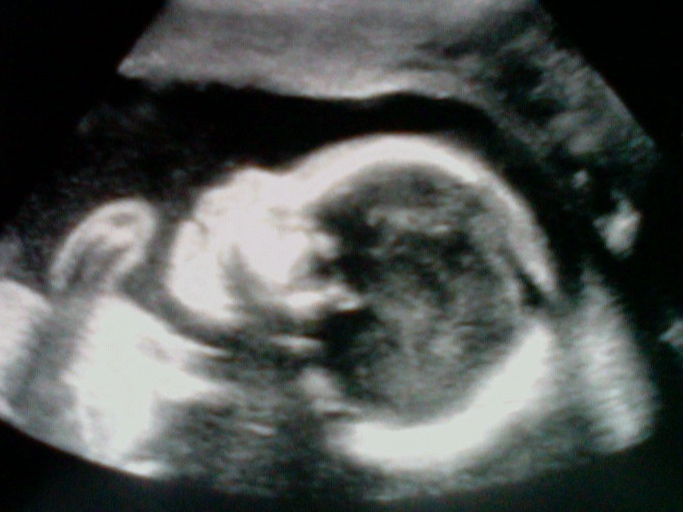
    Looks like it'll be boy, boy, girl, boy… boy.

    Number five us

    I spent my first three pregnancies avoiding unnecessary interventions, including routine ultrasounds, and feeling fine about it.

    But I have to say… of all the expensive, usually-unnecessary interventions there are in the world of prenatal self-care, the 20-week scan — now that I judge it necessary — is kind of fun.

    The young sir is doing fine, and so am I, and so is my placenta and all that stuff.

    Cool trivia:  Estimated weight is 454 grams.


  • Full-time.

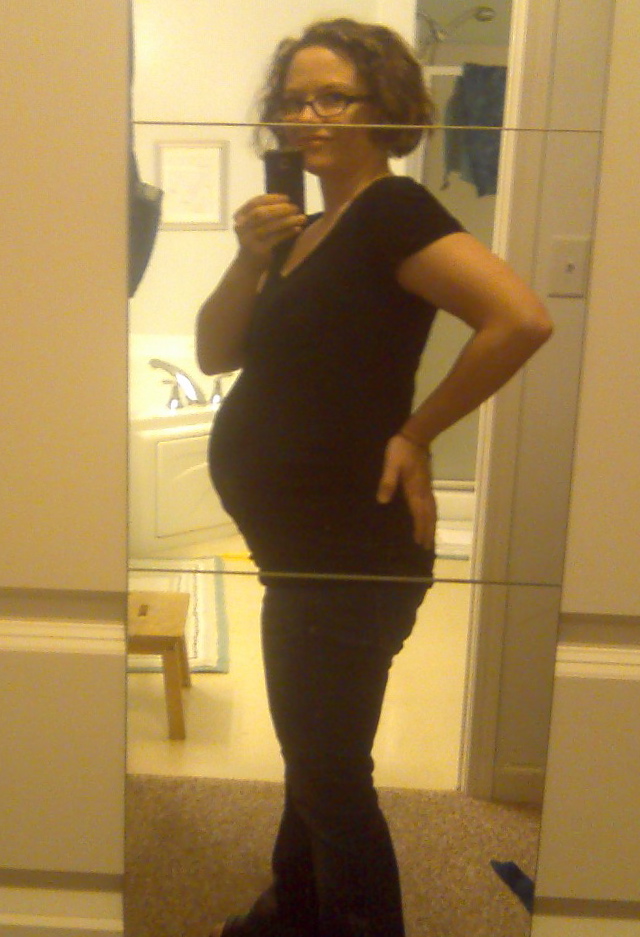
    Time for a blurry cell-phone selfie in the mirror in my closet:

    0829130633-00

    That's not-quite twenty weeks.  I feel bigger than I look, I think.

    + + +

    The other day, in the YMCA locker room, was the first time that someone said to me with a smile, "So is this your first pregnancy?"   

    I love the shock value of "No, it's my fifth."  The wide eyes and the Wow.   I am pretty sure this makes me a bad person.

    + + +

    I was pregnant with just number four the first time someone else — in the same locker room — followed that question with a brief lecture on overpopulation destroying the planet.  

    I said, "I think we should welcome and accept children from all kinds of familes, don't you?"

    + + +

    I have to tell you, I'm absolutely tickled to be pregnant with my fifth child.  Whether there would likely be a number five was a much-discussed subject around here.

     I really didn't know what kinds of feelings to expect — I have experienced each pregnancy with more ambivalence than you might think, considering that none were surprises.   There's just so much going on physically, and so much preparation to make, and the ever-looming Day of No Choice that comes some estimated day in the future, and the hopes for a good outcome and the worries about all the bad things that might happen.

    So I'm pleasantly surprised to find myself simply happy about this new child, and about the prospects of being mother-of-five, which just has a very cool ring to it, don't you think?  I feel like I'm earning a shiny new badge.

    + + + 

    At the same time there's been a sort of odd stop-in-my-tracks realization that, indeed, the way this story is turning out is that I am spending my entire, er, career or active life or whatever you want to call it, almost exclusively mothering.   I mean, I kind of knew that this was what was going to happen, but it sort of hit me in the last few months.

    Don't ask me why this is hitting me now and not the last time I was pregnant.   I was thirty-five years old when I had my fourth baby, and what with the general intention to keep homeschooling as long as it is working out, I was already quite clearly not expected to be off the hook for full-time involvement until my mid-fifties.  I'll be thirty-nine when I have number five, which brings me into later-mid-fifties, not that big of a difference really.  

    (Perhaps it feels big because I lost my own mom when she was fifty-four; in that sense there was and is an infinite distance between mid- and late fifties.)

    I haven't, either, chosen to keep active in my field even part-time on the side — I explored it for a while, and decided I didn't want the added stress; and I haven't, either, thrown my extra energy into working for any cause I care about.  The volunteer work I do is local, the kinds of things that parents do to help keep their kids' Scout troops and homeschooling co-ops going from year to year.  

    I have a lot of energy, a decent amount of talent for setting up systems and organizing stuff (not people, just stuff); but apparently, I have a limited supply of giving-a-shit.  

    Or maybe you could call it a limited supply of caring, and I  can't afford to spend it much except on the people I have relationships with.  

    The people who need me, personally, to give a shit about them, and no one else can replace me.

    This is not everybody's problem.  I have friends I admire who raise several young children and are also pillars of a community, doing good and useful and vital work.    I am happy for them and grateful for their example (and often beneficiaries of their efforts).

    Caring for and about my family, even though there's nothing especially needy about my family, requires my full-time effort.  It seems this will last about as long as I can stand to have a full-time anything.

    + + +

    That's the thing I wake up surprised about, almost every day:  That it's an endlessly fascinating challenge, that I always have something to think hard about, that I go to bed satisfied almost every night .  I am happy every morning when I step out onto the porch with my coffee and watch the school buses rumble by, or if I happen to glance further down to the end of the block, where the busy east-west road crosses, and can catch a glimpse of the morning rush hour line-up to get onto the highway.

    My job takes me nowhere that I am not curious to explore.   And I've signed up for another adventure, is what it feels like.  And I haven't had time to pack yet, but I will.


  • No bonk this time.

    I just got back from a late-evening trip to the gym.  

    I never fail to be amazed by the transformative effect of a little bit of vigorous exercise on my mood.  I've been sick, so I haven't been to the gym much lately.

     Last Tuesday I tried to run for the first time in two weeks, and everything hurt terribly; one of the "gifts" of pregnancy, it seems, is an almost-eerie sense that tells you firmly, without necessarily being able to say why, "YOU MUST STOP THIS NONSENSE RIGHT NOW."  

    I ran, stopped, walked, tried to run again, got the "I SAID STOP" feeling from somewhere deep within, gave up and went back to the stairclimber.  I think I managed thirteen minutes of elevated heart rate that particular workout.

    Thursday I stayed home when everyone else went to the gym.

    Saturday I tried to swim my usual mile.  I felt good for 1,150 yards and was making good time.  Then halfway across the pool I was suddenly overcome by violent nausea.  I rolled onto my back and breathed slowly, fighting the urge to vomit (I did not particularly want to ruin the lifeguard's day) until I made it to the edge — stopped — got control of myself — staggered to the locker room, where I hid in one of the fully-enclosed showers and wrestled with the dry heaves for ten or fifteen minutes.

    There is no bonk like the pregnant bonk, let me tell you.  (Link helpfully provided to keep your mind out of the gutter.)

    But today was almost better.  I put the run off till right before bed just in case it made me collapse into a quivering heap; Mark volunteered to clean up the kitchen and tuck in the kids.  I spent 9 minutes on the stairclimber and then headed over to the track, thinking I would walk a couple times around to get the ol' ligaments used to the idea of footfalls again and then run for 13 more minutes, if I could stand it.  And if you can call it running.  I've developed a shuffly sort of gait where I imagine my pelvis sailing forward always the same distance from the floor, without any up-and-down.  

    As I padded around the track I admired the women and men playing badminton in the gym on the level below.  Three of the women were lean and one of the women was rounded and muscular, and they worked hard, grunted and puffed and lunged, bouncing lightly on their toes, ponytails gently swinging back and forth as they watched for the direction of their next reaching leap.  Between plays they paced, brushing a strand of hair out of their eyes, sipped water and laughed.  I hoped they were not watching my conspicuous waddle.

    I came around again and again, and muttered through my teeth in time to my footfalls, "After… this… pregnancy… I'm… going… to… set… a… new… P-R."  (Of course, that's with the mental reservation that any race I run after this pregnancy will be my new "now that I am a mother of five" personal record, regardless of how fast I go.)   So annoying to feel so slow.  Not that I was ever impressively fast, but I impressed myself, anyway.  I glanced down again at the limber badminton players, and tried to remember what it was like to feel good in my skin.

    Only a couple more times around and then I can stop.

    Every once in a while someone would wander up into the little alcove off the track where they keep the exercise ball and the mats and things, where people stretch before and after running or sometimes do situps.  When someone would come out and look out over the track for a moment I would pick up the pace.  I wanted to at least look like I was playing the part of "really serious running-type person who even runs when she is pregnant" instead of "ridiculous waddling person who probably just started her exercise program halfway through her pregnancy against the advice of her OB because she was gaining too much weight."  

    Just about when it was time to quit I saw another person come in and I stepped it up — and all of a sudden when I picked up that faster pace, it was as if a switch went on inside me and everything got light instead of dark and heavy.  I felt — lighter and swifter, and nothing hurt.  My feet knew how to run again.  And I went around and around and felt my heart grow lighter too, and my mind, and I suddenly felt happy and optimistic.  I felt exactly as I do in the morning when I am halfway through my second cup of coffee and the caffeine kicks in:  this sense of well-being appears out of nowhere, and all of a sudden all the things I would like to do seem possible.

    I ran on that feeling for five more minutes, faster than before, until the "OKAY YOU HAVE TO STOP NOW" alarm started silently going off somewhere in the middle of my back, and I went back downstairs to the locker room and changed.  

    On the way out I bought two energy drinks with a swipe of my credit card, one for now and one for tomorrow, when I will start to sink down, in the somewhat silly hope that it would somehow deliver a placebo version of whatever essence I found twelve minutes into my intended thirteen-minute run.  

    Just goes to show you don't know what's around the next loop of the track, even the same track you've been looping the whole time.


  • Elisabeth Leseur’s “A Little Essay on the Christian Life” for her nephew: III, the active adult life.

    Continuing a series on the writings of Elisabeth Leseur, which I started here.

    + + +

    We're working our way through Elisabeth's letter to her nephew.    Elisabeth's approach in this letter is to explore the theme of orare et laborare as it unfolds through three stages of life, that is,

    • the time of adolescent crises, intellectual and moral;
    • the time of adulthood, of seeking and living out one's vocation;
    • the time of venerable old age.

    In my first post about this letter, I wrote about Elisabeth's depiction of the time of adolescent crisis, and in my second, I discussed her advice for getting through adolescence with one's faith not merely preserved, but tested, hardened, and the better for having been tested.  Here's how I ended that last bit:

    I like how Elisabeth acknowledges what all young, eager people feel, that "real life" has not started yet, that what is "real" is the life to be lived in the future as a grown man or woman.   But Elisabeth identifies it with a more precise term, "your active life."  

    At the same time everything that has gone into her essay so far demonstrates that Elisabeth takes the lives of young people quite seriously, and that the struggle of adolescence can only be won by manly courage.  It's obvious that she doesn't think of adolescence as an inactive life, or a dormant one.  I think the metaphor of the military training ground is apt; one does one's time there before entering "active" duty, and yet it is not a place free from peril.

    Now, having recapped what I wrote two weeks ago, we'll move on to the "active duty" of the Christian life.

    + + +

    Elisabeth on vocation:

    When you… are ready to become an adult, it will be extremely important for you to recognize and follow your vocation.  The word vocation means "calling:" it is God's secret call to your conscience to follow the path that he has marked out… [E]ach of us is intended to do some special work and receives a task determined beforehand.  Human society would be wonderful and harmonious if everyone accomplished all the work given to him by the "head of the household," and if we, laborers of the first hour, tried to discover God's will at every stage of our life.

    The reference to "laborers of the first hour" is to the parable of the workers in the vineyard.  It is, in this context, a subtle reminder that the one who remains in God's service from the very beginning of his life — like Elisabeth's nephew, a so-called cradle Catholic — can not expect to receive special accolades or a greater reward than those who come later.  And Elisabeth has attached to it a gentle note of responsibility.

    This cannot be, because from the beginning evil entered into the world, but we can at least  take our stand among those who desire to carry out God's plans…

    Therefore, when the time comes, try to discern God's will for you.

    Elisabeth on how to discern one's vocation:

    In order to do so, you must

    • pray, 
    • fortify yourself with the wise and loving advice of your parents and of others whose character validates consulting them, and especially of the priest, the friend and guide of your soul.  
    • Withdraw into your depths alone with God; 
    • face the thought of death, which clarifies so much,
    • and try to recognize your tastes and desires
    • and to discern what career and what kind of life will be the most fruitful for you and for others.  Try to see clearly where you will be able to do most good while freely developing your abilities.

    Note the balance of outward-facing good works and inward development!  Elisabeth's idea of the Christian life is not a self-effacing one, but one of self-development for service.  She goes on:

    Give as much time as necessary to this patient search; this discovery is worth the effort and refection that help you reach it.  It is better to spend a long time looking for the right road than to risk getting lost or choosing a hard and difficultpath.  Ask God to illumine you; he will not refuse you but will show you the way.

    Discernment does not end with the discovery of one's vocation:

    Then courageously begin your work, always trying to discern your true task and the most amount of good that you can do, telling yourself that, whatever your vocation may be, there are always people suffering in mind or body to be cared for, tempers to be calmed, and hearts to be healed… During this active phase of your life, let your motto always be Orare et laborare.

    (Here comes the part that I know a lot of my readers, by now well up to their elbows in their vocations, will want to pay attention to.)

    Prayer during the active years

    Be faithful to your morning and evening prayer, and to that honest examination of conscience… However absorbing your occupations may be, every day reserve a few minutes for recollection and solid meditation, which will strengthen you for the struggle.  

    Eucharist as a meeting between "friends" during the active years

    Above all, receive holy communion often with simplicity, confidence, and love.  Approach our Savior without anxiety as the friend he is, able to understand and share everything, with whom you can talk about your joys and sorrows, your temptations, and even the doubts that he can remove, your human plans and spiritual desires.  

    Elisabeth warns against a scrupulosity common among Catholics in her culture:

    Do not imagine, as some do, that, before going to holy communion you must be "well disposed" or worthy of the divine visit.  Such an idea is the result of a misconception about the goal and action of the holy Eucharist.  When we are physically weak, we eat the bread that restores our life; let us do the same spiritually.  If we were saints, the same abyss would exist between God and ourselves; but since he fills it up with his love, let us go to him as friends whom he does not frighten and whom his goodness attracts.

    And she warns against despair in the face of a lack of spiritual "feelings:"

    Above all, never stop receiving holy communion because you feel no consolation.  Sometimes we deeply sense our Savior's real presence and are tempted to believe that this loving awareness ought to happen every time.  This is a mistake, for, if it were so, communion would be heaven, whereas it is only meant to be the ay…. Just as food affects the body, so does God affect us without our perceiving it…

    Work during the active years

    Live your life as a man, in youth and in maturity, filling it with strenuous work and make it holy through prayer.  Orare et laborare:  once more I ask you to make this your motto throughout life, especially during those years of mental and physical energy when you can do so much to further God's interest.

    (It's sobering right now to think that these are "those years of mental and physical energy." I maybe need to stop complaining about being tired all the time.)

    Although it may be possible later to make up for wasted years, they can never be replaced.  Privileged people like yourself will have to render a strict account of them.

    Elisabeth seems to have an almost contemporary notion of the significance of "privilege," one that goes beyond ours, which generally stops not far beyond race, class, and gender.  She recounts the privileges that have been André's heritage here, and stresses that the most significant thing such privilege gains for him is responsibility to use its advantages in the service of God.  We can use this moment to pause and consider our own privileges and concomitant responsibilities:

    It fills me with emotion to think about the good you can do with the gifts you have received.  You are beginning life under the following circumstances:  

    • God has given you good health and intelligence;
    • you were born into a distinguished and united family ;
    • you have an excellent father and a Christian mother;
    • you have received great gifts spiritually, baptism, confirmation, and the Eucharist,
    • and also many signs of your heavenly Father's love for you.

    Until now, you have been able to offer him nothing in return except a little love and good will.  But from now on, you should think seriously about what you will be able to do for him, and by means of what courageous efforts, good works, and strong spirituality you will become a true soldier of Christ [Miles Christi].

    This concludes Elisabeth's discourse on adulthood; like the discourse on adolescence, it ends with a military note.

    + + +

    I am struck by the repeated reference to Jesus, especially in the Eucharist, as "friend."  It's not an uncommon designation, of course, but Elisabeth has many designations to choose from — Lord, King, Judge, Bridegroom, Messiah, among others — and I am sure she has picked this one deliberately.  

    Indeed, "friend" is how the landowner addresses the "laborers of the first hour" when they complain about their wages in the parable that Elisabeth has referenced earlier in the letter.  I am inclined myself to remember John 15:

    You are my friends if you do what I command you.  I do not call you servants any longer, because the servant does not know what the master is doing; but I have called you friends, because I have made known to you everything that I have heard from my Father.

    In a culture where an appropriate sense of unworthiness often leads to an inappropriate to fear of approaching the chief remedy, Elisabeth is, I think, making a point that Jesus himself has called us his "friends."  

    He calls us "friends" not unconditionally; but the conditions are not only for the heroic, but for the humble. He requires of us, his "friends," only obedience to what has been made known to us by Himself.  Not some extra mile, not imaginary requirements to imbue us with special sanctity, not legalistic rules that we make up and attempt to impose on ourselves or on others over which we hold no teaching authority.  So we need not fear to approach the Eucharist, if only we have kept his commands, including the commandment to repent of our failures and seek absolution through the ordinary means that have been made available to us.

    + + +

    It is interesting to compare the two letters, the one to a young woman, the other to a young man.  The advice in them is not so very different, except in tone.  We live today in a time that has succeeded in removing many artificial distinctions between males and females (yes, it tries also to remove necessary and good distinctions; but that does not negate the real benefits of having dealt blows to unnecessary and harmful ones).   Today's Christian women cannot escape an awareness, after medieval exemplars like St. Joan and modern exemplars like St. Edith Stein, of being called to the lives of milites Christi.   Today's Christian men have an awareness that to "'possess your soul in peace,' to be gently and lovingly composed," often requires virtue bordering on the heroic.  Perhaps because of this, I think men and women, and especially adolescents like those to whom Elisabeth composed her letters, can appreciate almost equally the somewhat-gender-tailored advice that appears in her two letters.   


  • Outside the hoverchair.

    Stroller bans are in the news again, here and here.  Predictably, some parents are railing against this "anti-child" policy, and some people who don't really like children very much are retorting that the children probably don't belong in the restaurants and stores that have the ban in them anyway.

    These attitudes only make sense if you accept the logic that having children requires having strollers.

    I do not.  I do not, therefore, believe that restricting the number of strollers in an enclosed space is the same thing as banning children.  I wish more places would do it.

    + + +

    My words are primarily aimed at young families, so that I might warn them away from the dependency on The Stroller before it's too late.  Therefore, I'm going to be blunt.  If  you have several children and have already become dependent on a stroller, you may not find my words appealing.

    + + +

    Although we have fewer children, by proportion of the population, than we used to have — especially in urban areas — we appear to have more strollers in every place where families go.  It may not be so bad in recently developed areas, but older buildings and areas that were designed for previous generations don't have room for all the strollers.   If you go to a place that attracts families with small children — the zoo or the state fair — sometimes you cannot move for all the strollers running over your toes and crashing into the backs of your knees.  Little kids who happen to be walking can't see over them.  

    It's not so much each individual's choice, as it is the sum total of a crowd's choice.  A few strollers here and there do not cause a problem.  But a large crowd of families, each of whom are pushing a large and bulky stroller, does.  In a small boutique store or cozy restaurant, one stroller may not cause a problem.  But if three or four parents happen to be in the store at the same time, and each has a stroller, there's a parking issue (and maybe a fire code violation, and maybe real trouble for guests who use wheelchairs or walkers to get around).  And the crowd-of-strollers problem reduces everyone's mobility.

    Why's that?  Why do we have more strollers than we have room for?

    The aging population of parents?  Could be.  If you have your first baby at age 39, you might not be able to carry him around as easily as a parent who has his first baby at 22.

    Maybe it's not that there are more strollers, but the strollers are bigger, clunkier, and fancier?  I think that is part of the problem.  You have to admit, today's strollers can be huge and unwieldy — a far cry from the folding "umbrella strollers" of yesteryear:  lightweight, not much bigger than a couple of large umbrellas, and only about fifteen inches wide when fully unfurled.  (I hear you can still purchase them.  Perhaps the restaurants could evade the "you're anti-child!"criticism by permitting umbrella strollers and rejecting larger ones.)

    When I survey the crowds at the fair or zoo, I'm tempted to identify another factor:  Kids in strollers until they are five or six or sometimes even older.  (This is enabled by the large-clunky-stroller phenomenon.)  It stands to reason that if a population depends on strollers up to age six, there will be more strollers in it than in a similar population that only depends on strollers up to age three.

    + + +

    Strollers, it seems, have undergone mission-creep.  Think about the movie WALL-E  for a minute.  You know how early in the movie, while WALL-E is still trudging around planet Earth stacking cubes of garbage, you see the old advertisement for the new fancy ship?  And how the little personal hovercraft mean "Even Grandma can join in on the fun?"

    6a00d8341bf67c53ef011570e9f955970b

    The hoverchairs in the film were created to assist people with more-limited-than-normal mobility.  But over the generations between the advertisement and the time of the film, the hoverchairs undergo mission creep, and using them is now normalized.  All the adults use them to get around all the time, and never walk anywhere:

    Unknown

    So it is with the stroller.  A device originally intended for occasional use, or perhaps constant use for a short period in a child's life, is now routinely employed for long periods that encompass all of early childhood.

    + + +

    A lot of people want a stroller.  But most parents do not need a stroller, certainly not nearly as often as they think they do. 

    Here is when you need a stroller:

    (1) Your child has a disability.

    (2) You have a disability, or are pregnant; or you are Grandma taking the child out;

    (3) You are going for a run and you require a specialized jogging stroller;

    (4) You have two babies;

    (5) On a particular day, for a particular reason, you plan to travel on foot for a time or a distance that is unusually longer than what your family is used to.

    For the able-bodied with typically-spaced singleton children, daily getting-around does not require a stroller.  

    Becoming dependent on a stroller is, in that case, a lifestyle choice.  And the aggregate of many such lifestyle choices is an unpleasantly cluttered environment, and a lot of children who do not know how to walk safely and considerately in public.

    + + +

    Obviously, when I look at a given family shoving their double stroller through the mall, I cannot know whether that family has to deal with an invisible disability, or some special circumstance.  So — no — I am not judging your family when I see your giant stroller, unless it runs over my foot, in which case I probably will, at least for a minute until I recover my senses.

    But when I look at an entire crowd of people shoving their double strollers through the mall, I can guess that based on the sheer numbers, a lot of them aren't dealing with disabilities.

    + + +

    My advice to those who are already dependent on the stroller is to try to wean themselves off from it, or maybe to go cold turkey.  My advice to those just starting out is never to get dependent on the stroller in the first place. 

    The easiest way to avoid becoming dependent on the stroller is not to buy one, not to register for one, and not to accept one as a hand-me-down.    

    Say, "I'll wait to get one of those until I find that I need it."  

    Then make do without it as long as you can.

    Carry the baby.  Use a sling or a wrap carrier.  You are an able-bodied adult, and newborns usually weigh less than ten pounds; you once carried far more than that in your school backpack.  Enjoy having your baby close to you, high up,  where he can hear your voice and see the people at people-height.  

    As the baby grows, you will continue to carry the baby, and you will get stronger.  The median twelve-month-old weighs less than 25 pounds, and almost all twelve-month-olds are under thirty pounds; if you're not used to it now, that may sound like a lot, but if you carry your baby regularly you will have strong carrying muscles.   And if the baby's growth happens to outpace you and you cannot carry the baby far, then you can always keep that cheap umbrella stroller in the car or entry-hall for the occasional longer jaunt.

    Let your toddler walk.  Hold his hand and travel at his pace down the street.  Start with short walks, perhaps picking him up to cross busy roads and parking lots, and setting him back on his feet when you have arrived on the other side.  Take longer walks as he gets stronger and more confident.   Keep a lightweight cloth carrier rolled up in your bag in case you accidentally overtire him and you need to carry him home.  Talk to him as you walk:  about traffic safety, about large dogs, about other pedestrians.   If you haven't a smaller baby to carry, hoist him onto your back or shoulders from time to time to give him a piggyback ride.  Let him ride in the cart or rental-stroller when you go to a store that has them; when you go to a store that doesn't, teach him not to touch the merchandise, or don't bring him into that kind of store until he's learned.  Keep the cheap umbrella stroller around for emergencies; maybe break it out more often for a little while if your next baby comes along before your toddler is really ready to walk everywhere you go.

    If you're not used to walking with a small child in public, this might be intimidating.  Traffic is scary, and so is the prospect of a big public meltdown.  But just as you trained your carrying muscles as your baby got bigger, you will train your awareness and your coping mechanisms as your toddler gets bigger.  You will be aware of the hazards of traffic, and you will choose your route accordingly, and you will teach your child to walk safely.  You will keep your toddler closer to you and you will become aware of the things that attract or frighten him.  You will learn to predict meltdowns and you will adapt your plans as necessary.  And as your child grows in stature and ability and confidence, he and you will grow in confidence and your outings will grow longer and more varied.

    This is how adults get around with children, outside the hoverchair.


  • Role-model time bombs.

    In a friend’s Facebook timeline I see the exchange:

    “Its a shame what Miley Cyrus has turned into. She was so sweet and innocent during her Hannah Montana days…someone a child could look up to….NOT ANYMORE. I don’t understand Hollywood kids that feel being good, pure and innocent is a bad thing.”

    “[My eight-year-old daughter] can’t understand why I won’t let her listen to her new song. It’s a shame. With lines about dancing like you’re in a strip club and getting in line for the bathroom to get a line.”

    I think a lot of it IS their own doing… They feel if they are hard and rough, it proves that they are no longer little goodie two shoes. Some come out of it though after they realize they have gone off the deep end (Hillary Duff comes to mind). But the likes of Lindsay Lohan, Amanda Bynes, and Miley Cyrus….not sure if they will come out of it.


    Me? I think we’ve seen it happen often enough, and we’ve seen the lucrative outcome in terms of publicity, that we can conclude they are part of a larger pattern.

    I suspect that the sweet/pure/innocent girl starlet image is carefully crafted by the entertainment companies as part of a master plan. Their young fans — who are generally several years younger than the starlets themselves and especially their young fans’ parents are being set up. The entire point of the sweet/pure/innocent/girl-next-door image is the Big Reveal, set for soon after the starlet turns eighteen: the nude photos come out, or the paparazzi images from the Hollywood party, or the mug shots, or the drug charges. The new album comes out with the suggestive dance moves and the explicit lyrics.

    And all of a sudden, this adulation that seemed so harmless when your seven-year-old was wearing heart-shaped sunglasses and clenching a hairbrush microphone, lip-syncing to the lyrics of that wholesome, fifteen-year-old TV cutie? Now your daughter’s ten, and her most beloved role model is dancing on stage in wet lingerie.

    That got awkward fast, hm?

    I have taken to viewing the “Disney sweetheart” phenomenon as a trap: a role-model time bomb, set on purpose to go off for maximum impact, maximum headlines, and to sell maximum copies of the first semi-nude photo shoot. In this model, the sweet-innocent-girl-next-door is an image carefully crafted and curated to ensnare as many hits as possible. The sweeter and more innocent the better, because then the more sensational the headline when she Goes Wild.

    There is, as you know, a thriving and only partly underground market in the images of young women who appear to be anywhere from twenty-one down to about sixteen. When a young woman who was recently well-known as an underage star comes of age and hits the centerfolds, there is a valuable association — “Is she even old enough for that?!” — that her handlers must rush to exploit before it expires.

    In other words: The Disney-Channel sweet and childlike girl next door is merely Phase I of “Hot, Wild, and Barely Legal.” These girls are not going off the deep end on their own. They are being groomed to go off the deep end, because a lot of people stand to make money when they “discover” the next Britney, the next Lindsay, the next Miley.

    Don’t fall for it. If your daughters want to emulate the image, evaluate the branded merchandise — it’s glittery tee shirts and sparkly berry-flavored lip gloss now — but what will it be in three years? And evaluate your own complicity — could it be that by buying into the sweet and pure act now, you are already participating in an act of exploitation, just one that has not yet come to fruition?