bearing blog


bear – ing n 1  the manner in which one comports oneself;  2  the act, power, or time of bringing forth offspring or fruit; 3 a machine part in which another part turns [a journal ~];  pl comprehension of one’s position, environment, or situation;   5  the act of moving while supporting the weight of something [the ~ of the cross].


  • Good enough for government work.

    Minneapolis does not allow residents to contract private companies for garbage removal.  We must use the city garbage collection service.  

    A couple of weeks ago, I called the city to ask for a new garbage cart.  Animals had chewed a hole through the heavy plastic of the lid and body of the cart, and squirrels were happily running in and out, strewing half-eaten objects around my yard.  The city told me to leave the cart in the alley for up to two weeks until the crew could get around to replace the lid and/or cart.

    Yesterday I noticed the garbage crew truck parked behind my house fiddling with the cart.  "Oh goody," I thought, "here's my new garbage cart.  Now I can bring the cart back into the yard except on trash day."  When I pulled out of my garage in the evening I noticed, approvingly, that the cart was not the same cart that I had had before.  Hurray.  New cart.

    This morning I took the  trash out and inspected the cart more closely.  In fact it was NOT a new cart.  

    It was a different cart, certainly.  

    But it was a different cart with a different hole chewed in its different lid.  

    I cannot, of course, guarantee that the hole was chewed by a different squirrel.

    So I called up the city to ask about it.  A very nice woman put me on hold for a while and then came back to tell me:  "Oh yes, the crews came out to fix the garbage cart.  But when they checked the serial number on your cart, they saw that the damaged cart behind your house was actually registered to your neighbor."

    "So they switched the carts back."

    "Yes, exactly."

    I stepped outside to check.  Indeed, there was the familiar damaged cart behind my neighbor's house where, apparently, it belonged.  The unfamiliar damaged cart had, apparently, been behind my neighbor's house by mistake.  

    So.  Let me get this straight:

    (1) The garbage-cart fixing crew was sent out, with garbage-cart fixing supplies, presumably being paid by the hour, to fix or replace a damaged cart that is a known nuisance.  

    (2) Upon arriving and investigating, they discovered that not only do *I* have a damaged cart registered to my residence, but my neighbor does.  Not one problem but two problem

    (3) They had the resources "shovel-ready" to fix BOTH problems.  Resources had already been expended to put both garbage carts aright.

    (4) Instead of fixing one or both problems, they gave me his problem and gave him my problem.

    (5) Now we still each have a problem, but each of us has a different problem from before.  Not that it amounts to much difference.

    It is very, very hard not to see this as some kind of extended metaphor for government services.

    I pointed out to the nice lady on the phone that I still had a cart with a hole in it parked behind my house, and she agreed with me that this had to be fixed and said that sometime in the next two weeks a crew would come out to fix the garbage cart.

    It was not until after I had hung up that it occurred to me that I should ask them to please also fix my neighbor's cart (the cart formerly assumed to have been mine).  Squirrels, after all, respect no property lines.


  • Reader question.

    I had an email exchange from a new reader this week who had a couple of weight loss questions, both of which I thought were good jumping-off points for the blog.

    I am  5'7"in height, and 217 lbs. (obese) and unhealty and a glutton. I'm 92 lbs overweight.   I'm 125 lean body mass and 92 lbs. of fat(!) according to my recent testing in this area.

    I answered:  You are *not* 92 pounds overweight. Everybody is supposed to have some fat on their lean body mass. Nobody is supposed to be 0% fat! If you go by BMI, you would reach the top end of the "normal" weight range at 159 pounds. So. 58 lbs probably seems like a big number, but I hope it does not
    feel as big as 92.  
    "BMI-normal" is a pretty wide range, and maybe she would be better off losing more weight than that, but at 159 pounds she would technically be within "normal."  At 190 pounds she would go from "obese" to "overweight."
    Another way, maybe an even better way, to find a definition of "normal" with this data would be by percent-body-fat (the weight of your body fat divided by your total body weight).  If your body fat measurement is accurate (which it probably isn't) you'd be at a body fat percentage of 31% (top end of "average") at 181 pounds.  That's only 36 pounds away.  To get into the "fit" range at 24% body fat for women, if this data were accurate, she'd have to reach 164 lbs.  But I suspect the body fat percentage is not accurately calculated to begin with.  All these numbers are just starting points.  Anyway:  it's not that bad.  You don't have to lose 92 pounds.  Please don't.

    I note on your blog that you mention both calories and hunger fullness.  What do you recommend for one as me starting out?   I know I'd love to eventually manage my weight with hunger/fullness, but for now it seems so subjective/hard to find. 

    I've been trying to eat only when hungry but find that my body doesn't ask for food but maybe twice a day… I had been obsessive about the waiting for hunger growl and I felt like I was gluttonous if I ate at any other time (schedule)….and if I stop when politely full on these occasions my stomach holds only 2 cups of food/liquid.  2 cups of food twice daily = 4 cups of food.     I find it's hard to get the NUTRIENTS I need in 4 cups of food (I'm not worried about energy/calories/fat as that's stuck all over my body), but I am finding it hard not to binge once I've tried this pattern a few days as the urge becomes overwhelming.

    I noted:  I am suspicious about "waiting for the stomach to growl" as the only legitimate sign of hunger.  And I definitely don't think that it's automatically "gluttonous" to eat when your stomach isn't growling! Our bodies give us a number of different cues to eat, and a growling stomach is only one of them; and as far as I can tell, different people feel different hunger cues to different degrees.  Hunger signals aren't caused (just) by physical lack of food in the stomach — they travel around the body in the bloodstream via at least three different hormones, all of which respond to the levels of available fuel (sugar and fat) for cells.  So — the stomach growl might be a good cue for one person but a terrible one for another.
    I believe that my hunger signals were messed up, so I quit trying to eat when I was hungry and stop when I was full. I had been trying to do that a lot of my life, and it wasn't working, partly because (as I figured out 
    later) I was interpreting "not yet painfully stuffed" as "still hungry." I had to learn what hungry really felt like and get to know it. 

    I also think that eating every time one feels hungry is a recipe for staying the same weight, not for losing it. My experience is that to lose weight, and even now to maintain it, I had to spend time feeling hungry every day. Not all day; I wasn't hungry right after meals. But I had to spend some time feeling hungry in the hour or so leading up to a meal. If I never let myself get hungry and stay hungry for a little while, then that was always a sign that I was eating enough to keep up with my energy intake.

    To stay motivated, I would tell myself that hunger was a sign that my body was consuming itself.  But I always knew another meal was coming, I just had to wait for it a bit. 

     Do you recommend beginning to tracking calories/points (something more objective) in the beginning or will you continue to count calories?

    I think that a good first step, especially if you haven't tried it for a while, is to begin by eating meals and snacks on a schedule. Mine was like this: breakfast on waking, small snack no earlier than 10:30 (and if I  didn't get it by 11:30 then I had to skip it), lunch no earlier than  12:30, small snack between 3:30 and 4, dinner no earlier than 6. I experimented with having a bedtime snack and not having a bedtime snack and decided I didn't need one to fuel my  sleeping.

    The thing about having a schedule is that you are sometimes forced to wait to have your meal. Which means you start getting some practice with feeling hungry and telling yourself, "oh well, it's not time to eat yet, I guess I will survive till then."

    A good second step is to restrict yourself to a single not-too-big plate of food, no seconds, at meals (and quite small snacks — three ounces was big enough for me for a snack most of the time). You can be sure that you will not suffer nutritional  deficiency from that. And if you are worried, you can take a multivitamin, or 
    make a larger portion of your plate be nutrient-rich vegetables. I used an  8-and-a-half-inch plate for meals. When it was done, I was done.

    By the way, I noticed you wrote that you were not worried about getting enough "energy/calories/fat" but were worried about getting enough "nutrients."  I want to point out that fat is an essential nutrient and you have to keep eating it, even if you are trying to lose weight.  Sufficient fat helps you absorb nutrients, and it plays an important role in satiety, not to mention that it helps your veggies taste really good.  So eat some fat.

    The "small plate," "no seconds," "eat on schedule" rules are very simple, but they will get you started without actually having to count anything or even deprive  yourself of any sort of food — if it fits on your plate, it's cool.  You can save calorie counting (I much prefer calories to WW points as I do not believe in eating low-fat)  for later when you get bored and want something more challenging, or if you hit a plateau, or if you are curious how many calories are on your plate.


  • Nasty is as nasty does.

    This is an interesting political thesis, from Brian Micklethwait of samizdata.net:

    "In my opinion, an amazing number of mysteriously vehement, evidence-defying opinions can be better understood once you understand that the expresser of such opinions is unthinkingly assuming that most others are, in some particular respect, just like him."

    I do not think he's picked for his illustration the very best examples (why are anti-gun people sometimes themselves very violent?  why are people who are very alarmed about the societal impact of open homosexuality sometimes "repressed homosexuals" themselves?)  but it is an interesting point.  

    (I'm going to try to be a little more careful than Micklethwait has been to qualify the remarks with terms like "some" and "sometimes" and "self-declared.")

    An example I have noticed that I think fits this pattern:  some self-declared feminists who will use the nastiest and most sexist language possible to describe women who hold conservative political views. 

    Micklethwait's idea is to turn the question around: instead of asking, for example, "why are some anti-gun people so violent?" change the question to "why are some violent people anti-gun?"    I suppose the question then becomes not "why are some self-declared feminists so willing to use sexist language against women who are different from them?" but "why do some users of vicious, sexist language against their political opponents persist in calling themselves feminists?"  And maybe Micklethwait is right that there is something in there about assuming that everyone is willing to use vicious sexist language.

    I have long had a different theory — maybe both theories are right.  My theory is that there are certain people who believe it is okay to play foul if your opponents are also playing foul — the "He started it" excuse.  So, then, if some people who call themselves feminists (and who believe that conservative women are anti-feminists — I don't think so, but I can of course understand that many liberal feminists define "feminism" in a way that excludes much social conservativism) believe that their opponents use vicious, sexist language, well then, it is okay for them to use vicious, sexist language too. 

    Hence all you have to do to justify nasty behavior on your part, is to imagine your opponents being just as nasty.  (Notice that they don't have to really be nasty.  You just have to imagine they are nasty.  Which is maybe just another form of Micklethwait's thesis that you "imagine they are just like you.")

    I'm sure there are many examples of this all over the political spectrum.    My point is that it is foolish to use someone else's bad behavior as an excuse for your own bad behavior.  Doubly foolish to use someone else's behavior that is really only as you imagine it to be.  All it does is turn you into what you hate.


  • Not-so-toy houses.

    Some time ago I wrote a post called "Toy Houses" in which I quoted St. Francis de Sales.  That was before I started up on my Introduction to the Devout Life series (which, by the way, I've got only the final part of the book to blog… more on that soon).  The passage I quoted is really what got me interested in St. Francis.  Here's the whole post:

    Jen at Conversion Diary has a post up with a quote from St. Francis de Sales that I'd never encountered before.   Quoting it in full because it deserves it:

    Soon we shall be in eternity and then we shall see how insignificant our worldly preoccupations were and how little it mattered whether some things got done or not; however, right now we rush about as if they were all-important. When we were little children how eagerly we used to gather pieces of broken tile, little sticks, and mud with which to build houses and other tiny buildings, and if someone knocked them over, how heartbroken we were and how we cried! But now we understand that these things really didn't amount to much. One day it will be like this for us in heaven when we shall see that some of the things we clung to on earth were only childish attachments.

    I'm not suggesting that we shouldn't care about these little games and trifling details of life, for God wants us to practice on them in this world; but I would like to see us not so strained and frantic in our concern about them. Let's play our childish games since we are children; but at the same time, let's not take them too seriously. And if someone wrecks our little houses or projects, let's not get too upset, because when night falls and we have to go indoors — I'm speaking of our death — all those little houses will be useless; we shall have to go into our Father's house. Do faithfully all the things you have to do, but be aware that what matters most is your salvation and the fulfillment of that salvation through true devotion. 

    Isn't that wonderful, realistic, practical writing about detachment?  It seems that so many of the saints are urging us to be ethereal and otherworldly, passing through the things of this world like light and with nary a thought about any of the stuff around.  Well, thank you St. Francis for recognizing that most of us live in the world, with children and spouses and other people we provide for… we touch the things of this world, and are touched by them.  

    I think he does a fantastic job putting things in their proper place.  "I'm not saying that we shouldn't care… because God wants us to practice on them… Let's play our childish games… but… not take them too seriously."  Strikes the perfect note, I think…


    I still really, really like that passage a lot, but I've come to realize it's not as simple as it seems:  our daily work is not all "toy houses."  St. Francis says "we shall see that some of the things we clung to on earth were only childish attachments."  I don't think it's instantly obvious which are and which aren't.  Especially when our daily work is raising and educating our children.  But even so when our daily work brings us into contact with grown-up human beings, strangers and friends and acquaintances.

    Other human beings are not toy houses.  To be a Christian is to believe that the things of this world are unimportant; but also to believe that the people of this world are vastly, vastly important.  And to us, the people whose special care and education has been entrusted to us are especially important and our greatest responsibility.  

    All that is easy to say, but my point is:  It's a little tricky to see where the "toy house" ends and the "real house" begins.  One of my daily jobs is teaching the children.  I get very preoccupied with the school schedule and the best way to go about instructing them and how best to balance my time.  Last night I woke up in the middle of the night and found myself grappling with the question of which I should teach first to the middle-schoolers, the dative case or the ablative case?  This is not something that should keep me up at night, but it does.  

    OK, so maybe dative vs. ablative is a toy house.  I shouldn't be so worried about it.  What about my seven-year-old's First Communion prep, though?  And what about history?  What about science?  There's moral content and theological content to all this stuff.   Like it or not, at every minute aren't we forming these eternal beings?  How can anything in contact with growing minds not also touch their souls?   And that is what starts me getting "strained and frantic."

    Here's another example.  I hate it when the house is messy.  I'm not exactly a neat freak but I feel so much better when it's all picked up and tidy.  "Strained and frantic" to get things back in order — that's me.  And yes, "someone" wrecks my little project all the time.  So reading that, it's all very well to say, "Hey, keeping the house orderly — not such a big deal.  It's got to be an example of the "childish attachments" St. Francis was talking about.  I should calm down about it."  But then I remember that I have to get after the children to hang up the coats and take off their muddy boots and put books away instead of sleeping with them and crunching up all the pages, and I start thinking:  And yet it is my job to teach the children to love order and discipline and to take care of their things and think of others' feelings and to do their part in our family, and how can that be a toy house? 

    So it gets all mixed up in my mind.  Obviously I should worry less and love more, but it's disturbingly hard to tell the difference between "doing faithfully all you have to do" and "taking [all you have to do] too seriously."  I mean, is that entirely interior or is there something exterior about it?

    I could start by YELLING less, I suppose.


  • Wish my doctoral thesis had been this cool on video.

    The hydrodynamics of how cats drink.  

    But recent high-speed videos made by this team clearly revealed that the top surface of the cat's tongue is the only surface to touch the liquid. Cats, unlike dogs, aren't dipping their tongues into the liquid like ladles after all. Instead, the cat's lapping mechanism is far more subtle and elegant. The smooth tip of the tongue barely brushes the surface of the liquid before the cat rapidly draws its tongue back up. As it does so, a column of milk forms between the moving tongue and the liquid's surface. The cat then closes its mouth, pinching off the top of the column for a nice drink, while keeping its chin dry.

    The liquid column, it turns out, is created by a delicate balance between gravity, which pulls the liquid back to the bowl, and inertia, which in physics, refers to the tendency of the liquid or any matter, to continue moving in a direction unless another force interferes. The cat instinctively knows just how quickly to lap in order to balance these two forces, and just when to close its mouth. If it waits another fraction of a second, the force of gravity will overtake inertia, causing the column to break, the liquid to fall back into the bowl, and the cat's tongue to come up empty.

    You really must check out the videos at the link.

    With these videos slowed way down, the researchers established the speed of the tongue's movement and the frequency of lapping. Knowing the size and speed of the tongue, the researchers then developed a mathematical model involving the Froude number, a dimensionless number that characterizes the ratio between gravity and inertia. For cats of all sizes, that number is almost exactly one, indicating a perfect balance.

    So cats' tongues have a Froude number of near-unity.  That is pretty darn cool.  Now I'm just trying to figure out whether it makes sense that they modeled the tongue as an impeller tip, or what.


  • School nutrition by the numbers.

    Simple, Good, and Tasty covers school lunches in Minneapolis.  I thought this series looked interesting.  If the school lunch program is indeed as thrifty as they make it out to be, then perhaps they should teach some of their magic to the REST of the administrators.

    I am glad that the kids in schools are now getting whole-muscle, non-breaded chicken fillets, but I did have to wonder why the district couldn't use up their existing inventory before declaring breaded formed chicken fillets verboten.   Seems silly to just keep "boxes" around indefinitely in a freezer, "lining the walls of the distribution center."  I doubt it would hurt the kids to eat a few more chicken patties before switching over.  


  • Art history and technique lesson.

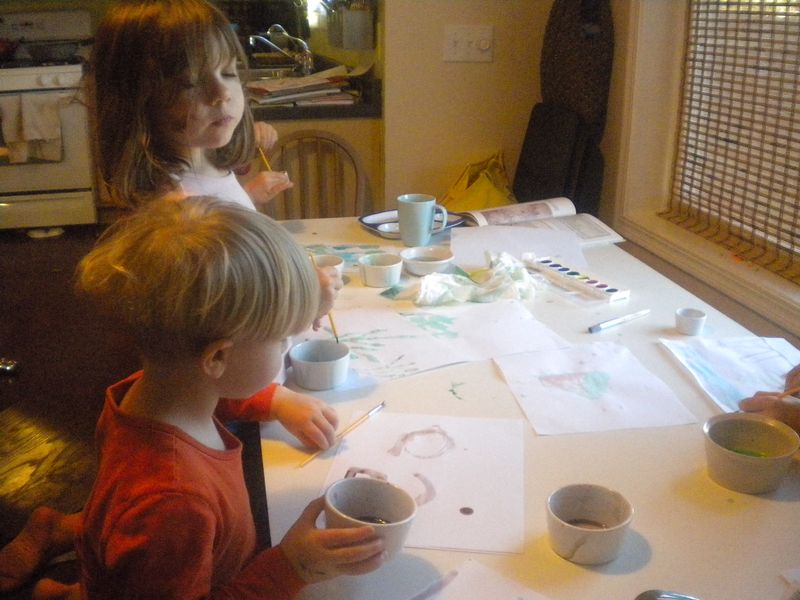
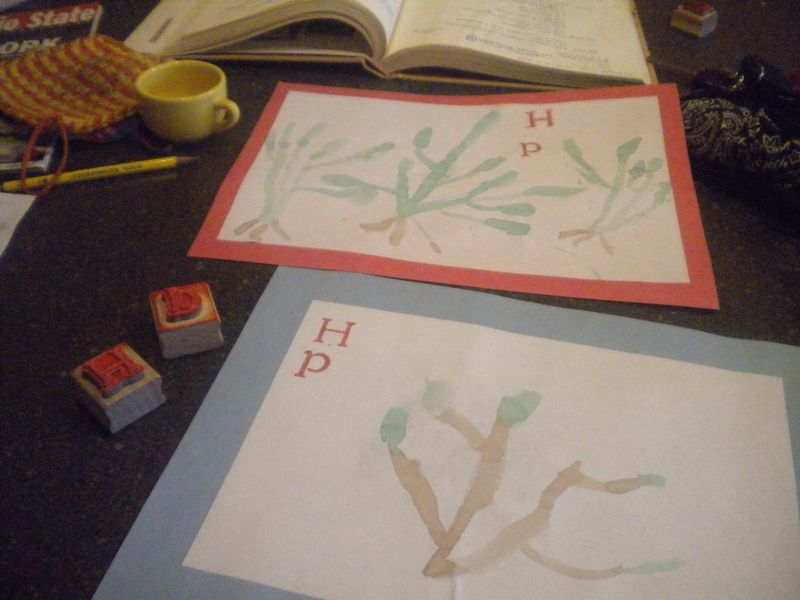
    "A painter should learn the art by copying. When you copy a painting, make sure it is accurate, in the spirit of the first painting, and respectful of the first painter."

    DSCN0806


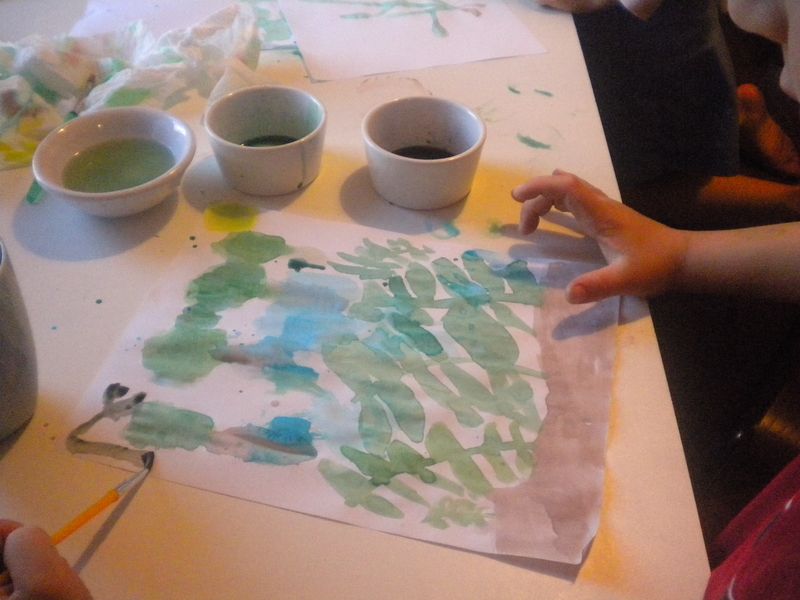
    "The right colors must be used in the right order."

    DSCN0801


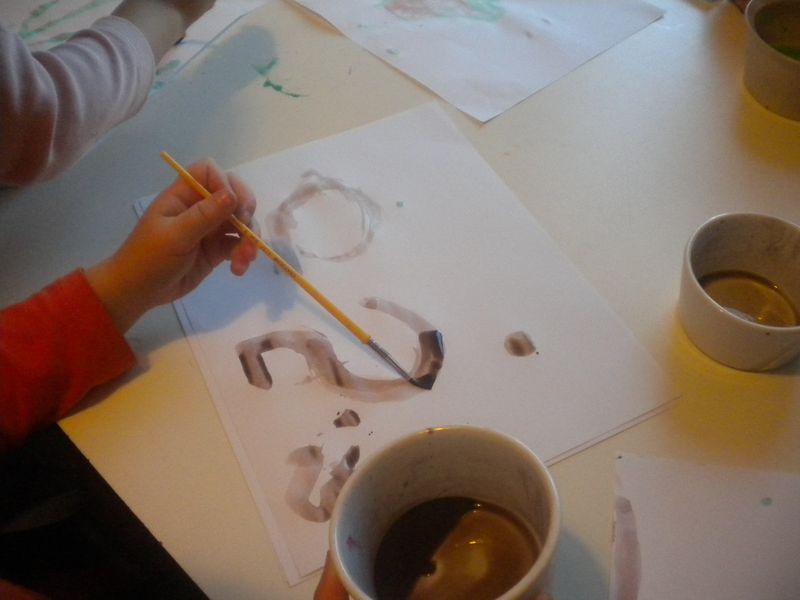
    "The brush must be used properly."

    DSCN0802


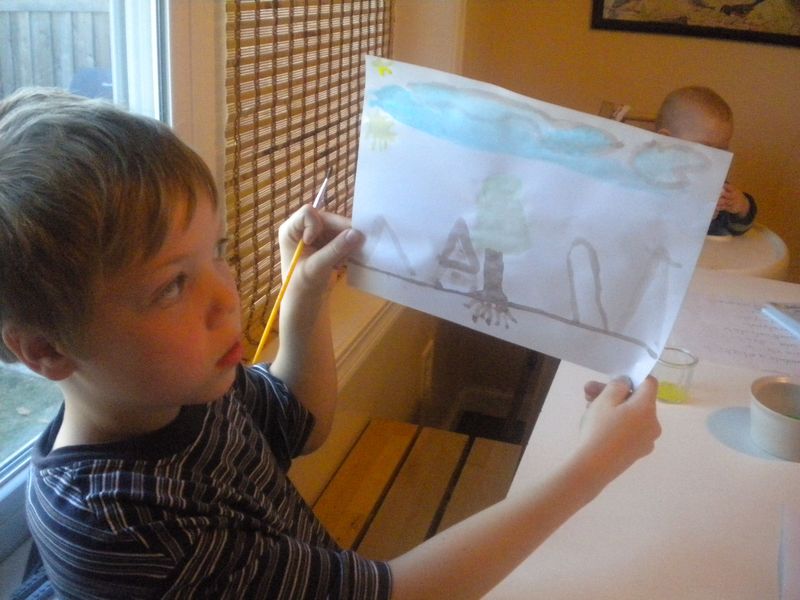
    "The painting must have vitality."

    DSCN0804


    "Things must be arranged harmoniously in the painting."

    DSCN0807


    "The painting must show accurately what is painted."

    DSCN0809

    –The Six Rules of Painting, Xie Hue, c.  500 A. D.

    (From Jane Shuter, Ancient Chinese Art, Reed Educational and Professional Publishing, 2001).


  • The Twinkie diet.

    Tabitha was the first person to point out the “snack cake dieting” professor to me and since then I have gotten a couple of messages.  Well!  Let’s take a look.  

    First of all, here is a link to the CNN article, “Twinkie diet helps nutrition professor lose 27 pounds.”  

    Second, he has a Facebook page: Sample diet day with grams and calories here. Here is the discussion board topic “Diet for Fall 2010.”  It follows his weight and lipid profile as time passes.  I’m much more interested in reading his own words than in reading the CNN report, so let’s take a closer look at that.

    This semester I decided to do it as an example for my HN 535 course (Energy Balance). The purpose is to illustrate metabolic, mental, and sociological issues surrounding “weight”. The principle is simple…eat fewer kilocalories than I expend. I have set 1,800 kcals as my goal. The basis of the energy comes from Little Debbie snacks — I eat about 4-5 a day. The other ‘limits’ of the diet include milk (for protein), 1 protein enhanced serviing, veggies ad lib (as long as they are low starch/calorie), sweetened cereal on occassion, 1-2 multivitamins, and 0 calorie caffeinate products (coffee and diet cola).

    The choice of “Little Debbie” products was simply to use a recognizable snack that is processed and deemed by most as “junk” food. I have allowed other foods (that is, I have ‘cheated’) so long as they are considered “junk” or deemed by many to be “bad” for one’s health (e.g., I had a Pepsi yesterday morning, loaded with obesity-causing sugar — except I am losing weight). I recently switched from 1% milk to whole milk, as whole milk is deemed to be worse for one’s health.

    I think you might be getting the picture of why I am pursuing this exercise. I am not recommending or promoting this approach. I am simply in the process of illustrating that foods deemed to wreck diets, cause obesity, lead to diabetes, etc., do not – in and of themselves – do that.

    Sounds like a great idea for teaching.  And I commend him, as a scientist, for refusing to stake any firm conclusions on the outcome of his anecdote.  

    So, let’s see here.  What’s wrong with this diet?  Well… what can be “wrong with” a diet?

    • It can include too many or too few calories
    • It can be deficient in any of many different essential vitamins and minerals
    • It can be deficient in protein
    • It can be deficent in fiber
    • It can contain a suboptimal balance of types of fat (but note, nobody actually knows what the optimal balance is)
    • It can contain toxic substances

    We know how many calories he ingested:  his goal was to eat less than he expended, and apparently he managed that.  He says he ate vegetables, so presumably got at least some fiber.  He drank milk and had a protein supplement, so there’s the protein.  He took a multivitamin, which should keep him from getting scurvy (remember, he only wanted to do this for a couple of months).  And despite the horrified gasps from mothers, co-op shoppers, and low-carb dieters everywhere, snack cakes do not contain any actual poison.

    A key piece of information that you would not notice from the press coverage and buzz, which emphasizes all the sugar:  This is NOT so much a high-carbohydrate diet.  It is a low-calorie, high-fat diet.  


    From the Facebook page (emphasis mine), written on day 4:

    So, to recap…I am eating about 50% or more of my calories from fat/day (with most of that fat being saturated), I eat mostly junk food (except for veggies & even if they’re fried), I drink whole milk, and take a multivitamin.

    I noticed the number “50%.”  (Although in his sample diet day it’s only 33%)  During my own weight loss period, I also ate about 50% of my calories per day from fat.  I’ve seen this number a couple of other times as an amount that led to successful weight loss — I think it turned up in at least one of the anecdotes in Gary Taubes’s book Good Calories, Bad Calories.  

    So, let me wrap this up so I can start my school day.  I am interested in the larger implications for nutrition science, of course, but what are the implications for ordinary people trying to develop a manageable healthful lifestyle, avoid gluttony*, and maybe get to a healthy weight and healthy blood chemistry?

    (1)  Junk food can be a delicious part of this nutritious breakfast.

    You may have psychological reasons why it’s a bad idea for you to have certain foods.  I don’t keep saltine crackers around because I can’t stop eating them.  Other people feel that way about ice cream, or cheeseburgers, or potato chips.  But if this guy can practically live on Little Debbie Snack Cakes and still lose weight, that rather supports the idea that a weight loser can incorporate favorite junk food into her daily routine.   

    If you are not sure whether it is possible, the thing to do is try an experiment on yourself.  Plan two days with equal calories.  One day let some of those calories be from a Twix bar.  Which day are you happier?  Which day do you feel better?


    (2)  This man carefully counted and controlled total calories.   

    So did I, when I was losing weight.  It’s kind of a pain, and few people will want to keep up the habit after they have lost the weight, but it is a powerful tool for weight loss and weight maintenance if you are willing to take the time and to be honest with yourself.

    (2a.)  Meanwhile, he ate stuff he found appealing that had plenty of fat in it.

    Again:  so did I during my weight loss period.  I ate what I wanted.  I controlled calories. 


    (3)  A snack or meal of junk does not “ruin your diet.”  

    There is just no excuse at all to say after a slice or two of chocolate cake, “Wow, I really messed up.  I’ll start again tomorrow.”   Or (this is what I used to do) “Gosh, I just ate a whole lunch of junk.  There wasn’t any nutrition there.  I better eat a SECOND lunch with some nutrition in it.”  

    This man ate junk for breakfast, lunch, and dinner.   What he did, that most of us don’t, is that every day he quit eating food — he quit eating junk AND he quit eating healthy food — before the calorie count passed the limit.  

    If you want to lose weight, you cannot give yourself a “do-over” every time you eat something that is unhealthy or unsatisfying.  You have to get used to saying “Oh well, I will have something better at another meal.”

    (4) He went through a period of feeling crappy when he first changed his diet, but the crappy feeling went away.  

    From the discussion page:

    A reporter has already distorted my diet by omitting the phrase “for one day” after stating “his head felt like it was in a vice” — thus, making it seem like I’ve felt bad for the entirety. 

    I think this is pretty common — the first few days of a new dietary composition cause some kind of biochemical rebellion.  Fortunately we are often highly motivated in the first few days of anything, so that can help us get through it.  On the other hand, it is all too easy to misinterpret “I feel crappy” as “I feel hungry.”

    (5) It’s indisputable that eating fewer calories than you burn causes weight loss.  The tricky part for an individual is managing behavior so that you really do eat fewer calories than you really do burn.

    And here is where individual psychology comes in.  Because what “works” for one person to motivate her, to help control cravings, to keep a sensation of having enough energy, all while she consumes fewer calories than her body needs (face it, dieting IS starvation) — that may not work for another person.  This guy was highly motivated to stick to his diet because he wanted to use it to prove an academic point.   Oh, and he also measured everything to a degree that some would call “obsessive” and others would call “like a nutrition professor with an entire lab at his disposal.”

    —-

    So what’s happened here that confirms my own pre-conceptions?

    One good way to lose weight is to:

    • carefully control total calories 
    • while eating stuff you like to eat 
    • that has plenty of fat in it 
    • and enough protein to avoid muscle loss
    • adding a multivitamin and to avoid deficiencies
    • while you are essentially underfeeding yourself.

    The only piece of the puzzle that I really believe in that isn’t present here?  I believe in pounding the veggies.  Professor Haub ate some vegetables every day, but that’s a far cry from the 6-8 servings I try to get daily.

    Oh, and one more thing:  I suspect this guy of gunning for an Ig Nobel prize, but hey, I respect that!


    *[Editing note.  Years and years later, I wish I’d done a better job distinguishing gluttony from other problems with food, like clinical eating disorders and other kinds of compulsiveness.  

    I want to emphasize that, whereas I identified some behaviors in myself that probably qualified as self-centered gluttony in the technical sense, I am not and never have been qualified to make that distinction for anyone else.

    I hope to add some commentary to all the posts that have this problem as I find the time to review them.  Here’s a more recent post where I acknowledge some of the problematic material I wrote and set new ground rules for myself going forward.]

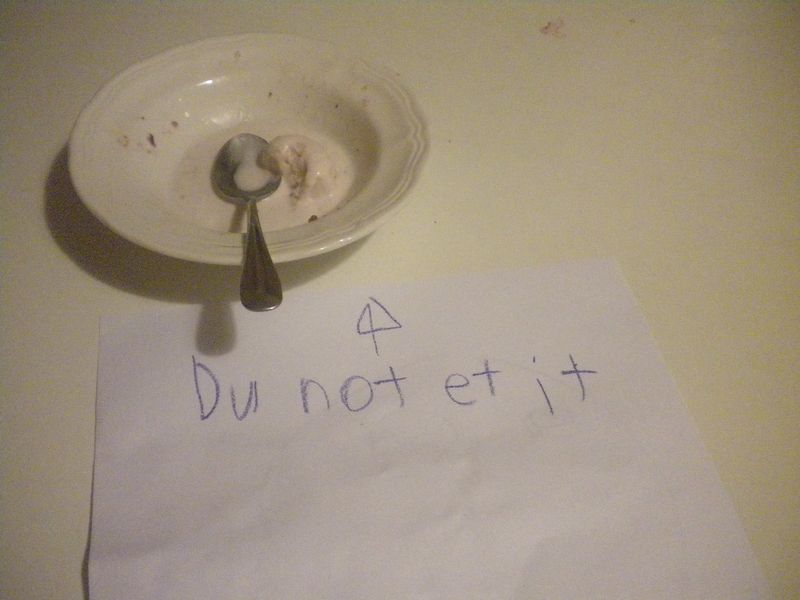

  • Oh, so that’s how she does it: Crazy plain salmon loaf.

    You know those "crazy cakes" , usually chocolate, that you mix up with a fork right in the cake pan?  I had no idea, but Hannah has just walked me through her kid-salmon-loaf recipe.  It is a crazy loaf much like the crazy cakes.

    It is very very plain.  Add other stuff if you want (like peas or green onions).  The kids all like this, though.  Here you go.

    Preheat oven to 400 degrees F.  Oil a 9×13 glass dish generously with olive oil.  Dump two cans of salmon with bones, liquid and all, into the dish.  Use a fork to mash up all the bones really well.  Crack in four eggs and beat them with the fork, mixing well with the salmon.

    Now take a container of finely ground yellow cornmeal (the cardboard canister from Quaker works fine) and shake some over the top.  Mix it in with a fork.  Repeat until the consistency resembles meatloaf.    (At this point, you could add vegetables, onions, and other things to make it not so plain.)

    Press the mixture flat down into the pan and drizzle generously with olive oil on the top.  Bake till crispy.  Cut up and serve with ketchup.

    There you go — the only thing you've dirtied is one glass dish and one fork…


  • Christmas is coming, the goose is getting fat.

    Christmas and Thanksgiving and New Year’s too.  And all the holiday travel.  And all the holiday meals…

    From the limited site statistics Typepad gives me (darn you, Sitemeter!  why did you go all buggy and make me delete you?!?)  I can see that this month I have a lot of traffic to my weight loss posts.  Yeah, I’m still working on formatting a printable version, when I have time.  It’s a long term plan…

    Anyway, I wanted to toss out a suggestion for folks who are viewing the upcoming holidays with trepidation.  Because it’s so much harder to eat moderately when you are with the extended family, isn’t it?  Partly because of the company, partly because the food is extra-appealing, partly because you don’t have control over the menu.  I have written about this before (and recently dredged up some old links for a friend).

    This might not work for everyone, but why not try a moderate-sized, balanced-plate plan to get through the holidays or the vacations or the visiting?  It’s a very simple set of rules governing meals and mini-meal-type snacks, but one that is highly adaptable to restaurants, buffets, potlucks, and feasts at other people’s houses.

    I’m definitely not the first to come up with the “plate method” (here is an example of a published version), which is, as far as I am concerned, a tool for filling up on vegetables.  The idea is to create a “mental model” of a balanced meal like this:

    The “ideal plate” is not too large and is mentally divided into four quarters.

    – At least two quarters is meant to hold non-starchy vegetables.

    – Up to one-quarter of the plate may hold a source of protein.

    – Up to one-quarter of the plate may hold starchy vegetables or grains.

    – And you don’t get to let stuff hang over the edge of the plate or stack it too high.

    – You can fill your two-quarters with salad if you like, but salad greens are so fluffy that as far as I am concerned you can have them for free in a bowl on the side.  Watch the dressing though.

    – Yes, your dessert must fit on your plate.  Have it bump some of the starchy stuff out of the way.

    – Yes, your fresh fruit must fit on your plate.  Just remove any of the other stuff to make room for it.

    Obviously it’s easy to figure out where everything goes if dinner is chicken, broccoli, and rice.  Half a plate of broccoli, a quarter-plate of rice, and a quarter-plate of chicken, right?  So what do you do if dinner is vegetable lasagna and minestrone soup,  or mixed beans and rice and coleslaw?  The key is not to think too hard about it, do your best to approximate the proportions, and to remember that Americans rarely suffer protein deficiency.  When I was following this guideline, I would keep stuff like lasagna to a quarter-plate.  I might let something like beans and rice be a little bit larger than a quarter-plate and fill the rest with vegetables.

    But it doesn’t hurt, when you get started, to be kind of strictly literal about it.  Like, if it’s spaghetti and red sauce and cheese, literally measure the pasta by placing it on a quarter of your plate before moving it to the middle of the plate and adding the sauce.

    You know, right, that “starchy” vegetables are peas; beans like kidney or pinto or black beans; corn; potatoes; sweet potatoes, right?   Don’t fear carrots, turnips, and squash; they can be piled high on your plate.  The low-carb people have given root vegetables and squashes an undeserved bad reputation.

    If you stick to a single plate and use these guidelines, you don’t have to worry so much about WHAT the stuff is you are eating — it will be moderate, almost automatically.   I’m not saying it will be low-calorie, but I am saying that you will be reinforcing moderate, healthy habits without having to be excessively picky. It really takes care of the excess associated with holiday gatherings.

    What if the plate is handed to you already composed, as in a restaurant or a dinner party?  Chances are that the plate is overlarge, so you probably have everything you need to make a balanced plate in front of you, plus a little extra of some of the things.  Transfer extras off the plate if it is possible to do so without being a weird guest.  If you can’t do that, discreetly move stuff around and draw mental lines around things.  Remember that the four-quarter plate is a helpful MENTAL model; it doesn’t have to actually exist in front of you to help you out.  Of course, some practice with physical four-quarter plates help.  But really, the point is to control what you put in your mouth, not what you put on the plate; the plate is only a tool, and an imaginary one at that.

    (And by the way, if you are used to smaller plates and you are given a BIG plate:  Big plates usually have a wide rim around them.  If you only use the center of the plate and pretend the rim part isn’t really there, you are generally left with a more manageable circle to work with.)

    One more note.  Occasionally you will run into the “corn-potato-peas” dinner when you are a guest at someone’s house — you know, the meal that consists of a piece of meat, plus the “vegetables” are corn and peas and potatoes.  In that situation, you have two choices, and I think either of them work.

    (1) Suck it up, count the peas and corn as vegetables, and put them on half your plate (not piled up huge though).  They do have a lot of fiber and other good nutrition in them, which is the main reason to eat vegetables. Be a gracious dinner guest.

    (2) If you are certain that maintaining lower calories is crucially important, and if you think you can do this graciously:  Count the corn and peas together as part of the protein, and just figure that you don’t get any vegetables on this plate.  Your vegetable quarters are metaphorically blank.  Don’t literally scrape all the food to one half of your plate though!   Remember about not being a weird guest.  Do the math in your head, smile and say thank you.


  • Cleaned up a bit.

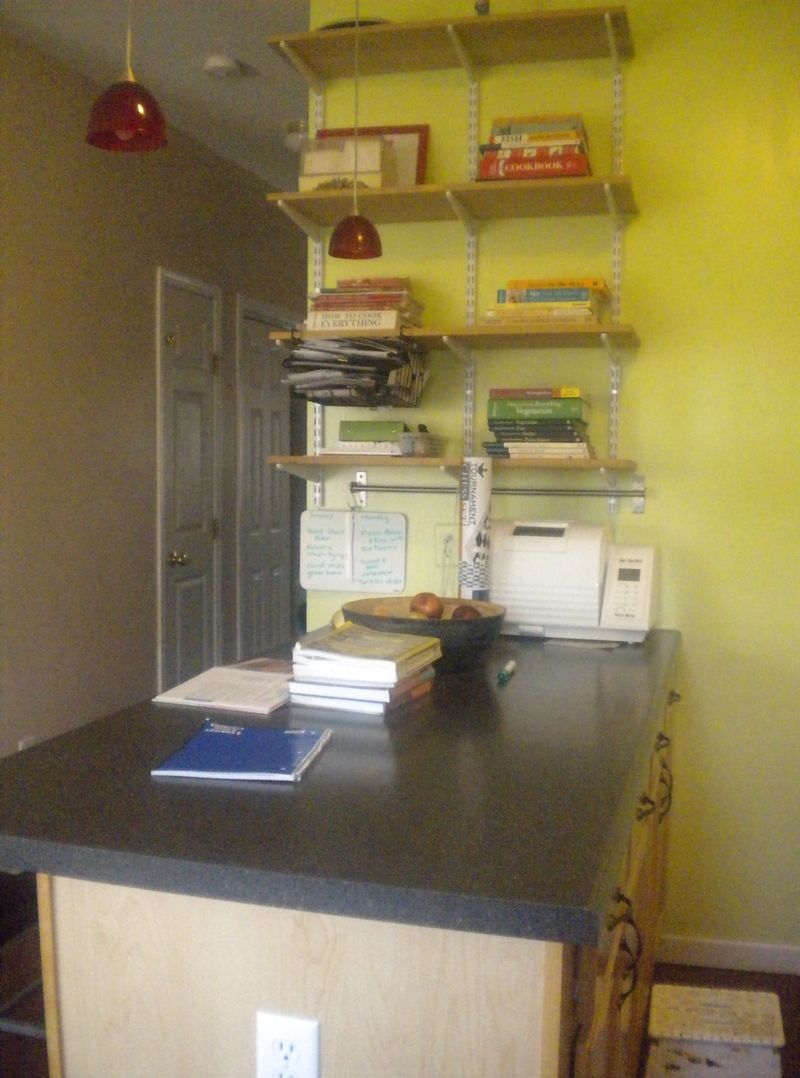
    For commenter Kelly.

    DSCN0799portrait

    Still a lot of mail in the in-basket, but better, no?