
We are down to the last few days, and on the last day there’s a Tube strike planned, so we must focus.
I made the three big kids get up at nine and leave at ten, because the sisters at Tyburn Convent offer a tour of their shrine daily at 10:30.
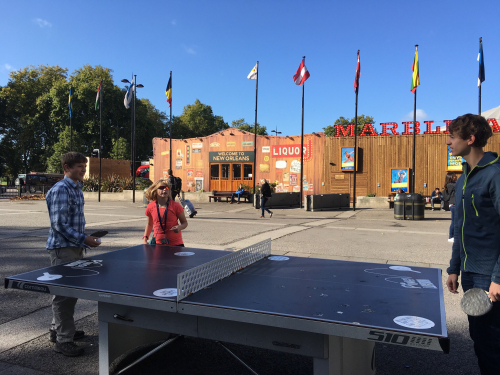
Outside Marble Arch tube station we discovered something cool: outdoor ping pong tables! The last players had left the ball on the surface, tented under two paddles so it wouldn’t roll away: two more paddles were in slots under the table.
Sadly, we had to move on so as not to be late.
“Now I want you to know that as you’re looking around down here, please feel free to take pictures. As many as you want! I know some feel they aren’t supposed to, in a holy place. But our work is for everyone, and the more people know about it, the better.”
So I did take pictures.
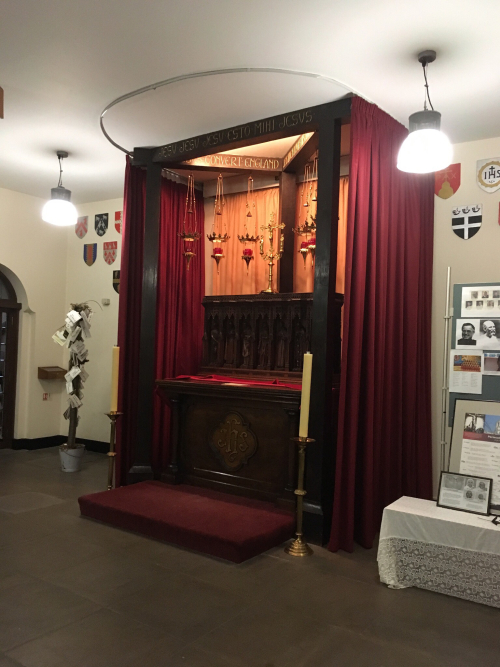
This is their altar, topped by small replica of the Triple Tree:
Sister Thomasina had a way of telling that started down a path, went down a trail, backed up to the main narrative, then started again down another trail. She began by explaining the long history of hangings at Tyburn. “East was the sea,” she said, “so when people approached London from the countryside they came from the west, and there was a little river here, the Tyburn. And you know, they wanted the criminals to be hanging there when visitors came from the west, so that is why the executions were here. And—listen—” She held up a finger and we heard a low rumble grow, tremble the floor, and die off. “That’s the train, from the Underground. Well, we’re downstream of the Triple Tree, and you know, the river once flowed under here, it forked. So we say that the blood of the martyrs flowed under our feet.”
She described hanging and drawing and quartering in detail, and she had a very different demeanor from the Yeoman Warder who gave our Tower tour; he played it for laughs. She was not somber, though; there was a certain cheerfulness in her telling of the story. She explained the size of the gallows, big enough to drive two carts side by side under each crossbeam, big enough to hang eight people on each, twenty-four in all.
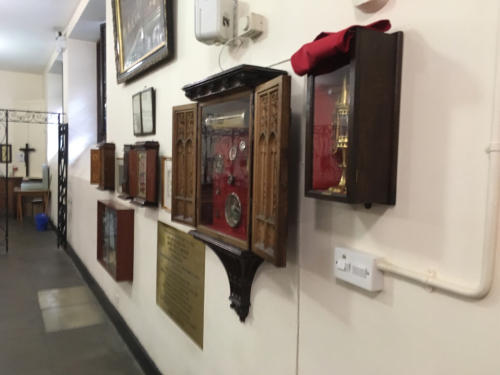
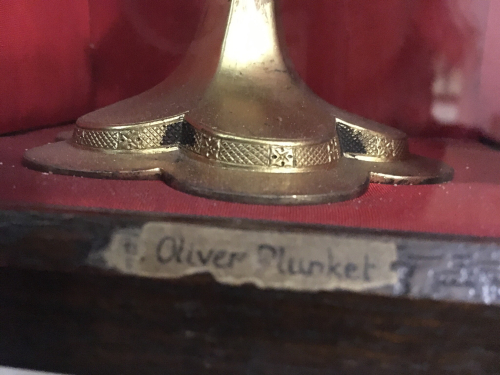
“These reliquaries on the walls,” she said. “On this side”—she gestured—”these relics were spirited away to France during the persecution, and they’ve been brought back here. And these on this side went to Spain, and they’re back thanks to the Spanish Embassy.”

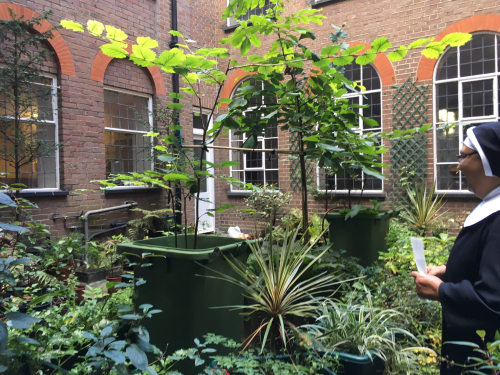
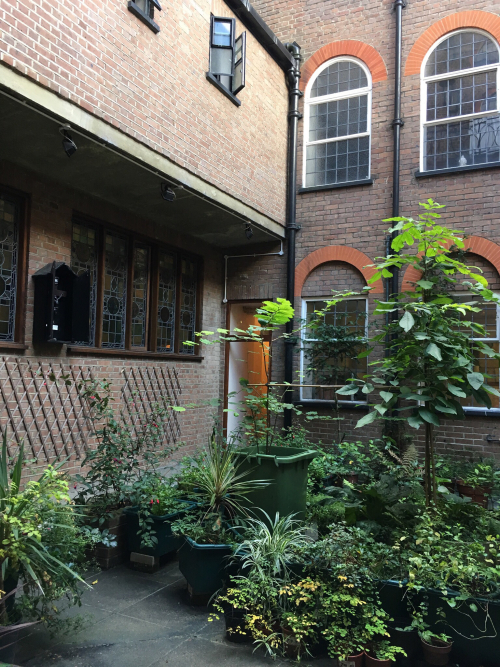
Sister Thomasina invited us through the gate into the kitchen garden, in a tiny courtyard. “Here is where we grow our herbs, and the salad things,” she said. “We have room to try some new things now and then. Here, we are trying to grow an avocado tree. Don’t know if it will bear fruit but it is worth a try.”
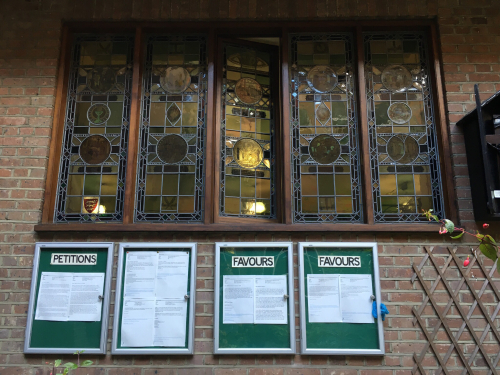
In one corner of the garden was a raised stone sepulchre. “That’s our foundress,” said Sister. There was a little kneeler in front of the tomb, and above it a mural of the resurrected Christ. Right next to the kneeler was a large glassed-in bulletin board in which were posted printed emails. I leaned over; they were clearly petitions submitted to the Sisters via a website combox of some sort. All were crisp with relatively recent dates. I suspect that if you send them an email and ask for a prayer, your prayer will be posted here, next to the little kneeler.
She gathered us around and handed us a little card with a prayer printed on it. “A prayer for the canonization of our foundress,” she said. “Why don’t you come around here and let’s all say it together right now.”
So we did, and then headed back through the door, passing more posted petitions.
The crucifix on the wall we passed bears a tag that reads: Pray for those who died around this crucifix at Ypres in the 1914-1918 war and for their chaplain. R. I. P.
Before we left, Sister said to us, still unflappably cheerful: “If you have anything that is worrying you or burdening you, leave it here at Tyburn. Our prayers are for everyone here. Prayer is our work. Leave it here at Tyburn. And,” she added with a wider grin, “if your burden isn’t lifted, you may take that to mean that we can use some help! And pray for us, then.”
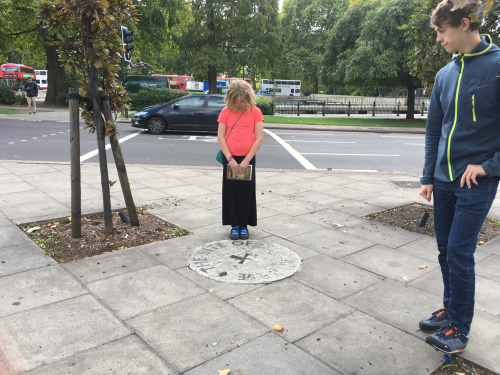
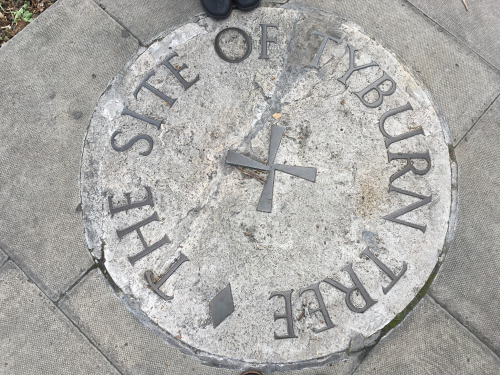
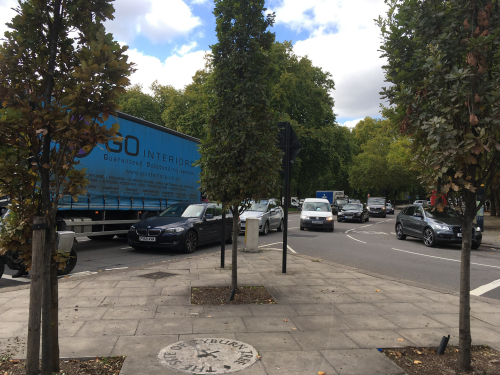
On our way past Marble Arch we found the stone marking Tyburn where she had said it would be, flanked by three little oaks that had been recently planted to make a new Triple Tree.
+ + +
We walked down to the Bond Street station, past Selfridge’s (which would be a better shopping destination than Harrods).

I had promised my daughter some sushi. We found a chain called Wasabi in the mall. Very nice: you can pick individually wrapped pieces of nigiri, maki, onigiri, and other things to make a bento box, or grab a preassembled combo to go. Also there are hot noodles and rice bowls. Once again, London fast food wins the category.

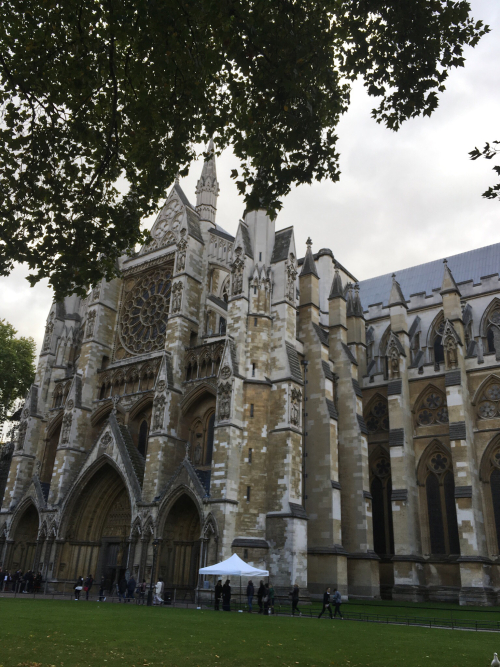
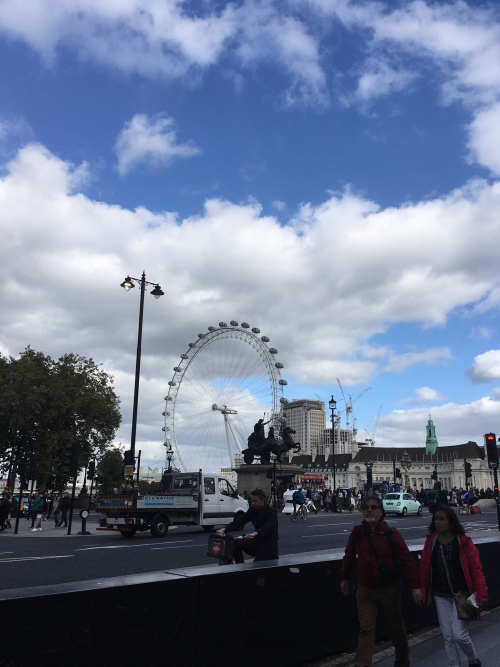
Then we took the tube to Westminster Abbey. Which had once been Benedictine, like Tyburn. But of course is quite different now.
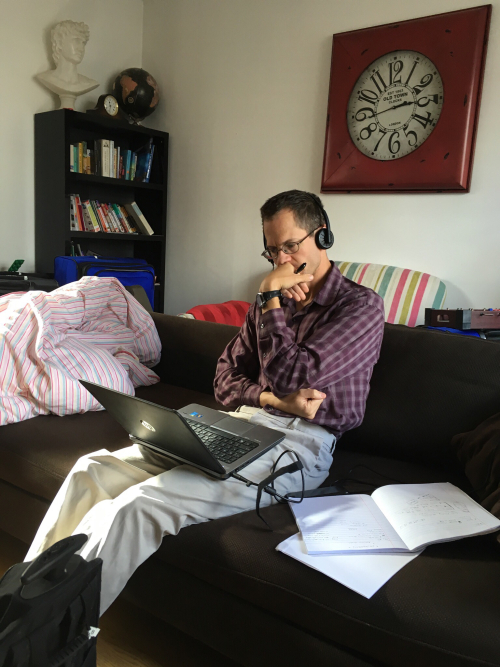
I came back to find Mark working:
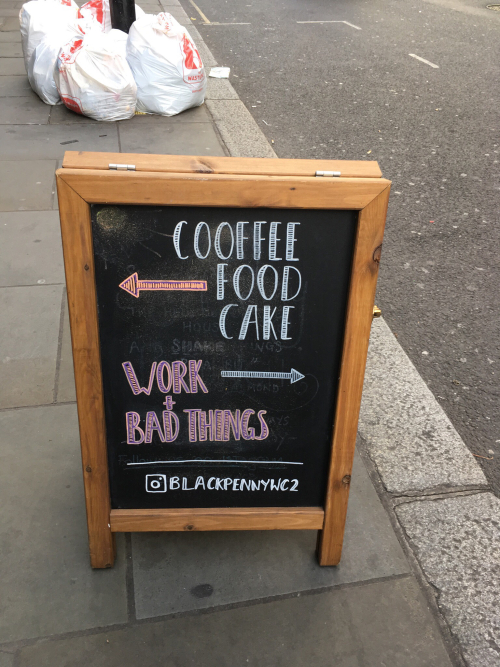
I snapped a photo of a sign I had passed many times over the past few weeks, and been pleased by:
After a quick gobble of dinner, I set out with four children to the Cambridge Theatre in Seven Dials. We had tickets to Matilda: The Musical.
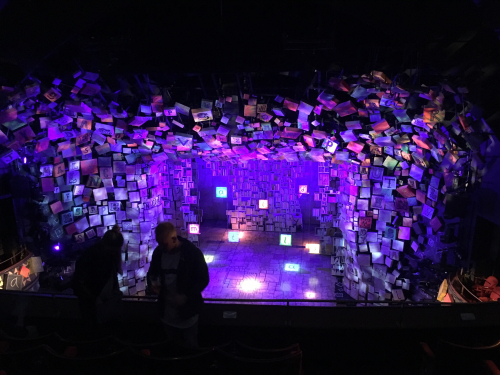
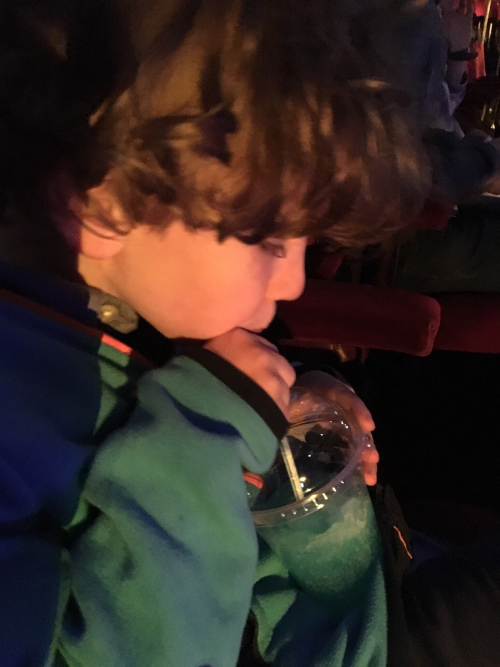
I haven’t time for a proper review, so I’ll just say that we all loved it, with the possible exception of the 7yo for whom it was a bit too intense and dark. I think he was okay in the end, though. Although I love Roald Dahl (even, or especially, his stories not written for children), I never have read the book Matilda nor seen the movie from a few years ago. I only had a vague idea of the plot. So it was unspoiled for me, and I enjoyed it greatly. There seem to be a few places in the story that are paced irregularly, the mark of an imperfect adaptation. But the music is wonderful, and there was the extra delight of a passel of very talented children. Matilda herself was played wonderfully dryly by Savannah Read, a tiny girl with long red hair and expressive body language. The set design and lighting is brilliant. A lovely evening out with the kids.
 Posted with Blogsy
 bearing blog