
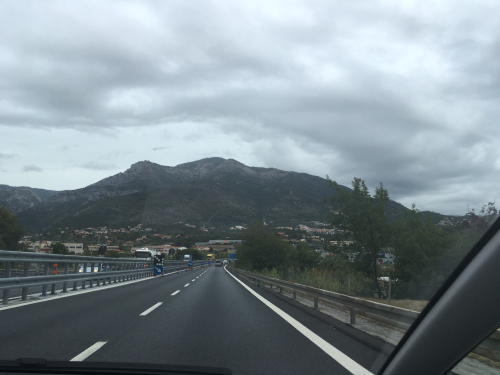
On Monday, with some trepidation, I suggested we drive one hour to Genoa for the day. There are things to see in Genoa, quite a lot, but I had a modest goal: the Aquarium, one of the largest in Europe. And possibly the Museo del Mare. Both are part of the same massive entertainment and tourist complex at the “old port.”
Google Maps gave us confusing directions, so I spent a lot of the drive deciphering the driving directions on the aquarium website.

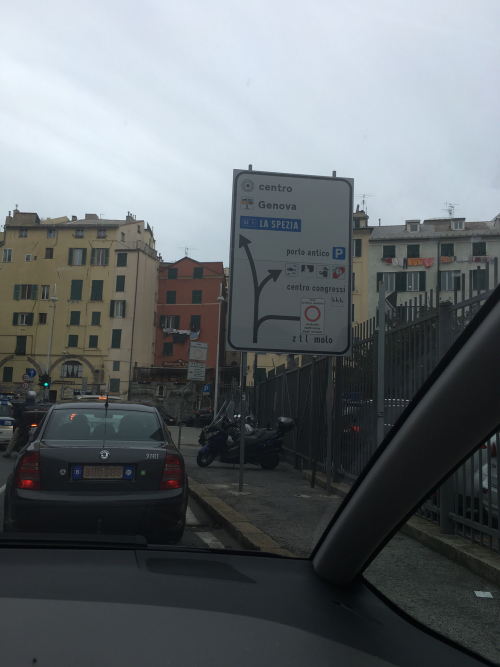
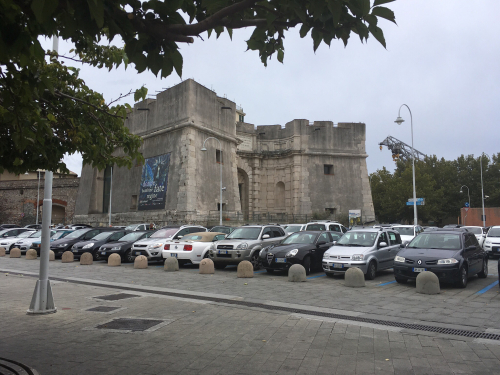
We maneuvered our way into a massive parking garage and emerged onto a huge plaza. It reminded us of other places we have been where an “old port” has been turned into an entertainment and restaurant complex: Chicago, and Newport, Kentucky, across the river from Cincinnati.
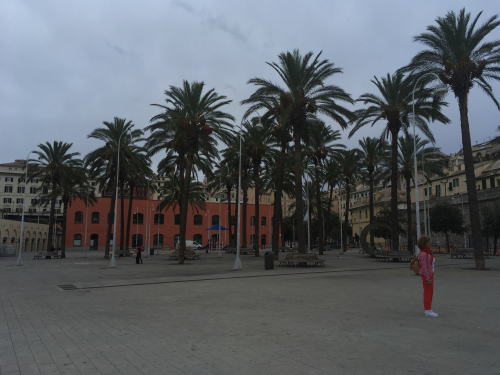
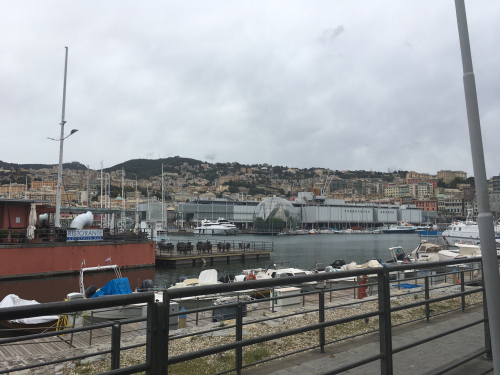
We weren’t sorry, though, because all that new construction made it easy to slip in from the elevated highway that snakes over the old port, with no slow nervous passage through medievally narrow streets. The “porto antico” was a little port within a port; it was full of boats, a working marina, and we even saw a big bright-orange tugboat in drydock there; but at the same time it was the home of several museums, a Disneyesque tourist pirate galley, and a big movie theater. It was disorienting to look around and think: This is the port from which the Niña, Pinta, and Santa Maria sailed.

But then if you turned and looked up at the buildings dotting the hills, all facing the sea, it wasn’t so hard to believe.
Sure, the houses are modern now, towering apartment blocks, and there are cars winding on the elevated highway, enclosed under perforated roofs, maybe sound protection to muffle the traffic noise from the inhabited balconies above. But there is something timeless about the way the buildings cling to the steep side of the cliffs, all of them craning their necks to see the expanse of the sea. Genoa is a craggy, green, creased city on the side of the hills, squinting permanently over the sparkling horizon, where travel was swift instead of (as on the hilly land) arduous. That intent gaze must have been the same five hundred years ago as it is now.
+ + +
There are antiquities and architecture to see in Genoa, but I had a much more modest and modern goal in mind. I wanted to take the kids to the Aquarium.
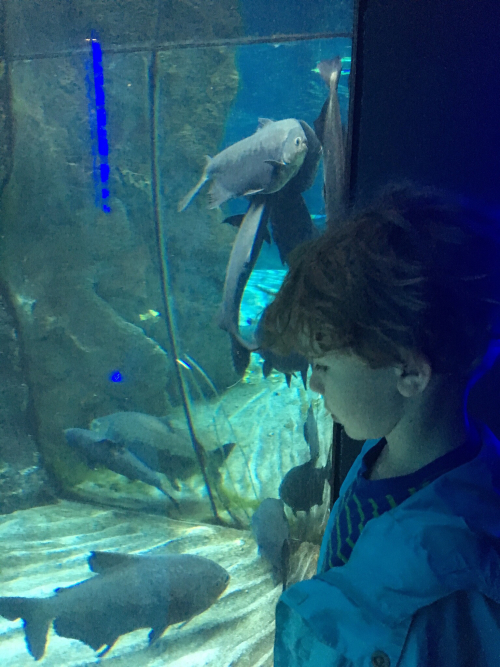
The Acquario di Genova claims it is the largest aquarium in Europe, although other sites name it the second-largest; maybe it depends on how you define it. I have only been to one aquarium that rivaled it, and that was the freshwater-only aquarium in Duluth. But this covered the Mediterranean and the whole world. It claims 15,000 animals; 200 plant species; and 27,000 square meters in area.

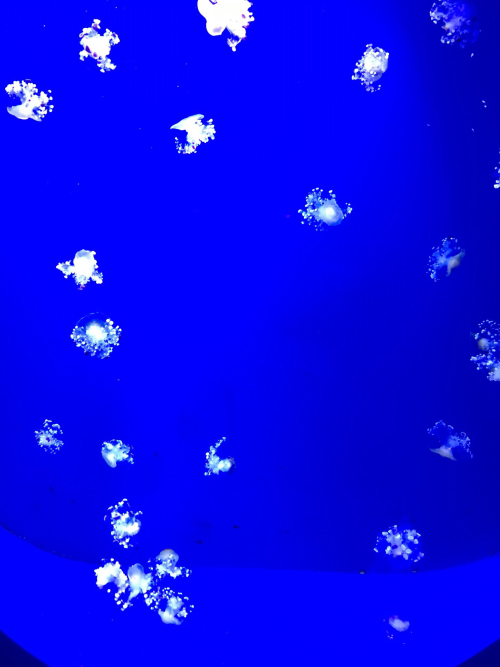
We saw a roomful of jellyfish; a pair of manatees; piranha; many sharks; seahorses; crocodiles; part of the dolphin show (very impressive, four dolphins synchronizing their leaping, and we were very close); manta rays, enormous moray eels emerging sluglike from their holes, scintillating spidery crabs, two sawfish skimming bizarrely along the bottom.

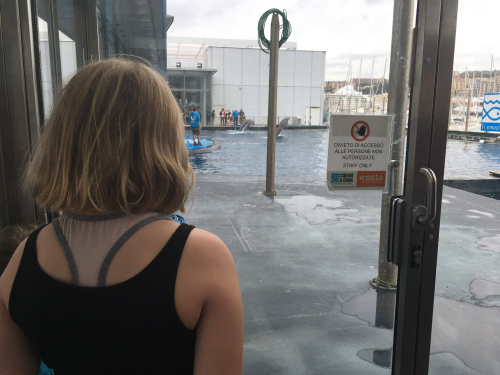
There was a touch pool where you could pet a sort of ray that fluttered along in the sand. And an exhibit with many species featured in “Finding Nemo.”
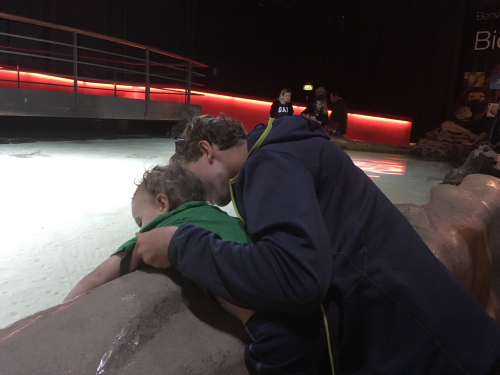
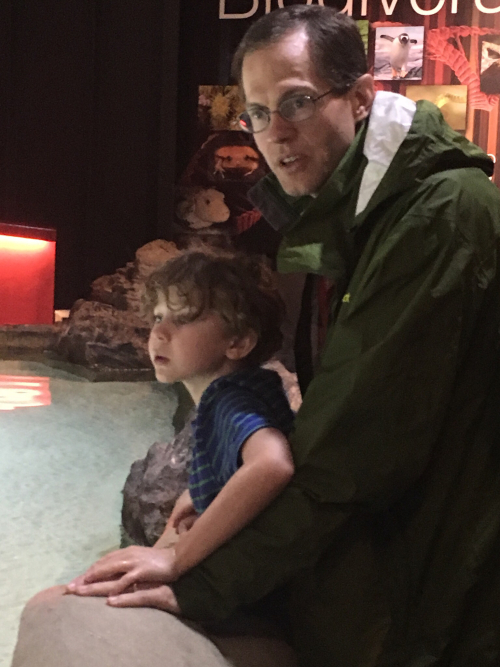

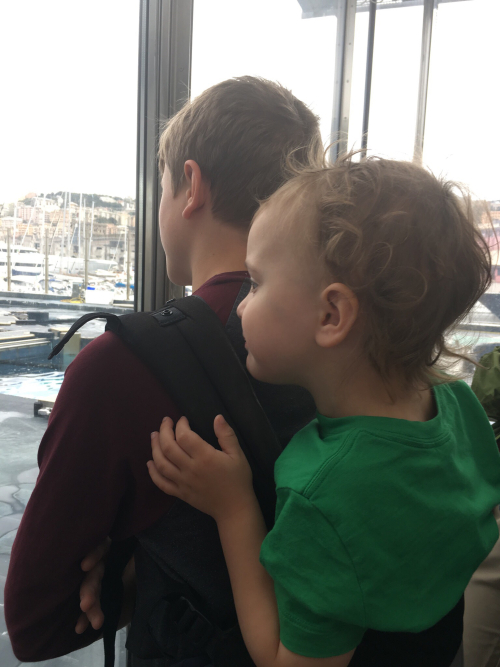
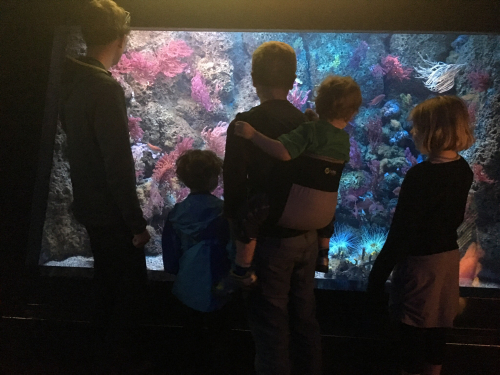
We all thought it was tremendous, from Mark down to the youngest. But it was that youngest who was really entranced. Our three-year-old’s favorite show is Octonauts, that cartoon about deep dives into the ocean among the sea creatures; and he spent the two hours of our visit in a state of utter delight. One of his brothers had him in the back carrier, so he didn’t tire, and he wanted to stay and look at every fish.
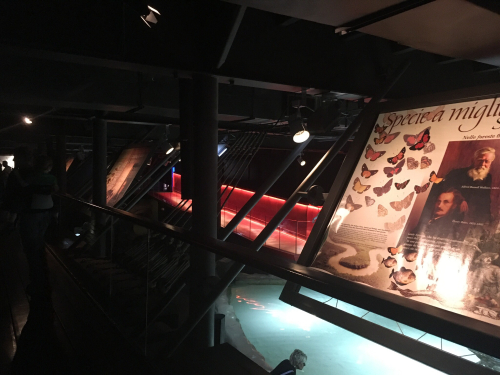
One of the last exhibits was about explorers and biodiversity and evolution, and it was very attractively set up as a mock deck on the H. M. S. Beagle. My 7- and 11-yos, in the process of learning about transatlantic explorers, were surprisingly engaged in the exhibit.
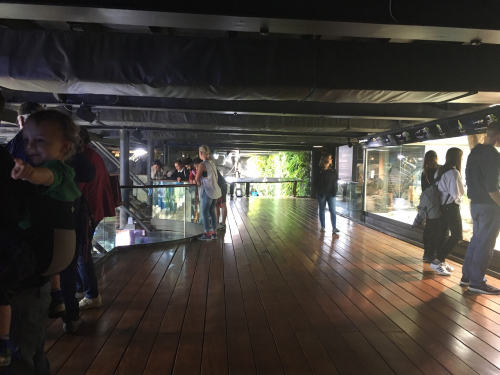
We ate a forgettable, but functional, fast food meal in the museum canteen midway through the visit. The fries weren’t bad, I should say, and I was pleased with myself for transacting everything relatively smoothly in Italian.
One thing that I think is funny is that the cashiers and baristas are always impressed with me for rattling off the numbers on the receipts. I think numbers must be difficult for most people who struggle with a little traveler’s Italian. Me, I have Italian numbers down cold by now: Tredici cinquanta, cente ottantasette, ventidue ventotto. I hear them and the numerals appear in my inner eye: 13.50, 187, 21.28; easy. You would think it was maybe because I am a math person, what with the engineering degrees and all that; but the truth is I am not nearly so facile with numbers in French, and have to think hard and “translate” them, not merely deal with them as words in a language I know. Before learning Italian I had a theory that the left and right brain both have to crunch the numbers in order to translate them from a foreign language, because I felt a real resistance in my head to press through to the meaning of treize cinquante, cent quatre-vingts-sept, vingt-et-un vingt-huit. But the Italian numbers just seem to work perfectly. Is it because they are less cumbersome than French: novanta (ninety) instead of quatre-vingts-dix (four-twenties-ten?) Or is it because the Italian enunciation is clearer to English-speaking ears? I don’t know; just that Italian numbers seem to work right away in my head, with no translation.
+ + +
After the aquarium we went to the Galata Museo
del Mare. This is the Genoa naval museum, and it includes a stunning variety of models of ships, from ancient times through Genoa’s golden age of shipping and exploring to today.
del Mare. This is the Genoa naval museum, and it includes a stunning variety of models of ships, from ancient times through Genoa’s golden age of shipping and exploring to today.
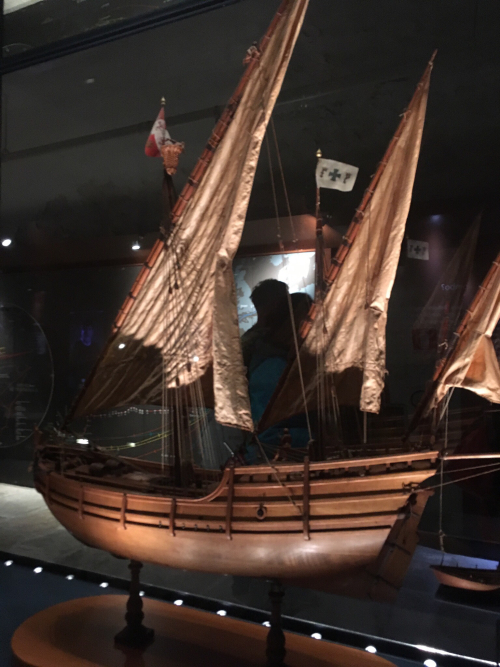
There are a few lifesize, walk-through ship reproductions: a whole galley, rooms on a transatlantic steamer, a more modern ship with a simulation of steering into the Genoa port.
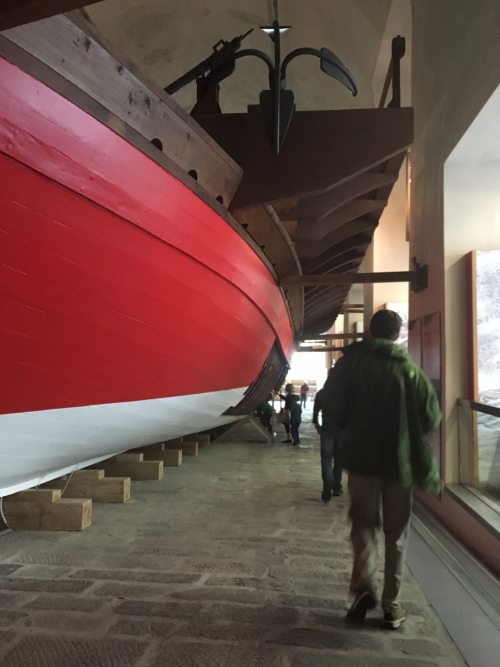
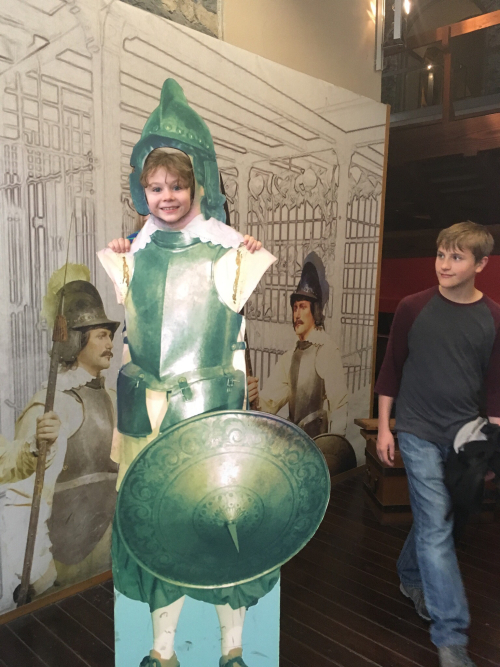
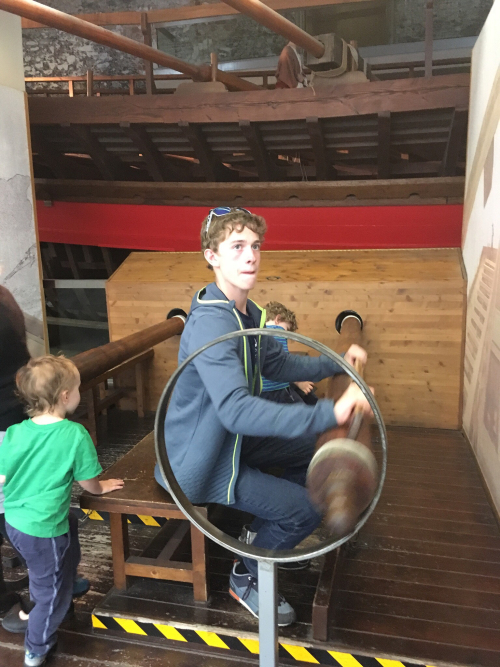
There was also a temporary exhibit about the Andrea Doria and its sinking, including a reconstructed room listed to 30°. And some atlases and globes were exhibited under glass, some hundreds of years old. One was an edition of Mercator’s atlas. There were also navigational instruments, clocks, and a simulated galley bench with an oar-handle to try to row.
+ + +
Eventually the 3yo got too tired, and we had to rush through the last bit of the museum. Mark and the 17-, 13-, and 7-year-old boys went to tour the Real Submarine while the 3yo (forbidden to tour the sub) and the 11yo (bored) and I went to find a treat; we found a coffee bar that sold sorbetto popsicles. The barista, hearing that I was American, first expressed condolences for the destructive hurricane season and then commented that in America we had weak coffee; I pointed out that at least in the U. S. we could obtain large quantities of coffee and did not serve it in thimble-sized portions.
It was good espresso, though. Can’t argue with that.

+ + +
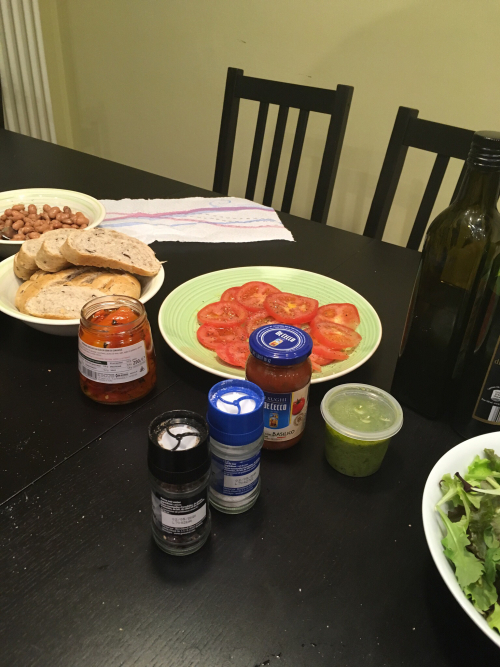
We drove the hour back to Andora, stopped in a grocery store for bread and olives and jarred peppers and beans, and made a feast out of refrigerated pasta boiled three minutes with Genovese pesto from the deli, and bread and meat and fruit.


And limoncello right before bed, bought from an Italian gas station.
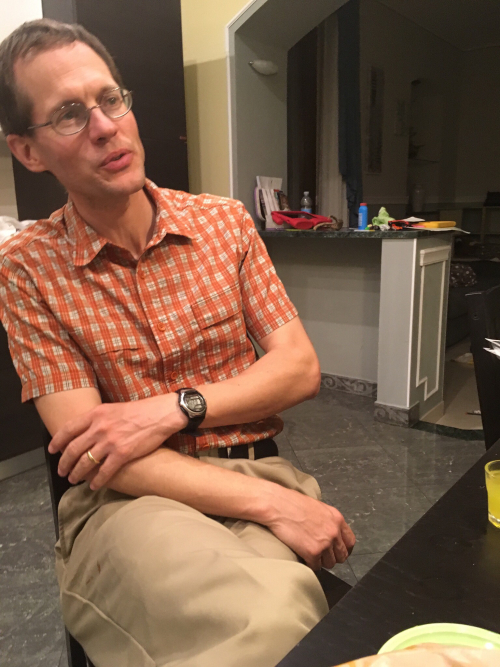
A good day.
 Posted with Blogsy
 bearing blog